
Please note: a valid prescription is required for all prescription medication.
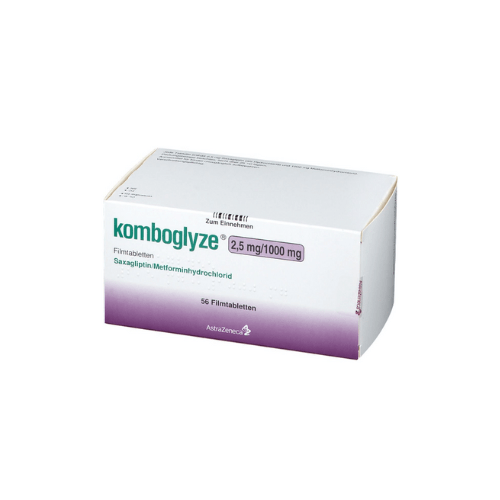
Komboglyze
Buy Komboglyze Online


Komboglyze is a diabetes medication that combines saxagliptin and metformin hydrochloride in one tablet. It can be bought online by choosing the available strength and quantity that match your clinician’s directions. Use the strength line carefully, because saxagliptin metformin tablets contain two active ingredients with separate amounts.
Komboglyze tablets are used with diet and exercise to help improve blood glucose control in adults with type 2 diabetes. The medicine is not used for type 1 diabetes or diabetic ketoacidosis. If you are arranging US delivery from Canada, match the medicine name, active ingredients, strength, form, and quantity before completing your order.
Komboglyze Price and Tablet Strength Selection
The Komboglyze price depends on the tablet strength and quantity chosen during ordering. Combination tablets can be easy to misread because the product name may include one number, while the full strength line includes two. Compare the total tablet count, pack information, and active ingredient amounts together rather than focusing only on the amount shown beside the name.
Komboglyze contains saxagliptin plus metformin hydrochloride. In a strength written as 500 mg plus 2.5 mg, the 500 mg amount refers to metformin and the 2.5 mg amount refers to saxagliptin. Both numbers matter when matching the medication to the directions you were given.
People paying without insurance often compare Komboglyze cost by tablet quantity, refill timing, and cash-pay checkout fields. A lower single displayed amount may not always mean the lowest cost for the intended supply. For related non-insulin products that combine more than one diabetes medicine, the combination tablets category can help you evaluate similar product types.
Quick tip: Read the active ingredients and both strength numbers before comparing quantities.
| Order detail | What to match |
|---|---|
| Medication name | Komboglyze or the named saxagliptin metformin product in your treatment plan. |
| Active ingredients | Saxagliptin and metformin hydrochloride should both be present. |
| Strength line | Confirm the saxagliptin amount and the metformin amount. |
| Quantity | Use the tablet count and refill supply that fit your instructions. |
| Release type | Do not assume regular and extended-release tablets are interchangeable. |
How to Buy Komboglyze Online
Start with the tablet strength shown during ordering and match it to your current medication directions. Review the form, active ingredients, strength, and quantity before checkout. If the brand name, release type, or strength wording looks different from what you expected, ask a qualified clinician or pharmacist to clarify the intended product before taking it.
Komboglyze online orders should be based on the exact saxagliptin metformin tablet you use, not on a broad class name alone. DPP-4 inhibitor combinations, biguanide-only tablets, SGLT2 inhibitor combinations, and insulin products can all be used in diabetes care, but they are not interchangeable. Small differences in active ingredients can change warnings, interactions, kidney considerations, and monitoring needs.
Keep a current medication list nearby when ordering. Include insulin, sulfonylureas, other diabetes medicines, kidney-related medicines, heart medicines, supplements, and non-prescription products. This list is useful because saxagliptin metformin can interact with other treatments or require extra monitoring during illness, dehydration, procedures, or changes in kidney function.
- Match the form: choose tablets, not an injectable or device product.
- Match both strengths: confirm the saxagliptin and metformin amounts.
- Match the quantity: compare the number of tablets in the order.
- Use the label directions: do not change timing or dose on your own.
What Komboglyze Treats
Komboglyze is used with diet and exercise to improve blood sugar control in adults with type 2 diabetes. Type 2 diabetes occurs when the body does not use insulin well and may not make enough insulin over time. Long-term high blood glucose can affect the kidneys, eyes, nerves, heart, and blood vessels.
This medicine is not a treatment for type 1 diabetes. It is also not used for diabetic ketoacidosis, a serious condition involving high blood acids called ketones. If you have symptoms such as vomiting, abdominal pain, deep breathing, confusion, or fruity-smelling breath with high blood glucose, seek urgent medical care.
The type 2 diabetes product list provides a way to browse treatments organized by condition. Broader diabetes medicines are also grouped in the diabetes medications category, which can help when a clinician has discussed a different class of therapy.
Active Ingredients and How They Work
Komboglyze combines two medicines with different actions. Saxagliptin is a DPP-4 inhibitor, a medicine that affects incretin hormones involved in insulin and glucagon regulation after meals. Metformin is a biguanide that helps reduce glucose production by the liver and can improve the body’s response to insulin.
Because the tablet contains both ingredients, it is not the same as taking metformin alone. It is also different from diabetes combinations that use an SGLT2 inhibitor or another drug class. The combined tablet may simplify a regimen for some people, but suitability depends on kidney function, other medicines, medical history, and treatment goals.
Strength wording can vary. A product described as Komboglyze 2.5 mg usually emphasizes the saxagliptin component, while paired wording such as Komboglyze 500 2.5 mg identifies both metformin and saxagliptin. Use the full strength line when checking the tablet you intend to buy.
Storage, Handling, and Travel
Komboglyze tablets are not insulin and are not handled like refrigerated injection products. Store tablets according to the label, usually in a dry place away from excess heat, light, and moisture. Keep the container closed and out of reach of children and pets.
Large quantities may be convenient only if the tablets can remain in their original container under recommended storage conditions. Avoid moving tablets into an unlabelled container if doing so makes the strength, expiry date, lot information, or directions harder to identify. If tablets look damaged, wet, discoloured, or exposed to unusual conditions, ask for product-specific guidance before using them.
Travel planning should focus on label visibility and temperature protection. Keep the medication with its label, protect it from moisture, and avoid leaving it in a hot vehicle. For orders that Ships from Canada to US, handling expectations should still be based on the storage directions for the specific tablet container you receive.
Side Effects, Warnings, and Monitoring
Common side effects of saxagliptin metformin can include diarrhea, nausea, vomiting, stomach upset, headache, and symptoms of a cold or upper respiratory infection. Some digestive effects may lessen over time, but persistent or severe symptoms should be discussed with a clinician. Low blood sugar is less common when this combination is used alone, but the risk can rise when combined with insulin or sulfonylureas.
Metformin-containing medicines carry an important warning for lactic acidosis, a rare but serious buildup of lactic acid in the blood. Risk may increase with significant kidney problems, dehydration, severe infection, heavy alcohol use, liver problems, low oxygen states, or certain procedures using iodinated contrast dye. Symptoms can include unusual tiredness, muscle pain, trouble breathing, stomach pain, dizziness, feeling cold, or a slow or irregular heartbeat.
Saxagliptin has been associated with heart failure risk in some patients, especially those with existing heart or kidney disease. Seek medical attention for sudden weight gain, swelling in the legs or feet, or shortness of breath. Severe ongoing abdominal pain, with or without vomiting, can suggest pancreatitis and needs prompt evaluation.
Monitoring may include home blood glucose records, A1C testing, kidney function tests, and sometimes vitamin B12 levels during longer metformin use. Kidney function is especially important because metformin is cleared through the kidneys. Diabetes education articles in the type 2 diabetes article category can support broader conversations about monitoring and daily self-care.
| Safety topic | Why it matters |
|---|---|
| Kidney function | Reduced kidney clearance can increase metformin safety risks. |
| Alcohol intake | Heavy use can raise lactic acidosis risk with metformin. |
| Insulin or sulfonylureas | These combinations may increase hypoglycemia risk. |
| Contrast dye or surgery | Temporary treatment changes may be needed around some procedures. |
| Heart failure symptoms | Swelling, breathlessness, or sudden weight gain should be reported. |
Why it matters: Safety checks help make sure the tablet fits both the treatment plan and the person using it.
Interactions and Situations to Discuss
Tell your healthcare professional about all prescription medicines, non-prescription products, supplements, and alcohol use before using saxagliptin metformin. Important interaction concerns can include insulin, sulfonylureas, strong CYP3A4 or CYP3A5 inhibitors, carbonic anhydrase inhibitors, and medicines that affect kidney function or dehydration risk.
Acute illness can change the safety profile of metformin-containing medicines. Severe vomiting, diarrhea, fever, dehydration, low food intake, or serious infection may require clinical guidance. Procedures using iodinated contrast dye and major surgery also need planning because kidney function and hydration status can affect metformin use.
Do not start, stop, or replace Komboglyze with another diabetes medicine based only on price or product availability. The best comparison depends on your current A1C, kidney function, cardiovascular history, hypoglycemia risk, weight considerations, and the other medicines in your regimen. The broader diabetes condition category can help place this medication among other diabetes treatments, but individualized decisions belong with a clinician.
Comparing Related Diabetes Options
Komboglyze is a saxagliptin metformin combination. That makes it different from metformin alone, which does not include a DPP-4 inhibitor. It is also different from combinations that pair metformin with an SGLT2 inhibitor or from injectable diabetes medicines. Comparing only the cash price can miss important differences in side effects and monitoring.
Alternative products should be evaluated by active ingredient, release type, dosing directions, kidney precautions, hypoglycemia risk, and interaction profile. If your clinician has discussed non-insulin therapy but not a specific product, the non-insulin diabetes medications category can help organize choices by treatment type.
Do not assume that a similar-looking name means the same tablet. Some markets use related names for saxagliptin metformin products, including extended-release versions. If your instructions name a different brand spelling, release type, or strength, clarify the intended medicine before using a substitute.
Authoritative Sources
These official sources support the product identity, use context, and major safety considerations for Komboglyze and its active ingredients:
- European Medicines Agency Komboglyze overview summarizes the medicine’s use and safety information.
- Canadian product monograph provides prescribing and patient medication information for Komboglyze.
This content is for informational purposes only and is not a substitute for professional medical advice.
Blood Glucose Unit Converter
Convert glucose readings between mg/dL and mmol/L without changing the clinical value.
mg/dL
-
US reporting unit
mmol/L
-
International reporting unit
These calculations are for education only and do not replace clinical advice, diagnosis, or treatment. Always confirm medical decisions with a qualified healthcare professional.
HbA1c & eAG Calculator
Convert between HbA1c percentage and estimated average glucose using the ADAG relationship.
HbA1c
-
percentage
eAG mg/dL
-
estimated average glucose
eAG mmol/L
-
estimated average glucose
These calculations are for education only and do not replace clinical advice, diagnosis, or treatment. Always confirm medical decisions with a qualified healthcare professional.
HOMA-IR Calculator
Estimate insulin resistance from fasting glucose and fasting insulin values collected from the same blood draw.
HOMA-IR
-
screening estimate, not a diagnosis
Formula used
-
depends on glucose unit
These calculations are for education only and do not replace clinical advice, diagnosis, or treatment. Always confirm medical decisions with a qualified healthcare professional.
Carb Serving Calculator
Convert total carbohydrate grams into carb choices for meal planning and diabetes education.
Carb choices
-
total carbs divided by choice size
Rounded choices
-
nearest half choice
Carb calories
-
4 kcal per gram
These calculations are for education only and do not replace clinical advice, diagnosis, or treatment. Always confirm medical decisions with a qualified healthcare professional.
Glycaemic Load Calculator
Calculate glycaemic load from glycaemic index and available carbohydrate in a serving.
Glycaemic load
-
GI x carbs / 100
Range
-
single serving estimate
Total carbs used
-
serving carbs x servings
These calculations are for education only and do not replace clinical advice, diagnosis, or treatment. Always confirm medical decisions with a qualified healthcare professional.
Express Shipping - from $29.99
Shipping with this method takes 3-5 days
Prices:
- Dry-Packed Products $29.99
- Cold-Packed Products $39.99
Standard Shipping - $19.99
Shipping with this method takes 5-10 days
Prices:
- Dry-Packed Products $19.99
- Not available for Cold-Packed products
What is Komboglyze used for?
Komboglyze is used with diet and exercise to help improve blood glucose control in adults with type 2 diabetes. It is not used for type 1 diabetes or diabetic ketoacidosis.
What ingredients are in Komboglyze tablets?
Komboglyze contains saxagliptin and metformin hydrochloride. Saxagliptin is a DPP-4 inhibitor, while metformin is a biguanide. The tablet strength should be read as two separate ingredient amounts.
How should I compare Komboglyze price online?
Compare the full strength line, quantity, tablet count, and refill supply. For example, paired strengths such as 500 mg and 2.5 mg refer to two different ingredients, so both numbers must match your directions.
Can Komboglyze cause low blood sugar?
Low blood sugar is less common when saxagliptin metformin is used alone, but the risk can increase when it is taken with insulin or sulfonylureas. Discuss symptoms and monitoring with a healthcare professional.
What serious warnings should I know about Komboglyze?
Metformin-containing medicines carry a serious warning for lactic acidosis, especially with kidney problems, dehydration, severe infection, heavy alcohol use, or certain contrast dye procedures. Saxagliptin has also been associated with heart failure risk in some patients.
How should Komboglyze tablets be stored?
Store Komboglyze tablets as directed on the container label, typically in a dry place away from excess heat, light, and moisture. Keep the container closed and away from children and pets.
Rewards Program
Earn points on birthdays, product orders, reviews, friend referrals, and more! Enjoy your medication at unparalleled discounts while reaping rewards for every step you take with us.
You can read more about rewards here.
POINT VALUE
How to earn points
- 1Create an account and start earning.
- 2Earn points every time you shop or perform certain actions.
- 3Redeem points for exclusive discounts.
You Might Also Like
Select options
This product has multiple variants. The options may be chosen on the product page
Select options
This product has multiple variants. The options may be chosen on the product page
Select options
This product has multiple variants. The options may be chosen on the product page
Select options
This product has multiple variants. The options may be chosen on the product page