
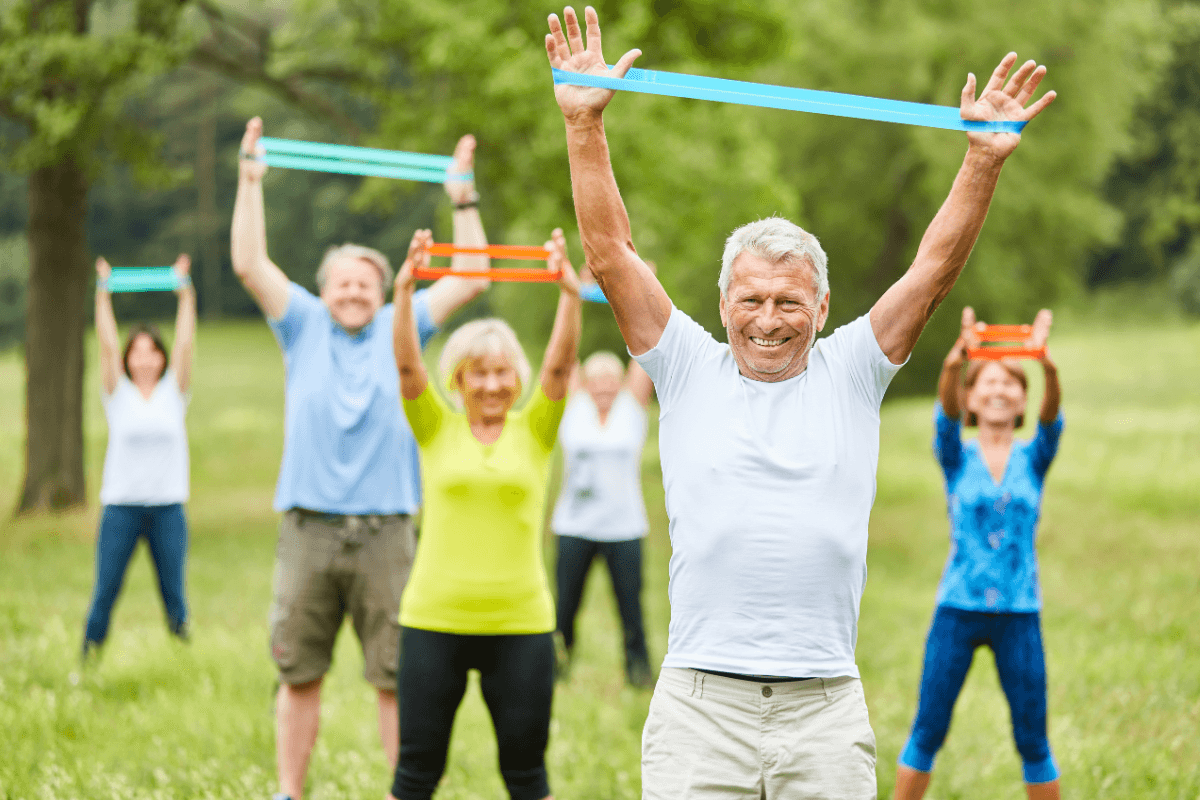
Use national senior health and fitness day to spotlight safe movement, social connection, and practical screenings. This guide shows how to plan inclusive events, choose scalable exercises, and keep older adults engaged year-round.
Key Takeaways
- Inclusive planning first: match activities to mobility, vision, and stamina.
- Small group formats help safety, coaching, and social connection.
- Balance and walking work best when tracked and celebrated.
- Screenings add value if privacy and follow-up are clear.
Why Movement Matters in Later Life
Regular physical activity supports cardiovascular endurance, glucose control, and mood. In clinical terms, aerobic work and resistance training help cardiorespiratory fitness and muscular strength. In everyday terms, it makes stairs easier, steadies balance, and boosts confidence. For joint safety and fall prevention, see Bone and Joint Health Awareness for evidence-based strength ideas and injury prevention guidance.
Older adults benefit from steady, moderate exercise most days, with strength and balance at least twice weekly. For dosage specifics and age-friendly examples, the CDC outlines older adult activity benchmarks in its physical activity guidance. Heart health also matters during planning; for context on cardio-metabolic risk ties, see National Diabetes Heart Connection Day to align movement with prevention messaging.
Planning for National Senior Health and Fitness Day
Start by confirming space, access, and supervision. Choose an accessible venue, ensure bathrooms and seating, and plan hydration. Build a simple flow: welcome, warm-up, rotating stations, cool-down, and social time. Keep station instructions large-print and picture-based for easy understanding.
Match activities to common mobility ranges. Offer chair-based options alongside standing circuits, and color-code intensity levels. Recruit volunteers to cue posture and pace. For intergenerational sessions or family participation, review Family Health and Fitness Day for small-group formats that encourage shared movement and support.
Key Dates and Event Themes
People often ask, when is national senior health and fitness day. The observance typically falls on the last Wednesday in May each year. In 2025, the day is May 28; in 2026, it lands on May 27. Confirm the date locally, since partner venues may shift schedules to weekdays with the best turnout.
Pick one unifying theme to guide visuals and programming. Examples include balance and fall prevention, brain-body fitness, or walking for heart health. A clear theme reduces planning friction and helps attendees choose sessions. When diabetes is common in your community, pull in ideas from Managing Geriatric Diabetes to align snacks, pacing, and medication timing with safe activity.
What to Do in 2025
Use national senior health and fitness day 2025 to launch practical, habit-forming routines. Plan a starter calendar that mixes balance drills, short walks, and light strength twice weekly. Keep sign-ups simple and commit to short sessions, then build momentum from success.
Address cognitive and social needs with memory-friendly cues and conversation breaks. Tie your theme to existing awareness moments to earn partnerships and speakers. For example, program a brief brain-health talk and reference World Alzheimer’s Day to connect movement with cognitive well-being in plain language.
Looking Ahead to 2026
Evaluate this year’s program and set one upgrade for the 2026 observance. Improve signage, add a quiet space, or expand chair options. Ask participants what felt hardest and most fun, then scale the winning elements.
Build continuity through a simple challenge that bridges years. A monthly balance or steps tracker keeps people engaged. Recognize consistent participation with certificates or low-cost tokens. Invite returning volunteers to mentor newcomers and keep knowledge in the community.
Activity Ideas and Safe Exercise
Choose national senior health and fitness day activities that scale across abilities. Offer three levels for each station: seated, supported standing, and independent. Keep repetition ranges low and coach slow, controlled movement. Add music at a conversational volume to support pacing without overpowering cues.
Mix formats to reduce fatigue and boredom. Circuit blocks can pair light resistance with coordination drills, followed by breathing and flexibility. Consider a brief nutrition corner that reinforces portion awareness. For weight-management context that fits senior needs, see Top 10 Weight Loss Tips That Actually Work for simple, sustainable behavior ideas your team can adapt.
Exercise Modules and Progressions
Build senior fitness day exercises as short, repeatable modules. Example sets include a five-minute warm-up, an eight-minute strength block, a six-minute balance block, and a gentle cool-down. Keep instruction cues consistent across modules, and reserve time to practice transitions safely.
If diabetes is prevalent, remind participants to monitor symptoms and act on low-glucose signs. Where appropriate, a testing table can be offered privately. For people who self-monitor, the Bayer Contour Test Strips page explains compatible strips and may help participants plan safe pre-activity checks. For medication timing and exercise considerations, see Common Diabetes Medications and How They Work to coordinate schedules with movement blocks.
Balance and Fall-Prevention Work
Center one block on balance exercises for seniors to reduce fall risk. Start with posture alignment at a wall, then add weight shifts, staggered stances, and heel-to-toe walking. Provide a sturdy chair or rail for contact support. Emphasize a soft gaze and slow breathing to reduce dizziness.
Vision and sensation shape balance, so integrate safe lighting and large-print signs. Encourage participants to wear supportive footwear and bring glasses. For a deeper look at fall burden and prevention strategies, review the CDC’s falls prevention facts. Also consider vision screenings; the guide on Diabetic Eye Disease Month outlines risk factors and may inform referral pathways after your event.
Walking and Social Challenges
Design senior walking challenge ideas that emphasize connection over competition. Create small walking pods with a flexible pace and clear routes. Use time-based goals, like 10–15 minutes, rather than distance for inclusivity. Celebrate consistency weekly with a shared board or simple tokens.
Discuss hydration, medications, and heat exposure before walks. Offer shaded rest points and a check-in buddy system. If nutrition support is part of the program, the Glucerna 1.2 Cal Vanilla listing shows a medical nutrition option some clinicians recommend for glycemic control; use this context to frame snack choices. For medication planning around activity, direct learners to Common Diabetes Medications and How They Work for non-technical explanations.
Organizing a Community Health Fair
Use how to host a senior health fair as a practical checklist theme. Start with quiet registration, consent signage, and privacy screens for screenings. Offer brief, actionable education at each station to avoid crowding. Provide print handouts in large font with plain-language summaries and follow-up resources.
Choose screenings that fit your staffing and scope. Blood pressure, fall risk, and medication brown-bag reviews work well in community settings. If your audience includes many with chronic conditions, link programming to reliable health literacy resources. Browse the General Health library for plain-language articles you can adapt to handouts. For group exercise tie-ins, see Family Health and Fitness Day for ideas that convert fairs into ongoing classes.
Recap
Effective programming starts with access, safety, and small wins. Choose a clear theme, scale activities across abilities, and keep sessions short. Track progress, celebrate consistency, and connect people to ongoing classes. When in doubt, simplify instructions and prioritize supervision.
Tip: Confirm local dates and partnerships early, then publish your plan in large-print flyers and community newsletters to build steady engagement.
For additional context across aging and chronic conditions, you can also consult World Diabetes Day 2025 to align messaging and GLP-1 Medications for a broad view of weight and metabolic health.
Note: The CDC provides accessible overviews of activity needs for older adults in its older adult activity basics, which can help refine intensity and session length.
This content is for informational purposes only and is not a substitute for professional medical advice.


