
National senior health and fitness day is an annual observance focused on safe movement, health education, and social connection for older adults. It is usually held on the last Wednesday in May, and many communities use it to host walking groups, balance classes, screenings, and senior wellness events.
The goal is simple: help older adults move more safely, feel less isolated, and connect with practical health resources. For families, caregivers, senior centers, and community organizers, the day works best when activities are accessible, short, supervised, and easy to repeat after the event ends.
Key Takeaways
- Usual timing: The observance falls on the last Wednesday in May.
- Access comes first: Plan around mobility, vision, hearing, stamina, and rest needs.
- Best activities: Walking, chair exercise, balance practice, light strength work, and health education.
- Safety matters: Use warm-ups, hydration, clear routes, seated options, and trained helpers.
- Lasting benefit: Turn one event into weekly habits and social routines.
What National Senior Health and Fitness Day Is
National senior health and fitness day highlights older adult health and wellness through local events. Senior centers, parks departments, retirement communities, faith groups, clinics, and family caregivers may all take part. Events can be small, such as a 20-minute walking group, or larger, such as a community health fair.
The day also sits near broader spring health campaigns, including Older Americans Month and National Physical Fitness and Sports Month. That timing makes it useful for discussing exercise for seniors, preventive care, nutrition, fall risk, and social support without making the event feel clinical.
For 2026, national senior health and fitness day is expected on Wednesday, May 27. Local venues may choose nearby dates if weather, staffing, or transportation works better. Confirm dates with your senior center, clinic, or community group before publishing flyers.
Why it matters: A well-planned event can make movement feel safer, more social, and more realistic.
Why Movement Matters in Later Life
Regular activity can support cardiovascular fitness, muscle strength, balance, mood, and daily independence. In plain language, it may make stairs easier, improve confidence while walking, and help people keep doing everyday tasks.
Older adults do not need intense workouts to benefit. Many people start with short, moderate sessions, then add time gradually. Moderate activity usually means breathing faster while still being able to speak in short sentences. Strength and balance work also matter because muscle loss and fall risk often increase with age.
Health status changes the plan. People living with heart disease, diabetes, neuropathy, arthritis, dizziness, recent surgery, or repeated falls may need tailored guidance. A clinician or physical therapist can help match activity type and intensity to the person’s current health. For joint protection and safe movement themes, the article on Body Mass Index explains why one measurement alone cannot define health or fitness.
For organizers, the key message is not performance. It is participation. Short movement breaks, supported standing, chair routines, and slow walking routes can serve more people than a single high-energy class.
Planning an Inclusive Event
A strong event starts with access, not the activity list. Before choosing sessions, confirm the space, bathroom access, seating, lighting, floor surface, parking, and transportation options. Clear pathways reduce trip hazards. Large-print signs reduce confusion. Quiet areas help people who tire easily or feel overstimulated.
Build a simple flow. Start with registration, a welcome, a gentle warm-up, two or three short activity stations, a cool-down, and social time. Keep sessions brief, often 10 to 20 minutes, so attendees can rest between activities. Volunteers should know where water, chairs, first aid supplies, and exits are located.
Use three activity levels whenever possible. A seated version helps people with limited balance. A supported standing version works well near a chair, wall, or rail. An independent version gives mobile participants more challenge. This structure avoids separating people by ability while still respecting safety.
Practical setup checklist
- Clear routes: Mark entrances, exits, bathrooms, and rest areas.
- Visible instructions: Use large print and simple pictures.
- Hydration plan: Offer water before, during, and after sessions.
- Rest options: Place chairs near every activity station.
- Volunteer roles: Assign greeters, walkers, station helpers, and safety monitors.
- Emergency plan: Know who calls for help and where supplies are stored.
If families or grandchildren will attend, keep the tone supportive rather than competitive. The ideas in Family Health and Fitness Day can help organizers adapt group movement for different ages and abilities.
National Senior Health and Fitness Day Activities That Work
The best national senior health and fitness day activities are easy to explain, easy to scale, and safe to repeat. They should also feel enjoyable. Social connection is often the reason people return.
Walking groups are a good starting point. Choose a flat route with shade, benches, and clear turnaround points. Time-based goals, such as 10 minutes out and 10 minutes back, are often more inclusive than distance goals. Pair walkers with a buddy, and allow different pace groups.
Chair exercise is useful for large mixed-ability groups. Movements may include ankle circles, seated marching, gentle arm reaches, shoulder rolls, and sit-to-stand practice when appropriate. Keep music low enough so instructions remain easy to hear.
Balance stations deserve special attention. Start with posture, weight shifts, and supported heel raises. Progress only when participants feel steady. Use chairs, walls, rails, or parallel support points. Avoid eyes-closed drills in public events unless a trained clinician is supervising closely.
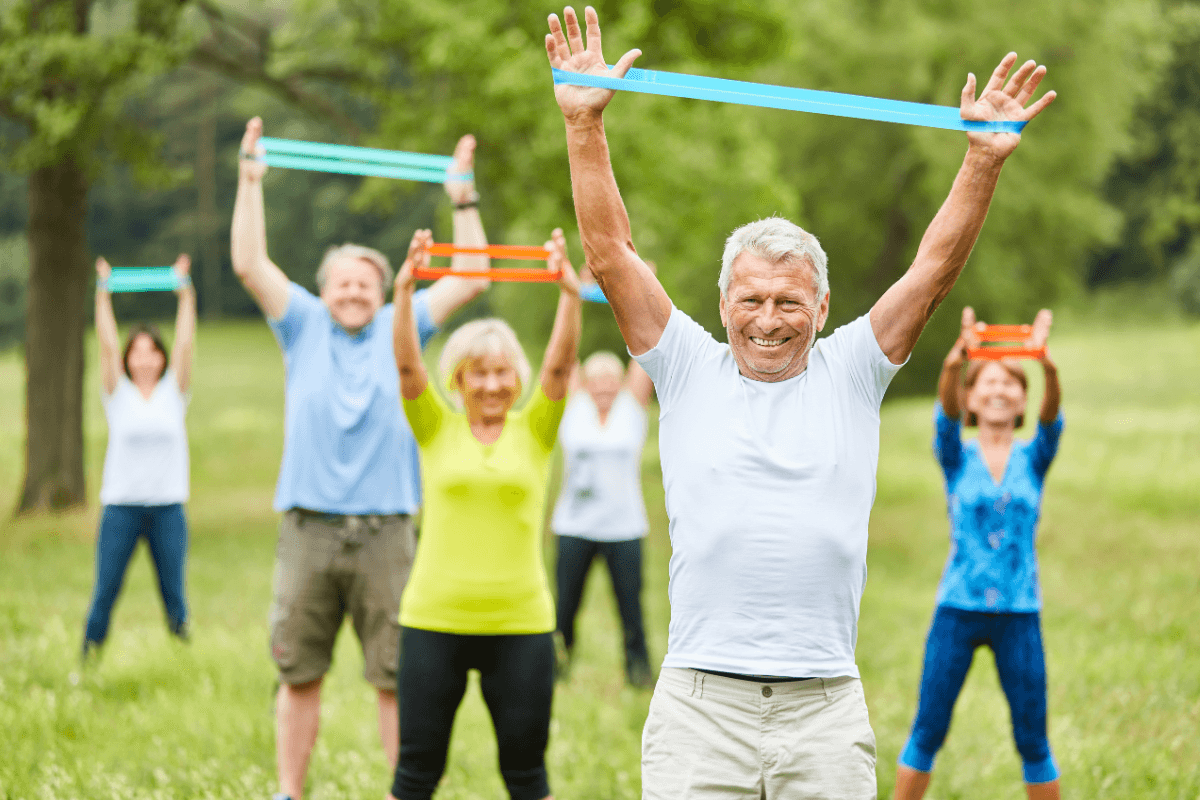
Light strength work can use resistance bands, small hand weights, or body weight. Focus on controlled movement rather than speed. Examples include wall push-ups, supported mini-squats, seated rows with a band, and gentle step-taps. Stop a movement if pain, chest discomfort, unusual shortness of breath, faintness, or new weakness occurs.
Nutrition and wellness corners can add value without overwhelming the day. Short stations may cover hydration, label reading, protein at meals, medication lists, or how to prepare for appointments. For broader health topics for senior citizens, the General Health collection can support follow-up reading after the event.
Safety Checks Before People Start Moving
Safety planning protects participants and volunteers. It also makes the event feel more welcoming. Ask attendees to choose the level that feels steady that day, not the hardest level available.
Encourage comfortable shoes, weather-appropriate clothing, glasses or hearing aids if used, and any usual walking aid. People who use canes, walkers, or rollators should not be asked to leave them aside for group activities. The device is part of safe participation.
Medication timing can matter, especially for people who take medicines that may affect blood pressure, blood glucose, balance, or alertness. Organizers should not advise dose changes. Instead, remind participants to follow their care plan and bring questions to their healthcare team. People with diabetes who are prone to low blood glucose may need an individualized plan for food, monitoring, and activity.
Fitness intensity should stay conservative at community events. One simple method is the talk test. If someone cannot speak comfortably during a session, the pace may be too hard for that setting. Heart-rate targets can be useful for some adults, but they are not suitable for everyone, especially people taking medicines that affect heart rate.
This calculator can help estimate general exercise heart-rate zones. It does not replace clinical guidance or account for every health condition.
Target Heart Rate Calculator
Estimate exercise heart-rate zones using age, resting heart rate, and the Karvonen method.
These calculations are for education only and do not replace clinical advice, diagnosis, or treatment. Always confirm medical decisions with a qualified healthcare professional.
Quick tip: When in doubt, shorten the session and add more rest breaks.
Ideas for 2026 and Year-Round Senior Wellness Events
National senior health and fitness day 2026 can be more than a one-day program. Use it as a launch point for a simple, repeatable calendar. Weekly walking pods, monthly balance classes, and seasonal health talks are easier to sustain than one large event with no follow-up.
Choose one theme to focus planning. Strong themes include fall prevention, heart-healthy walking, strength for daily tasks, brain-body movement, or social fitness. A theme helps volunteers choose activities and helps attendees understand what they will gain.
For national senior health and fitness day ideas, consider rotating stations instead of long lectures. A sample 90-minute event might include a welcome, a five-minute warm-up, a walking route, a balance station, a chair exercise station, a blood pressure education table, and a social snack period. Keep handouts brief and readable.
Community health fairs can work well when privacy is respected. Blood pressure education, medication list reviews, fall-risk conversations, nutrition displays, and local service referrals are common options. Screenings should have clear consent, private space, and follow-up instructions. Avoid collecting more health information than the event can handle safely.
Social events also count. A dance sampler, garden walk, gentle yoga demonstration, or intergenerational park day can reduce isolation. Memorial or remembrance events may also include gentle walking and community support; the article on Memorial Day Health offers ideas for connecting reflection with wellness.
Food access and nutrition can be sensitive topics for older adults. Some attendees may live alone, have dental problems, manage diabetes, or face limited budgets. If your event includes meals or snacks, offer simple choices and avoid shaming language. For awareness and education planning, Malnutrition Awareness Week can help frame nutrition as a health and support issue, not a personal failing.
Turning One Fitness Day Into Ongoing Habits
One event can spark interest, but habits need structure. Before people leave, give them a next step. That might be a walking group schedule, a chair class sign-up sheet, a balance handout, or a contact for local senior programs.
Tracking should be simple. Use checkmarks for attendance, minutes walked, or days with balance practice. Avoid ranking participants by speed, weight, or distance. Celebrate consistency, safe participation, and mutual support.
Caregivers can help by reducing friction. Place walking shoes near the door, choose a regular walking time, arrange transportation, or join the first class. For older adults who feel nervous, a familiar person can make the first session less intimidating.
Organizers should review what worked. Ask three short questions: What felt useful, what felt difficult, and what would you attend again? Then adjust the next event. Small improvements, such as better signage or more chairs, may matter more than adding new stations.
Authoritative Sources
The Physical Activity Guidelines for Older Adults summarize national recommendations for aerobic, strength, balance, and multicomponent activity.
The CDC overview of older adult falls explains why fall prevention is a major public health priority for aging adults.
The National Institute on Aging exercise resources provide practical information on endurance, strength, balance, and flexibility activities.
Recap
National senior health and fitness day works best when it is practical, inclusive, and connected to real life. Confirm the date, choose an accessible location, scale every activity, and build in rest. Use walking, chair exercise, balance work, light strength training, and wellness education to meet different needs.
The most useful events do not end at the door. They point people toward ongoing classes, social groups, caregiver support, and trusted health information. Keep the message clear: safe movement and connection can support older adult health and wellness at any age.
This content is for informational purposes only and is not a substitute for professional medical advice.