
Please note: a valid prescription is required for all prescription medication.
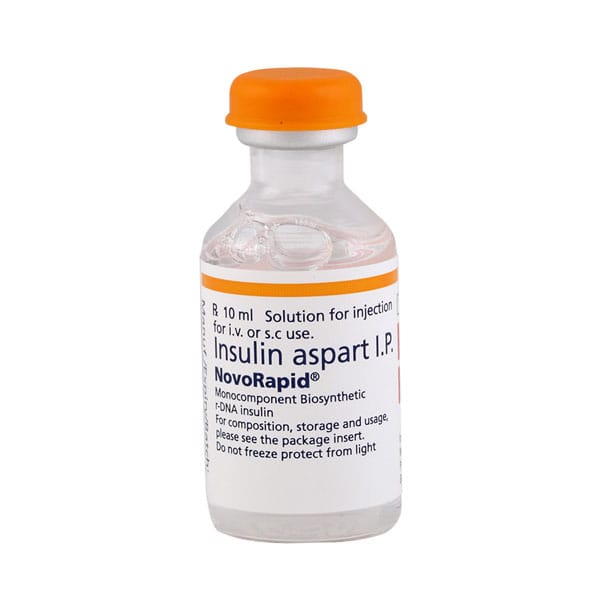
NovoRapid Vial
NovoRapid Vial: How to Buy and Use It Safely
Also available for your pet.
Price:
$80.99
You save


This page helps patients review how NovoRapid Vial is typically ordered, what it is used for, and the main safety points to know before moving ahead. It is a rapid-acting insulin aspart product used around meals in people with diabetes, and it requires prescription oversight.
It is written for people comparing whether this 10 mL vial format fits their treatment plan, what practical requirements may apply, and what handling issues matter first.
How to Buy NovoRapid Vial and What to Know First
NovoRapid is a mealtime insulin. It starts working quickly, so fit with meals, monitoring, and dose instructions matters before a refill or first order is pursued. This service functions as a prescription referral platform, with dispensing handled by licensed partner pharmacies where permitted.
Because this is a rapid-acting insulin, small handling differences can matter. A patient changing from pens, a pump cartridge, or regular insulin should make sure the prescribed container, syringe type, and timing plan all match before the product is supplied. That reduces mix-ups between rapid-acting and long-acting insulin, which can be serious.
Before pursuing this vial presentation, it helps to confirm the prescribed presentation, the intended delivery method, and whether a syringe or pump setup is part of the plan. Some patients explore US delivery from Canada when prescription review, eligibility, and local rules align. Patients who want to compare similar products can also browse Insulin Products for other insulin categories.
The page is meant to support an ordering decision, not replace diabetes training. Before the product is pursued, patients should know whether the prescription is for brand-specific insulin aspart, whether the strength matches existing supplies, and whether the care plan involves meals, correction dosing, or pump reservoirs. Those details are practical, but they also affect safety.
Who It’s For and Access Requirements
This rapid-acting insulin may be used in adults and children with diabetes when a clinician has determined that mealtime insulin is needed. NovoRapid Vial may be considered for adults and children with Type 1 Diabetes and for some people with Type 2 Diabetes who need meal-related glucose control.
The vial presentation can make sense for people who draw doses with a syringe or fill certain insulin pump reservoirs under device-specific instructions. It may be less practical for patients who prefer a ready-to-use pen system, who have difficulty measuring doses from a vial, or whose clinician has selected a different rapid-acting insulin. A valid prescription is generally required, and product verification may be needed before supply can be arranged.
This format may also be useful for households that prefer a multidose vial for measured syringe use. It may be less practical for people with limited hand dexterity or vision unless a clinician or diabetes educator has confirmed the technique and tools. Presentation choice is not just convenience; it can affect measurement accuracy and day-to-day adherence.
In practice, access often depends on matching the prescription to the exact presentation. A clinician may specify brand name, insulin type, concentration, and container because switching between vials, cartridges, and pens can change how the dose is prepared and delivered.
Dosage and Usage
Dosing is individualized. In general, insulin aspart is used close to mealtime because it acts faster than regular human insulin. Exact timing, total daily insulin plans, and dose adjustments should come from the prescribing clinician and the local product label.
For vial use, the medicine is typically drawn up with a U-100 insulin syringe unless a pump system has been specifically prescribed and the device instructions support this presentation. Patients switching from a pen should note that a vial changes the delivery method, not just the container.
Patients using this vial for pump therapy need the pump manual and local label to match the prescribed insulin. Reservoir fill technique, tubing changes, and interruption troubleshooting are device-specific, so a pump trainer or diabetes educator often reviews those steps separately. The vial itself does not replace pump training.
Quick tip: Check the label, insulin type, and that the solution looks clear and colorless before each use.
- Meal timing matters: rapid-acting insulin is usually linked to meals.
- Site rotation helps: abdomen, thigh, or upper arm use may reduce skin problems.
- Monitoring remains important: review Blood Sugar Monitoring and record patterns for clinician review.
- Device basics differ: this format is useful to compare with Insulin Pen Vs Syringe options.
- Pump use varies: follow pump-specific instructions when a vial is prescribed for that purpose.
Needles, syringes, and pump supplies should not be shared. If a dose is missed, a meal is delayed, or glucose readings are out of range, the safest next step is to follow the clinician’s written plan rather than improvise a catch-up dose.
In routine daily use, blood glucose patterns, meal size, illness, and exercise can all shift insulin needs. That is why refill questions and use questions are closely tied together on a product page like this one: the right format only helps if the timing and monitoring plan are already established.
People using more than one insulin should also keep the names and roles of each product clear. Mealtime insulin is not the same as basal insulin, and routine mix-ups can lead to unexpected highs or lows. Keeping the vial stored separately from long-acting insulin may help reduce selection errors.
Strengths and Forms
Yes, NovoRapid Vial is offered as a 10 mL multidose container at 100 IU/mL. That means each vial contains 1000 units of insulin aspart in total. Availability can vary by market, and packaging details can differ slightly across jurisdictions.
| Feature | What to know |
|---|---|
| Active ingredient | Insulin aspart, a rapid-acting insulin analogue |
| Strength | 100 IU/mL |
| Container | 10 mL multidose vial |
| Main role | Meal-related insulin coverage as prescribed |
| Delivery options | Usually syringe use, and sometimes pump use if specifically prescribed |
As a multidose glass container, this format needs clean technique each time it is entered. The stopper should be handled according to the supplied instructions, and the vial should be protected from dropping or cracking. If contamination is suspected, replacement is usually safer than continued use.
If the main question is whether the vial is the same medicine as a cartridge or pen, the answer is often yes for the active ingredient and strength, but not for the delivery workflow. The correct syringe, compatible device, and measurement process still have to match the prescribed format.
This medicine is also available in other delivery formats in some markets, such as cartridges or prefilled pens. If presentation choice is the main question, the Insulin Cartridges guide can help explain compatibility and handling differences.
Storage and Travel Basics
Insulin quality depends on proper temperature control. Unopened vials are usually kept refrigerated and should not be frozen. Once a vial is in use, room-temperature limits and discard timing should follow the current label supplied with the product.
Keep the vial away from direct heat and sunlight. For travel, use an insulated medication carrier rather than placing insulin directly on ice. Store it where the label remains readable and where breakage is less likely, especially during long commutes or flights.
Because a vial is glass, carrying supplies in a protective case can help prevent cracks, contamination, or lost doses. If the solution becomes cloudy, discolored, or contains particles, it should not be used unless the local label explicitly says otherwise.
Marking the date a vial is first opened can help prevent accidental use beyond the allowed in-use period. That timing should always follow the current package information that comes with the product actually supplied.
Travel plans should also include backup needles or syringes, a copy of the prescription, and a way to monitor glucose if a bag is delayed. For pump users, extra infusion supplies and a backup insulin-delivery plan are often part of standard travel preparation.
Side Effects and Safety
The most important risk with any mealtime insulin is hypoglycemia, or low blood sugar. It can happen if food intake is delayed, physical activity increases, a dose is too high, or another glucose-lowering medicine changes the balance. Symptoms may include sweating, shakiness, hunger, headache, palpitations, irritability, or confusion.
Why it matters: Low blood sugar can develop quickly with mealtime insulin and needs prompt attention.
Other side effects can include injection-site redness, itching, mild swelling, or skin thickening or dimpling after repeated use in the same area. Weight change and fluid retention can occur in some treatment settings, especially when insulin plans change or other diabetes medicines are added.
Repeated use of the same injection area can change the fat tissue under the skin, leading to lumps, thickening, or hollowed areas. Insulin absorbed from those areas may act less predictably, so rotating sites matters for both comfort and consistency.
Serious problems need urgent medical review. These include severe hypoglycemia with disorientation or loss of consciousness, signs of a generalized allergic reaction such as trouble breathing or widespread rash, or symptoms that may suggest low potassium such as unusual weakness or muscle cramps. Patients using pumps should also watch for rising glucose if insulin delivery is interrupted.
Very high glucose despite taking a rapid-acting dose can point to spoiled insulin, incorrect technique, pump delivery problems, or illness. That type of pattern should be reviewed promptly, especially when ketones are part of the sick-day plan.
Patients and caregivers should also know the difference between mild symptoms and an emergency. Trouble swallowing, seizures, loss of consciousness, or inability to take fast-acting carbohydrate safely need urgent care, not routine self-monitoring alone.
Drug Interactions and Cautions
Many medicines and situations can change insulin needs. Other diabetes drugs, corticosteroids, some blood pressure medicines, thyroid medicines, and alcohol can all affect glucose control. Beta-blockers may also make low-blood-sugar symptoms less obvious for some patients.
Caution is also needed when meals become irregular, kidney or liver function changes, or physical activity increases sharply. These factors do not automatically rule out insulin aspart, but they can change monitoring needs and the dose plan.
Pregnancy, breastfeeding, acute illness, and planned surgery are all situations where insulin regimens may need closer review. The safest approach is to use the prescriber’s current instructions and keep an updated medication list available for every clinical visit.
Switching between insulin products without clear instructions can also change how quickly a dose starts working. Even if the total units look similar on paper, onset and meal timing may not be the same across products or formulations.
Compare With Alternatives
For patients comparing mealtime options, NovoRapid Vial and cartridges contain the same active ingredient but differ in device compatibility. A vial often suits syringe users or certain pump systems, while a cartridge is built for specific reusable pens. The related NovoRapid Cartridge page may help when the main decision is container type rather than insulin choice.
Regular human insulin is another alternative, but it has different timing characteristics. A product such as Humulin R is usually taken earlier before meals and is not interchangeable on a one-size-fits-all basis. That timing difference matters for routines, meal predictability, and hypoglycemia planning.
| Option | Main difference | Who it may suit |
|---|---|---|
| Vial format | Measured with a syringe or used with certain pump reservoirs | Patients already trained on vial handling |
| Cartridge format | Fits specific reusable pen devices | Patients who prefer pen-based dosing |
| Regular human insulin | Usually slower meal timing than insulin aspart | Patients whose clinician selected a different bolus profile |
A vial can also be easier to pair with dose-measuring routines that already use syringes, while pen systems can be more portable for some users. Neither format is automatically better; the fit depends on dexterity, travel habits, training, and whether pump use is part of the plan.
Long-acting basal insulins serve a different role. They cover background insulin needs and do not replace a mealtime insulin on their own when bolus coverage is required. The right comparison depends on whether the goal is easier device handling, faster meal coverage, or a different overall insulin plan.
Prescription, Pricing and Access
When evaluating NovoRapid Vial access, the main issues are a valid prescription, product verification, local rules, and whether coverage or cash-pay options apply. When required, prescription details can be confirmed with the prescriber before partner-pharmacy fulfilment. Patients looking at ongoing supply can also review Promotions for stable site updates rather than time-limited deal language.
Coverage policies may ask for the exact brand or for proof that the prescribed presentation is medically appropriate. That matters more with insulin than with some tablets because device compatibility, training, and daily routine can all depend on the container selected.
Costs can differ based on jurisdiction, pack configuration, insurance status, and whether a person is paying without insurance. This page cannot predict approval, final availability, or out-of-pocket totals. It can, however, help patients understand the vial format, the prescription steps, and the documentation that may matter before moving ahead.
For people paying directly, the practical questions often involve refill frequency, documentation, and whether the prescription needs renewal before the next supply request. Those steps vary by prescriber, jurisdiction, and partner pharmacy rules.
For some people, the practical access question is not whether insulin aspart is appropriate in general, but whether this specific 10 mL vial matches the prescribed delivery method and refill pattern. That is especially relevant for patients transitioning from pens, using pump reservoirs, or comparing refill logistics across pharmacies and jurisdictions.
Coverage review may also depend on whether the prescription is written for a vial specifically or for insulin aspart more generally. If clarification is needed, confirming the intended presentation early can prevent delays linked to mismatched paperwork or device assumptions.
Authoritative Sources
- For official consumer instructions, review the Novo Nordisk Canada consumer information.
- For product and safety details, see the NovoRapid consumer medicine information.
- For general background on rapid-acting insulin, read the NHS overview of rapid-acting insulin.
Where permitted and after verification steps are complete, product handling may involve prompt, express, cold-chain shipping.
This content is for informational purposes only and is not a substitute for professional medical advice.
Customer Reviews
4.8 Based on 18 Reviews
Write a Review Ask a Question - Reviews
- Questions
Filter Reviews:
NK
06/13/2024
Norita K.  US
USSupport on Board
I was thrilled to have Canadian Insulin. Where I live there is a shortage of Novolog and other types of insulin. I was barely able to get 2 vials even though my RX was more than twice of that. All the pharmacies are on back orders. This has never happened in all my 58 years of having type 1 diabetes. I am so grateful for Canadian Insulin’s excellent customer service. Everything was just as what was described. A superb company. I have let other people who have or know people with diabetes. I have also recommended it to other healthcare place share it with patients or clients.
06/14/2024
CanadianInsulin.com
Hi Norita,Thank you for sharing your positive experience! We're thrilled to hear that we could assist you during a time of shortage and that you found our customer service excellent. It means a lot to us that you’ve recommended our service to others and healthcare providers. If you have any questions or need further assistance, please don't hesitate to reach out. We're here to support you.Thank you for choosing Canadian Insulin. Have a great day!
MT
12/19/2023
Michael T. USI recommend this product
Type 1 Diabetic using Novolog
We love working with Canadian Insulin. They are a life saver.
12/27/2023
CanadianInsulin.com
Hi Michael,We appreciate your kind words and we are thrilled to hear that you had a great experience with our service. It's always our goal to ensure a smooth and hassle-free experience for our customers.Thank you for supporting Canadian Insulin! We look forward to serving you again in the future.Have a great day!
RW
12/06/2023
Robert W. USI recommend this product
Insulin
Always the best!
12/15/2023
CanadianInsulin.com
Hi Robert, , We appreciate your kind words and we are thrilled to hear that you had a great experience with our service. It's always our goal to ensure a smooth and hassle-free experience for our customers.We look forward to serving you again in the future.Have a great day!
JB
07/14/2023
James B. USI recommend this product
Not Good…shipping takes 6 days
Purchased 3 months supply. Package shipped 7/6 via ground, didn’t arrive until 7/12 and all insulin was warm. Not Good! Great product, poor service.
07/26/2023
CanadianInsulin.com
Hi James,Thank you for bringing this matter to our attention. We sincerely apologize for the inconvenience and frustration you have faced. We understand the importance of timely delivery and keeping the medication cold for optimal effectiveness.We will take immediate action to improve our prescription process and address the issues you've raised. To do so, we'll assign someone to get in touch with you to gather more details and offer suitable resolution.We appreciate your patience and looking forward to resolving this matter to your satisfaction.
AJ
06/30/2023
Alyx J. USI recommend this product
Successful Transaction
Got my order without any disruption. Everything was intact & was retrieved at a decent amount of time.
07/11/2023
CanadianInsulin.com
Hello Alyx,Thank you for taking the time to share your feedback regarding your recent transaction. We appreciate your kind words and are thrilled to hear that everything went smoothly.We look forward to serving you again in the future.Have a great day!
Express Shipping - from $25.00
Shipping with this method takes 3-5 days
Prices:
- Dry-Packed Products $25.00
- Cold-Packed Products $35.00
Standard Shipping - $15.00
Shipping with this method takes 5-10 days
Prices:
- Dry-Packed Products $15.00
- Not available for Cold-Packed products
Does NovoRapid come in vials?
Yes. NovoRapid is available in a 10 mL multidose vial presentation at 100 IU/mL in relevant markets. The vial contains insulin aspart, a rapid-acting mealtime insulin. Packaging and country-specific labeling can differ, so the exact supplied pack may vary by jurisdiction. A vial format is commonly used with U-100 insulin syringes and may also be used in certain insulin pumps when specifically prescribed and device instructions allow.
How are NovoRapid vials used?
NovoRapid vials are generally used by drawing the prescribed dose into a U-100 insulin syringe for subcutaneous injection, or by filling certain pump reservoirs when that use has been specifically prescribed. The solution should be clear and colorless before use. Because it is a rapid-acting insulin, timing around meals matters. Site rotation, glucose monitoring, and not sharing needles or syringes are standard safety steps. Exact dose and timing must follow the prescriber’s instructions.
What is the difference between NovoRapid Penfill and a vial?
The main difference is the container and delivery method, not usually the active ingredient. A Penfill cartridge is designed for compatible reusable insulin pens, while a vial is commonly used with a syringe and may also be used with certain insulin pumps if prescribed. That affects portability, dose preparation, and device compatibility. A prescription may need to specify the presentation clearly, because cartridges, pens, and vials are not always substituted automatically.
What is the 3-hour rule in diabetes?
The 3-hour rule is not a standard dosing rule for NovoRapid itself. People often use that phrase when talking about sick-day management, ketone checks, or repeat glucose checks after high readings, especially in type 1 diabetes. The correct timing depends on the individual’s diabetes plan, ketone history, and clinician instructions. Because rapid-acting insulin problems can evolve quickly, any personal 3-hour guidance should come from the written sick-day plan rather than from a general product description.
What signs suggest blood sugar may be too low with insulin aspart?
Possible signs of low blood sugar include sweating, shakiness, hunger, headache, dizziness, fast heartbeat, irritability, confusion, or blurred vision. Symptoms can develop quickly with mealtime insulin. Severe hypoglycemia may involve disorientation, seizures, or loss of consciousness and needs urgent medical attention. Some people notice warning signs less clearly than others, especially if they use certain medicines such as beta-blockers. A clinician’s monitoring and treatment plan is important whenever rapid-acting insulin is prescribed.
What should be discussed with a clinician before using insulin aspart?
Useful points to review include meal timing, current diabetes medicines, recent low-blood-sugar episodes, kidney or liver problems, pregnancy status, travel plans, and whether the prescribed format is a vial, pen, or cartridge. Patients using or considering a pump should also confirm device compatibility and backup plans for interruptions. It is also helpful to discuss sick-day rules, ketone monitoring if relevant, and what to do if a meal is delayed or missed after a dose has been prepared.
Rewards Program
Earn points on birthdays, product orders, reviews, friend referrals, and more! Enjoy your medication at unparalleled discounts while reaping rewards for every step you take with us.
You can read more about rewards here.
POINT VALUE
How to earn points
- 1Create an account and start earning.
- 2Earn points every time you shop or perform certain actions.
- 3Redeem points for exclusive discounts.
You Might Also Like
Select options
This product has multiple variants. The options may be chosen on the product page
Select options
This product has multiple variants. The options may be chosen on the product page
Select options
This product has multiple variants. The options may be chosen on the product page
Related Articles
Type 2 Diabetes,
Generic Liraglutide For Weight Loss: A Practical Guide
People searching for generic liraglutide for weight loss usually want clear answers on three points: whether an approved lower-cost version exists, how it differs from brand-name products, and what access…
Type 2 Diabetes,
Liraglutide Vs Semaglutide Comparison Guide For Patients
Key Takeaways People searching liraglutide vs semaglutide usually want a practical comparison, not a slogan. The most useful differences involve formulation, schedule, approved uses, side effect patterns, and the paperwork…
Weight Management
Generic Zepbound: Availability, Status, and Options
Key Takeaways Patients and caregivers often search for generic zepbound when they need a clear answer about availability, labeling, and lower-cost access. The term is common online, but it does…
Type 2 Diabetes,
Oral Wegovy Explained: Facts, Risks, and Access Options
The phrase oral wegovy is best understood as a search term, not a settled product name. Most people use it to mean a pill version of semaglutide for weight management,…