
Please note: a valid prescription is required for all prescription medication.
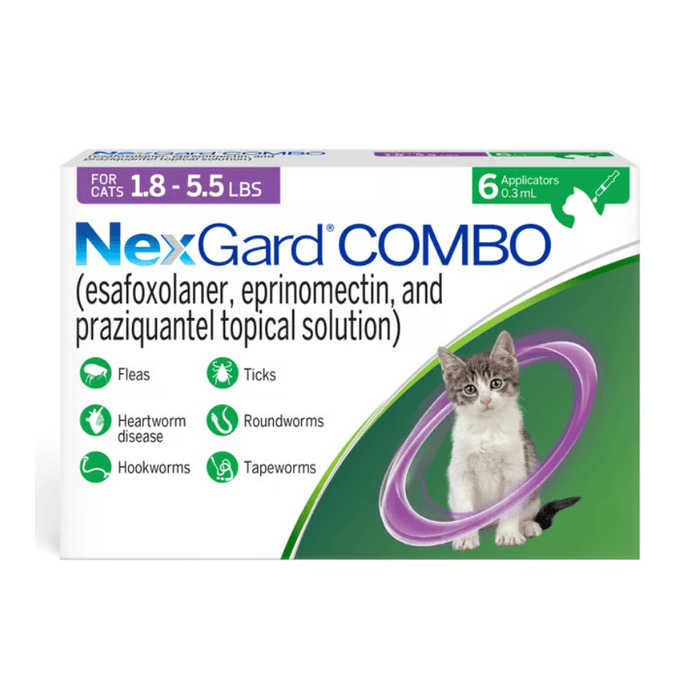
NexGard Combo
NexGard Combo for Cats: Uses, Safety, and Handling
Price:
Price range: $102.99 through $129.99
You save


NexGard Combo is a topical spot-on antiparasitic medicine for cats. It is used for prevention and treatment of certain external parasites and internal parasites based on the product label. This page summarizes how it works, practical use basics, safety considerations, and handling.
Parasite risk can vary by season, region, and lifestyle. Keeping a consistent prevention plan is often part of broader feline wellness care.
What NexGard Combo Is and How It Works
This product is a combination topical treatment designed for feline parasite control. After it is placed on the skin, the active ingredients spread across the skin surface and can be absorbed to provide ongoing protection within the labeled interval. Different components target different parasite groups, which is why combination products may be used when a cat needs broader coverage.
When needed, prescription details are verified with the veterinary prescriber. Some patients explore Ships from Canada to US options when permitted and when local access differs. For a broader view of related items and formats, you can browse the Pet Medications hub and compare categories such as topical preventives and dewormers.
In plain terms, the goal is to reduce parasite burden and lower the chance of parasite-related illness. The label and your veterinarian’s guidance remain the best sources for which parasites are covered in your area and how to coordinate testing, prevention, and follow-up.
Who It’s For
This medicine is intended for cats, and its labeled uses typically include managing common external parasites such as fleas and ticks, plus selected internal parasites. Clinical needs can differ between indoor-only cats and those with outdoor exposure, multi-pet households, or contact with wildlife. Background information on parasite types can be found in resources like Feline Flea Infestation and Feline Tick Infestation.
Some cats also require prevention strategies for vector-borne parasites. If heartworm prevention is part of the plan, your veterinarian may consider local prevalence and testing history; see Feline Heartworm Disease for general context. Internal parasites vary widely, so discussions often include stool testing and exposure history; an overview is available in Feline Intestinal Worm Infestation.
Do not use in species other than cats unless a veterinarian specifically directs it. Cats with a history of medication sensitivity, significant illness, or very young age may need additional screening and a different selection. If your cat has signs that could indicate a parasite problem outside typical coverage, such as persistent coughing, your clinician may also discuss other diagnoses, including conditions described in Feline Lungworm Infection.
Dosage and Usage
Dosing for combination spot-on products is typically weight-based, using a specific applicator size matched to your cat’s current body weight. The schedule is commonly monthly, but you should follow the exact timing on the label and any veterinary instructions based on local parasite risk. NexGard Combo should be used only in cats that meet the label’s age and weight limits, which are listed on the carton and product insert.
Most labels instruct placing the contents directly on the skin, often at the back of the neck, in a location the cat cannot easily lick. Part the fur so the skin is visible, then empty the applicator onto the skin rather than the haircoat. If you are unsure about technique or your cat is difficult to handle, your veterinary team can demonstrate safe restraint and placement.
Quick tip: Keep cats separated until the application site is dry.
If a cat grooms the site or another pet licks the area, mild drooling or stomach upset can occur. Contact your veterinarian if vomiting, lethargy, wobbliness, or unusual behavior develops after dosing. If your household has multiple cats with different weights, confirm each cat receives the correct applicator size to reduce dosing errors.
Strengths and Forms
This medicine is supplied as a spot-on solution in single-use applicators (pipettes). Manufacturers typically provide several size options to align with feline weight ranges, and the correct size is chosen to match the cat’s current weight at the time of dosing. Availability can vary by jurisdiction, and packaging may include multi-dose cartons intended for monthly schedules.
Because combination products contain more than one active ingredient, the overall formulation is not interchangeable with other “flea-only” or “worm-only” treatments. If your veterinarian recommends using other parasite products alongside a combination, confirm whether that would duplicate ingredients or increase risk of adverse effects.
When switching products, keep records of the previous dose date and product name. This helps avoid overlaps and supports consistent prevention, especially in households managing multiple parasite risks across seasons.
Storage and Travel Basics
Store NexGard Combo in its original packaging and keep it away from food, children, and other animals. Many topical products are stored at controlled room temperature and protected from excessive heat or direct sunlight; always follow the storage statement on the carton. Avoid using an applicator if the packaging is damaged or if the solution appears abnormal.
For travel, keep each dose sealed until needed and transport it in a way that reduces temperature extremes, such as inside a bag rather than a hot car. If you are crossing regions, ask your veterinarian whether parasite risks change at your destination and whether additional prevention steps are needed.
Dispose of used applicators as directed on the label. Wash hands after handling, and limit contact with the application site until it is dry to reduce unintended exposure.
Side Effects and Safety
Most cats tolerate topical parasite preventives well, but side effects can occur. Common issues may include temporary irritation at the application site, itching, hair changes, or mild gastrointestinal signs such as vomiting. Some cats may seem quieter than usual for a short period after dosing. Monitoring is most important during the first day, when both local skin effects and systemic signs are most likely to be noticed.
More serious reactions are uncommon but need prompt veterinary assessment. Isoxazoline-class medicines have been associated with rare neurologic adverse events (for example, tremors, unsteadiness, or seizures) in some animals. If your cat has a prior history of neurologic disease, tell your veterinarian before using NexGard Combo, and seek care quickly if abnormal movement or behavior occurs after dosing.
Why it matters: Early recognition of serious signs can reduce complications.
Also contact a clinician if there is facial swelling, hives, persistent vomiting, trouble breathing, or collapse. Report any suspected adverse effects to the prescribing veterinarian, and keep the carton available so ingredient and batch details can be confirmed.
Drug Interactions and Cautions
Interactions are not limited to prescription drugs. Parasite preventives can overlap in active ingredients or in pharmacologic class, especially when combining topical and oral products. Tell your veterinarian about any recent dewormers, flea/tick products, supplements, or medicated shampoos, so the plan avoids duplication and reduces the chance of side effects.
Use added caution in cats that are underweight, debilitated, or recovering from illness. If your cat is pregnant, nursing, or intended for breeding, ask the veterinarian to confirm whether the label supports use for that life stage. If there has been recent exposure to another pet’s topical product, such as a dog medication, mention it because some canine parasite products can be harmful to cats.
For unrelated medication questions, it may help to keep a current list of all products your pet receives. Educational resources like Cephalexin Uses And Dosage can help owners understand why drug histories matter, even though antibiotics and parasite preventives serve different purposes.
Compare With Alternatives
Several other parasite-control options exist, and the best fit depends on the parasites being targeted, the cat’s health history, local prevalence, and owner preferences. Alternatives may be topical combination products, oral flea/tick medicines, or standalone dewormers used when a narrower spectrum is appropriate. Your veterinarian may also incorporate diagnostic testing, such as fecal exams or heartworm testing, into the plan.
For topical combination preventives, one example is Revolution Plus, which is used in cats for certain parasite coverage based on its label. For tapeworm-focused deworming needs, some clinicians consider options like Profender Topical when a targeted intestinal parasite approach is preferred. Background reading on tapeworm treatment concepts is available in Droncit Tapeworm Treatment.
No product covers every parasite in every scenario, and “broader” is not always better if it adds unnecessary exposure. If you are comparing products, ask about labeled parasites, dosing intervals, age/weight limits, and what monitoring is recommended after the first dose.
Pricing and Access
Coverage and access depend on where you live, whether a prescription is required in your jurisdiction, and which parasite risks need to be addressed. Some owners use pet insurance reimbursement, while others pay out of pocket, including without insurance. The total expense can also vary based on applicator size (weight band), carton count, and whether additional testing is recommended by the veterinarian.
Dispensing is completed by licensed third-party pharmacies where allowed. If documentation is needed, the process may include confirming current prescription information and basic pet details before a referral can be completed. For those comparing options, informational updates may be posted on the Current Promotions Page, but availability and eligibility can vary by medication and region.
If you are discussing access with your veterinary team, it can help to ask whether parasite prevention should be year-round or seasonal, and whether any baseline testing is recommended before starting a new preventive. Keep a record of dose dates to support consistent coverage and to reduce accidental early repeat dosing.
Authoritative Sources
For the most accurate, up-to-date information, refer to the official product labeling and guidance from veterinary public health organizations. Labels may differ by country, and parasite prevalence also differs by region, so it helps to match recommendations to your local setting.
General prevention recommendations and parasite lifecycle context can support discussions with a veterinarian, especially when deciding which parasites to prioritize. The following resources provide reputable background information rather than individualized advice.
- General parasite guidance is available from Companion Animal Parasite Council.
- Regulatory summaries may be available via the European Medicines Agency.
When fulfilment is arranged, packaging may use prompt, express, cold-chain shipping when appropriate for the product.
This content is for informational purposes only and is not a substitute for professional medical advice.
Express Shipping - from $25.00
Shipping with this method takes 3-5 days
Prices:
- Dry-Packed Products $25.00
- Cold-Packed Products $35.00
Standard Shipping - $15.00
Shipping with this method takes 5-10 days
Prices:
- Dry-Packed Products $15.00
- Not available for Cold-Packed products
What does NexGard Combo cover for cats?
Coverage depends on the specific country label, but combination topical products are commonly used to address multiple parasite types at once, such as fleas and ticks, plus selected internal parasites. Your veterinarian can confirm which parasites are included on your local label and how that matches your cat’s exposure risk. Bring up lifestyle factors like outdoor access, hunting, multi-pet contact, and travel history, because these can change which parasites are most important to prevent or treat.
How often do you use NexGard Combo for Cats?
Many topical parasite preventives are used on a monthly schedule, with the interval defined by the product labeling. The dose is typically selected by the cat’s current body weight using a matching applicator size. If a dose is given late, protection may be reduced until the next dose is correctly timed. For the safest plan, follow the label and the veterinarian’s instructions, and keep a written log of dose dates for each cat in the home.
Can NexGard Combo be used in kittens?
Kittens may be eligible only if they meet the minimum age and minimum weight listed on the carton and insert. Those limits exist to reduce the risk of side effects and dosing errors in very small or young animals. If you have a kitten with unknown weight, weigh them right before dosing and confirm the correct applicator size. For very young kittens or those with illness, a veterinarian may recommend a different parasite-control approach until they are older.
What side effects should I watch for after applying it?
Monitor for skin irritation where the product was placed, including redness, itching, or hair changes. Some cats may have mild stomach upset, drooling (often from tasting the product), or temporary lethargy. Seek veterinary help urgently for more serious signs such as repeated vomiting, trouble breathing, facial swelling, collapse, or neurologic changes like tremors or unsteady walking. Keeping the carton can help the clinic identify ingredients and provide more specific guidance.
What should I tell my veterinarian before starting NexGard Combo?
Share your cat’s current weight, age, and any history of medication reactions. Mention neurologic issues (such as past seizures), chronic disease, pregnancy or nursing status, and whether your cat is on any other parasite preventives or dewormers, since ingredient overlap can matter. Also describe exposure risks: outdoor time, hunting, boarding, and whether other pets in the home are treated. Ask which parasites are the main concern locally and whether any testing is advised before or during prevention.
What if I miss a dose or my cat gets wet afterward?
If a monthly dose is missed, contact your veterinary clinic for guidance on how to re-establish a consistent schedule based on the product label. In general, late dosing can create a gap in coverage, especially during high-risk seasons. If your cat gets wet, is bathed, or is groomed soon after dosing, ask whether that could reduce effectiveness, since timing can matter for topical products. Keep notes on the date and what happened to support accurate advice.
Rewards Program
Earn points on birthdays, product orders, reviews, friend referrals, and more! Enjoy your medication at unparalleled discounts while reaping rewards for every step you take with us.
You can read more about rewards here.
POINT VALUE
How to earn points
- 1Create an account and start earning.
- 2Earn points every time you shop or perform certain actions.
- 3Redeem points for exclusive discounts.
You Might Also Like
Select options
This product has multiple variants. The options may be chosen on the product page
Select options
This product has multiple variants. The options may be chosen on the product page
Select options
This product has multiple variants. The options may be chosen on the product page
Select options
This product has multiple variants. The options may be chosen on the product page
Related Articles
Type 2 Diabetes,
Oral Wegovy Explained: Facts, Risks, and Access Options
The phrase oral wegovy is best understood as a search term, not a settled product name. Most people use it to mean a pill version of semaglutide for weight management,…
Diabetes, General Health,
Glp-1 Drugs Over The Counter: What’s Real And What’s Not
Key Takeaways Prescription GLP-1 medicines are not sold as true OTC drugs. Many “GLP-1” supplements aim to support fullness, not mimic prescriptions. Online “no prescription” offers raise counterfeit and quality…
Diabetes, Type 2
GLP-1 Cost Without Insurance: Compare Cash-Pay Options
Key Takeaways Many people searching for glp-1 cost without insurance are trying to plan for a long-term expense. The total can change based on the drug, the pharmacy, and how…
Cardiovascular, Diabetes, Nephrology,
SGLT2 Inhibitors Drugs: Names, Uses, And Safety Notes
Key Takeaways They lower glucose by increasing urinary sugar loss. Common options include dapagliflozin, empagliflozin, canagliflozin, and ertugliflozin. Some products combine an SGLT2 inhibitor with metformin. Risks include dehydration and…