
Please note: a valid prescription is required for all prescription medication.
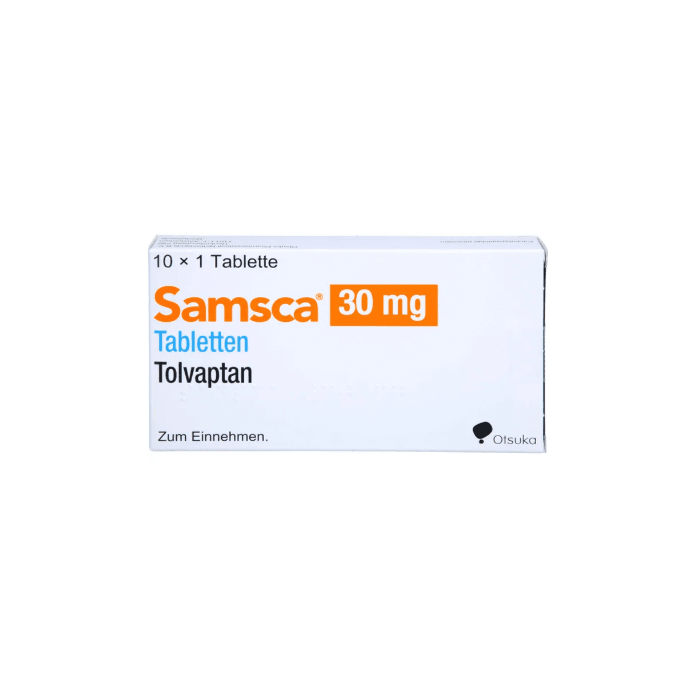
Samsca
Samsca: Buy With Prescription and Safety Basics
Price:
$1,285.99
You save


Samsca (tolvaptan) is an oral prescription medicine used for certain types of low blood sodium. This page explains how it works, how it is typically used, and which clinical and practical factors can influence Samsca price over a course of treatment. It also summarizes key safety monitoring, interactions, and storage basics.
What Samsca Is and How It Works
Samsca contains tolvaptan, a vasopressin V2-receptor antagonist. Vasopressin (also called antidiuretic hormone) signals the kidneys to retain water. By blocking V2 receptors in the kidney’s collecting ducts, tolvaptan promotes aquaresis (water-only diuresis), meaning the body can excrete free water with less electrolyte loss than typical diuretics. As free water is removed, the sodium concentration in the blood may rise, which is why careful lab monitoring is central to therapy.
CanadianInsulin functions as a prescription referral service and may confirm prescription details with the prescriber. Some patients explore US delivery from Canada when cross-border fulfilment is appropriate for their situation. In clinical practice, the goal is controlled correction of sodium; over-correction can be dangerous. Because treatment can change fluid balance, clinicians also watch for dehydration, low blood pressure, and changes in kidney function.
Another practical point is that the medication’s effect is driven by urine output. Many people notice increased urination and thirst soon after starting. A clinician may use serial sodium checks to guide ongoing dosing and duration. When allowed, licensed third-party pharmacies dispense and fulfill the medication. Separately, Samsca price discussions often depend on strength, duration limits, and whether monitoring occurs as inpatient or outpatient care.
Who It’s For
Samsca is used for clinically significant hyponatremia (low sodium) in settings where the body is retaining too much water relative to sodium. It is generally discussed for euvolemic and hypervolemic hyponatremia, including situations such as SIADH (syndrome of inappropriate antidiuretic hormone secretion), heart failure, or cirrhosis, when fluid restriction alone is not adequate or feasible. For background on the condition and related therapies, the Hyponatremia Hub is a useful navigation starting point.
This medicine is not appropriate for every patient with low sodium. It is typically avoided when there is an urgent need to raise sodium quickly (for example, severe neurologic symptoms), in people who cannot sense or respond to thirst, or in hypovolemic hyponatremia (low sodium due to low circulating volume). It is also generally not used in anuria (no urine output), because the mechanism depends on kidney water excretion. A clinician will consider the cause of hyponatremia, symptom severity, baseline sodium level, and comorbid conditions before selecting therapy.
Dosage and Usage
Dosing is individualized by the prescriber and is based on response and lab monitoring rather than symptoms alone. On-label use is commonly initiated at 15 mg by mouth once daily, with the possibility of titration to higher daily doses (such as 30 mg and, in some cases, up to 60 mg) as directed by a clinician. Because overly rapid sodium correction can cause serious neurologic injury, initiation and re-initiation are typically done in a monitored setting where sodium can be checked at appropriate intervals.
During early treatment, patients are usually advised to maintain access to water and to drink to thirst unless otherwise directed, since the drug can increase urine output substantially. Clinicians may also give instructions about fluid restriction timing, since restricting fluids too aggressively right after starting can increase the risk of dehydration and overly fast sodium correction. These monitoring steps can also indirectly affect Samsca price considerations, because site of care and lab frequency vary by case.
Quick tip: Bring an up-to-date medication list to each lab review.
If a dose is missed, the safest approach is to follow the prescriber’s written instructions and the dispensing label. Avoid making changes based on thirst, urine volume, or home scale weight alone, since these can be influenced by other conditions and medications.
Strengths and Forms
Samsca is supplied as an oral tablet. Strength availability can vary by jurisdiction and pharmacy sourcing, and prescribers choose a strength to match the planned regimen and titration approach. The most commonly referenced strengths are 15 mg and 30 mg tablets. When higher daily dosing is prescribed, it may involve more than one tablet, depending on the regimen.
The table below summarizes the typical presentations discussed in clinical use; it is not a substitute for the package insert or a pharmacist’s dispensing label. If you are comparing options within kidney-related therapies, browsing the Nephrology Products hub can help you see other medication categories without assuming they are interchangeable. Samsca price can differ between strengths even when the total daily dose is similar.
| Form | Common strengths | Notes |
|---|---|---|
| Tablet | 15 mg | Often used for initiation per label |
| Tablet | 30 mg | May be used for titration per clinician |
Storage and Travel Basics
Store tablets at controlled room temperature and keep them in their original packaging until use, unless the pharmacist provides different instructions. Protect the medication from excessive heat, moisture, and direct light. As with most prescription tablets, keep it out of reach of children and pets, and avoid storing it in a bathroom where humidity is high.
For travel, keep the medicine in a labeled container and carry a current medication list. If your itinerary could disrupt monitoring or follow-up labs, plan logistics with the prescribing team ahead of time. While Samsca does not require refrigeration like some injectables, general storage principles can still be helpful; see Zepbound Storage How To for broadly applicable storage considerations, and Travel With Ozempic for general travel documentation and packing ideas that apply to many prescriptions.
Side Effects and Safety
Because Samsca increases free-water excretion, the most common effects are related to fluid shifts. Thirst, dry mouth, increased urination, and more frequent nighttime urination are commonly reported. Some people may experience constipation, weakness, or dizziness, especially if they become dehydrated. Monitoring helps distinguish expected aquaresis from concerning volume depletion.
More serious risks relate to sodium changing too quickly or to organ toxicity. Overly rapid correction of chronic hyponatremia can lead to osmotic demyelination syndrome (a severe brain injury). Patients are typically started in a setting where sodium can be checked closely, and clinicians may adjust therapy based on early lab trends. Separately, tolvaptan has been associated with liver injury; prescribers may limit duration and avoid use in certain liver conditions. If symptoms such as confusion, difficulty speaking or swallowing, severe weakness, fainting, or yellowing of the skin occur, urgent medical evaluation is needed.
Why it matters: Rapid sodium shifts can cause permanent neurologic harm.
People often look up practical issues like Samsca price, but safety planning is equally important. Ask a pharmacist how to recognize dehydration and what to do if severe vomiting, diarrhea, or reduced fluid intake occurs, since these can amplify the medicine’s effects on volume status.
Drug Interactions and Cautions
Tolvaptan is metabolized mainly through CYP3A, so medications that strongly inhibit or induce this pathway can significantly change drug levels. Strong CYP3A inhibitors are generally contraindicated because they can raise tolvaptan exposure, increasing the risk of adverse effects. CYP3A inducers can reduce exposure, which may reduce the intended effect. Grapefruit and grapefruit juice can also affect CYP3A and are commonly discussed as a food interaction to avoid unless a clinician advises otherwise.
Other cautions involve additive effects on hydration, blood pressure, and electrolytes. Loop diuretics, thiazides, and other agents that affect sodium or water balance may increase the risk of dizziness, dehydration, or kidney function changes when combined, depending on the clinical situation. Lithium and certain other drugs may require extra monitoring in hyponatremia management. Always share a full list of prescription medications, over-the-counter products, and supplements so the prescriber can screen for interactions and adjust monitoring plans.
Compare With Alternatives
Choice of therapy for hyponatremia depends on the cause, symptom severity, and how quickly sodium must be corrected. In urgent neurologic situations, clinicians may use hypertonic saline in a monitored environment. For less urgent cases, approaches may include fluid restriction, addressing underlying triggers (such as medication-induced SIADH), or adding therapies that promote water excretion under supervision.
Other pharmacologic options can include conivaptan (an IV vasopressin antagonist used in select inpatient settings) and, in some cases, off-label agents such as demeclocycline or oral urea, depending on local practice and patient factors. Some patients with hypervolemic states may receive loop diuretics as part of broader volume management; examples on the site include Lasix Product Page and Salix Product Page, though these are not direct substitutes for a V2 antagonist and may serve different goals. When comparing options, Samsca price is only one factor; monitoring requirements, contraindications, and expected fluid effects often drive the decision.
Pricing and Access
Access to Samsca usually requires a valid prescription and a plan for lab monitoring, especially during initiation or re-initiation. Coverage rules vary widely by plan and indication, and some payers require prior authorization or documentation of the underlying cause of hyponatremia. For people paying without insurance, the out-of-pocket amount can also depend on tablet strength, prescribed duration, and dispensing policies.
General budgeting resources can help patients prepare for variable medication expenses across conditions. The guides Out Of Pocket Cost, Low Income Prescription Help, and Low Income Medication Options provide planning considerations that can be applied beyond their original examples. If you are reviewing site-wide updates, the Promotions Page may offer general information that is separate from clinical decision-making.
CanadianInsulin can coordinate prescription referral steps, while dispensing is completed by licensed pharmacies where permitted. Cross-border fulfilment eligibility can vary by jurisdiction and required documentation. When discussing Samsca price with a care team, it can help to separate medication expense from the clinical costs of monitoring and the site of care where therapy starts.
Authoritative Sources
For the most detailed prescribing information, rely on official labeling and safety sections, including boxed warnings and contraindications. These sources also outline monitoring expectations and key drug interactions.
- For FDA-label details on dosing and warnings: DailyMed listing for Samsca.
- For patient-focused safety and interaction basics: MedlinePlus tolvaptan information.
Medications requiring temperature control may be handled with prompt, express, cold-chain shipping when appropriate.
This content is for informational purposes only and is not a substitute for professional medical advice.
Express Shipping - from $25.00
Shipping with this method takes 3-5 days
Prices:
- Dry-Packed Products $25.00
- Cold-Packed Products $35.00
Standard Shipping - $15.00
Shipping with this method takes 5-10 days
Prices:
- Dry-Packed Products $15.00
- Not available for Cold-Packed products
What is Samsca used for?
Samsca (tolvaptan) is used to help manage clinically significant hyponatremia (low blood sodium) in certain settings where the body retains too much water. It is generally considered for euvolemic or hypervolemic hyponatremia, including cases associated with SIADH, heart failure, or cirrhosis. It is not used for situations that require rapid, emergency correction of sodium. The appropriate use depends on the cause of hyponatremia, symptom severity, and whether close lab monitoring is available.
Why does Samsca need close sodium monitoring when starting?
As Samsca increases free-water excretion, blood sodium can rise. If sodium corrects too quickly—especially in chronic hyponatremia—there is a risk of serious neurologic injury, including osmotic demyelination syndrome. Because of that risk, initiation and re-initiation are typically done in a monitored setting with scheduled blood tests. Monitoring also helps clinicians watch for dehydration, low blood pressure, and kidney function changes so the overall plan can be adjusted safely.
How quickly might thirst and urination increase after taking tolvaptan?
Many people notice increased urination and thirst relatively soon after starting tolvaptan, because the drug blocks vasopressin signaling in the kidneys and promotes water excretion. The exact timing and intensity vary with the underlying condition, baseline sodium, kidney function, and other medications (such as diuretics). These effects are one reason clinicians emphasize access to water and careful monitoring early on. If symptoms feel severe or are accompanied by dizziness or confusion, urgent medical assessment is important.
What are common side effects of Samsca?
Common side effects relate to fluid loss and can include thirst, dry mouth, frequent urination, increased nighttime urination, and sometimes constipation or weakness. Some people may feel lightheaded, particularly if they become dehydrated or if blood pressure drops. Serious risks include overly rapid sodium correction (which can cause neurologic injury) and possible liver injury. Seek urgent care for severe neurologic symptoms, fainting, or signs of liver problems such as yellowing skin, dark urine, or persistent upper abdominal pain.
What drugs and foods can interact with Samsca?
Tolvaptan is primarily metabolized by CYP3A, so strong CYP3A inhibitors and inducers can substantially change drug levels. Grapefruit or grapefruit juice is often discussed because it can affect CYP3A activity and may increase exposure. Other medications that change fluid balance or electrolytes—such as diuretics—can increase the chance of dehydration or blood pressure changes when combined, depending on the clinical context. Provide a complete list of prescriptions, over-the-counter products, and supplements so interactions can be screened.
What should I ask my clinician before starting Samsca?
Consider asking why Samsca is being chosen for your specific type of hyponatremia and what the monitoring schedule will be during the first days of therapy. Ask how to manage thirst and increased urination safely, and whether there are any fluid restriction instructions. Review your medication list for CYP3A interactions and discuss grapefruit intake. It is also reasonable to ask about liver-related precautions, how long treatment may continue per label, and what symptoms should prompt urgent evaluation.
Rewards Program
Earn points on birthdays, product orders, reviews, friend referrals, and more! Enjoy your medication at unparalleled discounts while reaping rewards for every step you take with us.
You can read more about rewards here.
POINT VALUE
How to earn points
- 1Create an account and start earning.
- 2Earn points every time you shop or perform certain actions.
- 3Redeem points for exclusive discounts.
You Might Also Like
Select options
This product has multiple variants. The options may be chosen on the product page
Select options
This product has multiple variants. The options may be chosen on the product page
Select options
This product has multiple variants. The options may be chosen on the product page
Select options
This product has multiple variants. The options may be chosen on the product page
Related Articles
Type 2 Diabetes,
Generic Ozempic Explained for Patients and Caregivers
Key Takeaways People searching generic ozempic are usually trying to confirm whether a lower-cost semaglutide option is a true approved equivalent, a compounded product, or a different diabetes medicine. Separate…
Uncategorized
Rybelsus Generic: A Patient Guide to Current Options
Key TakeawaysMany people searching for rybelsus generic are trying to answer one practical question: is there a true lower-cost equivalent tablet, or only the brand product and look-alike alternatives?Brand and…
Type 2 Diabetes,
Generic Liraglutide For Weight Loss: A Practical Guide
People searching for generic liraglutide for weight loss usually want clear answers on three points: whether an approved lower-cost version exists, how it differs from brand-name products, and what access…
Type 2 Diabetes,
Liraglutide Vs Semaglutide Comparison Guide For Patients
Key Takeaways People searching liraglutide vs semaglutide usually want a practical comparison, not a slogan. The most useful differences involve formulation, schedule, approved uses, side effect patterns, and the paperwork…