
Please note: a valid prescription is required for all prescription medication.
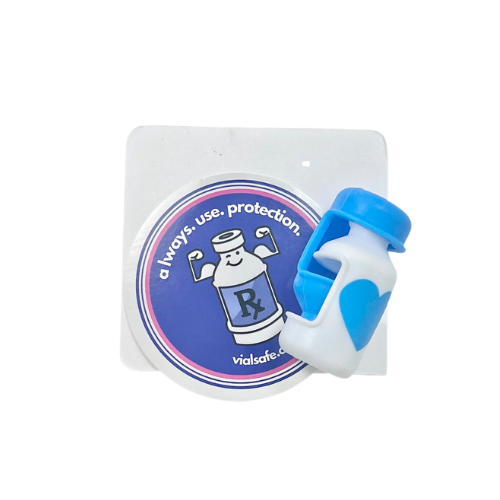
Vial Safe Insulin Protector
Buy Vial Safe Insulin Protector Online


Vial Safe Insulin Protector is a reusable protective sleeve for insulin vials. It can be bought online as an insulin vial protection accessory, with the quantity and current price shown during ordering. Choose the protector that fits the insulin bottle you use and keep the insulin label, cap, and stopper accessible for routine checks.
This insulin bottle protector is designed to add grip and cushioning around a glass vial during everyday handling. It is not insulin, a dosing device, a storage cooler, or a replacement for the instructions on your insulin label.
The Vial Safe insulin vial protector may be useful if you carry vial insulin between home, work, school, or travel supplies. It helps reduce routine handling risks, but it cannot guarantee that glass will not crack or that insulin will remain usable after a fall, heat exposure, freezing, or contamination.
Vial Safe Insulin Protector Price and Quantity
The Vial Safe Insulin Protector price reflects the quantity and sleeve type chosen during ordering. View the current accessory total before checkout and separate it from any insulin, syringes, needles, or other diabetes supplies in the same cart.
Fit should be weighed alongside cost. A sleeve that does not match the vial can leave too much glass exposed, cover information you need to read, or make the bottle harder to hold. The right choice should sit securely around the vial without interfering with safe access to the cap area.
| Detail | What to look for |
|---|---|
| Vial size | Match the sleeve to the insulin vial format you use, including common 10mL vial styles when appropriate. |
| Height | Use the sleeve height that leaves the cap and stopper area usable. |
| Quantity | Choose enough protectors for the vials you routinely handle or store. |
| Grip | Look for a snug feel that improves handling without forcing the vial. |
| Label visibility | Keep the insulin name, concentration, lot, and expiry details readable. |
Why it matters: A protective sleeve only helps when it fits the actual vial in your routine.
How to Order an Insulin Vial Protective Sleeve
To order Vial Safe Insulin Protector online, choose the sleeve and quantity that match your vial-handling needs. Keep your insulin packaging or vial nearby so you can assess the bottle shape, height, and label position before completing the order.
If your cart includes medication and accessories, treat each item as a separate decision. The sleeve protects the outside of the vial, while the insulin remains governed by its own storage, expiry, inspection, and administration instructions.
Customers using US delivery from Canada should also consider how accessories and temperature-sensitive insulin may be handled differently in the same order. The protector itself should stay clean and dry; insulin may require prompt, express, cold-chain shipping when refrigerated medication is included.
Fit, Material, and Everyday Use
A Vial Safe insulin protector is an insulin vial cover that wraps around the outside of a glass insulin bottle. Many shoppers look for a silicone insulin vial protector because flexible silicone-style sleeves can improve grip and provide cushioning during routine handling.
The sleeve should feel secure without being difficult to apply or remove when cleaning is needed. Do not force a protector onto a vial that resists the fit, because pressure on glass or an awkward grip can increase handling risk rather than reduce it.
- Vial height: The sleeve should not block safe access to the stopper or cap.
- Vial diameter: A loose cover may slip during removal from storage.
- Label view: Key insulin details should remain visible before every use.
- Grip surface: The outside should be easy to hold with clean, dry hands.
- Reusable condition: Replace the protector if it tears, stretches, or becomes hard to clean.
A 10mL vial protector may fit some commonly used insulin bottles, but vial dimensions are not identical across every product. This accessory is not suitable for insulin pens, cartridges, prefilled syringes, or pump reservoirs unless the manufacturer specifically designs it for that format.
Drop Protection and Vial Inspection
An insulin vial safety case can help reduce damage from everyday bumps, slips, and short handling mistakes. It should be treated as added protection, not a guarantee against breakage or medication damage.
If a protected vial is dropped, inspect it before any further use. Look for cracks in the glass, leaking liquid, a loose or damaged cap, unusual particles, unexpected cloudiness, discoloration, or a label that no longer matches your treatment plan.
Do not use an insulin vial that appears cracked, leaking, contaminated, or otherwise damaged. Contact a pharmacist or clinician if you are unsure whether the vial remains safe, especially if it was exposed to heat, freezing, or direct sunlight.
Quick tip: Read the vial label before placing the bottle into any protective sleeve.
Refrigerator Storage, Travel, and Packing
An insulin vial storage protector does not change the temperature rules for insulin. Follow the storage conditions on the insulin label, protect vials from freezing, and avoid direct heat or sunlight. A sleeve may help with grip, but it does not make insulin temperature-proof.
For refrigerator storage, place the protected vial where it will not roll, fall from a shelf, or touch a freezer wall. An insulin vial holder for refrigerator organization may help reduce bumps, but the medication still needs the manufacturer’s stated temperature range.
For travel, pack the vial so heavier items cannot crush it. Keep needles and syringes in appropriate containers, and use an approved sharps disposal method after injections. Do not place a vial loose in a bag where it can strike keys, hard containers, or electronic devices.
If insulin has been left in a hot car, frozen, or stored outside its labeled temperature range, do not rely on the sleeve to decide whether it remains usable. Ask a healthcare professional or pharmacist for product-specific guidance before using insulin that may have been compromised.
Cleaning and Replacement
Keep the protective insulin vial sleeve clean and dry. Remove the sleeve when residue, moisture, or dust builds up, because a dirty surface can make the vial harder to grip or inspect.
Allow the protector to dry fully before placing it back on a vial. Trapped moisture can obscure the label, make the bottle slippery, or interfere with quick visual checks before injection preparation.
Replace the protector if the material becomes torn, sticky, misshapen, stretched, or loose. A weakened insulin vial protector sleeve may create a false sense of security and can make the vial harder to control during routine handling.
Safety Checks Around Insulin Vials
Vial Safe is not associated with medication side effects because it is not a drug. The practical safety concerns are fit, cleanliness, label visibility, vial condition, and careful handling around needles and syringes.
| Check | Reason |
|---|---|
| Correct insulin | Read the vial name and concentration before preparing a dose. |
| Readable expiry | Do not let the sleeve hide the expiry date or discard-after date. |
| Clean sleeve | Residue can reduce grip and make inspection harder. |
| Secure fit | A loose sleeve may slide when the vial is removed from storage. |
| Needle safety | The protector does not replace safe injection technique or sharps disposal. |
Keep unattached sleeves away from small children and pets. Any small accessory can be misplaced, chewed, or handled unsafely when it is not attached to a vial.
Use the protector as part of a broader insulin routine: verify the medication, inspect the liquid when applicable, prepare supplies on a clean surface, and dispose of sharps properly. Your diabetes care team’s instructions should guide injection technique and dosing decisions.
When This Accessory Is Not the Right Choice
Vial Safe Insulin Protector is intended for insulin bottles, not every insulin delivery format. It should not be used as a pen case, cartridge holder, pump supply case, or cooling pouch unless those uses are specifically supported by the accessory design.
If your treatment uses insulin pens, a vial sleeve will not protect the pen mechanism, dose dial, or cartridge housing. If your insulin is supplied in cartridges or prefilled devices, choose an accessory made for that device type rather than adapting a vial cover.
The protector also does not replace a travel cooler, insulated bag, refrigerator organizer, or sharps container. Use the correct product for each job: temperature control, vial grip, needle storage, and disposal are separate parts of safe diabetes supply management.
Compare With Other Vial Supplies
Insulin vial protection accessories are often bought with supplies used for vial-based therapy. Syringes, needles, alcohol swabs, sharps containers, and storage tools should be chosen according to the treatment plan and the insulin product being used.
Do not assume one accessory fits all diabetes routines. A person using vial insulin may need different supplies than someone using pens, cartridges, or pump therapy. The sleeve should match the vial, while injection supplies should match the prescribed insulin routine and clinician instructions.
If you use more than one insulin vial, consider whether each bottle needs its own protector. Moving one sleeve between vials can increase handling, and it may also make it easier to mix up labels if you do not read each vial carefully before use.
Authoritative Sources
For general insulin handling and patient-use information, refer to MedlinePlus human insulin drug information.
For safe needle and syringe disposal at home or during travel, review the FDA sharps disposal container guidance.
Product packaging, insulin labels, and instructions from your diabetes care team should guide storage, inspection, injection preparation, and disposal decisions.
This content is for informational purposes only and is not a substitute for professional medical advice.
Blood Glucose Unit Converter
Convert glucose readings between mg/dL and mmol/L without changing the clinical value.
mg/dL
-
US reporting unit
mmol/L
-
International reporting unit
These calculations are for education only and do not replace clinical advice, diagnosis, or treatment. Always confirm medical decisions with a qualified healthcare professional.
HbA1c & eAG Calculator
Convert between HbA1c percentage and estimated average glucose using the ADAG relationship.
HbA1c
-
percentage
eAG mg/dL
-
estimated average glucose
eAG mmol/L
-
estimated average glucose
These calculations are for education only and do not replace clinical advice, diagnosis, or treatment. Always confirm medical decisions with a qualified healthcare professional.
HOMA-IR Calculator
Estimate insulin resistance from fasting glucose and fasting insulin values collected from the same blood draw.
HOMA-IR
-
screening estimate, not a diagnosis
Formula used
-
depends on glucose unit
These calculations are for education only and do not replace clinical advice, diagnosis, or treatment. Always confirm medical decisions with a qualified healthcare professional.
Carb Serving Calculator
Convert total carbohydrate grams into carb choices for meal planning and diabetes education.
Carb choices
-
total carbs divided by choice size
Rounded choices
-
nearest half choice
Carb calories
-
4 kcal per gram
These calculations are for education only and do not replace clinical advice, diagnosis, or treatment. Always confirm medical decisions with a qualified healthcare professional.
Glycaemic Load Calculator
Calculate glycaemic load from glycaemic index and available carbohydrate in a serving.
Glycaemic load
-
GI x carbs / 100
Range
-
single serving estimate
Total carbs used
-
serving carbs x servings
These calculations are for education only and do not replace clinical advice, diagnosis, or treatment. Always confirm medical decisions with a qualified healthcare professional.
Express Shipping - from $29.99
Shipping with this method takes 3-5 days
Prices:
- Dry-Packed Products $29.99
- Cold-Packed Products $39.99
Standard Shipping - $19.99
Shipping with this method takes 5-10 days
Prices:
- Dry-Packed Products $19.99
- Not available for Cold-Packed products
What is Vial Safe Insulin Protector used for?
Vial Safe Insulin Protector is used as a protective sleeve for insulin vials. It adds grip and cushioning around a glass insulin bottle during routine handling, storage, and packing, but it is not insulin or a dosing device.
Does an insulin vial protector prevent all breakage?
No. A protective sleeve can reduce everyday handling risk, but it cannot guarantee that a vial will not crack or that insulin will remain usable after a drop, heat exposure, freezing, or contamination. Inspect any dropped vial before use.
Can I use Vial Safe on insulin pens or cartridges?
Vial Safe Insulin Protector is intended for insulin bottles. It is not the right accessory for insulin pens, cartridges, prefilled devices, or pump reservoirs unless the accessory is specifically designed for those formats.
Does the sleeve change insulin storage requirements?
No. The sleeve does not change insulin temperature limits, expiry dates, or opened-vial instructions. Follow the insulin label and ask a healthcare professional if the vial may have been frozen, overheated, or damaged.
How do I know if the protector fits properly?
The protector should sit snugly around the vial without blocking the cap, stopper, insulin name, concentration, lot information, or expiry details. Do not force a sleeve onto a vial that does not fit comfortably.
When should I replace an insulin vial protector sleeve?
Replace it if the material is torn, sticky, stretched, misshapen, loose, or difficult to clean. A damaged or loose sleeve may reduce grip and make the vial harder to handle safely.
Rewards Program
Earn points on birthdays, product orders, reviews, friend referrals, and more! Enjoy your medication at unparalleled discounts while reaping rewards for every step you take with us.
You can read more about rewards here.
POINT VALUE
How to earn points
- 1Create an account and start earning.
- 2Earn points every time you shop or perform certain actions.
- 3Redeem points for exclusive discounts.