
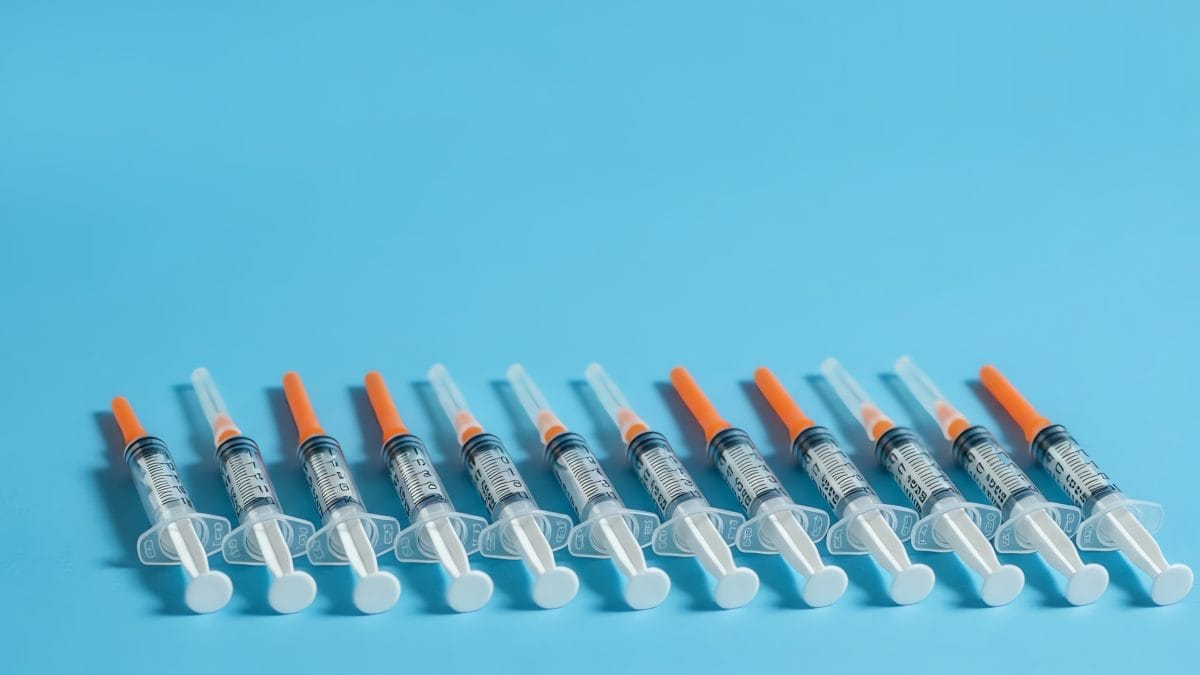
Insulin syringe sizes describe three things: how much the barrel holds, how long the needle is, and how thin the needle is. These details matter because insulin is measured in units, not just milliliters, and a mismatched syringe can make a dose harder to read or unsafe to measure.
Key Takeaways
- Barrel capacity shows how many insulin units the syringe can hold.
- Needle gauge means thickness; a higher gauge number is thinner.
- Needle length is measured in millimeters and affects injection technique.
- U-100 insulin needs U-100 markings unless a clinician gives specific instructions.
- Ask before changing syringe type, needle length, or delivery method.
How Insulin Syringe Sizes Are Labeled
An insulin syringe label usually combines barrel capacity, needle length, and gauge (needle thickness). A label may show a unit capacity, a milliliter volume, and a needle size such as 31G with a length in millimeters. Each part answers a different question.
The barrel tells you how much insulin the syringe can hold. The needle length tells you how far the needle can reach. The gauge tells you how wide or narrow the needle is. These numbers should match the insulin concentration, the prescribed dose, and the injection plan given by a clinician or veterinarian.
Insulin is usually prescribed in units. For U-100 insulin, 100 units equals 1 mL, so 1 unit equals 0.01 mL. That conversion only applies to U-100 products. Other concentrations need different markings or clear instructions from the prescriber.
Do not treat syringe labels as interchangeable. A syringe that looks similar can still have different markings, needle length, or concentration assumptions. If a label is unclear, pause and ask a pharmacist, prescriber, or diabetes educator before using it.
The Three Common Barrel Capacities
For U-100 insulin, the three common syringe barrel capacities are 30 units, 50 units, and 100 units. These are also commonly described as 0.3 mL, 0.5 mL, and 1 mL syringes. The right capacity is the one that lets the prescribed dose fit and be read clearly.
| Common label | U-100 volume | What it means | Practical note |
|---|---|---|---|
| 30-unit syringe | 0.3 mL | Holds up to 30 units of U-100 insulin | Often easier to read for smaller unit amounts, depending on markings. |
| 50-unit syringe | 0.5 mL | Holds up to 50 units of U-100 insulin | May suit middle-range prescribed doses when the markings are clear. |
| 100-unit syringe | 1 mL | Holds up to 100 units of U-100 insulin | Provides more capacity, but some markings may be harder to read. |
The practical point is accuracy. A large barrel may make small measurements harder to read. A small barrel may not hold the full prescribed amount. Neither is automatically better for every person.
If you are reviewing a dose plan, use a dedicated resource such as the Insulin Dosage Chart for general context, then confirm your actual dose with your prescriber. Do not adjust insulin based on a chart alone.
For unit and volume context, the Insulin Conversions guide can help explain why concentration matters. It should not replace product labeling or professional instructions.
Why it matters: A syringe can be the wrong choice even when it physically fits the vial.
Needle Gauge and Length: What the Numbers Mean
Needle gauge works in reverse: a higher gauge number means a thinner needle. A 31G needle is thinner than a 29G needle. This can surprise people because many other size systems get larger as the number rises.
Needle length is separate from gauge. You may see insulin syringe needles listed in millimeters, such as 6 mm, 8 mm, or longer options. The length affects how the needle reaches the subcutaneous tissue (the fatty layer under the skin), where insulin is generally intended to be injected.
Shorter and thinner needles may feel easier for some people, but comfort is not the only factor. Body size, injection site, dexterity, vision, grip strength, and prior injection problems can all affect the choice. A person who has trouble seeing small markings may need different support than someone whose main concern is needle length.
Injection site technique also matters. A suitable syringe can still be used incorrectly if the site, angle, or rotation pattern is not clear. The Where To Inject Insulin guide explains common injection site considerations in more detail.
If you are comparing product examples, a page such as BD UltraFine II Syringes can show how syringe listings may display capacity, gauge, and length together. Always compare those details with the prescription and product label.
Matching the Syringe to the Insulin
The syringe must match the insulin concentration and delivery format. Most human insulin vials are commonly supplied as U-100, but not every insulin product is used the same way. Some products are supplied in pens, cartridges, or specialized delivery systems.
Do not draw insulin from a pen, cartridge, or device unless a clinician or pharmacist has specifically instructed you. Pens are designed to deliver insulin in a particular way. Changing the delivery method can create measurement errors or contamination risk.
Pet insulin adds another important layer. Some veterinary insulin products may use a different concentration than common human U-100 insulin. Using the wrong syringe type for a pet can lead to serious dosing errors. Pet owners should follow the veterinarian’s device instructions and review common risks in Pet Insulin Dosage Mistakes.
Insulin type can also affect preparation steps. Some insulins are clear. Some are cloudy and may need gentle mixing according to product instructions. The syringe size does not tell you whether an insulin should be mixed, rolled, or left still. That information comes from the product label and the care plan.
For a broader look at delivery routes and devices, see Insulin Administration Methods. That context can help explain why a vial-and-syringe plan differs from a pen-based plan.
Reading the Markings Without Adding Risk
Accurate measurement starts before the needle touches the vial. Confirm the insulin name, concentration, expiration status, and appearance using the label and care instructions. If anything looks different than expected, do not guess.
Read the syringe at eye level. Align the plunger with the prescribed unit mark, not with an estimated space between lines. If air bubbles or unclear markings make the dose hard to confirm, stop and follow the instructions your clinician or pharmacist provided.
Markings can vary. Some syringes show every unit. Others may use larger intervals. A 100-unit syringe may be harder to read for very small unit amounts, especially if vision or hand tremor is a concern. This is one reason capacity matters as much as needle comfort.
Use a new sterile syringe as directed, and do not share needles or syringes. Sharing injection equipment can spread infections. Reusing a needle can also dull the tip and increase irritation or measurement problems.
Dispose of used sharps in an approved sharps container or another container recommended by local rules. Loose needles should not go into household trash without proper containment. If you travel, plan disposal before you leave home.
Quick tip: Keep one written device plan near insulin supplies to reduce mix-ups.
Syringes, Pens, and Needle Choices
Syringes are one way to deliver insulin from a vial. Pens deliver insulin through a pen mechanism and usually use pen needles, not insulin syringes. Each method has different handling steps, visibility issues, and device requirements.
Syringes may be preferred when a vial is prescribed or when a caregiver needs to draw up a measured amount. Pens may be simpler for some people because the dose is dialed on the device. Neither format is universally best. The safer choice is the one that matches the prescribed insulin and the person’s ability to use it correctly.
If you are comparing delivery formats, the Insulin Pen vs Syringe resource explains practical differences. For pen-based therapy, Insulin Pen Needles covers needle-specific points that do not apply in the same way to vial syringes.
Device changes deserve a medication review. Switching from vial to pen, changing needle length, or changing syringe capacity can affect the steps used at home. Ask the prescriber or pharmacist to watch a demonstration if confidence is low.
When a Syringe Choice Needs Clinician Review
Ask for help if the dose does not fit the syringe, the markings are hard to see, the concentration does not match, or the device instructions conflict. These are not minor details. They can change how insulin is measured.
Also ask for review if injections often leak, bruise, sting, or leave repeated lumps. Site rotation, needle length, technique, and skin changes can all play a role. Do not keep repeating a difficult process without support.
Seek urgent medical help if insulin is taken incorrectly and symptoms suggest low blood sugar, severe high blood sugar, confusion, fainting, seizure, or inability to keep fluids down. For background on low blood sugar signs, the Hypoglycemia condition hub can help you recognize why symptoms need prompt attention.
If a prescription item is involved, CanadianInsulin.com may help confirm prescription details with the prescriber when required. Dispensing and fulfillment are handled by licensed third-party pharmacies where permitted.
Authoritative Sources
- MedlinePlus patient guidance on insulin injections at home covers general injection and safety steps.
- American Diabetes Association overview of insulin medicines explains insulin’s role in diabetes care.
- FDA guidance on safe sharps disposal containers supports home needle disposal practices.
The safest syringe choice is the one that matches the insulin concentration, prescribed dose, delivery device, and instructions from your care team.
This content is for informational purposes only and is not a substitute for professional medical advice.


