
Please note: a valid prescription is required for all prescription medication.
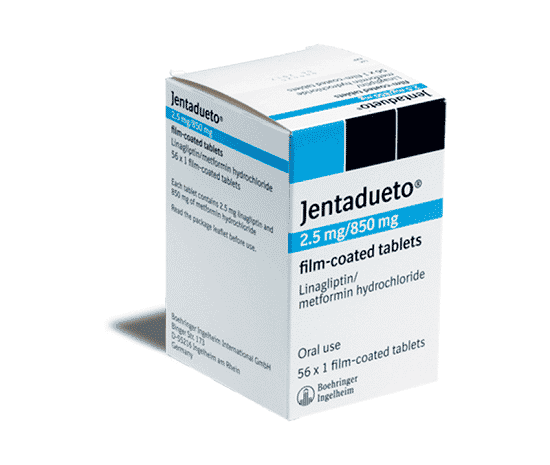
Jentadueto
Buy Jentadueto Online


Jentadueto is a combination diabetes tablet that contains linagliptin and metformin hydrochloride for adults with type 2 diabetes. It can be ordered online, with current product amounts and tablet strengths shown during checkout so you can match the medicine to clinician directions. Choose the strength carefully because each tablet includes the same linagliptin amount with a different metformin amount.
Jentadueto tablets combine a DPP-4 inhibitor, linagliptin, with a biguanide, metformin. The medicine is used with diet and exercise to help improve blood glucose control in adults with type 2 diabetes, and it is not for type 1 diabetes or diabetic ketoacidosis. If the directions name Jentadueto XR, choose an extended-release version rather than an immediate-release tablet.
Jentadueto Price and Strength Selection
The Jentadueto price depends on the strength, tablet count, and release type shown during ordering. A lower amount may reflect fewer tablets, a different metformin component, or a different formulation. Use the full strength and total quantity when judging Jentadueto cost, especially if paying without insurance.
Immediate-release Jentadueto strengths are commonly written with linagliptin first and metformin second. Common strengths include 2.5/500 mg, 2.5/850 mg, and 2.5/1000 mg. The phrase Jentadueto 1000 mg usually refers to the metformin component, but the full two-number strength is the safer way to identify the tablet.
Jentadueto XR is an extended-release formulation and should not be treated as the same product as immediate-release Jentadueto. Release type can affect how the medicine is taken and how metformin is released in the body. If the directions are unclear, ask the treating clinician or pharmacist to clarify the formulation before you complete the order.
Quick tip: Match both active ingredient amounts, not only the metformin number.
| Strength wording | What it means | Ordering note |
|---|---|---|
| 2.5/500 mg | Linagliptin 2.5 mg and metformin 500 mg | Confirm both numbers before purchase. |
| 2.5/850 mg | Linagliptin 2.5 mg and metformin 850 mg | Do not substitute for another metformin amount. |
| 2.5/1000 mg | Linagliptin 2.5 mg and metformin 1000 mg | The metformin component is higher. |
| XR | Extended-release formulation | Use only when the directions specify XR. |
How to Order Jentadueto Online
To order Jentadueto online, start with the release type: immediate-release tablet or XR tablet. Then choose the exact strength and tablet quantity that correspond to the treatment directions. The order should reflect the medicine name, formulation, active ingredient amounts, and total tablet count.
US delivery from Canada may be available through the ordering pathway for this product. Shipping should protect tablets from moisture, crushing, and avoidable temperature exposure. Because Jentadueto is a tablet, cold-chain handling is not the main storage issue, but prompt, express, cold-chain shipping may still appear in general pharmacy logistics language for different products.
- Choose the formulation: confirm immediate-release or XR.
- Match the strength: check linagliptin and metformin amounts together.
- Review the quantity: calculate how long the supply should last.
- Keep the label: store travel and medication records with the tablets.
What Jentadueto Is Used For
Jentadueto for type 2 diabetes is used along with diet and exercise to improve glycemic control in adults. It combines two blood sugar-lowering mechanisms in one tablet. The linagliptin component increases incretin activity, which supports meal-related insulin release and reduces glucagon when glucose is elevated.
Metformin decreases glucose production in the liver and can improve insulin sensitivity. Those effects help lower blood glucose as part of a broader treatment plan that may include nutrition, physical activity, home glucose checks, A1C monitoring, and other medicines. Individual goals should be set by a clinician because kidney function, age, other conditions, and hypoglycemia risk can affect the plan.
The Type 2 Diabetes section can help organize diabetes medicine browsing by condition. The broader Diabetes section is useful when comparing non-insulin tablets, injectables, supplies, and related treatment categories.
Tablet Strengths, Doses, and Formulation Differences
Jentadueto dosage is individualized, so the ordered strength should follow the directions already provided for the patient. Each immediate-release tablet contains linagliptin 2.5 mg plus one metformin hydrochloride amount. This fixed-dose design means a change from 500 mg to 850 mg or 1000 mg changes the metformin exposure while the linagliptin amount remains the same.
Linagliptin metformin tablets are not chosen by color, tablet count, or metformin number alone. The complete strength matters because combination products can look similar across strengths. The same caution applies when comparing Jentadueto with other metformin combinations, since the second active ingredient may be a different diabetes drug.
Extended-release metformin products are designed to release medicine differently from immediate-release tablets. Jentadueto XR may be preferred in some treatment plans, but it should be chosen only when the directions call for XR. Crushing, splitting, or changing how an XR tablet is taken can affect release characteristics, so follow the product label and clinician instructions.
| Decision point | What to verify | Why it matters |
|---|---|---|
| Active ingredients | Linagliptin plus metformin | Confirms this is the intended combination. |
| Metformin amount | 500 mg, 850 mg, or 1000 mg when shown | Changes the metformin component per tablet. |
| Release type | Immediate-release or XR | Affects how the medicine is used. |
| Tablet quantity | Total tablets in the order | Determines supply length and cash price comparison. |
Storage, Handling, and Travel
Store Jentadueto tablets at room temperature according to the product label, away from excess heat and moisture. Bathrooms, kitchen sinks, and vehicles can expose tablets to humidity or temperature changes. Keep tablets in their original bottle or blister package when possible so the name, strength, and lot details remain available.
During travel, carry enough tablets for the planned schedule and keep them with the medication label. Time zone changes, meal timing, vomiting, diarrhea, or missed doses can complicate diabetes routines. Ask a clinician or pharmacist what to do before changing the schedule, especially if other glucose-lowering medicines are also used.
Why it matters: Heat and moisture can reduce tablet quality before the expiry date.
Side Effects, Warnings, and Monitoring
Common side effects of Jentadueto can include diarrhea, nausea, stomach upset, reduced appetite, upper respiratory symptoms, headache, or nasopharyngitis. Gastrointestinal effects are often associated with metformin-containing medicines, especially when therapy is started or the metformin amount changes. Persistent, severe, or worsening symptoms should be discussed with a healthcare professional.
The metformin component carries a boxed warning for lactic acidosis, a rare but serious buildup of acid in the blood. Risk can increase with severe kidney impairment, dehydration, heavy alcohol use, serious infection, reduced oxygen states, liver problems, older age, heart failure, and some imaging procedures that use iodinated contrast. Kidney function is commonly assessed before and during treatment with metformin-containing medicines.
Contraindications in official labeling include severe renal impairment, acute or chronic metabolic acidosis, diabetic ketoacidosis, and serious hypersensitivity to linagliptin, metformin, or inactive ingredients. Urgent medical help is needed for symptoms such as unusual weakness, trouble breathing, severe stomach pain, feeling very cold, swelling, hives, blistering skin, or difficulty breathing.
Linagliptin is a DPP-4 inhibitor, and this class has safety considerations that include pancreatitis and serious hypersensitivity reactions. Severe persistent abdominal pain, with or without vomiting, needs prompt evaluation. Joint pain has also been reported with DPP-4 inhibitors, and new severe pain should be reported.
Low blood glucose is more likely when Jentadueto is used with insulin or sulfonylureas. Alcohol can increase metformin-related risk and may affect glucose control. Other medicines, including diuretics, corticosteroids, drugs that affect kidney function, and contrast dye used in imaging, may require monitoring or temporary treatment changes under clinician direction.
Long-term metformin use has been associated with lower vitamin B12 levels in some patients. The Type 2 Diabetes Articles category includes education on diabetes treatment and monitoring topics. The Diabetes Articles category can also help prepare questions about glucose goals, side effects, and routine follow-up.
Comparing Related Diabetes Medicines
Combination tablets can simplify a regimen by putting two active ingredients into one oral medicine. They are not interchangeable by category alone. A tablet that combines metformin with a DPP-4 inhibitor differs from one that combines metformin with an SGLT2 inhibitor or another drug class.
The Combination Tablets category can help compare active ingredients and forms across non-insulin diabetes products. For broader browsing, the Non-Insulin Diabetes Medications category separates oral and non-insulin therapies from insulin products.
| Product type | Active ingredient pattern | Practical distinction |
|---|---|---|
| Jentadueto | Linagliptin plus metformin | DPP-4 inhibitor and biguanide combination. |
| Other DPP-4 combinations | Different DPP-4 inhibitor plus metformin | Same broad class pairing, different active ingredient. |
| SGLT2 combinations | SGLT2 inhibitor plus metformin | Different mechanism and safety profile. |
The broader Diabetes Medications category can help place Jentadueto among other therapies used for glucose control. Any switch between products should be clinician-led because strength, kidney considerations, hypoglycemia risk, and side effect profiles differ.
Authoritative Sources
Official labeling is the main source for indications, strengths, boxed warnings, contraindications, interactions, and storage instructions. These references are useful for verifying product safety information and formulation differences.
- DailyMed Jentadueto prescribing information lists approved use, strengths, warnings, contraindications, adverse reactions, and storage guidance.
- FDA Jentadueto XR labeling helps distinguish extended-release tablets from immediate-release Jentadueto.
This content is for informational purposes only and is not a substitute for professional medical advice.
Blood Glucose Unit Converter
Convert glucose readings between mg/dL and mmol/L without changing the clinical value.
mg/dL
-
US reporting unit
mmol/L
-
International reporting unit
These calculations are for education only and do not replace clinical advice, diagnosis, or treatment. Always confirm medical decisions with a qualified healthcare professional.
HbA1c & eAG Calculator
Convert between HbA1c percentage and estimated average glucose using the ADAG relationship.
HbA1c
-
percentage
eAG mg/dL
-
estimated average glucose
eAG mmol/L
-
estimated average glucose
These calculations are for education only and do not replace clinical advice, diagnosis, or treatment. Always confirm medical decisions with a qualified healthcare professional.
Carb Serving Calculator
Convert total carbohydrate grams into carb choices for meal planning and diabetes education.
Carb choices
-
total carbs divided by choice size
Rounded choices
-
nearest half choice
Carb calories
-
4 kcal per gram
These calculations are for education only and do not replace clinical advice, diagnosis, or treatment. Always confirm medical decisions with a qualified healthcare professional.
Glycaemic Load Calculator
Calculate glycaemic load from glycaemic index and available carbohydrate in a serving.
Glycaemic load
-
GI x carbs / 100
Range
-
single serving estimate
Total carbs used
-
serving carbs x servings
These calculations are for education only and do not replace clinical advice, diagnosis, or treatment. Always confirm medical decisions with a qualified healthcare professional.
eGFR Calculator
Estimate kidney filtration using the 2021 CKD-EPI creatinine equation.
eGFR
-
mL/min/1.73 m2
G category
-
requires clinical context
These calculations are for education only and do not replace clinical advice, diagnosis, or treatment. Always confirm medical decisions with a qualified healthcare professional.
Customer Reviews
2.3 Based on 3 Reviews
Write a Review Ask a Question - Reviews
- Questions
Filter Reviews:
GD
09/06/2023
Gregg D.  US
USI recommend this product
Shipping time is improving
Last two orders have been shipped in a timely manner
09/12/2023
CanadianInsulin.com
Hi Gregg,Thank you for your feedback. Your positive comments about our ability to provide fast shipping are greatly appreciated. We're committed to maintaining this standard and ensuring your satisfaction.We appreciate your continued support with us at Canadian Insulin. We look forward serving you even better in the future. Have a great day!
GD
07/06/2023
Gregg D. USI recommend this product
Pathetically Slow Processing. Be prepared to wait and wait and wait.
Medication is fine. The time it takes to GET the medication is pathetically slow. WEEKS waiting for it to arrive. No real excuse for being this slow.
07/14/2023
CanadianInsulin.com
Hi Gregg,Thank you for bringing this matter to our attention. We sincerely apologize for the inconvenience and frustration you have experienced. We understand the importance of timely delivery.We will take immediate action to improve our process and address the issues you've raised. To do so, we'll assign someone to get in touch with you to gather more details and offer suitable resolution.We appreciate your patience and looking forward to resolving this matter to your satisfaction.Have a great day!
GD
12/20/2022
Gregg D. USI recommend this product
Slowest order processing imaginable
Order placed on Monday the 12th. Takes 2 to 3 days to approve and fill. Takes another 2 or 3 days to prepare for shipping. They don't ship on Friday, so order sits until sent out on Monday the 19th. Takes a week to 10 days to get through US postal system. Just not acceptable in this day and age. It's 2022 for goodness sake. Over 14 days to get medicine? Give me a break.
Express Shipping - from $29.99
Shipping with this method takes 3-5 days
Prices:
- Dry-Packed Products $29.99
- Cold-Packed Products $39.99
Standard Shipping - $19.99
Shipping with this method takes 5-10 days
Prices:
- Dry-Packed Products $19.99
- Not available for Cold-Packed products
What is Jentadueto used for?
Jentadueto is used with diet and exercise to improve blood glucose control in adults with type 2 diabetes. It is not used for type 1 diabetes or diabetic ketoacidosis.
What do Jentadueto 2.5/500 mg, 2.5/850 mg, and 2.5/1000 mg mean?
The first number is linagliptin 2.5 mg. The second number is the metformin hydrochloride amount: 500 mg, 850 mg, or 1000 mg. Match both numbers to the treatment directions.
Is Jentadueto XR the same as regular Jentadueto?
No. Jentadueto XR is an extended-release formulation, while regular Jentadueto is immediate-release. Choose XR only when the directions specify the extended-release product.
What side effects can Jentadueto cause?
Common effects can include diarrhea, nausea, stomach upset, reduced appetite, headache, and upper respiratory symptoms. Serious symptoms such as trouble breathing, severe abdominal pain, allergic swelling, or signs of lactic acidosis need urgent medical attention.
Does Jentadueto cause low blood sugar?
Jentadueto alone has a lower hypoglycemia risk than some diabetes medicines, but the risk can increase when it is used with insulin or sulfonylureas. Glucose monitoring plans should follow clinician instructions.
Rewards Program
Earn points on birthdays, product orders, reviews, friend referrals, and more! Enjoy your medication at unparalleled discounts while reaping rewards for every step you take with us.
You can read more about rewards here.
POINT VALUE
How to earn points
- 1Create an account and start earning.
- 2Earn points every time you shop or perform certain actions.
- 3Redeem points for exclusive discounts.
You Might Also Like
Select options
This product has multiple variants. The options may be chosen on the product page
Select options
This product has multiple variants. The options may be chosen on the product page
Select options
This product has multiple variants. The options may be chosen on the product page