Key Takeaways
- Answers what is insulin degludec, including its role as an ultra–long-acting basal insulin.
- Explains brand names, formulations, and devices used for daily injections.
- Outlines how it works, its classification, and typical clinical uses.
- Reviews dosing concepts, conversion cautions, and safety considerations.
- Provides links to deeper guides for pens, comparisons, and side effects.
What Is Insulin Degludec?
Insulin degludec is a basal insulin analog designed for steady, all-day glucose control. It releases slowly after injection, which helps reduce peaks and valleys. Many adults with type 1 or type 2 diabetes use it to maintain background insulin levels. Your care plan may combine it with mealtime insulin or non-insulin agents.
Clinically, this analog offers very long duration and low day-to-day variability. That profile can support dosing flexibility under medical guidance. It is available in multiple strengths, including higher-concentration pens for fewer units per injection volume. People often start on standard strengths and adjust as directed.
Brand Names and Formulations
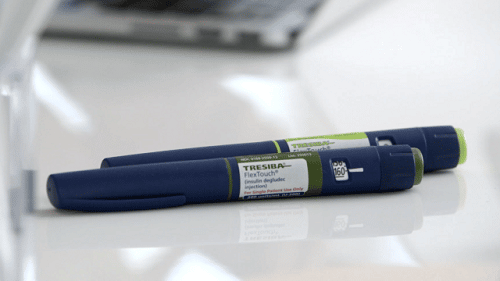
The principal insulin degludec brand name is Tresiba in most markets. It comes in prefilled pens and, in some regions, vials. The FlexTouch pen format is common and aims to simplify daily injections. Strengths include U-100 and U-200, which deliver the same units but different volumes.
Pen features, dial steps, and storage rules vary by device. For a practical device walkthrough, see Tresiba FlexTouch Pen Guide for handling and usage tips. If your regimen includes a fixed-ratio combination, degludec with liraglutide is marketed as Xultophy. See Xultophy Prefilled Pen for how the combo is used in care planning. Patients who need the pen itself can review Tresiba Flextouch Pens for format and strength options.
Mechanism of Action
The insulin degludec mechanism of action involves multihexamer formation in subcutaneous tissue. After injection, the analog forms soluble chains that slowly release active monomers. This creates a flat, consistent concentration over time. The result is a basal effect that supports 24-hour and beyond coverage.
Pharmacokinetics show a long half-life and limited day-to-day variability. Those features help clinicians design once-daily regimens. Under certain circumstances, the dosing interval may be flexible when advised by a clinician. For regulatory details, the manufacturer’s U.S. prescribing information describes absorption and steady-state characteristics.
Classification and Duration
As a basal agent, the insulin degludec classification is ultra–long-acting insulin analog. It sits alongside other long-acting options such as glargine and detemir. The prolonged profile is intended to cover background insulin needs at rest and between meals. Many patients use it with bolus insulin to manage post-meal spikes.
Duration extends well beyond 24 hours in most users. Steady state develops after several days of consistent dosing. These properties can reduce variability between days. They also allow clinicians to individualize injection timing when appropriate.
Clinical Uses
Common insulin degludec uses include basal support in type 1 and type 2 diabetes. In type 1 diabetes, it pairs with rapid-acting insulin for meals. In type 2 diabetes, it may be used alone or with other glucose-lowering agents. Individual goals and comorbidities guide selection and titration strategies.
If you are deciding between basal options, it helps to review basics first. For a focused summary of indications and patient selection, see Tresiba Uses and Dosage for clinical context. You can also compare background options in Different Types of Insulin for where degludec fits in therapy.
Dosing and Transitions
Initiation, titration, and switching require careful planning with a prescriber. Typical starting strategies consider prior insulin exposure, A1C, fasting patterns, and hypoglycemia risk. Clinicians may adjust gradually using fasting glucose logs. Device strength (U-100 or U-200) changes injection volume but not delivered units.
When changing regimens, use conservative steps and close follow-up. If switching from another basal analog, published algorithms guide unit adjustments. For structured examples and unit-by-unit guidance, see Insulin Conversions for standard approaches. If you are comparing basal analogs, you can also review Tresiba vs Lantus for clinical trade-offs discussed by indication.
The degludec dose should be individualized and reviewed regularly. Factors include fasting results, nocturnal lows, and concurrent therapies. Educators often emphasize gradual changes rather than rapid shifts. Any adjustments should follow medical advice and local guidelines.
Comparisons and Alternatives
Degludec is one of several basal analogs. Glargine is available in multiple formulations, including higher concentrations, and detemir is another long-acting option. Some people transition to or from degludec when seeking steadier profiles or different devices. Others prefer remaining on current regimens if they meet targets safely.
Understanding where each option fits prevents unnecessary switches. Reviews of clinical features help frame pros and cons. For a balanced head-to-head overview of common choices, see Tresiba vs Lantus to consider dose timing and device differences. If you are exploring combination options that include degludec, review Xultophy Side Effects to understand GLP-1–related considerations.
Safety Profile and Side Effects
Common insulin degludec side effects include hypoglycemia, injection-site reactions, and local skin changes. Less common events include edema and weight gain. Rotating injection sites helps minimize lipodystrophy (fat tissue changes). Sight changes can occur after the start of insulin therapy and should be promptly discussed with a clinician.
Risk reduction centers on careful titration and routine monitoring. People with frequent lows may need slower adjustments. For practical strategies to recognize and address symptoms, see Tresiba Side Effects for early warning signs and mitigation steps. Broader guidance on hypoglycemia prevention appears in the ADA Standards of Care, which outline education and monitoring practices.
Costs and Access
Costs vary by region, formulation, and coverage. Pens and vials may be priced differently from other basal options. Copays, deductibles, and discount programs can influence final out-of-pocket amounts. Pharmacies and plans may also preferentially cover specific brands.
To estimate your personal cost, check insurance formularies and pharmacy prices. Financial support programs may offer savings for eligible users. For approaches to lower overall expenses, community resources and plan tools can help. If you are weighing an alternative basal option, coverage differences may guide selection.
Practical Use and Handling
Proper handling supports consistent dosing and safety. Store sealed pens according to label guidance and avoid extreme temperatures. Opened pens can typically be kept at room temperature for a defined period. Do not reuse needles, and dispose of sharps properly after each injection.
Technique affects comfort and absorption. Use a fresh needle, wait the recommended count after injection, and rotate sites. If you want a device-focused overview, the Tresiba FlexTouch Pen Guide covers priming, dialing, and storage considerations. Manufacturer instructions in the U.S. prescribing information also summarize device use and stability.
Recap
Degludec is an ultra–long-acting basal insulin designed for steady background control. It is available in multiple strengths and common pen formats. Understanding how it works, where it fits, and how to use it safely can support better outcomes. Use clinical resources and your care team to tailor a plan that fits your needs.
Note: Always follow your prescriber’s instructions for dosing and titration. Device features and storage rules vary by product and strength.
This content is for informational purposes only and is not a substitute for professional medical advice.