
Please note: a valid prescription is required for all prescription medication.
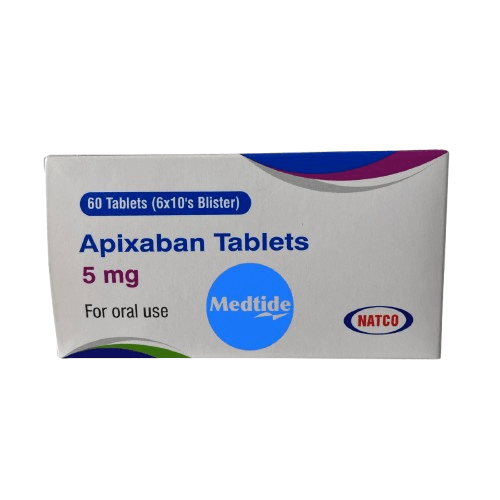
Apixaban
Buy Apixaban Online


Buy Apixaban online with a valid prescription and compare current listed pricing, tablet strengths, and safety basics before you place an order. If you are checking apixaban cost, use the product options on this page to match the listed tablet strength, quantity, and presentation to your prescription.
Apixaban is an anticoagulant (blood thinner) used for certain clot-related conditions. When US shipping from Canada is available for an order, review the selected product, handling notes, and checkout details before completing your purchase.
Apixaban Price and Available Options
Use the Apixaban price shown for the selected listing as your starting point. Compare the tablet strength, total quantity, and whether the listing is for generic Apixaban or a brand-name equivalent before you decide which option matches your order details.
If you are comparing apixaban cost without insurance, separate the page’s listed amount from any plan benefit, copay program, or reimbursement you may use elsewhere. Your out-of-pocket result can change when the strength, quantity, or supply length changes, so avoid comparing two listings unless those details match.
Apixaban tablets are commonly prescribed in 2.5 mg and 5 mg strengths. The exact strength is not interchangeable without clinical direction, even when the tablet name looks familiar. Apixaban 5 mg and Apixaban 2.5 mg may appear as separate options, and each should be matched against the prescription label.
| What to compare | Why it matters |
|---|---|
| Tablet strength | Strength must match the prescriber’s directions, such as 2.5 mg or 5 mg. |
| Quantity selected | The total tablet count affects how long the order may last. |
| Generic or brand | Apixaban is the active ingredient in Eliquis, but listings may differ. |
| Cash-pay context | Cash-pay totals may differ from insurance-based out-of-pocket amounts. |
Quick tip: Compare the selected tablet strength before comparing totals across listings.
Some patients search for Eliquis cost without insurance when they are really comparing the active ingredient, apixaban. If your clinician wrote for a specific brand or substitution rule, follow that wording when selecting a product.
How to Buy Apixaban Online
To order Apixaban online, choose the correct tablet listing, confirm the strength and quantity, and keep your prescriber information available. A valid prescription is required for Apixaban, and the details may be verified with your prescriber when needed.
The checkout path should reflect the medication exactly as prescribed. Do not select a different strength, split tablets differently, or substitute another anticoagulant because it appears similar on a product page. If supporting documents are requested, provide the requested information so the prescription order can be checked accurately.
Customers often compare Apixaban from Canada when reviewing access and cash-pay options. Product availability, acceptable documents, and order handling may depend on the selected medication and the information provided at checkout.
Use this page as a practical checklist: select the correct tablet, compare the currently listed option, review key safety points, and confirm that the order details match the prescriber’s instructions. The Cardiovascular collection can also help when you need to browse related heart and clot-related products.
Tablet Strengths and Product Details
Apixaban tablets are oral medicines taken on a schedule set by the prescriber. The product is a direct factor Xa inhibitor, meaning it helps reduce clot formation by blocking one part of the clotting process. That clinical role makes strength accuracy important when ordering.
Apixaban 2.5 mg and 5 mg strengths are not chosen by preference. Prescribers consider the condition being treated, kidney function, age, body weight, other medicines, and bleeding risk. Your product selection should mirror the written directions rather than a previous order or a general online comparison.
Generic Apixaban and Eliquis Apixaban share the same active ingredient when approved as equivalent products, but inactive ingredients, packaging, and appearance may differ. If your prescription says Eliquis only, or allows substitution, use that wording to guide the selection.
- Strength: Match the mg value exactly.
- Form: Confirm the listing is for tablets.
- Quantity: Check the total tablet count.
- Brand wording: Follow any substitution instructions.
- Directions: Use the prescriber’s schedule only.
Why it matters: Anticoagulants have a narrow safety margin when taken incorrectly.
What This Anticoagulant Is Used For
Apixaban may be prescribed to reduce the risk of stroke and systemic embolism in people with nonvalvular atrial fibrillation. It may also be used to treat deep vein thrombosis and pulmonary embolism, and to reduce the risk of these clots happening again after initial treatment.
These uses are condition-specific. A person taking apixaban for atrial fibrillation may have a different treatment plan than someone treated after a clot in the leg or lung. Duration also varies. Some people take it for a defined period, while others may need longer-term therapy based on their clinician’s assessment.
If you are comparing product options for a clot-related condition, the Atrial Fibrillation and Blood Clot DVT and PE product lists can help you navigate condition-related categories. They should not replace the directions on your prescription.
Storage, Shipping and Travel Basics
Apixaban tablets are generally stored at room temperature, away from excess moisture and heat. Keep tablets in their original container until use when possible, especially during travel, because the label helps identify the medicine and strength.
Unlike refrigerated injectables, apixaban tablets do not usually require cold-chain handling. Still, protect the package from extreme temperatures, damp bathrooms, and direct sunlight. If packaging appears damaged or tablets look different than expected, check before taking a dose.
Travel planning matters because missed doses can reduce clot protection, while extra doses can increase bleeding risk. Carry enough tablets for the planned trip, keep them in hand luggage when flying, and bring the prescription label or a copy of the directions. Do not transfer tablets into an unlabeled container for long trips.
When reviewing an online order, check the delivery address, contact details, and any handling notes before checkout. This is a practical logistics step, not a substitute for clinical guidance.
Safety Checks Before Ordering
Apixaban can increase bleeding risk. Common bleeding-related effects may include easy bruising, nosebleeds, bleeding gums, heavier menstrual bleeding, or longer bleeding from cuts. These effects are important to recognize because they can signal that the medicine is affecting clotting.
Seek urgent medical help for signs of serious bleeding, such as coughing or vomiting blood, black or tarry stools, red or brown urine, severe headache, sudden weakness, dizziness, fainting, or unusual pain and swelling. Also report any fall, head injury, or major trauma while taking an anticoagulant.
Apixaban should not be used in people with active pathological bleeding. It is also contraindicated in people with a serious hypersensitivity reaction to apixaban, such as anaphylaxis. Stopping the medicine too early can increase the risk of blood clots, so discontinuation should be handled through a clinician unless emergency care directs otherwise.
Spinal or epidural procedures can carry a rare but serious risk of blood collection around the spine in people taking anticoagulants. Tell every clinician, dentist, surgeon, and emergency care provider that you take apixaban before procedures or injections near the spine.
People with certain artificial heart valves, severe liver disease, advanced kidney disease, or high-risk antiphospholipid syndrome may need special evaluation. This does not mean apixaban is wrong for every person with these histories, but the prescriber should know before treatment begins.
Interactions and Monitoring
Apixaban has important interaction considerations. Medicines that affect bleeding can raise risk when used together, including aspirin, clopidogrel, nonsteroidal anti-inflammatory drugs such as ibuprofen or naproxen, some antidepressants, and other anticoagulants.
Strong inhibitors or inducers of both CYP3A4 and P-glycoprotein can also change apixaban exposure. Examples may include certain antifungals, HIV medicines, seizure medicines, and the herbal product St. John’s wort. Provide a complete medication list before starting or refilling therapy.
Routine blood thinning tests used for warfarin are not typically used to adjust apixaban, but monitoring still matters. Clinicians may check kidney function, liver function, hemoglobin, bleeding history, body weight, age-related risk factors, and whether procedures are planned.
Do not change the dose, skip doses, or double up without clinical direction. If a dose is missed or a procedure is scheduled, follow the instructions given by the prescribing clinician or the official patient information for the product.
Compare With Related Options
Apixaban is one of several anticoagulants used for clot-related conditions. The right option depends on the diagnosis, kidney and liver function, other medicines, bleeding history, procedure plans, coverage, and whether the prescription specifies a brand or generic product.
Eliquis contains apixaban as its active ingredient and may be relevant when the prescription is written for the brand. If the prescription allows substitution, the product name and active ingredient should still be checked carefully before ordering.
Xarelto is another direct oral anticoagulant, but it contains a different active ingredient and has different directions and safety considerations. Warfarin, dabigatran, and injectable anticoagulants are also distinct options that should not be swapped on your own.
Comparison is useful for understanding product categories, not for choosing therapy without medical input. If your prescription changes from one anticoagulant to another, confirm the stop and start instructions, because overlap or gaps can affect bleeding and clot risk.
Authoritative Sources
Use authoritative references when checking safety language, approved uses, and patient instructions. The official prescribing information outlines labeled indications, contraindications, warnings, and interaction details.
The MedlinePlus apixaban patient information provides plain-language details on use, precautions, side effects, and storage. Use these references alongside your prescriber’s directions and the product label supplied with your order.
This content is for informational purposes only and is not a substitute for professional medical advice.
Customer Reviews
5.0 Based on 12 Reviews
Write a Review Ask a Question - Reviews
- Questions
Filter Reviews:
AV
03/20/2026
Angelo V.  US
USgreat service
the representative is courteous and patience when reviewing my information and placing my order. also reminded me that the rep is available for any questions and to call any time i may have questions.
03/23/2026
CanadianInsulin.com
Hi Angelo!We’re delighted to hear that you had a positive experience with our representative. Providing courteous, patient, and thorough assistance is something we truly value, and it’s great to know that this was reflected during your interaction. Please don’t hesitate to reach out anytime you have questions or need assistance. We are always here to help!Thank you for always trusting Canadian Insulin!
VM
01/31/2026
Victoria M. USApixaban
Very good. Fair price and fast shipping.
02/02/2026
CanadianInsulin.com
Hi Victoria!Thank you so much for your kind words about your Apixaban order! We’re truly happy to hear that you were satisfied with both the price and the speed of delivery. Providing affordable medication and reliable service is exactly what we strive for and feedback like this means a lot to our team.If you ever have questions about your orders, refills, or anything else, we’re always here and glad to help.Thank you for always choosing Canadian Insulin!
JC
01/22/2026
Joseph C. USGreat online service
Good! No problems.
01/23/2026
CanadianInsulin.com
Hi Joseph!Thank you for sharing your experience with us. We’re glad to hear that you had a smooth and positive experience with our online service and that everything went well without any issues.Your satisfaction means a lot to us, and we’re committed to continuing to provide a reliable, easy, and hassle-free experience for all your prescription needs. If you ever need assistance, our team is always here to help.Don’t forget to visit our website regularly to explore our newest promotions and special savings, you may find great offers to help you save on upcoming orders.Thank you for always choosing Canadian Insulin! We truly appreciate your trust and support.
JM
01/22/2026
JAMES M. USApixaban order
Canadian Insulin has been an excellent source for my prescription and has done an outstanding job
01/23/2026
CanadianInsulin.com
Hi James!Thank you for taking the time to share your positive experience with us. We’re delighted to hear that Canadian Insulin has been an excellent and reliable source for your Apixaban prescription and that our team has met your expectations.Your trust means a great deal to us, and we’re honored to support you in managing your medication needs. Please know that our team remains committed to providing consistent service, timely support, and quality care whenever you need us.Thank you for always choosing Canadian Insulin. We truly appreciate your continued trust and look forward to serving you for years to come.
AR
12/04/2025
Alicia R. Forde USExcellent service!
This review refers to the company and the service. It took a moment to set up an account - and they provided great assistance and support through out the process. Once the account was established, the prescription arrived within 3 days! Speedy! It was exactly what I ordered - and very well priced!
12/05/2025
CanadianInsulin.com
Hi Alicia!Thank you so much for your excellent feedback. We are very pleased to hear that you had a smooth experience with our team. We understand that setting up an account can take some time, and we are glad our support team was able to assist you throughout the process.It is also wonderful to know that your prescription arrived within three days and exactly as ordered. Providing fast delivery, accurate fulfillment, and competitive pricing is very important to us, and we truly appreciate you sharing your experience.Thank you for choosing Canadian Insulin. We look forward to serving you again.
Express Shipping - from $25.00
Shipping with this method takes 3-5 days
Prices:
- Dry-Packed Products $25.00
- Cold-Packed Products $35.00
Standard Shipping - $15.00
Shipping with this method takes 5-10 days
Prices:
- Dry-Packed Products $15.00
- Not available for Cold-Packed products
What is apixaban used for?
Apixaban is an anticoagulant, often called a blood thinner. It may be prescribed to lower the risk of stroke and systemic embolism in certain people with nonvalvular atrial fibrillation. It may also be used to treat deep vein thrombosis or pulmonary embolism, and to reduce the risk of those clots returning after initial treatment. The reason for use, dose, and duration should come from the prescribing clinician.
What side effects should I watch for while taking apixaban?
Bleeding is the main safety concern with apixaban. Watch for easy bruising, nosebleeds, bleeding gums, heavier menstrual bleeding, or bleeding that takes longer to stop. Serious warning signs include black stools, blood in urine, vomiting blood, severe headache, sudden weakness, fainting, or unusual pain and swelling. A fall or head injury should be taken seriously while using any anticoagulant, even if symptoms seem mild at first.
What should I ask my clinician before starting apixaban?
Ask why apixaban was selected, which strength you should take, how long treatment is expected to last, and what to do if a dose is missed. Also ask how upcoming dental work, surgery, injections near the spine, travel, kidney problems, liver problems, or bleeding history may affect the plan. Share all prescription medicines, over-the-counter products, supplements, and herbal products before therapy begins.
Can apixaban be taken with other medicines?
Apixaban can interact with medicines that increase bleeding risk or change how the body processes the drug. This may include aspirin, clopidogrel, ibuprofen, naproxen, some antidepressants, other anticoagulants, certain antifungals, HIV medicines, seizure medicines, and St. John’s wort. Do not stop or add medicines without clinical guidance. A complete medication list helps the prescriber evaluate interaction risk.
How should apixaban tablets be stored?
Apixaban tablets are generally kept at room temperature, away from excess heat and moisture. Store them in the original container when possible, and keep the label available so the strength and directions can be checked. Avoid leaving tablets in a hot car, damp bathroom, or unlabeled travel container for long periods. Keep all medicines out of reach of children and pets.
Rewards Program
Earn points on birthdays, product orders, reviews, friend referrals, and more! Enjoy your medication at unparalleled discounts while reaping rewards for every step you take with us.
You can read more about rewards here.
POINT VALUE
How to earn points
- 1Create an account and start earning.
- 2Earn points every time you shop or perform certain actions.
- 3Redeem points for exclusive discounts.
You Might Also Like
Select options
This product has multiple variants. The options may be chosen on the product page
Select options
This product has multiple variants. The options may be chosen on the product page
Select options
This product has multiple variants. The options may be chosen on the product page
Select options
This product has multiple variants. The options may be chosen on the product page
Related Articles
Diabetes, Type 2
What Fruits Are Good for Diabetics? How to Choose Wisely
Most people with diabetes can eat fruit. The best choices are whole fruits with fiber, such as berries, apples, pears, citrus, cherries, and kiwi. When people ask what fruits are…
Diabetes, Type 1
Blood Sugar Normal Range Chart: How to Read Key Numbers
A blood sugar normal range chart gives you a quick way to compare fasting, before-meal, after-meal, and A1C numbers with common clinical cutoffs. It matters because the same glucose value…
Uncategorized
Clots and Period: When Menstrual Blood Clots Need Attention
The phrase clots and period usually refers to blood clots that pass during menstruation. In many cases, small clots on the heaviest days are a normal result of brisk bleeding.…
Diabetes, Type 1
Type 1 Versus Type 2 Diabetes: Symptoms, Causes, and Care
type 1 versus type 2 diabetes comes down to why blood sugar rises. In type 1, the immune system destroys insulin-making cells in the pancreas, so the body makes little…