
Please note: a valid prescription is required for all prescription medication.
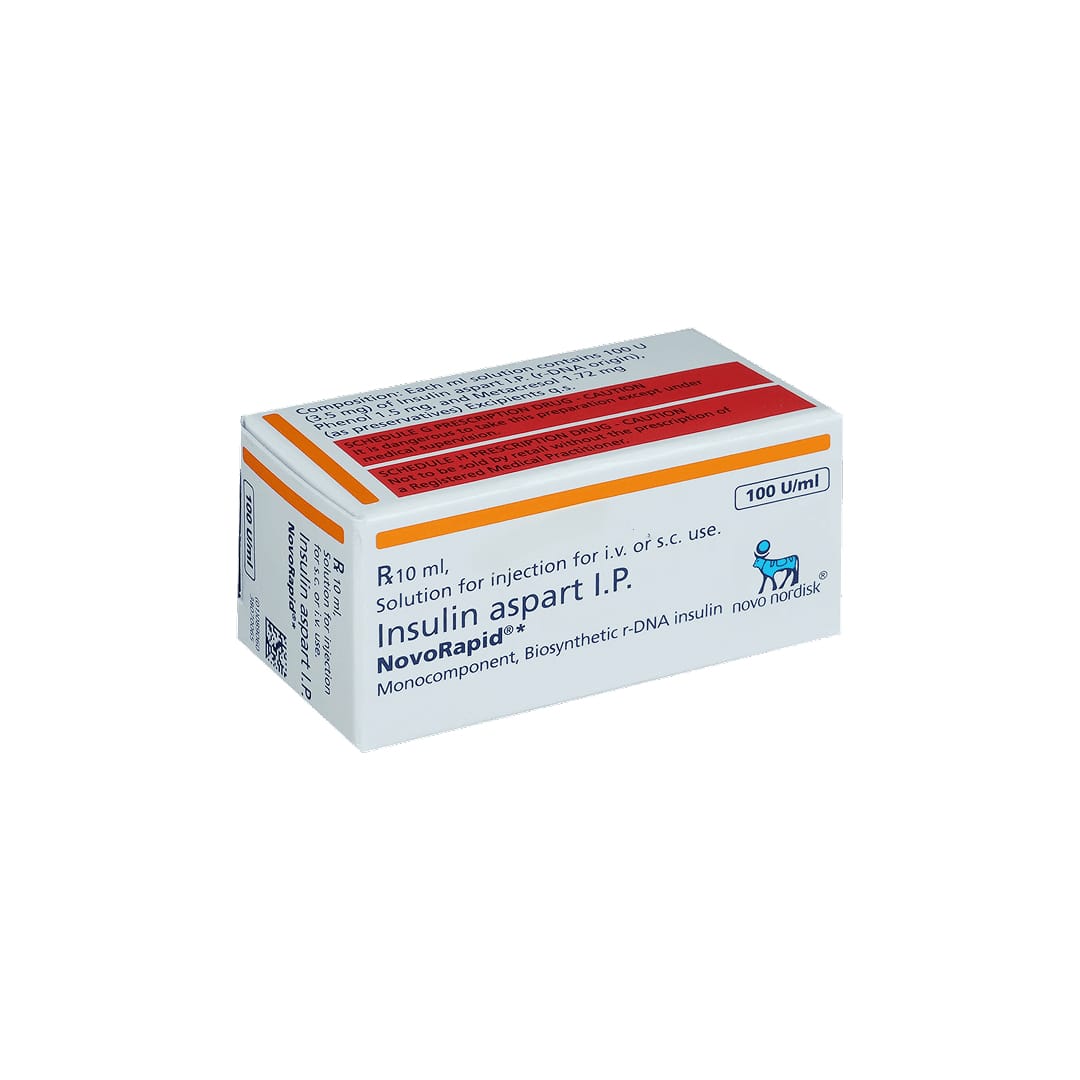
NovoRapid Vial
Buy NovoRapid Vial Online
Also available for your pet.


NovoRapid Vial is a rapid-acting insulin aspart medicine supplied as a 10 mL multi-dose vial at 100 units/mL. It can be bought online for US delivery from Canada, and the vial format, strength, and quantity should match the directions your clinician gave you. The 10 mL vial contains 1,000 total units, which is the total amount in the vial rather than a single dose.
NovoRapid is used in diabetes care to help manage blood glucose around meals, correction dosing, or insulin pump use when those instructions are part of an individual treatment plan. Because insulin dosing is individualized, use the ordering information to choose the correct vial and strength, not to change how much insulin you take.
NovoRapid Vial Price and 10 mL Strength Selection
The NovoRapid Vial price should be read together with the vial size, concentration, and quantity shown during checkout. A NovoRapid 10mL vial at 100 units/mL contains 1,000 units in total, but that total does not describe how many units to inject at one time. Your dose, meal timing, correction scale, and refill timing come from your diabetes care plan.
When comparing NovoRapid vial cost, focus on the exact format. A vial is different from a cartridge or pen, even when the active ingredient is insulin aspart. The vial may be used with appropriate U-100 insulin syringes or to fill a compatible pump reservoir when directed. If you normally use a device, make sure the medicine format and supplies match the written instructions.
People paying cash often look at the visible vial amount, the number of vials needed, and cold-chain handling expectations. The lowest visible amount is not always the most useful comparison if quantities, supply needs, or storage requirements differ. Keep the name NovoRapid, insulin aspart, 100 units/mL strength, and 10 mL vial format consistent across your order information.
| Vial attribute | What it means for ordering |
|---|---|
| Product name | NovoRapid Vial |
| Active ingredient | Insulin aspart, a rapid-acting insulin analogue |
| Concentration | 100 units/mL |
| Vial volume | 10 mL |
| Total contents | 1,000 units per vial |
| Format decision | Vial format requires compatible supplies or pump instructions |
Quick tip: Recheck the wording if your medicine directions mention cartridge, pen, pump reservoir, or vial.
How to Order NovoRapid Vials Online
Order NovoRapid vials online by choosing the 10 mL vial format and the quantity that matches your current treatment instructions. We may review order information to help ensure the medicine name, strength, vial format, and customer details align before the order is processed through licensed pharmacy channels.
Before checkout, verify the active ingredient is insulin aspart and the strength is 100 units/mL. NovoRapid should not be swapped with another rapid-acting insulin, a different device format, or a different concentration unless your clinician changes your therapy. Product names can look similar, so this step helps prevent errors when more than one insulin appears in your medicine list.
- Format: Choose the vial, not a cartridge or pen, when the vial is intended.
- Strength: Confirm 100 units/mL on the vial information.
- Quantity: Match the number of vials to your refill plan.
- Supplies: Confirm syringes, pump reservoirs, infusion sets, and sharps disposal needs separately.
- Storage: Plan refrigeration and in-use discard tracking before the vial arrives.
Temperature-sensitive insulin may require prompt, express, cold-chain shipping. Packaging supports transit handling, but it does not replace the storage rules on the medicine label. Inspect the parcel soon after arrival and place unopened vials in the appropriate storage location.
What This Rapid-Acting Insulin Is Used For
NovoRapid Vial is used to help lower high blood sugar in people with diabetes mellitus when insulin aspart is part of the treatment plan. It is a rapid-acting insulin, meaning it is typically used around meals or for correction dosing as directed. Many people use it alongside a basal insulin, glucose monitoring, nutrition planning, and other diabetes care steps.
In type 1 diabetes, the body does not make enough insulin, so insulin therapy is usually required every day. In type 2 diabetes, mealtime insulin may be added when other treatments do not provide enough glucose control. The broader diabetes section can help place insulin therapy in context, while type 1 diabetes and type 2 diabetes pages cover condition-specific background.
Rapid-acting insulin begins working faster than older regular insulin products. That faster timing can help cover food-related glucose rises, but it also increases the need for careful meal planning and glucose monitoring. Taking a dose without expected food, using the wrong insulin, or repeating correction doses too closely can raise the risk of hypoglycemia.
Insulin Aspart Vial Details and Device Considerations
Insulin aspart is an insulin analogue designed to act quickly after administration. The NovoRapid insulin aspart vial is a multi-dose container, so each use requires clean technique and the right supplies. Do not draw insulin into a syringe or fill a pump reservoir unless you have been taught how to do it safely.
For injection, the vial is used with U-100 insulin syringes. For pump therapy, the vial may be used to fill the reservoir of a compatible continuous subcutaneous insulin infusion system when that setup is part of the care plan. Pump users need backup supplies because blocked infusion sets, empty reservoirs, or pump failure can interrupt insulin delivery quickly.
The rapid-acting insulin category can help distinguish mealtime insulin products from long-acting insulin choices. If your clinician changes your insulin type, confirm the exact product name, timing instructions, concentration, and device format before using the new medicine.
| Decision point | Practical difference |
|---|---|
| Vial versus pen | Vials need separate syringes or pump supplies; pens use compatible pen needles. |
| 100 units/mL | Syringe markings and pump settings must match the concentration. |
| Multi-dose container | The vial is used multiple times until the labeled discard period is reached. |
| Rapid action | Meal timing and glucose monitoring are important for safer use. |
Storage, Handling, and Arrival Checks
Insulin is sensitive to temperature, light, and freezing. Store unopened NovoRapid vials according to the official product instructions, usually under refrigeration, and never freeze them. Keep vials away from direct heat and sunlight, including car interiors, windowsills, luggage holds, and freezer packs touching the vial directly.
Opened or in-use vials have a limited discard period. Write the first-use date on the label or in a medication log, then follow the manufacturer instructions for how long the vial can be kept. The solution should remain clear and colorless. Do not use the vial if the liquid is cloudy, thickened, discolored, leaking, cracked, or contains particles.
Use sterile supplies each time you withdraw insulin. Do not share syringes, needles, reservoirs, or infusion sets. Dispose of used sharps in an approved sharps container, not household trash. If you travel, keep insulin with you, protect it from freezing, and carry enough supplies for delays or device problems.
- On arrival: Open the package promptly and move the vial to proper storage.
- Before each use: Inspect the solution and container for visible changes.
- During use: Avoid contaminating the vial stopper or syringe needle.
- For pumps: Follow reservoir and infusion-set change intervals from the device instructions.
- At discard: Throw away the vial when the labeled in-use time has passed.
Why it matters: Heat, freezing, contamination, or expired in-use time can reduce insulin reliability.
Side Effects, Warnings, and Monitoring
The most important risk with NovoRapid Vial is hypoglycemia, or low blood sugar. Symptoms may include shakiness, sweating, hunger, headache, blurred vision, fast heartbeat, mood changes, confusion, weakness, or dizziness. Severe hypoglycemia can cause seizure, loss of consciousness, injury, or the need for emergency treatment.
High blood sugar can also become dangerous if insulin is missed, the vial is damaged, a pump fails, an infusion set blocks, or illness increases insulin needs. Hyperglycemia may cause thirst, frequent urination, fatigue, blurred vision, nausea, or ketones. People using pumps should keep a backup plan because rapid-acting insulin interruption can lead to rising glucose quickly.
Common local reactions include redness, itching, swelling, or discomfort at the injection site. Rotate injection sites within the area your clinician recommended. Repeated injections into the same spot may cause lipodystrophy, meaning skin thickening or pitting, or localized amyloidosis, meaning protein buildup in the skin. These skin changes can alter insulin absorption.
Do not use insulin aspart during a low blood sugar episode. Avoid use if you have had a serious allergic reaction to insulin aspart or any ingredient in the medicine. Seek urgent help for widespread rash, facial or throat swelling, wheezing, severe dizziness, or trouble breathing. Tell your care team about repeated lows, new swelling, unexplained weight changes, or glucose readings that remain high despite following your plan.
- Low glucose: Keep fast-acting carbohydrate available if your clinician recommends it.
- Injection sites: Rotate sites and avoid bruised, scarred, hard, or damaged skin.
- Pump users: Watch for infusion set problems when readings rise unexpectedly.
- Illness days: Ask how to monitor glucose and ketones during fever, vomiting, or poor intake.
- Emergency planning: Make sure caregivers know what to do for severe hypoglycemia.
Interactions and Clinical Factors That Can Change Insulin Needs
Many medicines and health changes can affect insulin requirements. Corticosteroids, some diuretics, thyroid medicines, other diabetes treatments, certain antidepressants, and alcohol may change blood glucose patterns. Beta blockers can also make warning symptoms of low blood sugar less obvious, especially a fast heartbeat.
Thiazolidinediones, often called TZDs, may increase fluid retention risk when used with insulin. Report swelling, shortness of breath, rapid weight gain, or worsening fatigue promptly, particularly if you have heart disease. Kidney or liver problems, pregnancy, changes in activity level, meal timing, and acute illness may also require closer monitoring.
Do not adjust dose timing, correction instructions, or pump settings based only on online product information. The insulin medications category can help you understand nearby insulin classes, but individualized treatment changes should come from your clinician. Use product information to keep the vial, concentration, quantity, and storage plan accurate.
- Keep your current insulin schedule and glucose targets written down.
- Ask how to handle missed meals, delayed meals, exercise, and illness.
- Know when ketone testing is needed, especially with pump therapy.
- Discuss medication changes before starting or stopping other treatments.
- Review low-glucose treatment and emergency glucagon planning when appropriate.
Related Diabetes and Insulin Choices
NovoRapid Vial belongs to the broader group of diabetes medications used to manage blood glucose. Some people use only insulin, while others use insulin with non-insulin medicines, depending on diabetes type, glucose patterns, kidney function, cardiovascular history, and treatment goals. The diabetes medications collection provides a broader view of medication categories.
If a different insulin is prescribed, do not choose it based only on similar timing or brand familiarity. Insulin lispro, insulin glulisine, insulin aspart, regular insulin, and long-acting insulins have different labels and use patterns. Even another insulin aspart product can differ in formulation, timing language, device compatibility, or handling instructions.
General diabetes articles may help you prepare questions for a visit, but they should not replace your personal treatment plan. The diabetes articles section covers practical topics, and the diabetes product category can help separate medicines, supplies, and related care items.
| Related choice | What to confirm |
|---|---|
| Another rapid-acting insulin | Confirm active ingredient, timing, concentration, and dosing instructions. |
| Different NovoRapid format | Confirm whether vial, cartridge, or pen is intended. |
| Pump therapy supplies | Confirm reservoir, infusion set, and backup injection instructions. |
| Long-acting insulin | Confirm basal insulin timing separately from mealtime insulin. |
Authoritative Sources
Official product information should be used when confirming administration routes, storage instructions, contraindications, and safety warnings. These sources support the clinical statements summarized above.
- Official product information: NovoRapid Summary of Product Characteristics.
- Manufacturer patient information: Novo Nordisk Canada consumer information for NovoRapid.
This content is for informational purposes only and is not a substitute for professional medical advice.
Blood Glucose Unit Converter
Convert glucose readings between mg/dL and mmol/L without changing the clinical value.
mg/dL
-
US reporting unit
mmol/L
-
International reporting unit
These calculations are for education only and do not replace clinical advice, diagnosis, or treatment. Always confirm medical decisions with a qualified healthcare professional.
HbA1c & eAG Calculator
Convert between HbA1c percentage and estimated average glucose using the ADAG relationship.
HbA1c
-
percentage
eAG mg/dL
-
estimated average glucose
eAG mmol/L
-
estimated average glucose
These calculations are for education only and do not replace clinical advice, diagnosis, or treatment. Always confirm medical decisions with a qualified healthcare professional.
HOMA-IR Calculator
Estimate insulin resistance from fasting glucose and fasting insulin values collected from the same blood draw.
HOMA-IR
-
screening estimate, not a diagnosis
Formula used
-
depends on glucose unit
These calculations are for education only and do not replace clinical advice, diagnosis, or treatment. Always confirm medical decisions with a qualified healthcare professional.
Carb Serving Calculator
Convert total carbohydrate grams into carb choices for meal planning and diabetes education.
Carb choices
-
total carbs divided by choice size
Rounded choices
-
nearest half choice
Carb calories
-
4 kcal per gram
These calculations are for education only and do not replace clinical advice, diagnosis, or treatment. Always confirm medical decisions with a qualified healthcare professional.
Corrected Sodium Calculator
Estimate sodium corrected for hyperglycemia using common 1.6 and 2.4 correction factors.
Corrected sodium
-
1.6 factor
Corrected sodium
-
2.4 factor
These calculations are for education only and do not replace clinical advice, diagnosis, or treatment. Always confirm medical decisions with a qualified healthcare professional.
Customer Reviews
4.8 Based on 19 Reviews
Write a Review Ask a Question - Reviews
- Questions
Filter Reviews:
LW
07/14/2026
Lena W.  US
USInsulin order
Arrived timely. Well packaged. Great customer service.
07/15/2026
CanadianInsulin.com
Hi Lena,Thank you so much for your kind feedback! We're delighted to hear that your insulin order arrived on time, was well packaged, and that you had a great experience with our customer service team. Providing reliable service and ensuring your medications arrive safely are always our top priorities. If you ever need assistance with placing an order or have any questions, please don't hesitate to reach out we're always here to help. Thank you for choosing Canadian Insulin!
NK
06/13/2024
Norita K. USSupport on Board
I was thrilled to have Canadian Insulin. Where I live there is a shortage of Novolog and other types of insulin. I was barely able to get 2 vials even though my RX was more than twice of that. All the pharmacies are on back orders. This has never happened in all my 58 years of having type 1 diabetes. I am so grateful for Canadian Insulin’s excellent customer service. Everything was just as what was described. A superb company. I have let other people who have or know people with diabetes. I have also recommended it to other healthcare place share it with patients or clients.
06/14/2024
CanadianInsulin.com
Hi Norita,Thank you for sharing your positive experience! We're thrilled to hear that we could assist you during a time of shortage and that you found our customer service excellent. It means a lot to us that you’ve recommended our service to others and healthcare providers. If you have any questions or need further assistance, please don't hesitate to reach out. We're here to support you.Thank you for choosing Canadian Insulin. Have a great day!
MT
12/19/2023
Michael T. USI recommend this product
Type 1 Diabetic using Novolog
We love working with Canadian Insulin. They are a life saver.
12/27/2023
CanadianInsulin.com
Hi Michael,We appreciate your kind words and we are thrilled to hear that you had a great experience with our service. It's always our goal to ensure a smooth and hassle-free experience for our customers.Thank you for supporting Canadian Insulin! We look forward to serving you again in the future.Have a great day!
RW
12/06/2023
Robert W. USI recommend this product
Insulin
Always the best!
12/15/2023
CanadianInsulin.com
Hi Robert, , We appreciate your kind words and we are thrilled to hear that you had a great experience with our service. It's always our goal to ensure a smooth and hassle-free experience for our customers.We look forward to serving you again in the future.Have a great day!
JB
07/14/2023
James B. USI recommend this product
Not Good…shipping takes 6 days
Purchased 3 months supply. Package shipped 7/6 via ground, didn’t arrive until 7/12 and all insulin was warm. Not Good! Great product, poor service.
07/26/2023
CanadianInsulin.com
Hi James,Thank you for bringing this matter to our attention. We sincerely apologize for the inconvenience and frustration you have faced. We understand the importance of timely delivery and keeping the medication cold for optimal effectiveness.We will take immediate action to improve our prescription process and address the issues you've raised. To do so, we'll assign someone to get in touch with you to gather more details and offer suitable resolution.We appreciate your patience and looking forward to resolving this matter to your satisfaction.
Express Shipping - from $29.99
Shipping with this method takes 3-5 days
Prices:
- Dry-Packed Products $29.99
- Cold-Packed Products $39.99
Standard Shipping - $19.99
Shipping with this method takes 5-10 days
Prices:
- Dry-Packed Products $19.99
- Not available for Cold-Packed products
What is NovoRapid Vial used for?
NovoRapid Vial contains insulin aspart, a rapid-acting insulin used to help manage high blood sugar in people with diabetes mellitus when it is part of their treatment plan. It is commonly used around meals or for correction dosing as directed by a clinician.
How many units are in a NovoRapid 10 mL vial?
A 10 mL NovoRapid Vial at 100 units/mL contains 1,000 total units. That number is the total vial contents, not the amount to inject at one time. Individual doses should follow the treatment plan provided by a clinician.
Can NovoRapid Vial be used in an insulin pump?
NovoRapid Vial may be used for continuous subcutaneous insulin infusion in a compatible pump system when that use is specifically directed. Pump users should follow device instructions and keep backup insulin supplies for infusion-set or pump problems.
What are common side effects of NovoRapid?
The most important side effect is hypoglycemia, or low blood sugar. Injection-site redness, itching, swelling, or discomfort can also occur. Serious allergic reactions are uncommon but require urgent care if symptoms include swelling, wheezing, severe dizziness, or trouble breathing.
How should NovoRapid Vials be stored?
Unopened vials should be stored according to the product instructions, usually refrigerated and protected from freezing, heat, and light. Opened or in-use vials have a limited discard period. Do not use insulin that is cloudy, discolored, thickened, leaking, cracked, or contains particles.
Rewards Program
Earn points on birthdays, product orders, reviews, friend referrals, and more! Enjoy your medication at unparalleled discounts while reaping rewards for every step you take with us.
You can read more about rewards here.
POINT VALUE
How to earn points
- 1Create an account and start earning.
- 2Earn points every time you shop or perform certain actions.
- 3Redeem points for exclusive discounts.
You Might Also Like
Select options
This product has multiple variants. The options may be chosen on the product page
Select options
This product has multiple variants. The options may be chosen on the product page
Select options
This product has multiple variants. The options may be chosen on the product page
Select options
This product has multiple variants. The options may be chosen on the product page