
Please note: a valid prescription is required for all prescription medication.
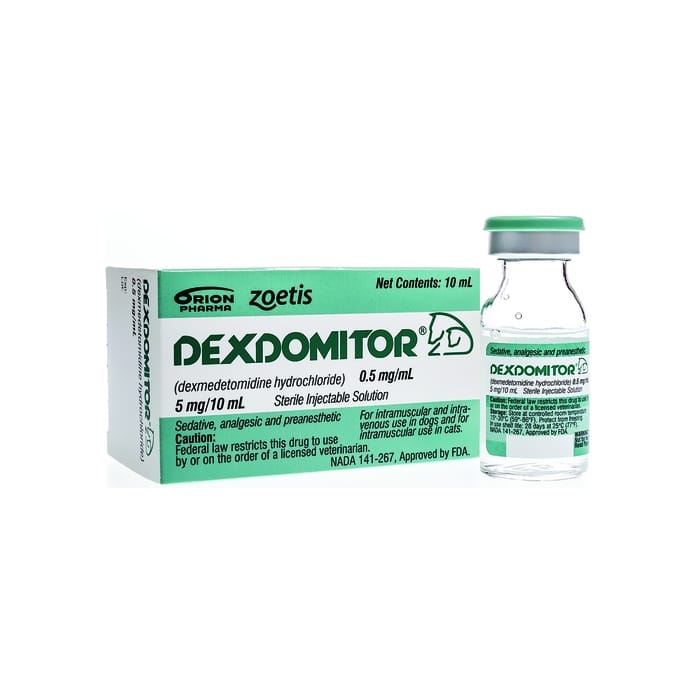
Dexdomitor Vial
Buy Dexdomitor Vial Online


Dexdomitor Vial is an injectable veterinary sedative and analgesic containing dexmedetomidine hydrochloride. You can buy Dexdomitor Vial online, view the current vial price, and match the 0.5 mg/mL 10 mL vial to the directions provided by the veterinary team.
This medicine is intended for dogs and cats under professional veterinary supervision. The vial strength, total volume, route, and quantity should align with the procedure plan, because the 10 mL vial size is not a single-animal dose.
Dexdomitor injection can affect heart rate, breathing, blood pressure, body temperature, and recovery. It should be handled as a clinical injectable, not as a routine home calming medicine or a substitute for a veterinarian-directed sedation plan.
Dexdomitor Vial Price and Strength Selection
The Dexdomitor vial price should be evaluated against the exact form, concentration, vial volume, and number of vials being purchased. The commonly supplied presentation is Dexdomitor 0.5 mg/mL 10 mL vial, which contains 0.5 mg of dexmedetomidine hydrochloride in each mL of solution.
Vial volume and dose are different. A 10 mL vial supports inventory and ordering decisions, while the animal’s individual dose is calculated by trained veterinary staff using species, body weight, route, procedure, health status, and concurrent medicines.
If you are assessing Dexdomitor cost without insurance or as a cash-pay purchase, look at the complete line item rather than the brand name alone. Quantity, handling requirements, and the vial strength can change the practical total.
| Ordering attribute | What it means | What to verify |
|---|---|---|
| Form | Injectable solution in a multidose vial. | Do not substitute another form unless the veterinarian directs it. |
| Strength | 0.5 mg/mL when this vial strength is shown. | Match the concentration to the clinical order. |
| Vial volume | 10 mL total vial contents. | Use for quantity planning, not dose calculation. |
| Quantity | Number of vials added to the cart. | Align with the clinic’s inventory or procedure need. |
Quick tip: Confirm mg/mL before comparing totals, because vial size alone does not identify strength.
How to Order Dexdomitor Online
To order Dexdomitor online, start with the exact brand, injectable form, concentration, and vial volume requested for the animal’s procedure. Similar sedatives are not automatically interchangeable, even when they belong to the same therapeutic class.
The checkout process may ask for clinic or animal information needed to match the order. Keep the veterinarian’s written directions available so the vial strength, quantity, and handling needs can be reviewed accurately before use.
For customers arranging US delivery from Canada, the same practical checks apply: vial strength, total volume, quantity, and packaging condition on arrival. When handling requires it, prompt, express, cold-chain shipping may be used, but the label and accompanying storage instructions remain the controlling reference after receipt.
- Brand and active ingredient: Dexdomitor contains dexmedetomidine hydrochloride.
- Concentration: Dexdomitor 0.5 mg/mL means each mL contains 0.5 mg of active drug.
- Vial volume: The 10 mL total volume supports supply planning.
- Quantity: Choose the number of vials that matches the veterinary plan.
- Use setting: Administration should occur under professional veterinary direction.
What Dexdomitor Injection Is Used For
Dexdomitor injection is labeled for use as a sedative and analgesic in dogs and cats. Sedation reduces arousal and movement, while analgesia helps control procedure-related pain when the medicine is used by trained veterinary professionals.
Veterinarians may use Dexdomitor for dogs and cats to facilitate clinical examinations, diagnostic procedures, minor surgical procedures, and minor dental procedures. It may also be used as part of a preanesthetic plan when the veterinarian determines that it fits the animal’s condition and procedure.
The active ingredient, dexmedetomidine hydrochloride injection, is an alpha-2 adrenergic agonist. This class affects nervous system signaling and can produce meaningful physiologic changes, so monitoring is part of appropriate use.
Dexdomitor is not meant to be chosen as a general anxiety treatment or unsupervised sedative. If a pet needs routine fear, anxiety, pain, or behavior support, the veterinarian may recommend a different therapy from the broader Pet Medications category.
Concentration, Dose Planning, and Dosing Charts
Dexdomitor concentration is central to safe selection. A Dexdomitor 0.5 mg/mL vial contains 0.5 mg of dexmedetomidine hydrochloride per mL, while the 10 mL figure describes the total amount of liquid in the vial.
Terms such as Dexdomitor dosing chart, Dexdomitor calculator, Dexdomitor mg/kg, canine Dexdomitor dosing chart, and Dexdomitor cat dosing chart reflect how veterinary teams translate concentration into an animal-specific plan. Those tools should be used only by veterinarians or trained staff, because small changes in route, weight, health status, or other sedatives can matter.
Official labeling describes different administration routes by species. Intravenous or intramuscular administration may be described for dogs, while intramuscular administration is described for cats. That labeling context helps verify the vial and route in a clinical setting; it is not a self-administration instruction.
| Term | Plain meaning | Why it matters |
|---|---|---|
| 0.5 mg/mL | Amount of active drug in each mL. | Used when calculating a dose. |
| 10 mL vial | Total liquid volume in the vial. | Used for supply and quantity planning. |
| mg/kg | Drug amount per kilogram of body weight. | Requires accurate weight and clinical judgment. |
| Route | How the injection is given. | Can change onset, monitoring, and recovery planning. |
Why it matters: A vial concentration is not a dosing instruction for any individual animal.
Administration and Clinical Monitoring
Dexdomitor injectable solution is generally administered in a veterinary setting or by personnel trained under a veterinarian’s direction. Safe use requires sterile technique, correct route, dose calculation, patient monitoring, and recovery planning.
Before use, the veterinary team may evaluate body weight, procedure type, hydration, temperature, recent illness, heart and lung status, current medicines, and fasting instructions. These factors can influence whether Dexdomitor is appropriate and how the animal should be observed.
During and after sedation, clinics may monitor heart rate, respiratory rate, oxygenation, blood pressure, body temperature, gum color, and recovery quality. The animal may need a quiet, temperature-appropriate recovery area until alertness and movement are adequate.
Pet owners should follow discharge instructions after any sedated procedure. Food, water, activity, and other medicines may be restricted for a period of time, and unusual sleepiness, weakness, breathing difficulty, agitation, collapse, or delayed recovery should be reported promptly to the veterinary team.
How Long Effects May Last
The duration of Dexdomitor effects can vary. Species, dose, route, procedure length, body temperature, organ function, other medicines, and the use of reversal strategies can all influence how long a dog or cat remains sedated.
Some animals recover quickly under supervision, while others need longer observation before discharge. The veterinary team determines when the animal is stable enough to leave the clinic and what home monitoring is appropriate after the procedure.
A reversal medicine may be used when clinically appropriate, but it is not an owner-directed decision. Recovery planning belongs with the veterinary professionals who know the animal’s response, procedure, and monitoring results.
Storage, Handling, and Product Integrity
Follow the storage directions on the Dexdomitor label and any instructions provided with the order. Injectable veterinary medicines may have specific temperature, light, puncture-date, and disposal requirements that differ from ordinary household medication storage.
Keep the vial in its labeled packaging until use. Do not freeze, overheat, transfer, dilute, or mix the solution unless a veterinarian or pharmacist has provided a specific clinical instruction.
When the vial is received, inspect the outer packaging and container before it enters clinic inventory. Do not use the product if the seal is compromised, the vial is leaking, the label cannot be read, or the solution appears abnormal compared with the package insert.
After the vial has been punctured, clinic protocols and the package insert should guide dating, storage, contamination prevention, and disposal. Sterility is part of safe handling, not merely a technical detail.
Side Effects, Warnings, and Precautions
Dexdomitor can cause clinically important changes because it alters nervous system activity. Labeling and veterinary references describe potential effects such as bradycardia, changes in breathing, vomiting, pale mucous membranes, low body temperature, blood pressure changes, and delayed recovery.
Official labeling warns against use in animals with certain serious health concerns, including cardiovascular disease, respiratory disorders, liver or kidney disease, shock, severe debilitation, or stress from extreme heat, cold, or fatigue. The veterinarian should know about pregnancy or breeding status, recent illness, and any previous anesthesia concerns.
Drug interactions are especially important with sedatives and anesthesia-related medicines. Tell the veterinarian about opioids, tranquilizers, anesthetics, heart medicines, supplements, recent injections, and any other therapies the animal has received.
Combining sedatives may intensify effects on breathing, heart rate, blood pressure, body temperature, and recovery time. Serious reactions need urgent veterinary attention, particularly if the animal has trouble breathing, collapses, remains unusually weak, or does not recover as expected.
Because Dexdomitor is used around procedures, safety depends on both product selection and clinical workflow. Accurate weight, correct concentration, sterile handling, monitoring equipment, and trained recovery observation all help reduce avoidable risk.
Dexdomitor, Dexmedetomidine, and Related Care Decisions
Another name associated with Dexdomitor is dexmedetomidine, the active ingredient. Dexdomitor is the brand name, while dexmedetomidine hydrochloride injection describes the active drug in injectable form.
Brand, ingredient, concentration, and route all matter when evaluating alternatives. A different dexmedetomidine product or another sedative may not have the same form, strength, route, or label context for dogs and cats.
For broader veterinary treatment browsing, the Pet Health collection can help separate procedure-related sedatives from ongoing pet-care therapies. Educational articles in Pet Health Resources can also support questions to discuss with the veterinary team before a procedure.
Keep the comparison practical. Dexdomitor is a professional-use sedative and analgesic for procedure support, not a routine pain medicine, anxiety supplement, or general anesthesia replacement unless the veterinarian includes it in the plan.
Authoritative Sources
These references support the labeled presentation, use context, administration-route information, and safety language summarized above.
- Official prescribing information for Dexdomitor 0.5 mg/mL.
- DailyMed label record for Dexdomitor veterinary labeling.
This content is for informational purposes only and is not a substitute for professional medical advice.
Research & Education Tool
Dexdomitor Vial Dosage Calculator
Enter the vial amount, diluent volume, and target amount to estimate concentration, draw volume on a 1 mL U-100 syringe, and approximate vial yield.
For research and educational use only. Check all values against the product label, certificate of analysis, and any applicable professional guidance before relying on the result.
mg
Concentration
-
mcg / mL
Volume per Dose
-
-
Estimated Draws / Vial
-
rounded down to whole draws
Draw Reference
Enter values to estimate the syringe mark.
0
-
-
-
-
Express Shipping - from $29.99
Shipping with this method takes 3-5 days
Prices:
- Dry-Packed Products $29.99
- Cold-Packed Products $39.99
Standard Shipping - $19.99
Shipping with this method takes 5-10 days
Prices:
- Dry-Packed Products $19.99
- Not available for Cold-Packed products
What is Dexdomitor injection?
Dexdomitor injection is a veterinary sedative and analgesic containing dexmedetomidine hydrochloride. It is used in dogs and cats under veterinary supervision to support examinations, diagnostic procedures, minor surgical procedures, minor dental procedures, or preanesthetic plans when appropriate.
How much does Dexdomitor Vial cost?
Dexdomitor Vial cost depends on the vial strength, total volume, quantity, and any handling charges shown during ordering. For the 0.5 mg/mL 10 mL vial, compare the full order total rather than vial name alone.
Is Dexdomitor 0.5 mg/mL 10 mL vial a dose?
No. The 0.5 mg/mL value is the concentration, and 10 mL is the total vial volume. A veterinarian or trained staff member calculates the animal-specific dose using species, weight, route, procedure, and health status.
How long does Dexdomitor stay in a dog’s system?
The duration varies by dose, route, procedure, other medicines, body temperature, organ function, and whether a reversal strategy is used. The veterinary team determines recovery monitoring and discharge timing for each animal.
What is another name for Dexdomitor?
Dexmedetomidine is the active ingredient associated with Dexdomitor. Dexdomitor is the brand name, while dexmedetomidine hydrochloride injection describes the active drug in injectable form.
What side effects can Dexdomitor cause in dogs and cats?
Possible effects include slow heart rate, breathing changes, vomiting, pale gums, low body temperature, blood pressure changes, and delayed recovery. Serious breathing trouble, collapse, unusual weakness, or failure to recover as expected needs prompt veterinary attention.
Rewards Program
Earn points on birthdays, product orders, reviews, friend referrals, and more! Enjoy your medication at unparalleled discounts while reaping rewards for every step you take with us.
You can read more about rewards here.
POINT VALUE
How to earn points
- 1Create an account and start earning.
- 2Earn points every time you shop or perform certain actions.
- 3Redeem points for exclusive discounts.
You Might Also Like
Select options
This product has multiple variants. The options may be chosen on the product page
Select options
This product has multiple variants. The options may be chosen on the product page
Select options
This product has multiple variants. The options may be chosen on the product page
Select options
This product has multiple variants. The options may be chosen on the product page