
Please note: a valid prescription is required for all prescription medication.
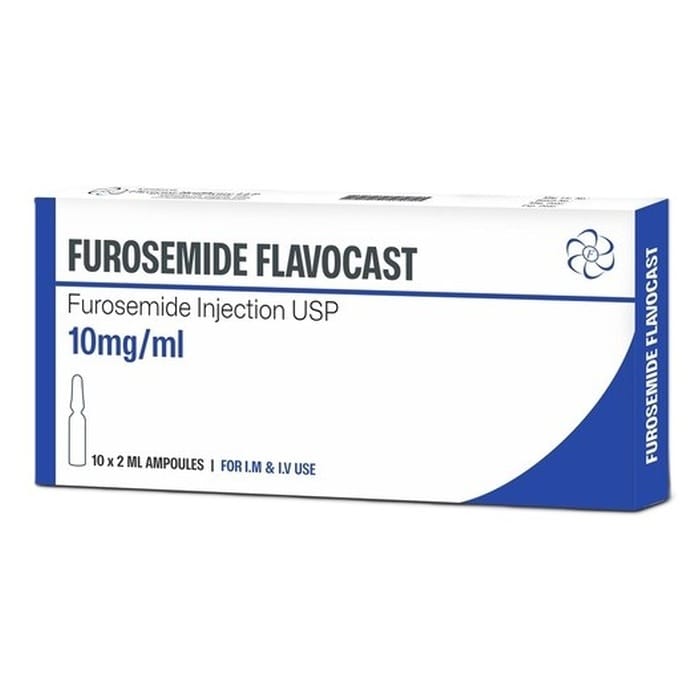
Furosemide Injection
Furosemide Injection: Uses, Dosing Basics, and Safety
Price:
$49.99
You save


Furosemide injection is a prescription loop diuretic (water pill) used to remove excess fluid by increasing urine output. Some patients explore US shipping from Canada when their prescription is appropriate for cross-border fulfilment. This page explains typical clinical uses, dosing basics, safety considerations, and handling points for the injectable form.
What Furosemide Injection Is and How It Works
Furosemide injectable solution (also known by the brand name Lasix Injection) is used when a rapid diuretic effect is needed or when oral therapy is not suitable. It works in the kidneys by blocking sodium and chloride reabsorption in the loop of Henle, which pulls more water into the urine. The result is reduced fluid overload (edema) and, in some cases, lower blood pressure due to less circulating fluid.
When people search for Furosemide Injection buy, they are often comparing the injectable form to tablets or asking about IV versus IM use in urgent care settings. CanadianInsulin operates as a prescription referral service and may confirm prescription details with the prescriber. Why it matters: Verification steps help reduce mix-ups between routes, concentrations, and vial sizes.
Clinical teams may use IV administration for faster onset and tighter monitoring. IM administration can be used when IV access is not available, but the route and technique depend on the clinical setting and local protocol. Because diuresis can shift fluids and electrolytes quickly, monitoring is usually part of treatment, especially for hospitalized patients or those with complex heart or kidney conditions.
Who It’s For
This medicine is generally used for adults (and sometimes pediatric patients under specialist care) who need treatment for edema associated with conditions such as heart failure, liver disease, or kidney disease, including nephrotic syndrome. It may also be used in some settings for hypertension, particularly when other approaches are not adequate or when fluid overload is present. The injectable form is often reserved for situations where oral dosing is not practical.
Furosemide Injection buy searches can also reflect clinic or facility needs for an emergency diuretic option, but suitability still depends on the individual patient’s risks. Furosemide injection is not appropriate for everyone. It is typically contraindicated in anuria (no urine output) and in patients with known hypersensitivity to furosemide. Caution is commonly needed with severe electrolyte depletion, significant dehydration, advanced liver disease (risk of hepatic encephalopathy), and in patients prone to gout or with diabetes, because metabolic changes may occur during treatment.
Dosage and Usage
Furosemide is usually administered by healthcare professionals in a monitored setting. Dose selection and frequency depend on the indication, the patient’s kidney function, prior diuretic exposure, and the clinical response (urine output, weight change, symptoms, and blood pressure). Because the injection can produce brisk diuresis, clinicians often reassess labs and vital signs after dosing.
Route and administration basics
IV use may be given as an IV push (slow injection) or by infusion, depending on the setting and institutional policy. IM use may be considered when IV access is not feasible. Regardless of route, the team typically checks the vial concentration, calculates the dose in mg based on the mg/mL strength, and verifies compatibility if the drug is being given through an IV line with other medications. When people look up Furosemide Injection buy, it can help to focus on these practical details: route, concentration, and monitoring plan should match the prescriber’s order and the facility’s protocol.
Quick tip: For any diuretic injection, keep an up-to-date medication list available for reconciliation.
Do not change dose or schedule without a clinician’s direction. If symptoms such as dizziness, fainting, extreme thirst, confusion, or reduced urine output occur, medical assessment is usually needed because they can signal dehydration or electrolyte imbalance.
Strengths and Forms
Furosemide Injection USP is commonly supplied as a sterile solution in vials intended for IV or IM administration. A frequently encountered concentration is 10 mg/mL, and common presentations include 20 mg/2 mL and 40 mg/4 mL (often described as Furosemide Injection 2 mL and Furosemide Injection 4 mL). Availability can vary by manufacturer, region, and current supply chain conditions.
Because ordering and administration depend on the concentration, it is important to distinguish between “dose in mg” and “volume in mL.” Confusion can occur if a patient or facility references “a 2 mL vial” without also stating the mg/mL strength. If Furosemide Injection buy is being used as a search phrase, it may help to also confirm whether the intended product is a single-dose vial, a multi-dose vial, or a specific packaging configuration, since handling and beyond-use dating can differ by product labeling and pharmacy policy.
Storage and Travel Basics
Furosemide Injection storage should follow the package insert (product labeling) for the specific manufacturer. In general, injectable medications are stored at controlled room temperature unless the label states otherwise, protected from excessive heat, and kept in original packaging when light protection is required. Vials should be inspected before use; do not use solutions with unexpected discoloration, visible particles, or compromised seals.
If transport is required between clinical areas, the goal is to keep the vial within labeled temperature limits and prevent breakage. Carrying the package insert or having quick access to it can reduce errors when multiple injectable diuretics are stocked. When people search Furosemide Injection buy, storage questions often come up alongside administration questions, because the injectable form is commonly used in urgent care environments where delays and temperature extremes can occur.
For patients transitioning from inpatient to outpatient care, clinicians may switch to oral furosemide or another diuretic, and storage instructions may change with the formulation. Any changes in form or route should be based on the prescriber’s plan.
Side Effects and Safety
Like other loop diuretics, furosemide can cause fluid and electrolyte shifts. Common effects may include increased urination, thirst, dizziness, headache, and low blood pressure symptoms (lightheadedness), especially when standing. Lab changes can include low potassium, low sodium, low magnesium, or increased BUN/creatinine, particularly with aggressive diuresis or underlying kidney impairment.
More serious risks can include dehydration, kidney injury, severe electrolyte abnormalities, and hearing-related symptoms (tinnitus or hearing changes), which have been reported with high doses or rapid IV administration. Hypersensitivity reactions are possible, and patients with sulfonamide-related allergies should discuss cross-reactivity concerns with their clinician. In clinical settings, safety monitoring often includes blood pressure checks, urine output tracking, and periodic labs to guide ongoing dosing decisions.
- Seek urgent evaluation: fainting, confusion, chest pain.
- Call a clinician promptly: severe weakness, cramps, palpitations.
- Watch for allergic signs: rash, swelling, breathing trouble.
Drug Interactions and Cautions
Furosemide can interact with medications that affect kidney blood flow, blood pressure, electrolytes, or hearing. Nonsteroidal anti-inflammatory drugs (NSAIDs) may reduce diuretic response in some patients and can increase kidney risk when combined with volume depletion. Lithium levels can rise with diuretics, increasing toxicity risk. Digoxin toxicity risk may increase if potassium or magnesium become low.
Other interactions depend on the clinical scenario. Aminoglycoside antibiotics and other ototoxic drugs can increase the chance of hearing-related adverse effects. Corticosteroids, amphotericin B, and stimulant laxatives can worsen potassium loss. If Furosemide Injection buy is part of a facility’s medication planning, consider how it will be used alongside IV antibiotics, vasodilators, ACE inhibitors/ARBs, or other diuretics, and ensure lab monitoring protocols are aligned to the overall regimen.
Patients with diabetes, gout, or significant liver disease may need closer monitoring, since changes in glucose, uric acid, or mental status can occur during large fluid shifts.
Compare With Alternatives
Clinicians choose among diuretics based on urgency, kidney function, response history, and the need for IV versus oral therapy. Oral furosemide is commonly used for chronic edema management, while the injectable form is often used for acute decompensation or when oral absorption is unreliable. Another loop diuretic, bumetanide, may be considered in certain settings, including when a different potency profile is desired.
Torsemide is another loop diuretic often used orally for longer-term management in selected patients, and ethacrynic acid can be an option for patients with specific sulfonamide-related concerns, though its use is less common and depends on local availability and risk-benefit assessment. The “best” alternative varies, and switching diuretics is a clinical decision that typically incorporates labs, volume status, and symptoms rather than one-to-one dose comparisons.
For broader context on related conditions and medication categories, readers may browse the Cardiovascular Category, the Nephrology Category, and hub listings like Kidney Disease.
Pricing and Access
Access to injectable furosemide usually requires a valid prescription and an appropriate clinical use case. In many jurisdictions, injection products are supplied to hospitals, clinics, or outpatient infusion settings under local rules. For CanadianInsulin’s model, prescriptions are routed through a referral process, and dispensing is performed by licensed third-party pharmacies where permitted. Documentation checks may include prescriber details, patient identifiers, and confirmation of the intended route and concentration.
Coverage and out-of-pocket responsibility vary by plan design, site of care (hospital versus outpatient), and whether an IV medication is billed under a medical benefit rather than a pharmacy benefit. Some patients review cash-pay options, including without insurance, but eligibility and documentation requirements can differ across regions. If researching Furosemide Injection buy as a way to understand access pathways, it can help to ask the care team which setting will administer the dose, what monitoring is planned, and whether a switch to an oral diuretic is expected after stabilization. General site information is available at Programs And Updates.
Related browsing hubs may be useful for comparing medication classes and comorbidities: Cardiovascular Products and Nephrology Products. For condition education, see guides such as Diabetes And Kidney Damage, Diabetic Nephropathy, Diabetes And Dehydration, Manage Heart Health, and Regular Check Ups.
Authoritative Sources
For the most reliable and current details, consult the official labeling for the specific product being used. Manufacturer labeling is the primary reference for indications, contraindications, preparation, administration rate guidance, and storage requirements, and it can differ slightly across suppliers. Clinical teams also rely on institutional protocols for monitoring electrolytes, kidney function, and blood pressure during diuresis.
Neutral references that can support verification include the following resources.
- For FDA-labeling text via NIH, see: DailyMed furosemide injection listings.
- For patient-focused medication information, see: MedlinePlus furosemide information.
If a medication shipment is needed, packaging may use prompt, express, cold-chain shipping to help protect temperature-sensitive products.
This content is for informational purposes only and is not a substitute for professional medical advice.
Express Shipping - from $25.00
Shipping with this method takes 3-5 days
Prices:
- Dry-Packed Products $25.00
- Cold-Packed Products $35.00
Standard Shipping - $15.00
Shipping with this method takes 5-10 days
Prices:
- Dry-Packed Products $15.00
- Not available for Cold-Packed products
Is furosemide injection the same as Lasix Injection?
Lasix Injection is a brand name for furosemide injection. Many facilities use “Lasix” as shorthand, but products may come from different manufacturers and can have different vial sizes or labeling details. The active ingredient is furosemide, a loop diuretic used to remove excess fluid. When reviewing an order, confirm the concentration (mg/mL), the total vial volume (mL), and the intended route (IV or IM). For safe use, match the product to the prescriber’s order and local protocol.
What is furosemide injection used for?
Furosemide injection is used to treat fluid overload (edema) related to conditions such as heart failure, liver disease, or certain kidney disorders. The injectable form is often used when rapid diuresis is needed or when oral medication cannot be taken or absorbed reliably. In some situations it may also be used for hypertension, depending on clinical circumstances. A clinician determines whether injection is appropriate based on symptoms, exam findings, kidney function, blood pressure, and the need for close monitoring.
How is furosemide injection given IV or IM?
Furosemide injection may be administered intravenously (IV) or intramuscularly (IM) by trained healthcare professionals. IV dosing can be delivered as a slow IV push or as an infusion, depending on the care setting and protocol. IM administration may be used when IV access is not feasible. Preparation steps typically include verifying the mg/mL strength, calculating the correct volume to draw up, and checking compatibility if other IV medications are running. Administration rate and monitoring should follow the product label and institutional guidance.
What monitoring is usually needed during treatment?
Monitoring often focuses on fluid status and electrolytes. Clinicians may track blood pressure, urine output, body weight, and symptoms of dizziness or dehydration. Lab monitoring commonly includes potassium, sodium, magnesium, and kidney function tests (such as serum creatinine and BUN), especially with repeated doses or higher-risk patients. Monitoring intensity depends on the indication and setting (hospital versus outpatient). Contact a healthcare professional promptly for signs like confusion, fainting, severe weakness, palpitations, or markedly reduced urine output.
What side effects should be watched for with furosemide injection?
Common effects include increased urination, thirst, dizziness, headache, and low blood pressure symptoms. Because furosemide changes electrolyte balance, muscle cramps or unusual fatigue can occur if potassium or magnesium becomes low. More serious concerns include dehydration, kidney injury, and significant electrolyte abnormalities. Hearing-related symptoms (ringing in the ears or hearing changes) have been reported, particularly with rapid IV administration or high doses. Allergic reactions are possible; seek urgent care for swelling, trouble breathing, or widespread rash.
What should I ask my clinician before receiving furosemide injection?
Consider asking which route will be used (IV push, infusion, or IM) and what monitoring will be done afterward. It can also help to ask how electrolytes and kidney function will be checked, and whether potassium or magnesium replacement might be needed. Share a complete medication list, including NSAIDs, lithium, digoxin, and any antibiotics, because interactions can affect safety. If there is a history of sulfonamide-related allergy, gout, diabetes, or severe liver disease, ask how those factors change risk and follow-up.
How should furosemide injection vials be stored?
Storage depends on the specific manufacturer’s labeling, so the package insert is the best source for temperature limits, light protection, and handling instructions. In many cases, vials are kept at controlled room temperature and protected from extreme heat; some products also require protection from light. Before use, the solution should be visually inspected for particles, unusual discoloration, or a damaged container. If a vial has been stored outside labeled conditions, a pharmacist or clinician should advise whether it is still appropriate to use.
Rewards Program
Earn points on birthdays, product orders, reviews, friend referrals, and more! Enjoy your medication at unparalleled discounts while reaping rewards for every step you take with us.
You can read more about rewards here.
POINT VALUE
How to earn points
- 1Create an account and start earning.
- 2Earn points every time you shop or perform certain actions.
- 3Redeem points for exclusive discounts.
You Might Also Like
Select options
This product has multiple variants. The options may be chosen on the product page
Select options
This product has multiple variants. The options may be chosen on the product page
Select options
This product has multiple variants. The options may be chosen on the product page
Select options
This product has multiple variants. The options may be chosen on the product page
Related Articles
Weight Management
Generic Zepbound: Availability, Status, and Options
Key Takeaways Patients and caregivers often search for generic zepbound when they need a clear answer about availability, labeling, and lower-cost access. The term is common online, but it does…
Type 2 Diabetes,
Oral Wegovy Explained: Facts, Risks, and Access Options
The phrase oral wegovy is best understood as a search term, not a settled product name. Most people use it to mean a pill version of semaglutide for weight management,…
Diabetes, General Health,
Glp-1 Drugs Over The Counter: What’s Real And What’s Not
Key Takeaways Prescription GLP-1 medicines are not sold as true OTC drugs. Many “GLP-1” supplements aim to support fullness, not mimic prescriptions. Online “no prescription” offers raise counterfeit and quality…
Diabetes, Type 2
GLP-1 Cost Without Insurance: Compare Cash-Pay Options
Key Takeaways Many people searching for glp-1 cost without insurance are trying to plan for a long-term expense. The total can change based on the drug, the pharmacy, and how…