
Please note: a valid prescription is required for all prescription medication.
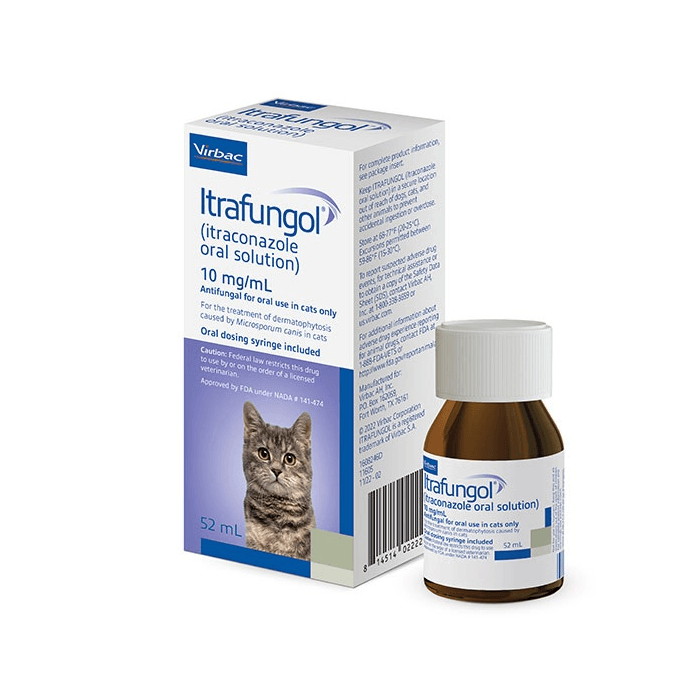
Itrafungol
Itrafungol Oral Solution for Cats: How to Buy It Safely
Price:
$112.99
You save


Itrafungol is a veterinary antifungal medicine used to treat dermatophytosis (ringworm), most commonly in cats. It is typically part of a broader plan that also addresses contagious spread in the home. Some patients explore US shipping from Canada when their veterinarian supports cross-border fulfilment and it is permitted.
What Itrafungol Is and How It Works
Ringworm is a fungal infection of hair and skin, not a worm. In cats, it is often caused by dermatophytes such as Microsporum canis, and it can spread to other pets and people. Itrafungol contains itraconazole, an azole antifungal that interferes with fungal cell membrane formation by inhibiting ergosterol synthesis. As fungal growth is suppressed, lesions may improve over time, but environmental decontamination and management of exposed animals are still important.
Many households use both systemic therapy and topical measures, based on veterinary advice. For background on the condition and common control steps, you can browse the site’s hub for Feline Ringworm. Prescription details may be verified with the prescribing veterinarian before processing. In practice, veterinarians may also recommend hygiene steps such as vacuuming, laundering fabrics, and limiting contact with high-risk family members during active infection.
Even when lesions look better, cats can still carry spores on hair. Follow-up testing (such as fungal culture or PCR, depending on the clinic) may be used to confirm response. Dispensing is handled by licensed partner pharmacies where regulations permit, which matters when patients are comparing sources for regulated veterinary medicines. For a broader view of related items that may be used in animal care, the Pet Medications hub can help you navigate available categories.
Who It’s For
This medicine is primarily used for cats diagnosed with ringworm by a veterinarian. It may be considered when infection is widespread, when there are multiple animals in the home, or when topical measures alone are unlikely to control the outbreak. Because ringworm is zoonotic (can spread to humans), treatment decisions may also factor in household risk, including children, older adults, and people with weakened immune systems.
It is not appropriate for every pet or situation. A veterinarian may avoid or use extra caution with systemic azole antifungals in animals with known hypersensitivity to ingredients, significant liver disease, or complex medication regimens. Pregnancy and nursing status can also change risk-benefit considerations. For kittens, age and weight thresholds can matter, so the prescribing clinic should confirm suitability and monitoring plans.
Dosage and Usage
Itrafungol is usually dosed according to the prescribing veterinarian’s instructions and the product label. For feline ringworm, many protocols use a “pulse” schedule (treatment given for a block of days, followed by a planned break, then repeated). This approach aims to balance antifungal exposure with tolerability and monitoring needs. Do not change the schedule or stop early without veterinary guidance, even if lesions appear improved.
Because it is a liquid, accurate measurement is important. Clinics often advise using an oral dosing syringe and giving the dose slowly to reduce stress and spillage. If a dose is missed, the safest next step is to follow the clinic’s instructions rather than doubling. Quick tip: Keep a calendar for on-weeks and off-weeks to avoid dosing mix-ups.
If your household is already familiar with measured medicines, some of the same habits can help (clean measuring devices, clear labeling, and consistent timing). For general technique ideas on measured medications, the resource Insulin Pen Vs Syringe provides a useful discussion of device handling concepts, even though it is focused on diabetes treatment.
Strengths and Forms
This product is provided as an oral solution intended for veterinary use. The label will list the active ingredient (itraconazole), concentration, bottle volume, and any specific administration directions. Because product presentations can change, confirm the exact concentration on the package you receive and review the included patient information, if available.
Itrafungol is designed for oral dosing, which can be helpful for cats that do not tolerate tablets. The solution format also supports weight-based dosing when a clinic needs precise adjustments. In some cases, a veterinarian may recommend additional topical products (such as medicated shampoos or rinses) alongside systemic therapy, especially in multi-pet environments. Availability of forms and pack sizes can vary by jurisdiction and pharmacy supply.
Storage and Travel Basics
Follow the storage directions on the product label, since stability requirements can differ across formulations. In general, keep the bottle tightly closed, store it away from excess heat and direct light, and prevent accidental access by children or animals. Avoid transferring the medicine into unmarked containers, which can increase dosing errors and reduce traceability of lot and expiry information.
When traveling, keep the bottle in its original packaging and transport it upright in a sealed bag to prevent leaks. If you use an oral syringe, rinse and dry it as instructed by the clinic, and store it separately to reduce contamination. If the solution’s appearance changes (unusual odor, cloudiness, or crystallization), contact the dispensing pharmacy or veterinary clinic for guidance before giving additional doses.
Side Effects and Safety
Like other systemic antifungals, itraconazole can cause side effects. Commonly reported issues include reduced appetite, vomiting, diarrhea, drooling, or mild lethargy. These effects may be more noticeable at the start of therapy or during dosing weeks in pulse schedules. If symptoms are persistent, severe, or worsening, veterinary evaluation is important to rule out dehydration, medication intolerance, or other illness.
More serious reactions are less common but require prompt attention. Signs that can suggest liver stress include marked fatigue, ongoing vomiting, yellowing of the gums or whites of the eyes, unusually dark urine, or pale stools. Allergic-type reactions (facial swelling, hives, trouble breathing) also warrant urgent care. Why it matters: Early recognition can prevent complications and help guide safer next steps.
| What to watch for | What it can mean |
|---|---|
| Vomiting or diarrhea | GI irritation or intolerance |
| Poor appetite | Medication effect or illness |
| Yellow gums/eyes | Possible liver injury |
| Swelling or hives | Possible hypersensitivity |
With Itrafungol, some veterinarians may recommend baseline or follow-up lab work, particularly for cats with prior liver issues or those taking multiple medications. Monitoring plans vary, so it helps to document symptoms, dosing days, and any other changes (diet, new supplements, recent stressors) to share at follow-up.
Drug Interactions and Cautions
Itraconazole can interact with other medicines because it affects drug metabolism pathways (notably CYP enzymes) and can change blood levels of certain drugs. In veterinary practice, this can matter for pets taking long-term therapies, including some heart medications, neurologic drugs, or other agents with narrow safety margins. Provide your veterinarian with a complete and current medication list, including non-prescription products and supplements.
Caution is also reasonable when combining itraconazole with other medicines that may affect the liver. If your cat is on multiple therapies, the clinic may choose additional monitoring or adjust timing. Avoid starting, stopping, or substituting medications without veterinary input. For a general overview of how medicines can work differently and why interactions matter, the educational resource Common Diabetes Medications offers a helpful framework, even though it covers human diabetes treatments rather than veterinary antifungals.
Compare With Alternatives
Veterinarians choose ringworm therapy based on severity, household risk, coat length, and how well a cat can tolerate oral dosing. Itrafungol is one systemic option; other systemic antifungals may include terbinafine or fluconazole in selected cases. Each has different dosing patterns, side effect profiles, and interaction considerations, so “best” depends on the clinical context and the prescribing veterinarian’s experience.
Topical approaches are also commonly used, either alone for limited lesions or alongside systemic therapy for broader outbreaks. These may include antifungal shampoos, rinses, or lime sulfur dips, plus clipping and careful cleaning of bedding and surfaces. Environmental control is a key “alternative” strategy that is often needed regardless of which oral medicine is chosen, because spores can persist in the home and reinfect pets.
Pricing and Access
Access to regulated veterinary medicines depends on prescription requirements, jurisdiction, and pharmacy policies. Some families use pet insurance reimbursement, while others pay cash-pay; coverage varies by plan and may require documentation. If paying without insurance, it can help to ask the clinic what paperwork is needed for claims, what follow-up testing is expected, and whether companion topical measures are recommended to shorten overall outbreak management.
CanadianInsulin operates as a prescription referral service, and prescription information may need confirmation with the prescriber. Cross-border fulfillment is considered only when eligibility and jurisdictional rules allow. Other practical factors that can affect access include the exact formulation requested, whether the clinic specifies brand versus acceptable equivalents, and whether additional supplies (such as oral syringes) are required for accurate measurement.
If you are comparing treatment plans, focus on total care needs rather than the medicine alone. Ringworm control often includes rechecks, possible cultures, and household cleaning supplies. The resource Cut Insulin Costs discusses general budgeting principles for long-term medication needs, and Diabetes Management Tips offers additional ideas for organizing care costs, even though these articles are not specific to veterinary infections.
Authoritative Sources
For veterinary drug approval and labeling context, review Animal Drugs@FDA.
For an overview of dermatophytosis in pets, see Merck Veterinary Manual.
For pet-owner guidance on preventing spread, review AVMA Ringworm.
Where permitted, fulfilment logistics may involve prompt, express, cold-chain shipping coordinated through licensed pharmacy partners.
This content is for informational purposes only and is not a substitute for professional medical advice.
Express Shipping - from $25.00
Shipping with this method takes 3-5 days
Prices:
- Dry-Packed Products $25.00
- Cold-Packed Products $35.00
Standard Shipping - $15.00
Shipping with this method takes 5-10 days
Prices:
- Dry-Packed Products $15.00
- Not available for Cold-Packed products
What is Itrafungol used for in cats?
Itrafungol is used in cats for treatment of dermatophytosis, commonly called ringworm. Ringworm is a contagious fungal infection that affects hair and skin and can spread between pets and to people. A veterinarian typically confirms the diagnosis and recommends a plan that may include an oral antifungal plus topical therapy and environmental cleaning. Because spores can persist in the home, medicine is only one part of outbreak control. Follow-up testing may be used to confirm that infection is clearing.
How is Itrafungol typically given for feline ringworm?
Veterinarians commonly prescribe itraconazole solutions using a structured schedule rather than continuous daily dosing. Many protocols use “pulse” treatment cycles, such as dosing for a set number of consecutive days followed by a planned break, then repeating the cycle. Exact timing and the total number of cycles depend on the label directions and the veterinarian’s plan. Doses are usually measured with an oral syringe for accuracy. Do not adjust the schedule without veterinary guidance.
Can Itrafungol be used for kittens or dogs?
Itrafungol is primarily labeled for use in cats, and suitability for kittens depends on age, weight, and the veterinarian’s assessment. For dogs, itraconazole is sometimes used in veterinary medicine, but product selection and dosing are typically considered off-label and should be directed by a veterinarian. Species differences in metabolism and side effects are important. If ringworm is suspected in a dog or a very young kitten, the clinic may recommend different testing, topical measures, or an alternative oral antifungal.
What side effects should I watch for during treatment?
Common side effects with systemic azole antifungals can include reduced appetite, vomiting, diarrhea, drooling, and tiredness. More serious concerns include signs of liver injury, such as persistent vomiting, marked lethargy, yellowing of gums or eyes, dark urine, or pale stools. Allergic-type reactions (facial swelling, hives, breathing difficulty) also require urgent care. If any concerning symptoms appear, contact the veterinary clinic promptly. The clinic may recommend monitoring, dose schedule adjustments, or switching therapies.
What drug interactions are important to tell the veterinarian about?
Itraconazole can interact with other medications because it can change how drugs are metabolized. Interactions are most important when a pet takes long-term medicines or drugs with narrow safety margins. Tell the veterinarian about all prescription drugs, over-the-counter products, flea/tick preventives, and supplements. Also mention any history of liver disease. The clinic may adjust timing, choose an alternative antifungal, or recommend lab monitoring depending on the overall regimen and your pet’s risk factors.
How long does it take for ringworm to clear with treatment?
The time to clear ringworm varies. Visible lesions may improve before the infection is fully gone, and cats can still carry spores even when skin looks better. Many veterinarians use follow-up testing, such as fungal culture or PCR, to help confirm clearance and guide when it is reasonable to stop therapy. Household factors also matter, including how many pets are exposed and how consistently environmental cleaning is done. Your veterinarian can explain what “clear” means for your specific case.
What should I ask my veterinarian before starting Itrafungol?
Ask how the diagnosis was confirmed and what the full control plan includes (oral medicine, topical therapy, isolation steps, and home cleaning). Clarify the exact dosing schedule, how to measure the dose, and what to do if a dose is missed. Discuss side effects to watch for and whether baseline or follow-up lab work is recommended, especially if there is any liver history. Also ask about protecting higher-risk household members and whether other pets should be examined or treated.
Rewards Program
Earn points on birthdays, product orders, reviews, friend referrals, and more! Enjoy your medication at unparalleled discounts while reaping rewards for every step you take with us.
You can read more about rewards here.
POINT VALUE
How to earn points
- 1Create an account and start earning.
- 2Earn points every time you shop or perform certain actions.
- 3Redeem points for exclusive discounts.
You Might Also Like
Select options
This product has multiple variants. The options may be chosen on the product page
Select options
This product has multiple variants. The options may be chosen on the product page
Select options
This product has multiple variants. The options may be chosen on the product page
Select options
This product has multiple variants. The options may be chosen on the product page
Related Articles
Uncategorized
Rybelsus Generic: A Patient Guide to Current Options
Key TakeawaysMany people searching for rybelsus generic are trying to answer one practical question: is there a true lower-cost equivalent tablet, or only the brand product and look-alike alternatives?Brand and…
Type 2 Diabetes,
Generic Liraglutide For Weight Loss: A Practical Guide
People searching for generic liraglutide for weight loss usually want clear answers on three points: whether an approved lower-cost version exists, how it differs from brand-name products, and what access…
Type 2 Diabetes,
Liraglutide Vs Semaglutide Comparison Guide For Patients
Key Takeaways People searching liraglutide vs semaglutide usually want a practical comparison, not a slogan. The most useful differences involve formulation, schedule, approved uses, side effect patterns, and the paperwork…
Weight Management
Generic Zepbound: Availability, Status, and Options
Key Takeaways Patients and caregivers often search for generic zepbound when they need a clear answer about availability, labeling, and lower-cost access. The term is common online, but it does…