
Please note: a valid prescription is required for all prescription medication.
Mounjaro KwikPen Pre-Filled Pen
Buy Mounjaro KwikPen Pre-Filled Pen Online


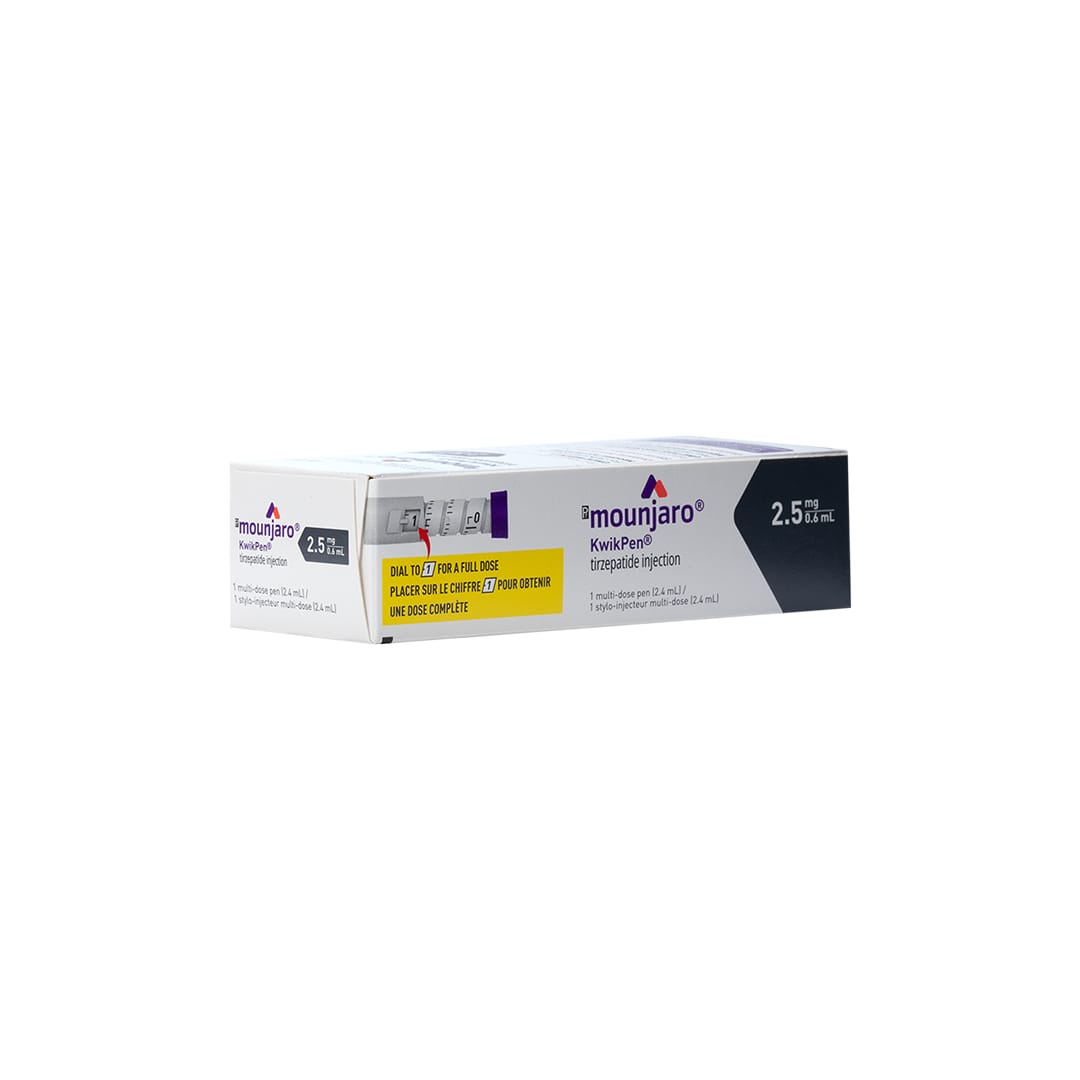
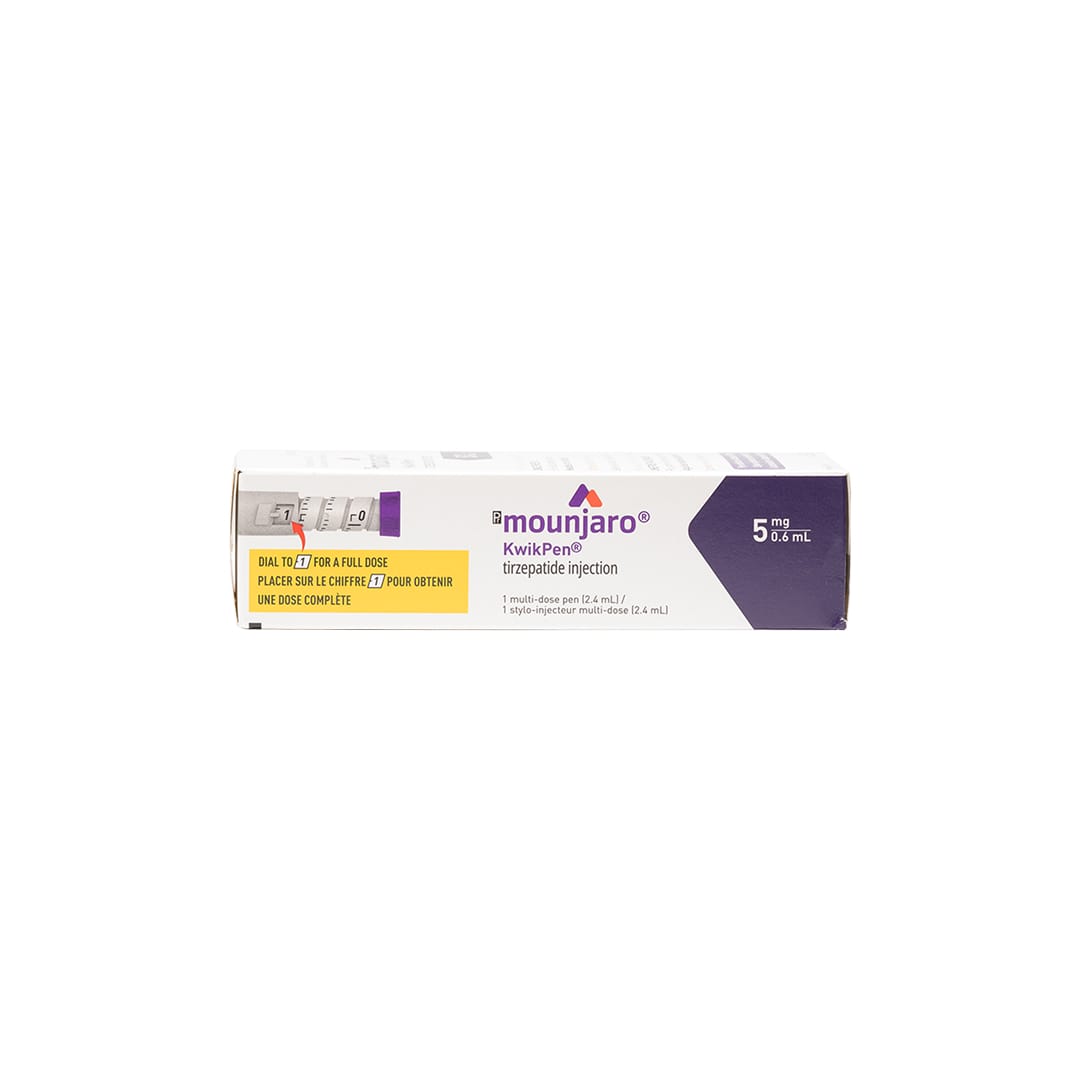
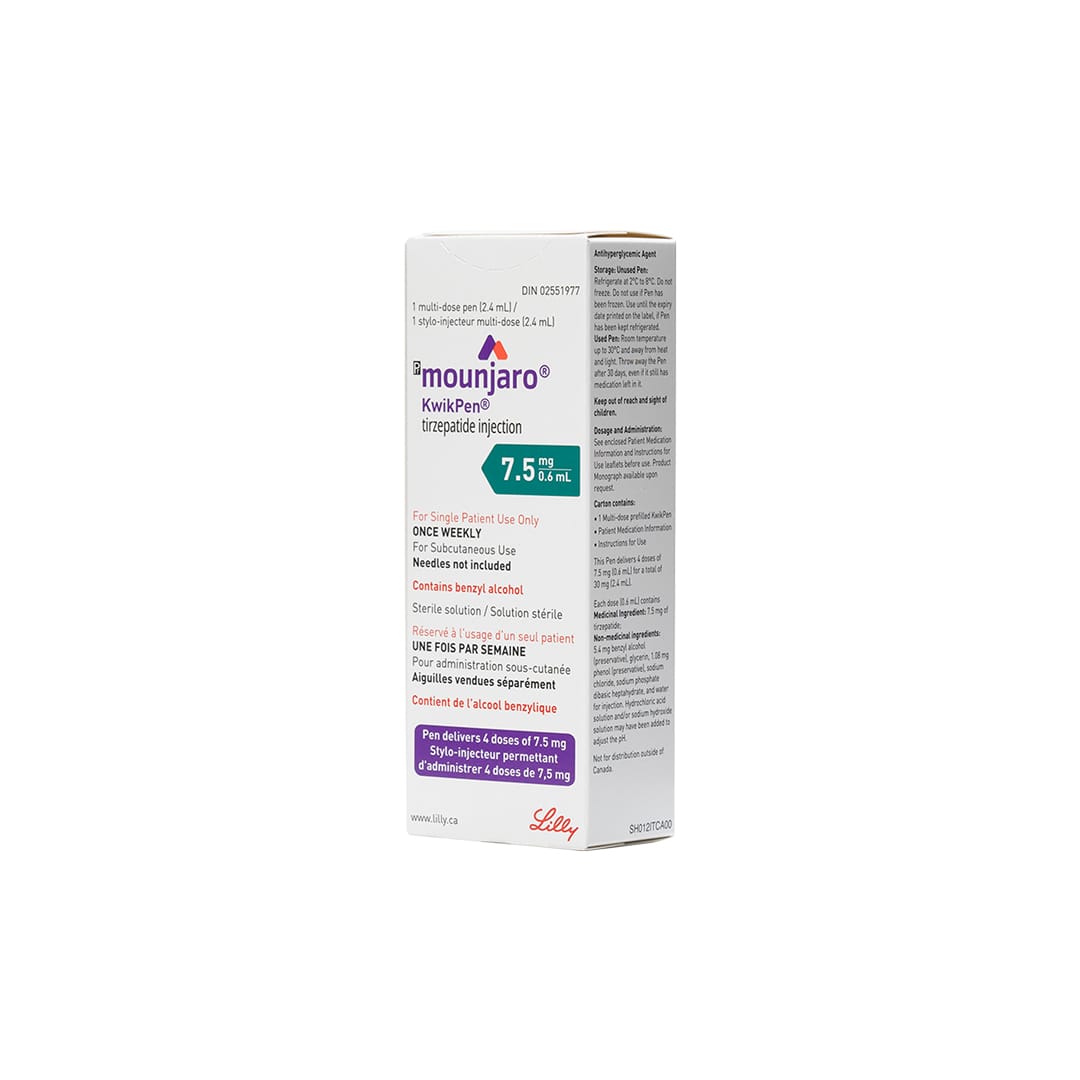
Mounjaro KwikPen Pre-Filled Pen is a tirzepatide injection pen used as part of a clinician-directed treatment plan. It can be bought online, with current pricing shown during ordering and strength choices matched to the directions you have been given. Choose the Mounjaro KwikPen dose and quantity carefully because the device, strength, and storage needs all affect practical use.
Mounjaro is an injectable medicine, so small product differences matter. The active ingredient is tirzepatide, and the KwikPen format is a prefilled pen device designed for single-patient use. Strength, pen format, quantity, injection supplies, and cold storage instructions should all align with your treatment plan.
Mounjaro KwikPen Price, Cost, and Strength Selection
The Mounjaro KwikPen price should be read together with the strength, device format, and quantity shown during ordering. A headline amount is less useful unless it is tied to the exact mg strength and total supply. If more than one tirzepatide presentation appears during ordering, make sure the wording says KwikPen Pre-Filled Pen rather than a vial or another injection format.
Mounjaro KwikPen cost can vary by strength, quantity, cash-pay path, and handling requirements. People looking at Mounjaro KwikPen without insurance often compare the total cart amount, expected supply duration, and any cold-chain handling rather than only the unit price. For US delivery from Canada, temperature-sensitive medicine may require prompt, express, cold-chain shipping, but transport wording should not be treated as a guaranteed arrival time.
Quick tip: Match the medicine name, device format, strength, and quantity before comparing totals.
| Strength | What to match | Why it matters |
|---|---|---|
| Mounjaro KwikPen 2.5 mg | Introductory-strength wording and quantity | Helps avoid choosing a higher strength by mistake |
| Mounjaro KwikPen 5 mg | Strength, pen format, and supply count | Supports accurate dose selection during ordering |
| Mounjaro KwikPen 7.5 mg | Exact mg strength and device name | Nearby strengths are not interchangeable |
| Mounjaro KwikPen 10 mg | Pack wording and current cart amount | Allows a fair cost comparison |
| Mounjaro KwikPen 12.5 mg | Strength-specific product wording | Reduces confusion during dose changes |
| Mounjaro KwikPen 15 mg | Highest listed strength and quantity | Should only be used when it matches directions |
The dose strength is the amount delivered per injection, not simply the total liquid inside the pen. Do not assume one pen equals one dose unless the supplied patient leaflet and your directions say that. The KwikPen device and dose strength should be treated as separate order details.
How to Order Mounjaro KwikPen Online
To order Mounjaro KwikPen online, choose the KwikPen Pre-Filled Pen format and the strength that matches your directions. Confirm the active ingredient tirzepatide, the mg strength, and the quantity before checkout. If your order requires additional documentation, provide accurate clinic and medicine information so the order can be reviewed without changing the strength yourself.
The online order path is simpler when the pen format and dose strength match exactly. Mounjaro KwikPen is not the same as a vial, another brand of incretin medicine, or a different injectable diabetes product. If you are switching from another device, ask the clinician or pharmacist involved in your care how the device steps, needle needs, and storage instructions differ.
Some customers compare Mounjaro KwikPen US shipping from Canada when planning cold storage, travel, or cash-pay ordering. Keep delivery planning practical: arrange to receive temperature-sensitive medicine promptly, refrigerate it as directed after arrival, and ask a pharmacist if the carton appears damaged or has been exposed to heat or freezing conditions.
Pen Format, Doses, and Injection Supplies
Mounjaro KwikPen Pre-Filled Pen contains tirzepatide in a multi-dose pen designed for one person only. Official KwikPen materials describe six strengths: 2.5 mg, 5 mg, 7.5 mg, 10 mg, 12.5 mg, and 15 mg. Each strength refers to the amount of tirzepatide delivered per injection, so a strength change should be handled through clinical directions rather than personal adjustment.
The KwikPen uses a new sterile pen needle for each injection. Needle supply can differ by package and market, so confirm whether compatible single-use needles are included or must be obtained separately before the first dose. Never reuse needles, share the pen, or store the pen with a needle attached, because those practices increase contamination and injury risk.
Do not use unofficial click charts, partial-dose estimates, or leftover pen contents to change how much medicine is injected. If the dose seems wrong, the pen does not work as expected, or the solution does not look right, pause and ask a pharmacist or clinician before injecting. Injection training should follow the patient leaflet supplied with your own carton.
For more practical background, GLP-1 agonists and related incretin medicines can help place tirzepatide among non-insulin injections. The non-insulin diabetes medications category may also help when comparing broad medication classes discussed in a care plan.
What Tirzepatide Is Used For
Tirzepatide is an injectable incretin-based medicine used with diet and exercise to improve blood sugar control in adults with type 2 diabetes when clinically appropriate. It acts on GIP and GLP-1 receptors, hormone pathways involved in insulin release, glucagon regulation, appetite, and digestion. It is not insulin and should not replace insulin when insulin is required.
Mounjaro is not for type 1 diabetes or diabetic ketoacidosis. Some people use tirzepatide alongside other diabetes medicines, while others need changes to medicines that can cause low blood sugar. Those decisions depend on glucose patterns, kidney function, side effects, and the rest of the treatment plan.
Many people also ask about weight changes because tirzepatide can affect appetite and gastric emptying. Weight-related expectations should be discussed with a clinician, especially if you have gastrointestinal disease, gallbladder history, or other medicines that could affect nutrition or hydration. For broader condition browsing, see type 2 diabetes, obesity, and overweight categories.
Storage, Handling, and Travel
Mounjaro KwikPen is temperature-sensitive. Store unused pens in the refrigerator according to the leaflet supplied with your carton, commonly within the 2°C to 8°C range. Do not freeze the pen, and do not use it if it has been frozen. Keep the pen in its original carton when possible to protect it from light.
Room-temperature allowances can differ by market, product presentation, and whether the pen is already in use. Follow the exact maximum temperature and discard timing in the leaflet that comes with your medicine. If a pen has been left in direct sunlight, a hot car, checked luggage, or a freezing cooler, ask a pharmacist before using it.
- Before injection: Inspect the solution as directed in the leaflet.
- During storage: Keep pens away from freezer compartments.
- After injection: Remove the needle safely and do not recap carelessly.
- For disposal: Place used needles in an approved sharps container.
- For travel: Keep the carton, supplies, and medicine with carry-on items.
Travel plans should protect both temperature control and your weekly schedule. Carry the original carton and any supporting medicine documentation together. If travel crosses time zones, ask how to keep dosing consistent without doubling up, skipping unexpectedly, or changing injection timing on your own.
Side Effects, Warnings, and Monitoring
Mounjaro carries a serious warning about thyroid C-cell tumors observed in animal studies. It should not be used by people with a personal or family history of medullary thyroid carcinoma or by people with multiple endocrine neoplasia syndrome type 2. Tell a clinician about a thyroid lump, swelling in the neck, trouble swallowing, hoarseness, or persistent shortness of breath.
Common side effects can include nausea, diarrhea, decreased appetite, vomiting, constipation, indigestion, and abdominal discomfort. These effects may be more noticeable when treatment starts or after a strength change. Severe or persistent vomiting or diarrhea can lead to dehydration, which may worsen kidney problems in susceptible people.
Serious risks can include pancreatitis, gallbladder problems, severe allergic reactions, kidney problems linked to dehydration, and low blood sugar when tirzepatide is used with insulin or sulfonylureas. Seek urgent medical help for severe abdominal pain that may spread to the back, trouble breathing, swelling of the face or throat, fainting, or symptoms of very low blood sugar.
Tirzepatide slows stomach emptying, so some oral medicines may be absorbed more slowly. This can matter for medicines that require precise timing or consistent blood levels. Oral hormonal contraceptives may require additional or alternative contraception for a period after starting tirzepatide and after dose increases, according to official labeling.
Monitoring may include blood glucose patterns, A1C results, kidney function if dehydration occurs, and vision changes in people with diabetic retinopathy. Keep notes on side effects, missed doses, storage problems, and injection issues so your clinician can make decisions from concrete information. Do not adjust the pen clicks, use partial doses, or combine leftover medicine without clinical direction.
Related Diabetes and Weight-Management Choices
Mounjaro KwikPen is one non-insulin injectable option used in type 2 diabetes care. Other medicines differ by active ingredient, dose schedule, device, storage, side effects, and monitoring needs. Comparing categories can help you understand why one therapy may be chosen over another, but products are not automatically interchangeable.
The broader diabetes category includes multiple medicine types used for blood sugar management. The diabetes medications category can help separate oral medicines, injectables, and insulin-related products. People focusing on incretin-based therapy may find the GLP-1 category useful, while those reviewing lifestyle and medicine discussions may browse weight management.
Condition-focused education can also help frame questions for a visit. The type 2 diabetes articles category covers practical diabetes topics, and the weight management articles category addresses weight-related treatment discussions. Use those materials to prepare questions about safety, monitoring, and device use, not to replace individualized medical advice.
Authoritative Sources
Official sources are the best references for strength details, device steps, storage limits, warnings, contraindications, and interaction information. Always follow the leaflet supplied with your own medicine carton, because market-specific instructions can differ.
- Official device guidance: Eli Lilly KwikPen instructions.
- Official strength guidance: Eli Lilly strengths and doses.
- Official label information: DailyMed tirzepatide label.
This content is for informational purposes only and is not a substitute for professional medical advice.
BMI Calculator
Estimate adult body mass index from height and weight, with metric and imperial units.
BMI
-
kg/m2 equivalent
Category
-
Adult screening range
These calculations are for education only and do not replace clinical advice, diagnosis, or treatment. Always confirm medical decisions with a qualified healthcare professional.
Calorie & TDEE Calculator
Estimate resting energy needs and daily calorie range from age, sex, body size, and activity level.
Hold Ctrl or Cmd to select more than one calculator.
BMR
-
estimated calories/day at rest
Maintenance
-
BMR multiplied by activity
Weight loss guide
-
maintenance minus 500 kcal/day
These calculations are for education only and do not replace clinical advice, diagnosis, or treatment. Always confirm medical decisions with a qualified healthcare professional.
Weight Loss Timeline Calculator
Estimate a simple timeline from current weight, goal weight, and average daily calorie deficit.
Estimated weekly change
-
based on 3,500 kcal per lb
Estimated time
-
simple arithmetic estimate
Approx. date
-
if average deficit is maintained
These calculations are for education only and do not replace clinical advice, diagnosis, or treatment. Always confirm medical decisions with a qualified healthcare professional.
Weight-Loss Progress Calculator
Track percentage body-weight change and progress toward a target weight.
Weight change
-
current vs starting weight
Body weight change
-
percent of starting weight
Goal progress
-
change achieved toward goal
These calculations are for education only and do not replace clinical advice, diagnosis, or treatment. Always confirm medical decisions with a qualified healthcare professional.
HbA1c & eAG Calculator
Convert between HbA1c percentage and estimated average glucose using the ADAG relationship.
HbA1c
-
percentage
eAG mg/dL
-
estimated average glucose
eAG mmol/L
-
estimated average glucose
These calculations are for education only and do not replace clinical advice, diagnosis, or treatment. Always confirm medical decisions with a qualified healthcare professional.
Customer Reviews
3.2 Based on 10 Reviews
Write a Review Ask a Question - Reviews
- Questions
Filter Reviews:
KS
07/13/2026
Karen S.  US
USMounjaro KwikPen Reorder
This is the first time I've ordered this when I have received it in just over a week! That was outstanding. Prior to this, I kept getting e-mails and calls with delays, often up to three months! This was perfect.The price could be cheaper, but at least it got to me quickly.
07/13/2026
CanadianInsulin.com
Hi Karen!Thank you for taking the time to leave us a review. We value your trust and are honored that you continue to choose Canadian Insulin. We understand how frustrating the previous delays must have been, so it's wonderful to know we were able to provide you with the fast and reliable service you expected this time. We also appreciate your honest feedback regarding our pricing. We continually strive to provide competitive pricing while ensuring access to high-quality medications and dependable service. Your satisfaction is our priority, and we're grateful for the opportunity to serve you. Thank you again for your trust in Canadian Insulin!
GL
02/14/2026
Gina L. USGood product bad service
The wok pen is perfectly fine but I am being asked to review an order I haven’t received in almost 4 weeks from placing the order.
02/16/2026
CanadianInsulin.com
Hi Gina!Thank you for bringing this to our attention, and we sincerely apologize for the frustration this has caused.We’re glad to hear that the Mounjaro KwikPen Pre-Filled Pen itself has been working well for you, but we completely understand how concerning it is to be asked for a review when your recent order has not yet arrived especially after almost four weeks. That is certainly not the experience we want you to have.Please know that your concern is important to us. An Account Manager will be reaching out to you directly to ensure this is properly addressed as quickly as possible. We want to make sure you receive clear communication and a timely resolution.We truly value your trust and appreciate your patience while we look into this matter. Thank you for always choosing Canadian Insulin.
GR
01/22/2026
Grant R. USStill hasn’t arrived.
Been a week since ordered and still hasn’t even shipped. Inconsistent deliveries. When they do arrive work great
01/23/2026
CanadianInsulin.com
Hi Grant!Thank you for sharing your experience with us. We sincerely apologize for the delay in shipping your order and understand how frustrating it is to be waiting a week without seeing any shipment updates. We know how important consistency and timely delivery are, especially when it comes to your medication, and we regret the inconvenience this has caused.We truly appreciate you letting us know that when your orders do arrive, the medication works well for you. Your feedback helps us identify where we need to improve, particularly with delivery timelines and communication.Please be assured that your assigned Account Manager will be reaching out to you directly to provide an update on your order and assist in resolving this as quickly as possible. Our team is actively reviewing the status of your shipment to ensure you receive the support and information you need.Thank you for your patience and for bringing this to our attention. We value your trust and are committed to improving your experience moving forward.Thank you for always choosing Canadian Insulin!
LG
01/01/2026
Lynette G. USCanadian Insulin
Great customer service! Product arrived as expected!
01/01/2026
CanadianInsulin.com
Hi Lynette!Thank you for taking the time to share your experience with Canadian Insulin!We’re delighted to hear that you received great customer service and that your product arrived exactly as expected. Our team works hard to ensure a smooth and reliable experience from start to finish.Thank you for choosing Canadian Insulin! We truly appreciate your trust and look forward to serving you again.
CP
12/27/2025
Cindy P. USVery disappointing!
I ordered three months worth of the Mounjaro 7.5 KwikPen pre-filled pen. It took a while for my order to be approved and to go through. When I finally got my order, I was very surprised that the needles were not included. I had ordered Mounjaro from another company in Canada and needles were definitely included. In the picture on the website that showed a picture of the quick pins a needle was definitely in the picture so as a consumer, I assumed that that would be part of what I would get. I called and talked to several people and they said it was definitely spelled out that it was not part of it. I disagree. I tried to copy the picture to this review but couldn’t get it to paste into this review. But if you look at the picture on the website you can clearly see that it shows a needle along with the pins.
12/29/2025
CanadianInsulin.com
Hi Cindy! Thank you for taking the time to share your experience with us. We sincerely apologize for the frustration and disappointment this situation has caused. We understand how concerning it can be to receive your order and find that an expected item, such as needles, was not included especially when the product image may have led to a different expectation.We truly appreciate you bringing this to our attention. Your feedback regarding the website image is important, and we understand how this could have caused confusion. While needles are not included with certain injectable medications and are noted separately in the product details, we recognize that the visual presentation may not have been as clear as it should have been. Your comments help us identify opportunities to improve how we communicate this information to avoid similar misunderstandings in the future.Please know that our team aims to provide clear guidance and support, and we regret that this experience fell short of your expectations. If you need assistance with obtaining compatible needles or have any additional concerns about your order, our customer service team would be more than happy to help.Thank you for choosing Canadian Insulin!
Express Shipping - from $29.99
Shipping with this method takes 3-5 days
Prices:
- Dry-Packed Products $29.99
- Cold-Packed Products $39.99
Standard Shipping - $19.99
Shipping with this method takes 5-10 days
Prices:
- Dry-Packed Products $19.99
- Not available for Cold-Packed products
What is Mounjaro KwikPen used for?
Mounjaro KwikPen contains tirzepatide, an injectable incretin-based medicine used with diet and exercise to improve blood sugar control in adults with type 2 diabetes when clinically appropriate. It is not insulin and is not used for type 1 diabetes or diabetic ketoacidosis.
What strengths does Mounjaro KwikPen come in?
Official KwikPen materials describe 2.5 mg, 5 mg, 7.5 mg, 10 mg, 12.5 mg, and 15 mg strengths. The strength refers to the amount delivered per injection. Choose the strength that matches your directions and do not use click-count changes to create a different dose.
How should Mounjaro KwikPen be stored?
Unused Mounjaro KwikPen pens should be refrigerated according to the leaflet supplied with the medicine, commonly within the 2°C to 8°C range. Do not freeze the pen, protect it from light, and ask a pharmacist before use if it was exposed to heat or freezing conditions.
What are common Mounjaro KwikPen side effects?
Common side effects can include nausea, diarrhea, decreased appetite, vomiting, constipation, indigestion, and abdominal discomfort. Contact a clinician if symptoms are severe, persistent, or cause dehydration.
What serious warnings should I know about tirzepatide?
Mounjaro has a serious warning about thyroid C-cell tumors observed in animal studies and should not be used by people with a personal or family history of medullary thyroid carcinoma or MEN2. Serious risks can also include pancreatitis, gallbladder problems, severe allergic reactions, kidney problems related to dehydration, and low blood sugar when combined with certain diabetes medicines.
Does tirzepatide interact with other medicines?
Tirzepatide slows stomach emptying, which can affect how some oral medicines are absorbed. It may also increase low blood sugar risk when used with insulin or sulfonylureas. Oral hormonal contraceptive users may need additional or alternative contraception after starting tirzepatide and after dose increases, according to official labeling.
Rewards Program
Earn points on birthdays, product orders, reviews, friend referrals, and more! Enjoy your medication at unparalleled discounts while reaping rewards for every step you take with us.
You can read more about rewards here.
POINT VALUE
How to earn points
- 1Create an account and start earning.
- 2Earn points every time you shop or perform certain actions.
- 3Redeem points for exclusive discounts.
You Might Also Like
Select options
This product has multiple variants. The options may be chosen on the product page
Select options
This product has multiple variants. The options may be chosen on the product page
Select options
This product has multiple variants. The options may be chosen on the product page
Select options
This product has multiple variants. The options may be chosen on the product page
Related Articles
Weight Management
Weight Loss and Calories Calculator: Safe Planning Basics
A weight loss and calories calculator estimates daily calories for maintenance and planned weight change by using your age, sex, height, weight, activity level, and goal. It gives a starting…
Diabetes, Type 1
Humulin N Dosage Chart: Safe Use and Adjustment Factors
A Humulin N dosage chart can help you organize a prescribed insulin plan, but it should not decide your dose. Humulin N is insulin isophane, also called NPH insulin (neutral…
Diabetes, Type 1
Humalog KwikPen Generic Options and Insulin Lispro Safety
A Humalog KwikPen generic search usually comes down to one key point: Humalog KwikPen contains insulin lispro, but insulin copies are not always handled like traditional small-molecule generics. Some products…
Diabetes
Insulin Syringe Sizes: Barrel, Needle, and Safety Basics
Insulin syringe sizes describe three things: how much the barrel holds, how long the needle is, and how thin the needle is. These details matter because insulin is measured in…