
Shipping with this method takes 3-5 days
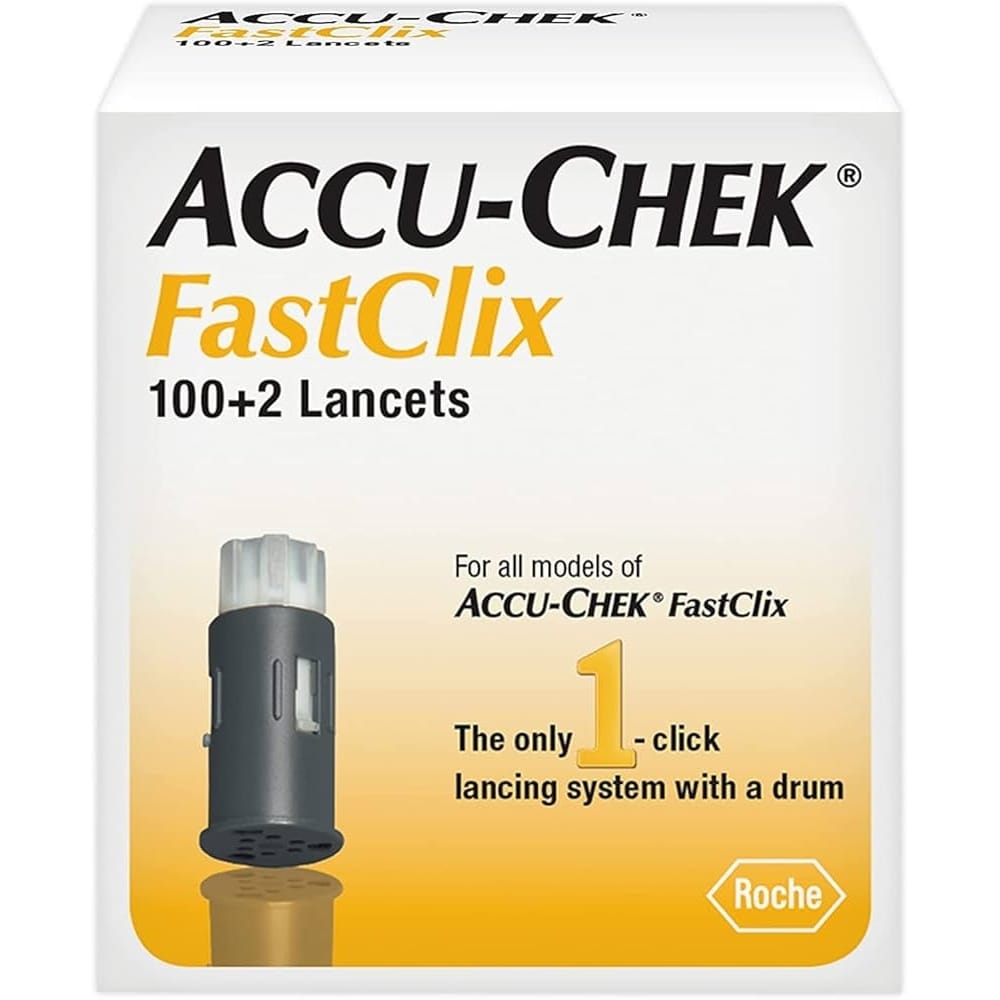
Accu-Chek Fastclix Lancets
Buy Accu-Chek FastClix Lancets Online


Accu-Chek FastClix Lancets are drum-style replacement lancets for the Accu-Chek FastClix lancing device. They can be bought online in the 102-count format shown for this product, with the quantity matched to your glucose testing routine and compatible device. These lancets help create a small blood drop for blood glucose testing; they do not measure glucose or replace meter-specific test strips.
The main buying decision is compatibility, not a medication dose. FastClix lancets are supplied in preloaded drums that fit the matching FastClix device, so they should not be substituted with loose lancets or a different Accu-Chek lancing system. When you order Accu-Chek FastClix Lancets online, review the pack count, current price, and replacement needs before checkout.
Accu-Chek FastClix Lancets Price and 102-Count Format
The Accu-Chek FastClix Lancets price should be read together with the pack count and the drum format. A 102-count pack refers to the total number of lancet tips. It does not mean 102 separate drums, and it does not include a glucose meter or test strips unless those items are purchased separately.
FastClix lancets are packaged as preloaded drums for the FastClix lancing device. Each drum contains six lancets, so the 102-count format is commonly understood as 17 drums with six lancets per drum. That structure helps you estimate replacement timing based on how often you test under your diabetes care plan.
When comparing Accu-Chek FastClix Lancets cost, look beyond the single cash amount. Check whether the item is replacement drums only, whether your lancing device is already the FastClix model, and whether the quantity fits your expected testing supply needs. If you are paying without insurance, the cash-pay total depends on the quantity placed in the cart and the current checkout total.
| Product detail | What it means for ordering |
|---|---|
| 102-count pack | Total lancet tips in the pack, not 102 separate drums. |
| Drum design | Preloaded drums reduce direct handling of loose lancets. |
| Device fit | Made for the Accu-Chek FastClix lancing device. |
| Separate supplies | Meters, test strips, and some lancing devices are separate products. |
For broader glucose testing items, the diabetes supplies category can help you review meters, strips, lancing products, and other routine supplies by product type.
How to Order FastClix Lancet Drums Online
To order Accu-Chek FastClix Lancets online, first make sure the lancing device you use is the FastClix model. The drum shape is the defining feature. FastClix drum lancets are not interchangeable with Accu-Chek Softclix lancets, OneTouch-style lancets, Microlet lancets, or other loose single-lancet systems.
Choose the 102-count quantity available for this product and match it to your testing supply plan. Keep the device name with your diabetes supplies, especially if a caregiver helps reorder items. A clear device name reduces the chance of buying the wrong lancet style.
- Match the device: use FastClix drums only with the FastClix lancing device.
- Review the count: the 102-count pack represents 102 lancet tips.
- Plan supply use: estimate replacement needs from your established testing schedule.
- Prepare disposal: keep a puncture-resistant sharps container available.
US delivery from Canada may be available as part of the ordering service. Shipping language can vary by product and checkout details, so use the final cart information for the most current handling and delivery information.
What Comes in the 102-Count Pack
Accu-Chek FastClix 102 lancets are supplied as drum lancets for the FastClix system. The drum design keeps unused lancets enclosed until the device advances to them. This can make handling simpler than loose lancets, but every used drum still contains sharps and needs careful disposal.
The count tells you how many punctures the pack can support when each lancet is used once. It does not tell you how often to test, which site to use, or whether your monitoring plan should change. Testing frequency should follow the plan given by your healthcare professional and the instructions for your glucose meter.
FastClix diabetes lancets create a small puncture so a blood sample can be applied to a compatible glucose test strip. They do not read glucose levels, store results, or correct meter errors. Accuracy depends on the full testing system: clean hands, a working meter, unexpired strips, an adequate blood drop, and proper strip compatibility.
Compatibility With the FastClix Lancing Device
The most common question is what lancets go with Accu-Chek FastClix. The answer is Accu-Chek FastClix lancet drums made for the FastClix lancing device. The device is built around an internal drum that advances from one lancet to the next.
This system differs from lancing devices that hold one loose lancet at a time. A loose lancet may not seat correctly, may not advance safely, or may create an injury risk if forced into the wrong device. If your current device does not accept drums, you likely need a different compatible lancet rather than FastClix replacement drums.
Device fit also affects comfort and sample consistency. A properly seated FastClix drum lets the device control the puncture depth and advance mechanism as designed. If you need to identify drum-based devices or compare other lancing systems, the lancing devices category can help separate device types.
| Lancet system | Compatibility note |
|---|---|
| Accu-Chek FastClix drum lancets | Designed for the Accu-Chek FastClix lancing device. |
| Accu-Chek Softclix lancets | Designed for a different Accu-Chek lancing system. |
| Loose universal-style lancets | May fit some single-lancet devices, but not FastClix drums. |
| Glucose test strips | Must match the meter, not the lancing device. |
How to Use and Replace Lancet Drums Safely
Accu-Chek FastClix lancets how-to-use questions usually involve loading the drum, setting puncture depth, obtaining the blood sample, and advancing to a fresh lancet. Always follow the instructions supplied with the lancing device. The device manual is the best source for model-specific loading, depth settings, and drum replacement steps.
- Wash and dry hands: clean, dry skin reduces contamination and sample problems.
- Insert the drum: load only a compatible FastClix drum as directed.
- Set the depth: use the device setting that supports an adequate sample.
- Obtain the sample: use an approved site and apply blood to the correct strip.
- Advance after use: move to a fresh lancet according to the device instructions.
- Dispose safely: place used drums in an appropriate sharps container.
A new lancet is sterile and sharp before first use. Reuse can make punctures more painful because the tip becomes duller, and it may increase contamination risk. If you currently reuse lancets, ask your clinician how to balance comfort, safety, supply planning, and your monitoring schedule.
Never share a lancing device, lancet drum, or used lancet with another person. Blood glucose testing equipment can carry bloodborne infection risk when shared, even among family members. This rule applies at home, during travel, and in any caregiving setting.
Quick tip: Store a spare drum with your meter kit so a replacement is available when the current drum is empty.
Storage, Handling, and Travel
Store FastClix lancets in their original packaging until use. Keep drums dry, protected from damage, and away from children or pets. Lancets are not insulin and usually do not need refrigeration, but moisture, crushing, or loose storage can damage packaging and increase handling risk.
Travel planning is mostly about carrying enough compatible supplies. Pack extra drums, your meter, test strips, the lancing device, and a sharps container or another puncture-resistant disposal option accepted in your destination area. Keeping the box or label with the supplies can help identify the product during travel or while organizing a diabetes kit.
If you also use insulin or other temperature-sensitive diabetes products, store those items according to their own instructions. Lancets, meters, strips, insulin, and injectable medicines do not share one universal storage rule. Product-specific handling helps prevent wasted supplies and testing interruptions.
For broader condition and supply planning, the diabetes section provides a condition-level starting point, while type 1 diabetes and type 2 diabetes pages organize related treatment and monitoring topics.
Safety Checks Before Ordering and Using
FastClix lancets are medical sharps used for fingerstick blood sampling. Common local effects can include a brief sting, mild bleeding, small bruises, or fingertip soreness. These effects are usually limited to the puncture site, but ongoing pain, swelling, warmth, drainage, or bleeding that does not stop should be discussed with a healthcare professional.
People who take blood thinners, bruise easily, have reduced sensation, have circulation problems, or heal slowly should ask a clinician about safe lancing technique and approved sample sites. The lancet itself has no drug interaction, but your health conditions and medicines can affect bleeding, bruising, skin healing, and infection risk.
Testing accuracy depends on more than the lancet. Dirty hands, expired strips, insufficient blood, an incompatible strip, or a meter problem can lead to errors or repeated fingersticks. If glucose readings do not match how you feel, follow your meter instructions and seek clinical guidance when appropriate.
Used lancet drums belong in a sharps container or a puncture-resistant container accepted in your area. Do not place loose sharps in regular trash unless local disposal rules specifically allow the method being used. Safe disposal protects household members, caregivers, sanitation workers, and pets from accidental needle injuries.
For practical reading on selection and safety, the diabetes articles section includes education about glucose monitoring, diabetes routines, and supply use.
Related Testing Supplies and Product Choices
Accu-Chek FastClix drum lancets are a strong choice only when your device is also FastClix. If you use another lancing device, match the lancet system before replacing supplies. Device design, lancet shape, loading style, and advancement mechanism matter more than brand familiarity alone.
If you are replacing several glucose testing items at once, separate the role of each product. Lancets create the blood drop. Test strips receive the sample. The meter reads the strip and calculates the glucose result. Correct lancets do not fix an incompatible strip or a meter setup problem.
| Supply type | What to match |
|---|---|
| FastClix lancet drums | Match to the Accu-Chek FastClix lancing device. |
| Lancing device | Match to the lancet design and loading style. |
| Test strips | Match to the glucose meter model. |
| Meter | Use with the correct strip system and instructions. |
The diabetes products category can help organize related medicines and supplies, while type 1 diabetes articles and type 2 diabetes articles offer additional education for people managing different forms of diabetes.
Authoritative Sources
Manufacturer compatibility and feature information: Official FastClix lancet product information from Accu-Chek.
Manufacturer device loading and support information: Official FastClix lancing device support from Accu-Chek.
This content is for informational purposes only and is not a substitute for professional medical advice.
Blood Glucose Unit Converter
Convert glucose readings between mg/dL and mmol/L without changing the clinical value.
mg/dL
-
US reporting unit
mmol/L
-
International reporting unit
These calculations are for education only and do not replace clinical advice, diagnosis, or treatment. Always confirm medical decisions with a qualified healthcare professional.
HbA1c & eAG Calculator
Convert between HbA1c percentage and estimated average glucose using the ADAG relationship.
HbA1c
-
percentage
eAG mg/dL
-
estimated average glucose
eAG mmol/L
-
estimated average glucose
These calculations are for education only and do not replace clinical advice, diagnosis, or treatment. Always confirm medical decisions with a qualified healthcare professional.
Carb Serving Calculator
Convert total carbohydrate grams into carb choices for meal planning and diabetes education.
Carb choices
-
total carbs divided by choice size
Rounded choices
-
nearest half choice
Carb calories
-
4 kcal per gram
These calculations are for education only and do not replace clinical advice, diagnosis, or treatment. Always confirm medical decisions with a qualified healthcare professional.
Glycaemic Load Calculator
Calculate glycaemic load from glycaemic index and available carbohydrate in a serving.
Glycaemic load
-
GI x carbs / 100
Range
-
single serving estimate
Total carbs used
-
serving carbs x servings
These calculations are for education only and do not replace clinical advice, diagnosis, or treatment. Always confirm medical decisions with a qualified healthcare professional.
CGM Time-in-Range Summary
Summarise CGM percentages across very low, low, in-range, high, and very high glucose bands.
Entered total
-
should equal 100%
Below range
-
very low plus low
Above range
-
high plus very high
Summary
-
common adult CGM targets vary by patient
These calculations are for education only and do not replace clinical advice, diagnosis, or treatment. Always confirm medical decisions with a qualified healthcare professional.
Express Shipping - from $29.99
Prices:
- Dry-Packed Products $29.99
- Cold-Packed Products $39.99
Standard Shipping - $19.99
Shipping with this method takes 5-10 days
Prices:
- Dry-Packed Products $19.99
- Not available for Cold-Packed products
What lancets go with the Accu-Chek FastClix device?
The Accu-Chek FastClix lancing device uses Accu-Chek FastClix lancet drums. Loose lancets and other Accu-Chek systems, such as Softclix, are different designs and should not be forced into a FastClix device.
What does the Accu-Chek FastClix Lancets 102 count mean?
The 102-count format refers to 102 total lancet tips. FastClix lancets are supplied in preloaded drums, with six lancets in each drum, so the pack is commonly understood as 17 drums.
Are FastClix lancets the same as test strips?
No. FastClix lancets create the fingerstick blood drop. Test strips receive the sample and must match the glucose meter. Lancets, strips, and meters each have separate compatibility requirements.
Can Accu-Chek FastClix lancets be reused?
A new lancet is sterile and sharp before first use. Reusing lancets can make punctures more uncomfortable and may increase contamination risk. Ask a clinician if you need help planning safe supply use.
How should used FastClix lancet drums be disposed of?
Used drums should go into a sharps container or a puncture-resistant container accepted by local rules. Do not leave used lancets loose in bags, drawers, or regular trash without following local disposal guidance.
Do Accu-Chek FastClix Lancets ship from Canada to the US?
Canada-to-US service may be available for this product. Use the final checkout information for current handling, shipping, and order details because service terms can vary by order.
Rewards Program
Earn points on birthdays, product orders, reviews, friend referrals, and more! Enjoy your medication at unparalleled discounts while reaping rewards for every step you take with us.
You can read more about rewards here.
POINT VALUE
How to earn points
- 1Create an account and start earning.
- 2Earn points every time you shop or perform certain actions.
- 3Redeem points for exclusive discounts.
You Might Also Like
Select options
This product has multiple variants. The options may be chosen on the product page
Select options
This product has multiple variants. The options may be chosen on the product page
Select options
This product has multiple variants. The options may be chosen on the product page
Select options
This product has multiple variants. The options may be chosen on the product page