
Please note: a valid prescription is required for all prescription medication.
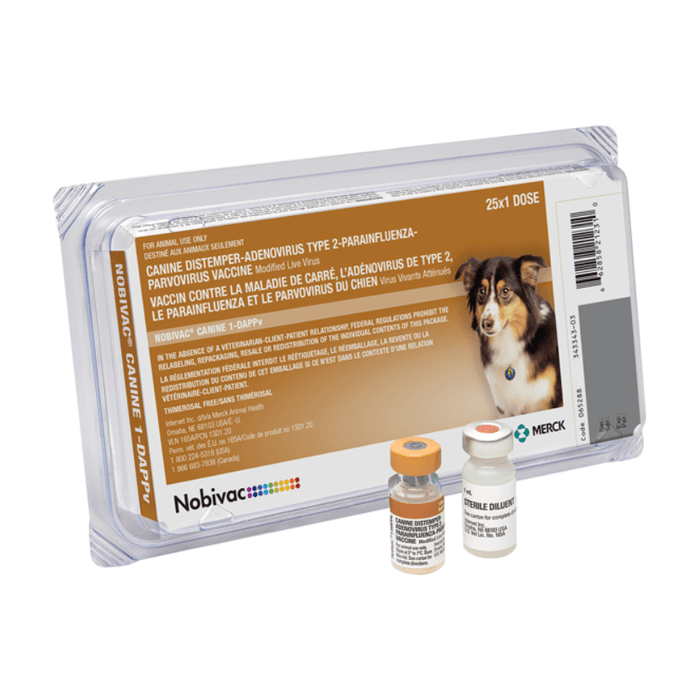
Nobivac Canine 1-DAPPv
Nobivac Canine 1-DAPPv Buying and Safety Guide
Price:
$165.99
You save


Nobivac Canine 1-DAPPv is a combination canine vaccine used in veterinary vaccination programs to help protect against several contagious viral diseases. This page summarizes what the vaccine covers, typical schedule concepts, safety considerations, and storage and handling basics. Some patients explore Ships from Canada to US when cross-border fulfilment is appropriate and permitted.
What Nobivac Canine 1-DAPPv Is and How It Works
This vaccine is commonly described as a “DAPPv” product, meaning it targets multiple viral pathogens in one injection. In plain terms, it is designed to “teach” a dog’s immune system to recognize certain viruses before real-world exposure. The covered diseases are often discussed as distemper, adenovirus, parainfluenza, and parvovirus; clinics may also describe related syndrome names and abbreviations. For background on the illnesses these vaccines aim to prevent, you can browse condition hubs such as Canine Distemper and Canine Parvovirus Infection.
Protection from vaccination is not immediate, and immune response can vary by age and health status. In many settings, these vaccines are given as a series in puppies and later as boosters, because early life antibodies from nursing can reduce the response to certain vaccines. CanadianInsulin.com supports prescription referral workflows; dispensing is through licensed third-party pharmacies where permitted. Your veterinarian remains the best source for product selection, timing, and clinical fit, especially for dogs with complex medical histories or uncertain vaccine records.
Who It’s For
Vaccination decisions are usually based on a dog’s age, exposure risk, and local disease patterns. Nobivac Canine 1-DAPPv is generally used for healthy dogs as part of routine prevention, including puppy series vaccination and adult booster programs. These “core” targets are discussed because the diseases can be widespread, highly contagious, or severe. Risk is not identical for every household; dogs in boarding, daycare, shows, shelters, or high-traffic parks may have different exposure profiles than dogs with limited contact.
This type of vaccine may be deferred or used with extra caution in certain situations. Examples include dogs that are acutely ill, have a history of serious vaccine reactions, or have immune compromise from disease or treatment. Pregnancy and very young age can also change how and when vaccines are used, depending on product labeling and veterinary judgment. For context on one respiratory component often included in “DAPP” products, see Canine Parainfluenza, and for adenovirus-related discussion, see Canine Adenovirus Infection.
Dosage and Usage
This is an injectable veterinary vaccine that is typically administered by a veterinary professional or under clinic protocols. Puppy vaccination is often approached as a series given at regular intervals, starting when a puppy is young and continuing until the puppy reaches an age where maternal antibody interference is less likely. Adult dogs with an unknown history may be treated as unvaccinated and started on an appropriate primary series before moving to boosters. Exact timing can differ by jurisdiction, product labeling, and the dog’s risk factors.
In practice, clinics also consider spacing between vaccines, appointment timing around illness or stress, and documentation requirements for travel, boarding, or training programs. If a dog is behind schedule, veterinarians generally plan a catch-up approach that prioritizes core disease coverage while minimizing confusion in the record.
Quick tip: Keep a single vaccination record that includes product name, date, and lot information.
Because vaccination is preventive, monitoring focuses on near-term tolerance and longer-term continuity. Ask the clinic how they want post-vaccination observations reported, especially if your dog has previously had vomiting, facial swelling, hives, or collapse after any injection.
Strengths and Forms
Canine combination vaccines are often supplied as single-dose presentations that may require preparation before administration (for example, reconstitution, meaning mixing components before injection). Packaging can vary by market, and clinics may use different presentations depending on inventory and protocols. Nobivac Canine 1-DAPPv may be stocked as part of a broader “core vaccine” workflow that also includes other preventives, diagnostics, and recordkeeping steps.
Because vaccines are biologic products, availability and handling requirements can be more restrictive than many oral medications. Lot control, expiration dating, and temperature management may matter for product quality. If you are comparing options, it can help to confirm whether a product is intended for initial puppy series use, adult boosters, or specific risk settings. Documentation practices also vary, so make sure the name recorded by the clinic matches what was administered.
Storage and Travel Basics
Many veterinary vaccines require refrigerated storage and protection from freezing, heat, and light. Temperature excursions can reduce potency, which is why clinics pay close attention to storage conditions throughout handling. If a vaccine is reconstituted (mixed), it is commonly intended for prompt use; once mixed, stability may decrease over time. Always refer to the product labeling and your clinic’s protocols for the most accurate handling requirements.
Why it matters: Proper storage supports expected immune response and reduces avoidable waste.
For pet owners who are transporting temperature-sensitive items for any reason, basic principles include using an insulated container, minimizing door-open time, and avoiding leaving items in a hot car. While it is not veterinary-specific, CanadianInsulin.com’s resources on refrigerated injectables, such as Zepbound Storage, can help illustrate general cold-storage concepts. For broader travel handling considerations, Travel With Ozempic offers practical examples of temperature planning that may translate to other refrigerated products.
Side Effects and Safety
Most dogs tolerate vaccination well, but mild, short-lived effects can happen. These may include sleepiness, reduced appetite, mild fever (higher body temperature), or soreness at the injection site. A small lump can sometimes be felt where the injection was given. When Nobivac Canine 1-DAPPv is used as part of a multi-vaccine visit, it can be hard to attribute mild effects to one specific injection.
Serious reactions are less common but require urgent veterinary attention. Warning signs include facial swelling, hives, repeated vomiting, trouble breathing, collapse, or marked weakness soon after vaccination. These can indicate anaphylaxis (a severe allergic reaction). Delayed concerns, such as persistent lethargy, ongoing diarrhea, or a swelling that enlarges or does not resolve, should also be discussed with a veterinarian. If your dog has ever had a significant vaccine reaction, ask the clinic what monitoring steps they recommend for future vaccinations.
Drug Interactions and Cautions
Vaccines can be affected by a dog’s immune status. Dogs receiving immunosuppressive therapy (medicines that reduce immune activity) may have a reduced response to vaccination, and certain underlying diseases can change risk–benefit discussions. If your dog takes corticosteroids, chemotherapy agents, or other immune-modifying medications, the veterinarian may adjust timing or choose a different approach. Similar caution may apply after recent severe illness, major surgery, or when a dog is febrile.
Other considerations include concurrent vaccines, parasite prevention products, and pre-medication plans in dogs with prior allergic reactions. Many dogs receive multiple preventives during the same season, and veterinarians typically coordinate schedules to limit confusion and improve record accuracy. The clinic may also ask about previous vaccine brands and dates, because product type and timing can influence how they plan a series. Share any history of autoimmune disease, seizure disorders, or prior injection-site complications so the care team can document risks and plan observation appropriately.
Compare With Alternatives
Veterinary clinics may choose among several combination “core” vaccines that cover similar diseases, with differences in labeling, included strains, and clinic preference. Some options are positioned for early puppy series use, while others are chosen for general use across ages. In many practices, the selection is also influenced by availability, recordkeeping systems, and local experience with disease patterns.
Examples of alternatives you may see discussed include other Nobivac products that focus on similar targets. For instance, Nobivac Canine Edge is another DAPPv-labeled option, and Nobivac Puppy Dpv is a puppy-focused combination referenced in some vaccination plans. Some dogs also receive additional vaccines based on risk, such as leptospirosis, rabies, or kennel cough products; these are typically selected separately based on lifestyle, geography, and regulatory requirements.
Pricing and Access
Access to veterinary vaccines may depend on clinic policy, jurisdictional rules, and documentation requirements. In many cases, a veterinarian’s authorization is needed because vaccination is part of a broader preventive care plan and record. Prescription details may be confirmed with the veterinarian before the request is processed. If you are planning vaccination around boarding, grooming, training, or travel deadlines, consider that record review and appointment timing can affect when a dog is considered “up to date.”
Out-of-pocket planning can also vary. Coverage depends on the pet insurance policy and whether vaccines are included as wellness benefits; many plans treat vaccination as elective preventive care. If paying without insurance, the total expense is often shaped by the office visit, exam, and any add-on services (such as fecal testing or heartworm screening) rather than the vaccine alone. For an overview of other veterinary items people may compare while planning care, browse Pet Medications as a navigation hub.
Cross-border fulfilment may be an option depending on eligibility and jurisdiction. Even when a product is available, vaccines have additional handling requirements, and clinics may prefer direct sourcing channels they already use. If you are evaluating Nobivac Canine 1-DAPPv for a prevention plan, confirm what documentation the clinic provides (date administered, manufacturer, serial/lot, and due date) and what their policy is for scheduling boosters after delays or missed visits.
Authoritative Sources
For evidence-based vaccination timing concepts and terminology, consult veterinary guidelines and official references. The following sources are commonly used for general context and are not a substitute for individualized veterinary care.
For consensus guidance on canine vaccination practices, review the AAHA guideline resource: https://www.aaha.org/resources/aaha-canine-vaccination-guidelines/. For regulatory context on licensed veterinary biologics in the United States, see the USDA APHIS Center for Veterinary Biologics: https://www.aphis.usda.gov/aphis/ourfocus/animalhealth/veterinary-biologics. For product-specific labeling and manufacturer information, consult Merck Animal Health’s Nobivac portfolio pages: https://www.merck-animal-health-usa.com/species/canine/products/nobivac.
When temperature control is required, partner pharmacies may use prompt, express, cold-chain shipping where permitted.
This content is for informational purposes only and is not a substitute for professional medical advice.
Express Shipping - from $25.00
Shipping with this method takes 3-5 days
Prices:
- Dry-Packed Products $25.00
- Cold-Packed Products $35.00
Standard Shipping - $15.00
Shipping with this method takes 5-10 days
Prices:
- Dry-Packed Products $15.00
- Not available for Cold-Packed products
What diseases does this DAPPv vaccine cover?
DAPPv is a common shorthand used in veterinary practice for a combination vaccine that targets several contagious canine viruses. The letters generally refer to distemper, adenovirus (often type 2 for respiratory protection and cross-protection), parainfluenza, and parvovirus. These diseases can spread through close contact, contaminated environments, or respiratory secretions, and some can cause severe illness, especially in puppies. Exact indications and labeling details can vary by product and jurisdiction, so the clinic should confirm what is included on the specific vial used.
Is this considered a core vaccine for dogs?
Vaccines that cover distemper and parvovirus are commonly referred to as “core” because they protect against diseases that are widespread and potentially severe. Many veterinary guidelines include a distemper–parvovirus–adenovirus combination in routine prevention plans for most dogs, with scheduling adapted to age and exposure risk. “Core” does not mean identical timing for every dog. Your veterinarian considers local disease prevalence, travel, boarding, and the dog’s health status before finalizing which vaccines are appropriate.
What is a typical Nobivac 1 DAPPv schedule for puppies?
Puppy vaccination is commonly given as a series of injections spaced a few weeks apart, beginning when a puppy is young and continuing until the puppy reaches an age where maternal antibodies are less likely to interfere. After the initial series, a booster is often given later to reinforce immunity, followed by periodic boosters based on guidelines and the veterinarian’s assessment. Exact dates, number of doses, and booster intervals depend on the product label, the puppy’s age at first dose, and risk factors such as shelter exposure or high-contact settings.
Can it be given at the same visit as other vaccines?
Dogs often receive more than one vaccine during a preventive care visit, but whether vaccines are given together depends on the dog’s age, prior reaction history, and the clinic’s protocol. Some vaccines are licensed for concurrent administration, while others may be spaced out to simplify monitoring if a reaction occurs. Risk-based vaccines (for example, leptospirosis or kennel cough products) may be added depending on lifestyle and regional risk. The veterinarian can explain which products are planned that day and why they are grouped or separated.
What side effects should I monitor after vaccination?
Mild effects can include sleepiness, temporary decreased appetite, mild fever, or tenderness at the injection site. A small swelling or lump may occur and often resolves over time, but persistent or enlarging swelling should be checked. Seek urgent veterinary care for signs of a severe allergic reaction, such as facial swelling, hives, trouble breathing, repeated vomiting, collapse, or profound weakness soon after vaccination. If your dog has had any prior vaccine reaction, discuss a monitoring plan with the clinic before future vaccines.
What should I ask my veterinarian before my dog is vaccinated?
Useful questions include: which diseases are being covered today, whether your dog is due for a primary series or a booster, and what documentation will be provided for boarding or travel. You can also ask how the clinic handles dogs with prior allergic reactions, whether your dog’s current medications could affect vaccine response, and what to do if mild symptoms occur at home. If your dog is ill, recovering, pregnant, or immunocompromised, ask whether vaccination should be delayed or modified based on the product label and your dog’s risk profile.
Rewards Program
Earn points on birthdays, product orders, reviews, friend referrals, and more! Enjoy your medication at unparalleled discounts while reaping rewards for every step you take with us.
You can read more about rewards here.
POINT VALUE
How to earn points
- 1Create an account and start earning.
- 2Earn points every time you shop or perform certain actions.
- 3Redeem points for exclusive discounts.
You Might Also Like
Select options
This product has multiple variants. The options may be chosen on the product page
Select options
This product has multiple variants. The options may be chosen on the product page
Select options
This product has multiple variants. The options may be chosen on the product page
Select options
This product has multiple variants. The options may be chosen on the product page
Related Articles
Type 2 Diabetes,
Generic Ozempic Explained for Patients and Caregivers
Key Takeaways People searching generic ozempic are usually trying to confirm whether a lower-cost semaglutide option is a true approved equivalent, a compounded product, or a different diabetes medicine. Separate…
Uncategorized
Rybelsus Generic: A Patient Guide to Current Options
Key TakeawaysMany people searching for rybelsus generic are trying to answer one practical question: is there a true lower-cost equivalent tablet, or only the brand product and look-alike alternatives?Brand and…
Type 2 Diabetes,
Generic Liraglutide For Weight Loss: A Practical Guide
People searching for generic liraglutide for weight loss usually want clear answers on three points: whether an approved lower-cost version exists, how it differs from brand-name products, and what access…
Type 2 Diabetes,
Liraglutide Vs Semaglutide Comparison Guide For Patients
Key Takeaways People searching liraglutide vs semaglutide usually want a practical comparison, not a slogan. The most useful differences involve formulation, schedule, approved uses, side effect patterns, and the paperwork…