
Please note: a valid prescription is required for all prescription medication.
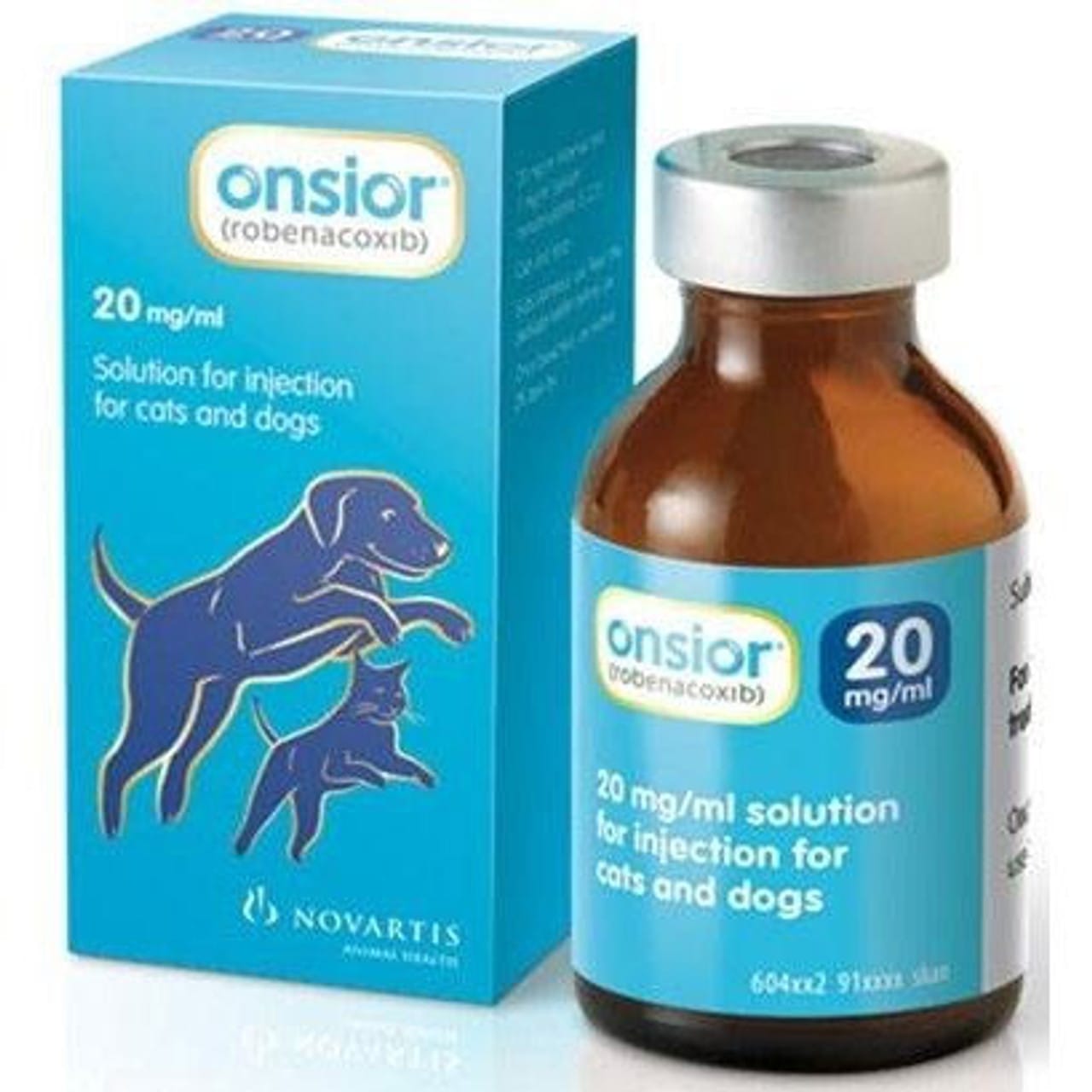
Onsior Solution
Buy Onsior Solution Online


Onsior Solution is a veterinary robenacoxib medication used as an injectable nonsteroidal anti-inflammatory drug, or NSAID. You can buy Onsior Solution online and choose the bottle strength or quantity available during ordering, then match the concentration and form to your veterinarian’s written directions. The injectable solution is different from Onsior tablets or compounded oral liquids, so the route, species, and amount on the label matter.
Robenacoxib belongs to the coxib class of NSAIDs. Veterinarians use it to help control pain and inflammation in labelled surgical settings for cats or dogs, depending on the country and product label. If you are checking Onsior Solution price, Onsior concentration, or US delivery from Canada, start with the exact injectable form and the animal named in the clinic instructions.
Onsior Solution Price and Bottle Details
The current Onsior Solution price should be read together with the bottle size, labelled concentration, and quantity being ordered. Injectable veterinary medicines are commonly priced by the vial or bottle, not by an individual administered dose. A lower total may not represent the same amount of robenacoxib if the bottle volume or concentration differs.
Many veterinary references describe Onsior Solution for Injection as a 20 mg/mL robenacoxib solution, but the bottle label and ordering strength should guide the final match. Do not treat an oral tablet, oral suspension, or another NSAID as interchangeable with Onsior injectable solution unless the veterinarian changes the plan.
| Ordering detail | What to match |
|---|---|
| Form | Choose the injectable solution when the clinic directions specify injection. |
| Concentration | Match the labelled robenacoxib concentration, such as 20 mg/mL when shown. |
| Bottle size | Compare total mL in the bottle with the quantity needed. |
| Species | Make sure the instructions identify the correct cat or dog. |
| Price | Use the displayed total with the bottle contents, not as a single-dose estimate. |
Quick tip: Compare concentration and bottle volume together before judging the total cost.
How to Order the Injectable Solution
Order Onsior Solution online by choosing the injectable form, quantity, and strength shown during ordering. Enter the animal and clinic directions exactly as written so the bottle, route, and intended species stay aligned. We may review order details when clarification is needed.
Keep the veterinary clinic’s contact information, your pet’s species, body weight, and procedure context nearby while ordering. These details help distinguish robenacoxib injection from oral pain medicines or longer-term mobility products. If the bottle label does not match the clinic instructions, ask the veterinarian to clarify the product name, concentration, and quantity before use.
Do not substitute a different animal’s remaining medicine, change from injection to tablets to reduce cost, or extend the course after the procedure. NSAID dosing and timing depend on the individual animal, route, health status, and surgical plan. For general veterinary browsing, the Pet Medications category can help separate pain and inflammation products from diabetes or other animal medicines.
What Onsior Solution Is Used For
Onsior Solution contains robenacoxib, an NSAID used by veterinarians to reduce pain and inflammation in labelled postoperative settings. Product labels differ by market and species, so use depends on the approved indication, the animal’s health, and the surgical procedure. It is not a general household pain reliever and should not be used in people.
For dogs, robenacoxib injection may be used around surgery when the label and veterinarian support its use. For cats, labelled use is commonly associated with postoperative pain and inflammation after certain procedures. The Canine Surgical Pain and Feline Surgical Pain sections can help place the medication in a surgery-related treatment context.
Onsior injectable solution is not the same as a chronic arthritis plan. Dogs or cats with longer-term stiffness, lameness, or mobility decline may need a different route, monitoring schedule, or medicine class. For those discussions, browse Canine Arthritis or Feline Arthritis products and bring questions back to the veterinary team.
Strength, Concentration, and Dose Decisions
The concentration tells how much robenacoxib is contained in each mL of solution. It does not tell you the amount your pet should receive. Dose decisions depend on species, body weight, procedure, hydration, kidney and liver considerations, route, and the veterinarian’s assessment.
People often look for an Onsior injectable dosing chart or an Onsior dosage for cats chart to verify they are buying the right medication. Charts can be useful conversation aids, but they should not be used to calculate, convert, or extend treatment at home. Tablet doses do not automatically translate to injection doses.
- Active ingredient: Robenacoxib.
- Drug class: Veterinary NSAID, specifically a coxib-type anti-inflammatory.
- Form: Injectable solution, when supplied as Onsior Solution for Injection.
- Route: Follow the route stated by the veterinarian and bottle label.
- Course length: Use only for the directed period.
Why it matters: Small differences in concentration or route can change the amount delivered.
Storage, Handling, and Shipping Basics
Injectable veterinary medicines require careful handling because sterility, expiration dating, and storage conditions matter. Keep the bottle in its original packaging until the veterinary team or trained person administers it. Do not use the solution if the vial looks damaged, contaminated, discoloured, or past its expiry date.
Read the carton, bottle label, and package insert when the order arrives. Store the medication as directed on the label, keep it away from children, and separate it from household medicines. If the product will be taken to a clinic, transport the original packaging so staff can verify the lot number, concentration, and expiry information.
For US shipping from Canada, handling should follow the medicine’s labelled storage requirements rather than assumptions about all injectables. When appropriate, prompt, express, cold-chain shipping may be used to support temperature-sensitive handling. Shipping methods do not change veterinary directions or make the product suitable for a different animal.
Side Effects, Warnings, and Monitoring
Robenacoxib is an NSAID, and NSAIDs can cause serious adverse reactions in some animals. Label warnings for veterinary NSAIDs include possible digestive, kidney, liver, and bleeding-related problems. Risk may be higher in dehydrated animals, animals with organ disease, very young or frail pets, or pets receiving interacting medicines.
Tell the veterinarian about all current medicines, supplements, recent injections, anesthetic drugs, and previous reactions to pain relievers. Do not combine Onsior Solution with another NSAID or a corticosteroid unless the veterinarian has directed that combination. A washout period may be needed when switching anti-inflammatory medicines.
| Possible concern | Signs to watch for |
|---|---|
| Digestive effects | Vomiting, diarrhea, drooling, appetite loss, or black stools. |
| Kidney or hydration problems | Changes in thirst, urination, energy, or hydration status. |
| Liver-related signs | Yellow gums or eyes, severe tiredness, or unexplained decline. |
| Injection-site reaction | Pain, swelling, redness, or irritation where the injection was given. |
| Allergic reaction | Facial swelling, hives, breathing trouble, collapse, or sudden weakness. |
Contact a veterinarian promptly if serious signs appear or if your pet seems worse after receiving the medication. Human exposure should be avoided. Do not use veterinary NSAIDs for people, and keep the vial out of reach of children.
Interactions and Animals Who Need Extra Caution
Medication history is especially important before a pet receives robenacoxib injection. Other NSAIDs, steroids, diuretics, anticoagulants, blood pressure medicines, anesthetic agents, and medicines that affect the kidneys can alter the risk profile. The veterinarian may also consider recent bloodwork, hydration, procedure type, and the broader pain-control plan.
Animals with kidney disease, liver disease, heart disease, dehydration, gastrointestinal ulcer history, bleeding disorders, or poor appetite may need extra assessment before NSAID use. Pregnant, breeding, very young, senior, or medically fragile animals may also need a different plan. These decisions should be based on the veterinarian’s examination and label guidance, not online dose conversion.
Monitoring continues after administration. Watch appetite, stool, hydration, energy, urination, and comfort level. If pain returns after a short postoperative course, do not restart or extend the medication without veterinary direction. Persistent lameness or chronic stiffness may point to a different diagnosis than surgical pain.
How the Injectable Differs From Related Pain Medicines
Onsior Solution is an injectable robenacoxib product. Onsior tablets, compounded liquids, and other veterinary NSAIDs may have different strengths, routes, species limits, and dosing schedules. Similar brand names or active ingredients do not remove the need to match the exact form.
The injectable route may be chosen around surgery because timing and administration can be controlled by the veterinary team. Oral forms may be used in different circumstances when labelled and directed. If more than one robenacoxib product appears suitable, ask the clinic whether the plan requires injection, oral dosing, or a transition from one route to another.
When comparing related veterinary medicines online, separate active ingredient, drug class, route, and treatment goal before looking at cost. A postoperative NSAID, a chronic arthritis product, an antibiotic, and a diabetes medicine are not clinically interchangeable. The Pet Medications category can support broader browsing, but the final medicine should match the veterinarian’s directions.
Questions to Ask the Veterinary Team
Before buying Onsior Solution from Canada, ask the clinic to confirm the intended species, concentration, route, and quantity. This is especially useful when the written instructions mention robenacoxib injection, Onsior injection, or Onsior 20 mg/mL solution. Clear wording reduces the risk of choosing a tablet or another NSAID by mistake.
Ask whether the dose will be administered at the clinic or at home, who should administer it, and how the bottle should be stored until use. Also ask which side effects require urgent contact and whether any current medicines need to be paused or avoided. These questions are practical safeguards for a medicine used around surgery.
If your pet has ongoing arthritis, recurring pain, or a new mobility problem, ask whether a surgery-related injectable is still the right match. Long-term pain plans often involve rechecks, bloodwork, weight management, physical activity changes, and different medication choices. The goal is to use the right product for the right clinical reason.
Authoritative Sources
Official labels are the best sources for species limits, route, warnings, adverse reactions, and handling instructions. The sources below support the safety and use information summarized here.
- Official DailyMed robenacoxib injection label covers U.S. labelled information for Onsior injection.
- Canadian veterinary product monograph outlines Canadian label information for Onsior Solution for Injection for dogs.
This content is for informational purposes only and is not a substitute for professional medical advice.
Express Shipping - from $29.99
Shipping with this method takes 3-5 days
Prices:
- Dry-Packed Products $29.99
- Cold-Packed Products $39.99
Standard Shipping - $19.99
Shipping with this method takes 5-10 days
Prices:
- Dry-Packed Products $19.99
- Not available for Cold-Packed products
What is Onsior Solution used for?
Onsior Solution contains robenacoxib, a veterinary NSAID used to help control pain and inflammation in labelled postoperative settings. Use depends on the animal, procedure, market label, and veterinarian’s directions.
Is Onsior Solution the same as Onsior tablets?
No. Onsior Solution is an injectable robenacoxib product, while tablets are an oral form. Route, concentration, timing, and species directions can differ, so one form should not be substituted for another without veterinary direction.
What side effects can Onsior Solution cause?
Possible concerns include vomiting, diarrhea, appetite loss, black stools, changes in thirst or urination, lethargy, liver-related signs, injection-site reactions, or allergic reactions. Contact a veterinarian promptly if serious or worsening signs occur.
Can Onsior Solution be used for cats and dogs?
Robenacoxib injection has labelled veterinary uses that vary by country and product presentation. Cats and dogs may have different indications, limits, and dosing considerations, so the bottle and route should match the veterinarian’s directions for that animal.
How should Onsior Solution be stored?
Store the injectable solution according to the carton, bottle label, and package insert. Keep it in the original container, away from children, and do not use it after expiry or if the solution or vial appears compromised.
Rewards Program
Earn points on birthdays, product orders, reviews, friend referrals, and more! Enjoy your medication at unparalleled discounts while reaping rewards for every step you take with us.
You can read more about rewards here.
POINT VALUE
How to earn points
- 1Create an account and start earning.
- 2Earn points every time you shop or perform certain actions.
- 3Redeem points for exclusive discounts.
You Might Also Like
Select options
This product has multiple variants. The options may be chosen on the product page
Select options
This product has multiple variants. The options may be chosen on the product page
Select options
This product has multiple variants. The options may be chosen on the product page
Select options
This product has multiple variants. The options may be chosen on the product page