
Please note: a valid prescription is required for all prescription medication.
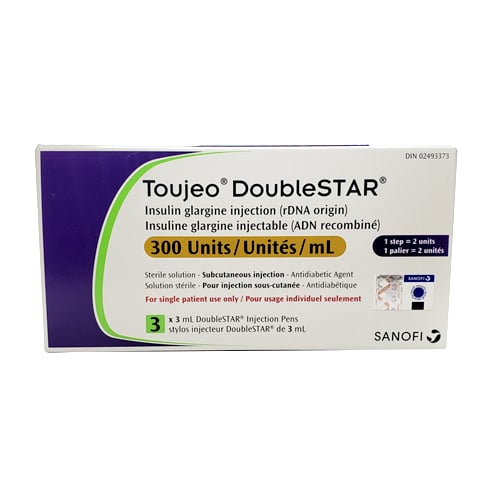
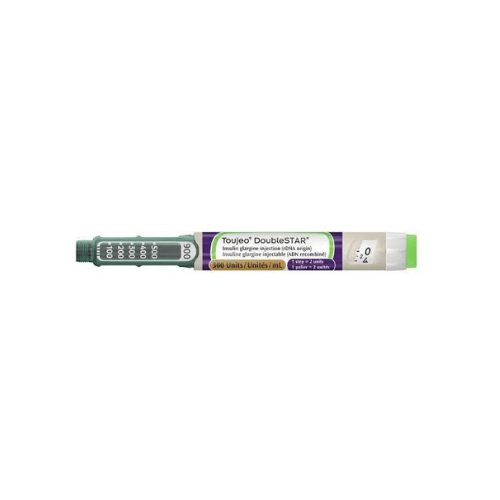
Toujeo Doublestar/Solostar Prefilled Pen
Buy Toujeo DoubleStar/SoloStar Prefilled Pen Online


Toujeo DoubleStar/SoloStar Prefilled Pen is a long-acting insulin glargine pen containing 300 units/mL for once-daily basal insulin use when directed by a clinician. Toujeo can be bought online by choosing the pen presentation and quantity shown during ordering, then matching the device and strength to your clinician’s directions. US delivery from Canada may be used for eligible insulin orders when required order details and handling steps are complete.
Toujeo is more concentrated than U-100 insulin glargine products, so the pen device matters as much as the insulin name. SoloStar, DoubleStar, and Max SoloStar wording can refer to different pen capacities or dose-increment features while still using Toujeo 300 units/mL insulin glargine.
Toujeo DoubleStar/SoloStar Prefilled Pen Price and Quantity
The Toujeo insulin price shown during ordering depends on the pen presentation, quantity, and current product availability. For a Toujeo prefilled pen, a total price may reflect how many pens are included, how much solution each pen contains, and the 300 units/mL concentration rather than a single daily amount.
When checking Toujeo SoloStar price or Toujeo cost without insurance, compare the checkout total against the exact pen name and quantity. A larger-capacity pen can contain more total insulin without changing the concentration, so a simple single-pen comparison may be misleading.
- Concentration: Match the product to Toujeo 300 units/mL.
- Pen wording: Distinguish SoloStar, DoubleStar, and Max SoloStar if more than one appears.
- Quantity: Review how many pens are included before comparing totals.
- Total insulin: Consider pen volume and concentration together.
- Needles: Pen needles are usually chosen separately from insulin pens.
Why it matters: Device capacity can change how long a pen lasts, even when the insulin strength is the same.
Cash-pay customers often search for Toujeo price without insurance, but the useful comparison is the current total for the exact device being ordered. Do not assume Toujeo SoloStar, DoubleStar, and Max SoloStar contain identical total units or dial the same way.
How to Order the Correct Toujeo Insulin Pen
Choose the Toujeo pen that matches the written product name, concentration, and use directions you were given. The most important ordering checks are the insulin name, 300 units/mL strength, device wording, quantity, and any needle supplies needed for use.
- Choose the device: Select SoloStar, DoubleStar, or Max SoloStar only when it matches your directions.
- Match the strength: Look for Toujeo 300 units/mL on the pen information.
- Review the quantity: Make sure the number of pens fits the intended supply.
- Plan handling: Insulin may require prompt, express, cold-chain shipping.
We may review order details when information needs to be clarified. That practical check helps reduce device, strength, or quantity mismatches for concentrated insulin products.
Quick tip: If your directions name DoubleStar or Max SoloStar, do not switch to SoloStar without clinician confirmation.
DoubleStar vs SoloStar: Device and Strength Details
Toujeo DoubleStar vs SoloStar is mainly a pen-capacity and dose-increment question, not a different insulin-ingredient question. Both are Toujeo insulin glargine pens at 300 units/mL, but the total amount in the pen and the way doses are dialed may differ by device.
| Presentation | What to check | Why it matters |
|---|---|---|
| SoloStar | Commonly described as a 1.5 mL U-300 pen containing 450 units total | Often used when the intended dose fits the device range and increments |
| DoubleStar | Commonly described as a 3 mL U-300 pen containing 900 units total | May suit larger-capacity use and can dial differently from SoloStar |
| Max SoloStar | A high-capacity U-300 pen used in some markets | May reduce pen changes for people using higher daily amounts |
| Pen needles | Needle length and gauge are chosen separately | Fit, injection technique, and disposal affect safe use |
The official product information states that Toujeo SoloStar and Toujeo DoubleStar are designed specifically for Toujeo, so dose recalculation is not needed when using the correct Toujeo pen as instructed. That does not mean another insulin glargine product can be substituted unit-for-unit without clinician direction.
Never withdraw Toujeo from a pen with a syringe. The pen is designed to deliver concentrated insulin through its own dosing mechanism, and syringe withdrawal can cause a serious dosing error.
Customers browsing basal insulin choices can use the long-acting insulin category to see how Toujeo fits among other background insulin products.
What Toujeo Is Used For
Toujeo is a long-acting insulin used to help manage blood glucose in people with diabetes when basal insulin is part of the treatment plan. Basal insulin provides background insulin coverage and is different from rapid-acting mealtime insulin used around food.
Toujeo is injected under the skin with the prefilled pen. It should not be used to treat diabetic ketoacidosis, which is a medical emergency that requires different treatment.
People living with diabetes may use different combinations of diet, activity, glucose monitoring, oral medicines, non-insulin injections, and insulin. The broader diabetes section gives condition context, while the insulin category helps narrow product choices by insulin type.
Toujeo SoloStar is an insulin glargine pen. Insulin glargine is a basal insulin analogue designed to provide long-acting glucose-lowering coverage after subcutaneous injection. It is not intended for rapid correction of high blood sugar after a meal.
Timing, Use Basics, and Monitoring Questions
Toujeo is commonly used once daily, and the time of day should be consistent with clinician directions. The best time to take Toujeo is the time that matches your treatment plan, daily routine, and blood glucose monitoring schedule.
Use a new sterile pen needle for each injection, prime the pen as instructed, inject under the skin, and remove the needle after use. Needle removal helps reduce leakage, blockage, air entry, and contamination risk.
Injection sites are usually rotated within recommended areas to reduce skin changes such as lumps, thickening, or pitting. Avoid injecting into skin that is tender, bruised, hard, scarred, or visibly abnormal unless a clinician has specifically instructed you otherwise.
Blood glucose checks help show whether the basal insulin plan is working as intended. Illness, missed meals, increased activity, kidney or liver changes, alcohol, and medication changes can alter insulin needs, so monitoring becomes especially important during routine disruptions.
Storage, Cold-Chain Handling, and Travel
Insulin is temperature sensitive. Unused Toujeo pens are generally stored in a refrigerator at 2°C to 8°C and must not be frozen, kept against a freezer element, or exposed to direct heat.
- Before first use: Keep unopened pens refrigerated as directed by the carton and leaflet.
- After first use: Follow the in-use storage period stated with the pen.
- Freezing: Discard insulin that has been frozen.
- Heat: Do not use insulin left in a hot car or direct sun.
- Appearance: Do not use solution that is cloudy, colored, or contains particles.
After delivery, inspect the package, move unopened pens to proper storage, and keep the leaflet. If a pen appears damaged, has leaked, or was exposed to obvious temperature extremes, ask a pharmacist or clinician what to do before using it.
For travel, keep insulin in temperature-controlled carry-on storage rather than checked luggage when flying. Pack spare needles, glucose supplies, and a backup plan for delayed travel or unexpected temperature exposure.
The diabetes articles section can support broader questions about living with insulin therapy, while product-specific storage instructions should always come from the Toujeo leaflet supplied with the pen.
Safety, Side Effects, and Precautions
The most important risk with Toujeo and any insulin is hypoglycemia, or low blood sugar. Symptoms can include shakiness, sweating, fast heartbeat, hunger, headache, blurred vision, confusion, irritability, dizziness, or unusual tiredness.
- Low blood sugar: Follow your clinician’s treatment plan promptly.
- Injection-site reactions: Redness, itching, swelling, or discomfort may occur.
- Skin changes: Repeated injections in one area can cause lumps or thickened skin.
- Allergy symptoms: Rash, wheezing, or swelling of the face or throat needs urgent help.
- Low potassium: Weakness, cramps, or abnormal heartbeat may be serious.
- Fluid retention: Swelling can worsen with some diabetes medicines.
Do not use Toujeo during an episode of low blood sugar or after a serious allergic reaction to insulin glargine or any ingredient in the pen. Seek emergency care for severe hypoglycemia, loss of consciousness, seizure, trouble breathing, or swelling of the face, lips, tongue, or throat.
Toujeo should not be mixed with another insulin, diluted, used in an insulin pump, or injected into a vein. Never share an insulin pen, even if the needle has been changed, because blood-borne infections can be transmitted.
Common colds, fever, infections, surgery, stress, diet changes, and activity changes can affect glucose control. Ask a clinician how often to test blood sugar and when to call for help if readings are repeatedly higher or lower than expected.
Interactions and Medicine Changes
Many medicines can increase or decrease insulin needs. Other diabetes medicines, corticosteroids, diuretics, some blood pressure medicines, beta blockers, and alcohol are common examples that may affect glucose control or warning symptoms.
- Beta blockers: May hide a fast heartbeat caused by low blood sugar.
- Corticosteroids: Can raise blood glucose in some people.
- Alcohol: Can increase the risk of low blood sugar.
- Thiazolidinediones: May increase fluid retention when used with insulin.
- Kidney or liver changes: May affect insulin requirements and monitoring needs.
Do not change insulin strength, pen device, timing, or dose based only on price or availability. Concentrated insulin requires careful device matching because a wrong pen, wrong insulin, or misunderstood dose can lead to dangerous glucose changes.
People with type 1 diabetes and people with type 2 diabetes may have different treatment plans, glucose targets, and medication combinations. Toujeo use should fit the plan created for the specific diabetes type and medical history.
Related Basal Insulin Choices
Toujeo, Lantus, Basaglar, Levemir, and Tresiba are all used in basal insulin care, but they are not interchangeable without clinician direction. Concentration, active ingredient, device design, onset, duration, and dose-conversion rules can differ.
A U-300 insulin glargine pen such as Toujeo is not the same as a U-100 insulin glargine pen. Even when the active ingredient family sounds familiar, the concentration and pen mechanism affect safe product selection.
| Product type | Comparison point | Ordering relevance |
|---|---|---|
| Toujeo | Insulin glargine U-300 | Match SoloStar, DoubleStar, or Max SoloStar wording carefully |
| Other glargine products | May use U-100 concentration | Do not substitute by name similarity alone |
| Other long-acting insulins | May use a different insulin ingredient | Device, timing, and conversion questions require clinician input |
The diabetes medications category can help place insulin alongside other diabetes treatments. For insulin-specific browsing, the insulin products category is more focused.
Authoritative Sources
The safety, device, and use points above are summarized from official product information and device instructions. Use the carton, label, and leaflet that arrive with your pen as the controlling instructions for your specific supply.
- UK summary of product characteristics for Toujeo DoubleStar
- Health Canada product monograph for Toujeo SoloStar and DoubleStar
- Manufacturer instructions for Toujeo SoloStar and DoubleStar
This content is for informational purposes only and is not a substitute for professional medical advice.
Blood Glucose Unit Converter
Convert glucose readings between mg/dL and mmol/L without changing the clinical value.
mg/dL
-
US reporting unit
mmol/L
-
International reporting unit
These calculations are for education only and do not replace clinical advice, diagnosis, or treatment. Always confirm medical decisions with a qualified healthcare professional.
HbA1c & eAG Calculator
Convert between HbA1c percentage and estimated average glucose using the ADAG relationship.
HbA1c
-
percentage
eAG mg/dL
-
estimated average glucose
eAG mmol/L
-
estimated average glucose
These calculations are for education only and do not replace clinical advice, diagnosis, or treatment. Always confirm medical decisions with a qualified healthcare professional.
CGM Time-in-Range Summary
Summarise CGM percentages across very low, low, in-range, high, and very high glucose bands.
Entered total
-
should equal 100%
Below range
-
very low plus low
Above range
-
high plus very high
Summary
-
common adult CGM targets vary by patient
These calculations are for education only and do not replace clinical advice, diagnosis, or treatment. Always confirm medical decisions with a qualified healthcare professional.
BMI Calculator
Estimate adult body mass index from height and weight, with metric and imperial units.
BMI
-
kg/m2 equivalent
Category
-
Adult screening range
These calculations are for education only and do not replace clinical advice, diagnosis, or treatment. Always confirm medical decisions with a qualified healthcare professional.
Carb Serving Calculator
Convert total carbohydrate grams into carb choices for meal planning and diabetes education.
Carb choices
-
total carbs divided by choice size
Rounded choices
-
nearest half choice
Carb calories
-
4 kcal per gram
These calculations are for education only and do not replace clinical advice, diagnosis, or treatment. Always confirm medical decisions with a qualified healthcare professional.
Customer Reviews
5.0 Based on 2 Reviews
Write a Review Ask a Question - Reviews
- Questions
Filter Reviews:
JT
08/01/2025
Jeffery T.  US
USGreat prices
Courteous customer service and great product pricing
08/04/2025
CanadianInsulin.com
Hi Jeffery,Thank you for your kind words! We’re delighted to hear that you’re happy with our product pricing and courteous customer service.Ensuring you receive the care you need quickly, easily, and at the right price while providing exceptional customer service is always our top priority.Thank you for choosing Canadian Insulin! We’re grateful for your continued support and look forward to serving you for many more years.
RK
12/31/2022
Regina K. USI recommend this product
Still using but you need to put more ice packs or larger ice packs in the cooler. Arrived thawed & not very cold.
Express Shipping - from $29.99
Shipping with this method takes 3-5 days
Prices:
- Dry-Packed Products $29.99
- Cold-Packed Products $39.99
Standard Shipping - $19.99
Shipping with this method takes 5-10 days
Prices:
- Dry-Packed Products $19.99
- Not available for Cold-Packed products
What is the difference between Toujeo DoubleStar and SoloStar?
Toujeo DoubleStar and SoloStar both contain insulin glargine 300 units/mL. The main differences are pen capacity and dosing mechanism details, so the device name should match your clinician’s directions.
What type of insulin is Toujeo SoloStar?
Toujeo SoloStar is a long-acting basal insulin pen containing insulin glargine U-300. It provides background insulin coverage and is not a rapid-acting mealtime insulin.
How much does Toujeo cost without insurance?
Toujeo cost without insurance depends on the current pen presentation, quantity, and total units supplied. Compare the checkout total for the exact SoloStar, DoubleStar, or Max SoloStar device rather than assuming all pens contain the same amount.
What is the best time of day to take Toujeo?
Toujeo is commonly used once daily, but the best time is the time your clinician has directed and that you can use consistently. Do not change timing without medical guidance.
Can Toujeo be used for diabetic ketoacidosis?
No. Toujeo is a long-acting insulin for basal glucose control and is not used to treat diabetic ketoacidosis. Diabetic ketoacidosis requires urgent medical care and different treatment.
Do Toujeo pens need separate needles?
Yes, pen needles are generally selected separately from Toujeo pens. Use a new sterile needle for each injection and remove it after use according to the pen instructions.
Rewards Program
Earn points on birthdays, product orders, reviews, friend referrals, and more! Enjoy your medication at unparalleled discounts while reaping rewards for every step you take with us.
You can read more about rewards here.
POINT VALUE
How to earn points
- 1Create an account and start earning.
- 2Earn points every time you shop or perform certain actions.
- 3Redeem points for exclusive discounts.
You Might Also Like
Select options
This product has multiple variants. The options may be chosen on the product page
Select options
This product has multiple variants. The options may be chosen on the product page
Select options
This product has multiple variants. The options may be chosen on the product page
Select options
This product has multiple variants. The options may be chosen on the product page
Related Articles
Diabetes, Type 1
Humalog KwikPen Generic Options and Insulin Lispro Safety
A Humalog KwikPen generic search usually comes down to one key point: Humalog KwikPen contains insulin lispro, but insulin copies are not always handled like traditional small-molecule generics. Some products…
Diabetes
Insulin Syringe Sizes: Barrel, Needle, and Safety Basics
Insulin syringe sizes describe three things: how much the barrel holds, how long the needle is, and how thin the needle is. These details matter because insulin is measured in…
Diabetes, Type 1
Fiasp Cartridge Safety, Compatibility, and Mealtime Use
A Fiasp cartridge is a replaceable cartridge form of Fiasp, a faster-acting insulin aspart used around meals when prescribed for diabetes. It is meant for compatible reusable insulin pens, not…
Diabetes, Type 1
Fiasp Alternative Options for Mealtime Insulin Decisions
A Fiasp alternative is usually another mealtime insulin that acts quickly around food, not a simple over-the-counter substitute. Options may include other insulin aspart products, insulin lispro products, insulin glulisine,…