
Please note: a valid prescription is required for all prescription medication.
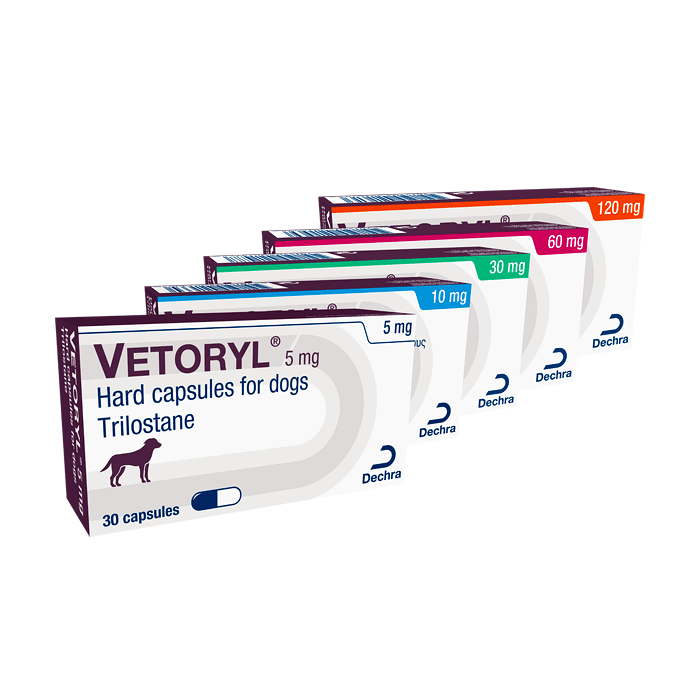
Vetoryl
Buy Vetoryl Online


Vetoryl is a trilostane capsule medication for dogs with Cushing’s disease. It can be bought online, with the capsule strength and quantity chosen to match the veterinarian’s written directions for the individual dog. Current Vetoryl price details should be read alongside the strength, capsule count, and refill timing needed for ongoing treatment.
Vetoryl capsules are used under veterinary supervision because trilostane changes adrenal hormone production. Dogs taking this medicine usually need follow-up testing, symptom review, and careful dose assessment over time. US delivery from Canada may be part of the service context for customers arranging a refill, but the medicine choice should still follow the dog’s current treatment plan.
Vetoryl Price and Capsule Strengths
Vetoryl price comparisons are most useful when the same strength and quantity are being evaluated. A lower bottle total may not represent the lower treatment cost if it contains fewer capsules, a different strength, or a supply that does not match the dog’s daily instructions. Review the displayed cash price, the capsule strength, and the quantity together before checkout.
Vetoryl capsules are commonly associated with 5 mg, 10 mg, 30 mg, and 60 mg strengths. These strengths are not interchangeable unless the veterinarian has directed a specific change or capsule combination. Trilostane dosing is individualized according to the dog’s weight, clinical response, cortisol testing, and tolerance.
If paying without insurance, compare the Vetoryl cost for the exact strength and count needed for the refill. The total medicine expense may also change when a dog moves to a new strength after monitoring. For related veterinary products, the Pet Medications category can help keep animal medicines organized while treatment decisions remain with the veterinary team.
| Order factor | What to review | Why it matters |
|---|---|---|
| Capsule strength | Match the milligram strength in the current directions. | Different strengths can change the total daily dose. |
| Quantity | Look at the capsule count or supply amount. | Quantity affects refill planning and total cost. |
| Form | Confirm that the medicine is Vetoryl capsules. | The form should align with the dog’s treatment plan. |
| Pet information | Use the correct dog’s name, weight, and clinic details. | Accurate information reduces avoidable order delays. |
Quick tip: Compare Vetoryl price by the same strength and quantity, not by bottle total alone.
How to Order Vetoryl Online
To order Vetoryl online, choose the capsule strength and quantity that match the current veterinary directions. Keep the dog’s recent weight, diagnosis information, and clinic contact details available so the order can be matched to the intended treatment. Do not rely on an older label if the dog has had recent bloodwork or a dose change.
Vetoryl for dogs is typically used as a long-term medicine, so refill timing matters. Plan around monitoring visits, holidays, and travel so there is enough time to arrange the next supply. If the dog is due for testing soon, ask the veterinary clinic whether the current directions should be updated before the next refill.
- Choose the Vetoryl strength shown in the current directions.
- Match the capsule quantity to the expected refill interval.
- Enter the dog’s and veterinary clinic’s information accurately.
- Review the order summary before submitting the medicine request.
- Keep the labeled container for future reference and monitoring visits.
Vetoryl ships from Canada to US customers as part of cross-border service logistics when arranged through the store. Shipping wording should not replace veterinary guidance about timing, monitoring, or dose changes. Avoid using another dog’s capsules, an expired supply, or a previous strength without direct veterinary instruction.
What Vetoryl Treats in Dogs
Vetoryl medication for dogs is used to treat hyperadrenocorticism, commonly called canine Cushing’s disease. This condition occurs when the body produces too much cortisol, a hormone involved in stress response, metabolism, immune function, and fluid balance. Official product information describes Vetoryl use for dogs with pituitary-dependent hyperadrenocorticism and adrenal-dependent hyperadrenocorticism.
Common signs of Cushing’s disease can include increased thirst, frequent urination, increased appetite, panting, a pot-bellied appearance, thin skin, skin infections, or hair thinning. These signs can overlap with other illnesses, so diagnosis usually depends on examination, history, bloodwork, urine testing, and condition-specific endocrine tests. Products associated with this condition can be browsed through the Canine Cushing’s Disease condition category.
Vetoryl for Cushing’s disease in dogs is not a wellness supplement or a general treatment for aging changes. It affects adrenal hormone production and can cause harm if the dose is too high, too low, or not monitored appropriately. The veterinarian decides whether trilostane is suitable based on the dog’s diagnosis, other health conditions, and response after treatment starts.
Active Ingredient and How Trilostane Works
Vetoryl contains trilostane, an active ingredient that inhibits an enzyme involved in cortisol production in the adrenal glands. By reducing cortisol production, trilostane can help control the hormone excess associated with Cushing’s disease. The goal is not to eliminate cortisol completely, because dogs still need an appropriate amount for normal body function.
Trilostane for dogs requires a careful balance. Too much cortisol activity can leave Cushing’s signs uncontrolled, while too little cortisol activity can create serious weakness, vomiting, diarrhea, collapse, or electrolyte changes. This is why clinical response and lab monitoring are part of responsible Vetoryl use.
Dechra Vetoryl is supplied as capsules. If the veterinary directions refer to trilostane by active ingredient name, make sure the medicine form and strength still match the intended product. Do not open, split, or crush capsules to create a different dose unless a veterinarian specifically instructs that approach.
Capsule Strength Matching and Dose Changes
Vetoryl 5 mg, Vetoryl 10 mg, Vetoryl 30 mg, and Vetoryl 60 mg are common strength terms because many dogs need individualized treatment. A small dog, a large dog, and a dog recovering from side effects may need different dosing decisions. Strength selection should follow the veterinary plan rather than assumptions about which capsule is safest or strongest.
Vetoryl dosage for dogs may be adjusted after the veterinarian reviews symptoms and monitoring tests. The dog may need a different strength, a changed schedule, or temporary interruption depending on response and safety findings. Pet owners should not raise, lower, skip, or combine capsules based only on thirst, appetite, panting, or energy level.
| Strength term | Practical ordering step | Do not assume |
|---|---|---|
| 5 mg | Match the 5 mg strength only if directed. | It is not automatically a starter dose. |
| 10 mg | Confirm the label directions before refilling. | Two smaller capsules are not a substitute unless directed. |
| 30 mg | Review strength and quantity together. | The bottle total alone does not show treatment cost. |
| 60 mg | Use only when it matches the current plan. | Capsules should not be split to reduce dose. |
Why it matters: Accurate strength matching helps prevent dosing errors and refill delays.
Storage, Handling, and Daily Administration
Store Vetoryl capsules according to the label instructions and keep them in the original container unless the pharmacist or veterinarian gives different directions. Protect capsules from excess heat, moisture, and direct light. Keep all pet medicines away from children, other pets, and anyone who might accidentally handle or swallow them.
Vetoryl capsules are often given with food, but the dog’s label directions should be followed. Consistent administration helps the veterinary team interpret cortisol testing and symptom changes. If a dose is missed, contact the veterinary clinic for instructions instead of doubling the next dose.
Handling matters because the medicine affects hormone production. Do not open or crush capsules unless specifically directed. People who are pregnant, trying to become pregnant, or concerned about hormone-related medicine exposure should avoid contact with capsule contents and use extra care when handling the container.
Travel planning is important for dogs on long-term treatment. Keep the labeled bottle with the dog, pack enough supply for the full trip, and avoid leaving capsules in a hot vehicle. If travel may interfere with monitoring appointments, speak with the veterinary clinic before changing the schedule.
Side Effects, Warnings, and When to Call a Veterinarian
Vetoryl side effects can include reduced appetite, vomiting, diarrhea, lethargy, weakness, weight loss, trembling, or behavior changes. Some dogs have mild digestive signs, while others develop symptoms that need urgent care. New or worsening signs should be reported promptly, especially soon after treatment starts or after a dose change.
Serious reactions can occur if cortisol levels become too low or if the adrenal glands are affected more strongly than intended. Urgent warning signs include severe weakness, collapse, bloody diarrhea, persistent vomiting, marked lethargy, or refusal to eat. These signs require immediate veterinary attention.
Vetoryl should not be used in dogs that are pregnant, intended for breeding, or nursing. Official labeling also warns against use in dogs with certain liver disease or kidney insufficiency. Dogs with anemia, significant illness, or recent gastrointestinal problems may need closer assessment before and during trilostane treatment.
Tell the veterinarian about every medication, supplement, and diet change the dog receives. Corticosteroids, some heart or blood pressure medicines, potassium-related therapies, and other endocrine treatments may affect safety decisions. Do not add over-the-counter products for appetite, diarrhea, energy, or skin signs without veterinary guidance.
- Digestive concerns: vomiting, diarrhea, poor appetite, or blood in stool.
- Energy changes: unusual weakness, lethargy, trembling, or collapse.
- Hormone concerns: signs of too little adrenal hormone activity.
- Medical history: kidney disease, liver disease, anemia, breeding, or pregnancy risk.
- Medicine review: steroids, heart medicines, supplements, and endocrine therapies.
Monitoring During Long-Term Treatment
Monitoring is part of safe Vetoryl treatment. Veterinarians may use cortisol testing, electrolyte checks, kidney values, liver values, and symptom updates to assess response. Test timing can be important, especially after starting trilostane, changing strength, or investigating side effects.
Keep a simple daily or weekly log of thirst, urination, appetite, panting, activity, weight, skin changes, and digestive signs. These notes can help the veterinary team decide whether the current plan is working. A written log is often more reliable than trying to remember changes during a busy appointment.
Long-term treatment may continue when the dog benefits and monitoring remains acceptable. There is no single timeline that fits every dog with Cushing’s disease. The plan can change as the dog ages, develops other conditions, or responds differently to the same strength over time.
Comparing Vetoryl With Other Treatment Decisions
Vetoryl trilostane is an established treatment option for canine Cushing’s disease, but it is not the only decision involved in managing the condition. Some dogs need additional diagnostic testing, imaging, surgery evaluation, or a different treatment path depending on whether the disease is pituitary-dependent or adrenal-dependent. The underlying cause affects expectations, monitoring, and risk discussion.
Do not substitute compounded trilostane, human medicines, or another dog’s Vetoryl capsules without veterinary direction. Differences in formulation, strength, absorption, and quality control can affect safety. If affordability or supply planning is difficult, ask the veterinary clinic which parts of the plan are flexible and which are essential.
When comparing trilostane cost with other options, include follow-up visits and lab testing, not only the capsule bottle. Cushing’s disease management often involves repeat testing, dose reassessment, and symptom review. The medicine portion is only one part of the overall care plan.
Questions to Ask Before a Refill
Before refilling Vetoryl capsules for dogs, confirm the current diagnosis, treatment goal, strength, timing, and monitoring schedule. Ask which signs should be treated as urgent and which changes may be expected as the dog adjusts. Clear instructions can prevent confusion if appetite, thirst, or energy changes at home.
Useful questions include whether the capsule should be given with food, what to do after a missed dose, when bloodwork should be repeated, and whether the next refill should wait for test results. Also ask whether any other medicines or supplements should be stopped, separated, or monitored more closely.
If the dog has kidney disease, liver concerns, anemia, pregnancy risk, or a history of severe digestive signs, those details should be discussed before continuing treatment. These factors can change whether Vetoryl remains appropriate or how closely the dog needs follow-up.
Authoritative Sources
Official manufacturer product information: Dechra Vetoryl Capsules.
Veterinary label summary: Vetoryl Professional Information.
Use these sources to confirm indication, contraindications, side effects, and label-aligned safety details with the veterinarian’s instructions. Store ordering information helps with product selection and refill planning, but the official label and veterinary plan should guide treatment decisions.
This content is for informational purposes only and is not a substitute for professional medical advice.
Express Shipping - from $29.99
Shipping with this method takes 3-5 days
Prices:
- Dry-Packed Products $29.99
- Cold-Packed Products $39.99
Standard Shipping - $19.99
Shipping with this method takes 5-10 days
Prices:
- Dry-Packed Products $19.99
- Not available for Cold-Packed products
What is Vetoryl used for in dogs?
Vetoryl is used for dogs with Cushing’s disease, also called hyperadrenocorticism. It contains trilostane, which reduces cortisol production in the adrenal glands. Diagnosis and treatment monitoring should be managed by a veterinarian.
What Vetoryl capsule strengths are commonly searched for?
Common Vetoryl strength terms include 5 mg, 10 mg, 30 mg, and 60 mg capsules. The correct strength depends on the dog’s current veterinary directions, weight, response, and monitoring results. Do not switch strengths without veterinary instruction.
How should I compare Vetoryl price?
Compare Vetoryl price by the same capsule strength and quantity. A different strength or capsule count can change the refill interval and total treatment cost. Monitoring expenses and veterinary follow-up are also part of Cushing’s disease care.
What are common Vetoryl side effects?
Common concerns include reduced appetite, vomiting, diarrhea, lethargy, weakness, weight loss, trembling, or behavior changes. Severe weakness, collapse, bloody diarrhea, persistent vomiting, or refusal to eat should be treated as urgent and discussed with a veterinarian immediately.
Can Vetoryl capsules be split or opened?
Vetoryl capsules should not be opened, split, or crushed unless a veterinarian specifically directs it. The medicine affects hormone production, and exposure to capsule contents may be a concern, especially for people who are pregnant or trying to become pregnant.
Why does a dog need monitoring while taking Vetoryl?
Monitoring helps the veterinarian assess whether cortisol control is appropriate and whether side effects or electrolyte changes are occurring. Blood tests, symptom updates, and timing after dose changes can all affect treatment decisions.
Rewards Program
Earn points on birthdays, product orders, reviews, friend referrals, and more! Enjoy your medication at unparalleled discounts while reaping rewards for every step you take with us.
You can read more about rewards here.
POINT VALUE
How to earn points
- 1Create an account and start earning.
- 2Earn points every time you shop or perform certain actions.
- 3Redeem points for exclusive discounts.
You Might Also Like
Select options
This product has multiple variants. The options may be chosen on the product page
Select options
This product has multiple variants. The options may be chosen on the product page
Select options
This product has multiple variants. The options may be chosen on the product page
Select options
This product has multiple variants. The options may be chosen on the product page