
Please note: a valid prescription is required for all prescription medication.
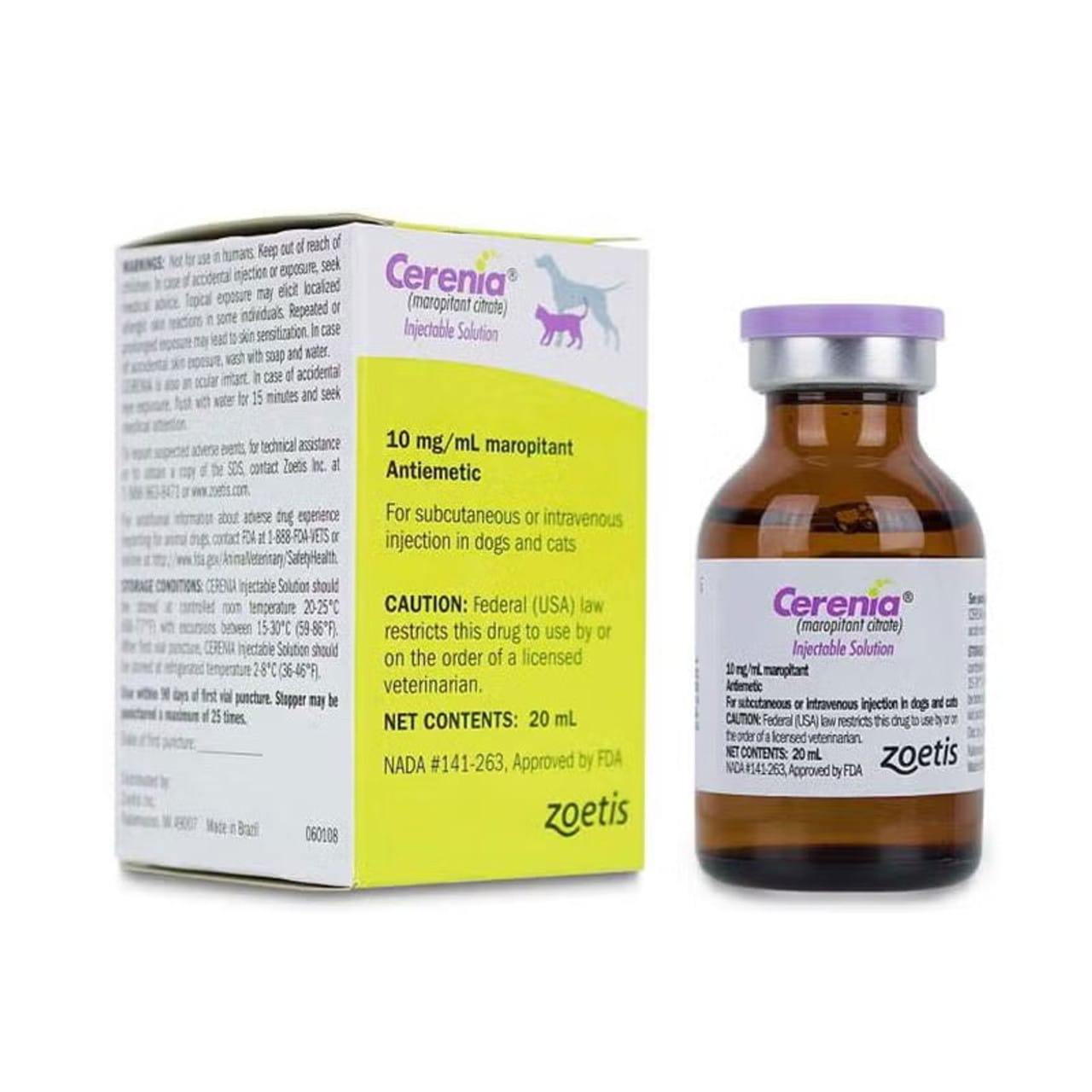
Cerenia Injection
Buy Cerenia Injection Online


Cerenia Injection is a veterinary antiemetic containing maropitant citrate for dogs and cats. It can be bought online, with current price shown during ordering and vial information available so the medicine can be matched to your veterinarian’s written directions. Choose the strength, vial size, and quantity shown for Cerenia Injection only when they align with the animal’s treatment plan.
The injectable form is used when a veterinarian wants a non-oral anti-vomiting medicine or clinic-administered treatment. Cerenia Injection is different from Cerenia tablets, compounded preparations, and other antiemetics, so the form and concentration matter as much as the brand name.
Cerenia Injection Price, Strength, and Vial Details
Cerenia Injection price should be read together with the vial strength, total volume, and quantity being purchased. Official labeling commonly describes Cerenia Injectable Solution as maropitant citrate 10 mg/mL in a 20 mL amber glass vial. The vial volume is the total amount in the container, not a single dose for one dog or cat.
When reviewing Cerenia Injection cost, match the active ingredient, concentration, and vial size before looking at the final total. A different line item may reflect a different quantity, pack format, or order path. For cash-pay planning, the most useful comparison is the exact injectable vial your veterinarian named, not a general price seen for tablets or another maropitant product.
Quick tip: Match maropitant citrate 10 mg/mL and the vial volume first, then review the order total.
| Ordering detail | Why it matters |
|---|---|
| Active ingredient | Cerenia Injection contains maropitant citrate, the antiemetic ingredient. |
| Concentration | 10 mg/mL describes solution strength, not how much an animal receives. |
| Vial size | A 20 mL vial contains multiple milliliters of solution, depending on use directions. |
| Quantity | The number of vials affects the order total and handling plan. |
| Animal species | Directions for a dog and a cat may differ even when the medicine name is the same. |
| Administration setting | The clinic may administer the injection or provide specific home-use instruction. |
How to Order Cerenia Injection Online
Order Cerenia Injection online by choosing the injectable maropitant product that matches the veterinary directions. Keep the clinic name, pet information, current instructions, and product form nearby so the order can be matched accurately. We may review order details if clarification is needed before the medicine is supplied through licensed pharmacy channels.
Some veterinary records may describe the medicine as Cerenia maropitant injection, maropitant Cerenia injection, maropitant citrate injection, or Cerenia Injectable Solution. These names refer to the same active ingredient context, but the purchased form still needs to be the injectable solution. Do not treat tablets, compounded liquids, or other anti-vomiting drugs as automatic substitutes.
US delivery from Canada may be relevant for customers arranging pet medication access across borders. Check the delivery address, quantity, and any handling instructions shown during checkout. Do not assume a storage method, shipping temperature, or use timeframe unless it appears with the product or is included in the veterinarian’s instructions.
What Cerenia Injection Is Used For
Cerenia is the brand name for maropitant citrate, an NK1 receptor antagonist antiemetic. In plain language, it helps block a vomiting pathway involving substance P. Veterinarians use Cerenia Injection for dogs and cats when they want to prevent or treat certain vomiting episodes according to the animal’s condition and the approved product labeling.
Vomiting is a symptom, not a diagnosis. It may occur with diet changes, infections, motion sickness, pancreatitis, kidney disease, liver disease, intestinal blockage, toxins, medication reactions, or other causes. Cerenia may reduce vomiting, but the animal may still need examination, fluids, imaging, lab work, or another treatment if the cause is serious.
The injectable form may be chosen when a pet cannot keep oral medicine down, needs clinic-based care, or requires a route other than the mouth. Cerenia tablets may be discussed for different outpatient situations, including some travel-related plans. Browse condition-focused pet categories for canine vomiting, feline vomiting, and canine motion sickness when your veterinarian has already identified the reason for treatment.
Injectable Form Compared With Tablets and Other Antiemetics
Cerenia Injection and Cerenia tablets are not interchangeable buying choices. The active ingredient may be the same, but the route, onset expectations, handling, and administration process differ. A vomiting pet may not retain an oral tablet, while an injectable product may be selected for clinic care or carefully instructed home administration.
Other veterinary antiemetics may act differently or be used for different reasons. A veterinarian may consider the pet’s age, weight, hydration status, abdominal pain, other medicines, and suspected cause of vomiting before choosing maropitant. If vomiting is linked with toxin exposure, a swallowed foreign object, severe weakness, or abdominal swelling, controlling nausea alone may delay urgent care.
When comparing related pet products, focus on form, active ingredient, species use, and instructions rather than brand familiarity alone. The Pet Medications category can help with navigation after the veterinary plan is clear, but it should not replace diagnosis or treatment selection.
Dose Matching and Administration Considerations
The phrase Cerenia 10 mg/mL injectable refers to the concentration of the solution. The phrase Cerenia 20 mL injection refers to the total volume in the vial. Neither phrase tells you how much a specific dog or cat should receive. The amount used depends on veterinary calculations and the reason for treatment.
Administration may involve subcutaneous or other labeled veterinary use, depending on the instructions and clinical setting. Pet owners should not estimate a dose from weight charts, online comments, or leftover clinic directions. A small measurement error with an injectable medicine can be clinically important, especially in cats, toy-breed dogs, puppies, kittens, or dehydrated animals.
If home administration has been approved by the veterinarian, make sure you understand syringe size, measurement markings, injection route, injection site, restraint method, and sharps disposal. Many animals are better treated at the clinic when they are painful, weak, dehydrated, aggressive from discomfort, or unable to keep fluids down.
Storage, Handling, and Shipping Basics
Injectable veterinary medicines require careful handling even when routine room-temperature storage is allowed. Official labeling for Cerenia Injectable Solution includes controlled room temperature storage and a use period after the vial is first punctured. Keep the vial in its original container, away from children and animals, and follow the label or clinic instructions after opening.
Do not freeze Cerenia Injection, leave it in a hot vehicle, or store it near direct heat. Avoid using a vial that appears cracked, contaminated, discolored, or past its labeled use period after puncture. If packaging looks compromised on arrival, separate the vial from household items and ask for guidance before any administration.
Not every injectable veterinary product requires refrigerated transport, so prompt, express, cold-chain shipping should not be assumed unless it is shown for the order. Storage and handling instructions are product-specific. If the medicine was exposed to extreme temperatures or you are unsure how long a punctured vial has been open, contact the veterinarian or pharmacy support before use.
Safety, Side Effects, and Monitoring
Discuss the pet’s full health history before Cerenia Injection is used. Important factors include liver disease, pregnancy, nursing, breeding status, very young age, previous reaction to maropitant, dehydration, severe weakness, and the use of several medicines. Maropitant is processed partly through the liver and is highly protein bound, so interactions and organ function can matter.
Commonly discussed effects include injection-site pain, vocalization during injection, lethargy, reduced appetite, drooling, diarrhea, or behavior changes. Cats may react more noticeably to the injection itself. Track when signs appear, whether vomiting improves, and whether the pet’s overall condition is getting better or worse.
Seek veterinary help urgently if the animal has facial swelling, hives, breathing trouble, collapse, severe weakness, repeated vomiting despite treatment, bloody vomit, black stools, severe abdominal pain, or signs of dehydration such as dry gums and very little urination. Cats, puppies, kittens, and small dogs can worsen quickly when they cannot keep fluids down.
Give the veterinarian a complete list of medicines and supplements, including flea and tick preventives, pain relievers, sedatives, seizure medicines, heart medicines, antibiotics, recent injections, and over-the-counter products. Monitoring should include appetite, thirst, stool changes, urination, gum moisture, energy, abdominal comfort, and any return of vomiting.
When Vomiting Needs More Than an Antiemetic
Cerenia Injection can reduce vomiting, but it does not remove the need to identify the cause. Vomiting after toxin exposure, ingestion of a string or toy, severe abdominal pain, bloating, repeated retching, collapse, or suspected obstruction needs prompt veterinary attention. In those situations, stopping vomiting without addressing the underlying problem can be risky.
Repeated vomiting can cause dehydration and electrolyte problems. A veterinarian may recommend fluids, blood testing, X-rays, ultrasound, diet changes, pain control, deworming, or additional medicine depending on the animal’s condition. If a pet seems brighter after an antiemetic but still refuses water, remains painful, or becomes very quiet, follow up quickly.
Travel-related nausea is a different discussion from acute illness. Dogs with predictable car sickness may have a prevention plan that differs from treatment for sudden vomiting at home. The veterinary plan should identify whether the goal is motion sickness prevention, acute vomiting control, supportive care, or investigation of an underlying disease.
Authoritative Sources
Official labeling supports formulation, storage, species-use context, and safety details for maropitant citrate injectable solution. See the Cerenia Injectable Solution label.
Use the official label together with the veterinarian’s directions for the individual animal. The label provides product-level information; the clinic instructions apply those details to the pet’s species, diagnosis, weight, route, and treatment plan.
This content is for informational purposes only and is not a substitute for professional medical advice.
Express Shipping - from $29.99
Shipping with this method takes 3-5 days
Prices:
- Dry-Packed Products $29.99
- Cold-Packed Products $39.99
Standard Shipping - $19.99
Shipping with this method takes 5-10 days
Prices:
- Dry-Packed Products $19.99
- Not available for Cold-Packed products
What is Cerenia Injection used for in dogs and cats?
Cerenia Injection contains maropitant citrate, an antiemetic used by veterinarians to help prevent or treat certain vomiting episodes in dogs and cats. The cause of vomiting still matters, because toxin exposure, obstruction, dehydration, pancreatitis, kidney disease, and other illnesses may need additional care.
Is Cerenia Injection the same as Cerenia tablets?
No. The active ingredient may be the same, but the injectable solution and tablets have different routes of administration and handling needs. A veterinarian may choose the injection when a pet cannot keep oral medicine down or needs clinic-based treatment.
What does Cerenia 10 mg/mL 20 mL mean?
10 mg/mL describes the concentration of maropitant citrate in the solution. 20 mL describes the total volume in the vial. These numbers do not state an individual dog or cat dose; dosing should follow the veterinarian’s written directions.
What side effects can occur with Cerenia Injection?
Possible effects include injection-site pain, vocalization during injection, lethargy, reduced appetite, drooling, diarrhea, or behavior changes. Seek veterinary help urgently for trouble breathing, swelling, collapse, severe weakness, bloody vomit, black stools, or worsening dehydration.
How should Cerenia Injection be stored after opening?
Follow the official label and clinic instructions. Labeling includes controlled room temperature storage and a use period after the vial is first punctured. Do not freeze the vial, expose it to heat, or use it if it appears damaged, contaminated, discolored, or beyond the labeled use period.
Rewards Program
Earn points on birthdays, product orders, reviews, friend referrals, and more! Enjoy your medication at unparalleled discounts while reaping rewards for every step you take with us.
You can read more about rewards here.
POINT VALUE
How to earn points
- 1Create an account and start earning.
- 2Earn points every time you shop or perform certain actions.
- 3Redeem points for exclusive discounts.
You Might Also Like
Select options
This product has multiple variants. The options may be chosen on the product page
Select options
This product has multiple variants. The options may be chosen on the product page
Select options
This product has multiple variants. The options may be chosen on the product page
Select options
This product has multiple variants. The options may be chosen on the product page