
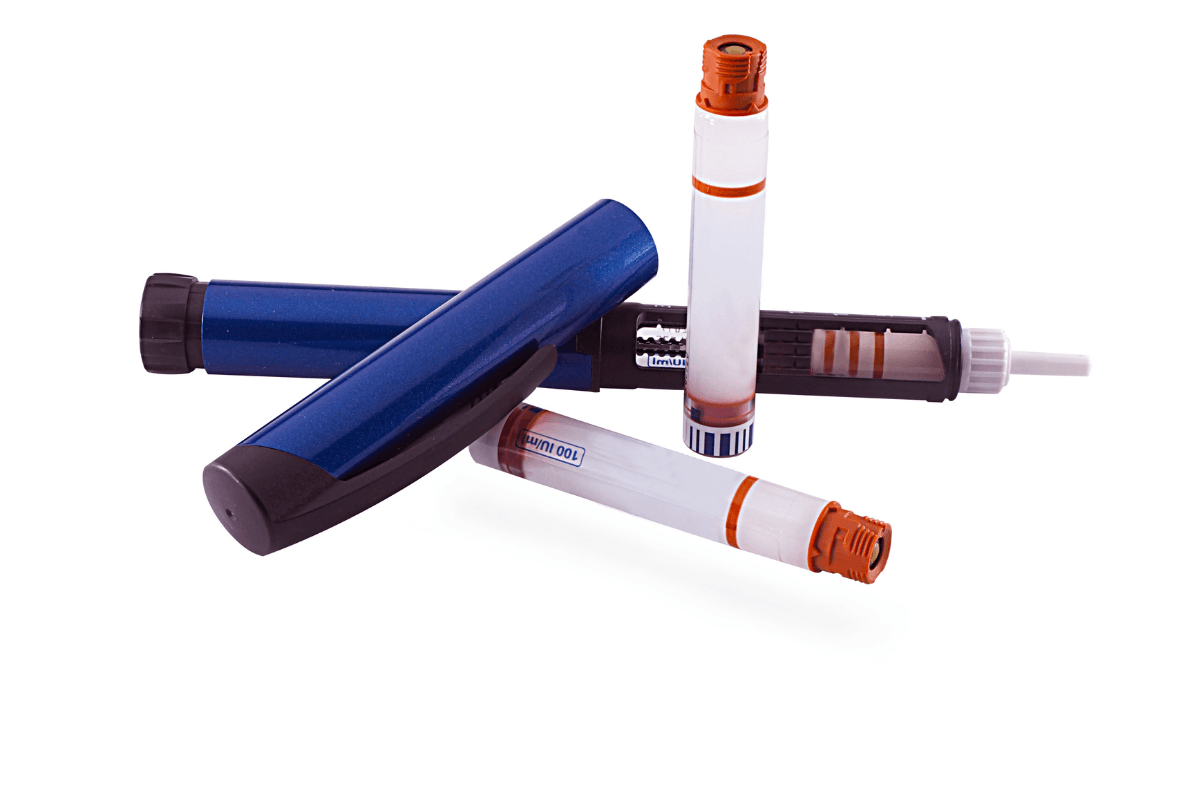
NovoMix 30 Penfill is a premixed insulin used to lower blood glucose in people with diabetes who need insulin therapy. For readers looking into NovoMix 30 Penfill uses, dosage, timing, and side effects, the key point is that it contains one faster insulin component and one longer-acting component, so meal timing and low-blood-sugar awareness matter. That matters because taking it too late, eating less than planned, or using the cartridge incorrectly can increase the risk of hypoglycemia (low blood sugar) or poor control. This page explains the main uses, how dosage is usually individualized, what timing questions often come up, and which side effects deserve closer attention.
Key Takeaways
- It is a premixed insulin, not a basal-only insulin.
- Dosage is individualized; there is no single best dose for everyone.
- It is usually coordinated closely with meals because it starts working quickly.
- Low blood sugar is the main day-to-day safety concern.
- Penfill is a cartridge for a reusable pen device, not a disposable prefilled pen.
What NovoMix 30 Penfill Is and When It Is Used
NovoMix 30 Penfill is used for diabetes when insulin is needed to help control high blood sugar. The mixture combines 30% soluble insulin aspart with 70% insulin aspart protamine, often described as premixed insulin aspart 30/70. In practical terms, one part acts quickly around meals and the other part provides longer coverage afterward. If you want a refresher on How Insulin Affects Glucose or Insulin In The Body, those explainers can help put the drug class in context.
It may be prescribed for different forms of diabetes, depending on the person and the treatment plan. That is why it helps to understand T1D And T2D Basics and the difference between Resistance Vs Deficiency. For broader background, the Diabetes Content Hub and Diabetes Treatments Hub group related insulin and medication topics in one place.
Like other insulins, it should not be used during an active episode of low blood sugar. A known allergy to the formulation is also a major caution. It is not interchangeable unit for unit with every other insulin product, even when the names sound similar, because different insulin mixes behave differently across the day.
Some services confirm prescription details with the prescriber when required.
One device detail is easy to miss. Penfill refers to the cartridge form, which is loaded into a compatible reusable insulin pen. That is different from a disposable pen that already comes filled. The distinction matters because the handling steps, priming process, and replacement parts may differ even when the insulin formulation is similar.
How Dosage and Timing Are Usually Decided
Dosage and timing are individualized, not set by a single universal chart. A prescriber usually looks at glucose patterns, meal timing, carbohydrate intake, past insulin exposure, activity level, and other diabetes medicines before deciding how much to use and when to use it. Because this is a premixed insulin, changing the dose can affect both meal coverage and background coverage at the same time.
That is also why there is no one-size-fits-all answer to questions like how many times a day or what the maximum dosage is. Some care plans use one daily injection, some use two, and some differ further based on glucose trends and meals. A universal maximum dose does not exist in the way many patients expect. Insulin is titrated to response and safety rather than capped at a single number that fits everyone.
Practical dose setting can also change over time. Illness, travel, reduced appetite, unexpected exercise, kidney or liver problems, and medicines such as steroids can all change insulin needs. That does not mean doses should be adjusted casually. It means a plan that once fit well may need review when the routine changes.
| Question | General answer | Why it matters |
|---|---|---|
| How many times a day? | Often once or twice, but the schedule varies by the treatment plan. | Frequency depends on meals, glucose patterns, and the rest of the regimen. |
| Before or after food? | Labeling generally places it with a meal, often immediately before eating. | Delaying food after a dose can raise low-blood-sugar risk. |
| Is there a maximum dose? | No universal maximum applies to every patient. | Insulin is adjusted to response, monitoring, and tolerability. |
| How fast does it work? | Official labeling describes an onset around 10 to 20 minutes, a peak around 1 to 4 hours, and an effect that may last up to 24 hours. | These timing features shape meal planning, monitoring, and side-effect risk. |
Why it matters: Premixed insulins tie food timing more tightly to injections than many basal insulins do.
How timing and food interact
Meal timing matters because the rapid component begins lowering glucose soon after injection. If a meal is delayed, skipped, or much smaller than expected, the risk of hypoglycemia can rise. If a meal is much larger than usual, the dose may not match the glucose load as well as it does on more predictable days. That does not mean the product is unsafe. It means routine and monitoring matter.
If a dose is late or missed
A late or missed dose should be handled using the specific instructions from your clinician and the product information for your region. Because this insulin is linked closely to meals, guessing or doubling the next dose can be risky. If you do not have written missed-dose instructions, it is safer to pause and get professional advice than to try to correct the problem on your own.
Common Side Effects and the Main Safety Risks
The most important side effect of premixed insulin is hypoglycemia, or low blood sugar. Early symptoms can include shakiness, sweating, hunger, headache, fast heartbeat, irritability, or trouble concentrating. Severe hypoglycemia can progress to confusion, loss of coordination, seizure, or loss of consciousness. The risk usually rises when food intake changes, activity unexpectedly increases, alcohol is involved, or another glucose-lowering medicine is added without matching the rest of the plan.
Other side effects can occur as well. People using NovoMix 30 Penfill may notice injection-site redness, swelling, itching, or small skin changes if they use the same spot repeatedly. Some people gain weight with insulin treatment, which is one reason broader reading on Insulin Weight Gain can be useful. Temporary fluid retention, mild visual changes during periods of rapidly changing glucose, and uncommon allergic reactions are also described in insulin labeling.
Not every symptom after an injection signals a true allergy. Mild irritation at the injection site can happen for practical reasons, including technique, needle changes, or local skin sensitivity. A more serious systemic reaction is different. It may involve rash away from the injection site, swelling, wheezing, or trouble breathing, and it needs urgent assessment.
Drug interactions matter, even when they do not involve another insulin. Other diabetes medicines can increase the chance of low glucose. Some medicines, such as corticosteroids, may push glucose higher and change insulin needs. Beta-blockers can mask warning signs like tremor or palpitations in some people. In type 2 diabetes, insulin may also be part of a wider plan that includes medicines discussed in SGLT2 Safety Notes or similar class overviews.
When side effects need urgent help
Get urgent medical help for severe low blood sugar, loss of consciousness, seizure, trouble swallowing, or symptoms of a serious allergic reaction such as widespread rash, swelling, wheezing, or difficulty breathing. Repeated unexplained lows, persistent very high glucose, vomiting, or signs of dehydration also deserve prompt review, because they can reflect a mismatch between insulin, food, illness, and the rest of the regimen.
Quick tip: Keep the exact insulin name and device type with your medication list.
Dispensing may be handled by licensed third-party pharmacies where permitted.
Safe Use, Injection Technique, and Storage
Safe use depends as much on handling as on the insulin itself. NovoMix 30 Penfill is a suspension, not a clear solution, so it usually needs to be mixed as directed before each injection until the liquid looks evenly cloudy. If the suspension stays separated, looks clumped, or has an unusual appearance, it should not be used until you confirm the right next step with a pharmacist or clinician.
As a general rule, the cartridge should be used only with a compatible reusable pen device and a new needle. Insulin is typically injected under the skin, not into a vein. Rotating injection sites helps reduce lipodystrophy (skin fat changes), which can make insulin absorption less predictable. Sharing pens, cartridges, or needles is unsafe, even if the needle is changed, because blood exposure can still occur.
- Check the cartridge label before each dose.
- Mix until the suspension looks evenly cloudy.
- Use a fresh needle and rotate sites.
- Do not share the pen device.
- Follow local storage instructions closely.
Storage rules matter because insulin is sensitive to heat and freezing. Unopened cartridges are usually refrigerated, while in-use storage can vary by label and region. Freezing can damage insulin, and excessive heat can reduce reliability. If the product has been frozen, overheated, stored outside its instructions, or kept beyond the in-use limit on its leaflet, ask a pharmacist before using it.
Confusion often comes from using the right insulin in the wrong device. A cartridge can be fine but still unusable if the pen body is incompatible or damaged. That is a device issue, not a medication failure, and it is one reason packaging and device instructions deserve close attention.
Penfill and FlexPen are not the same device
Penfill and FlexPen can contain the same insulin formulation, but the delivery system is different. Penfill is a cartridge loaded into a reusable pen. FlexPen is a disposable prefilled device. That means loading steps, priming, troubleshooting, and disposal are not interchangeable. Always follow the instructions for the device you actually have in hand.
Where It Fits in Diabetes Care
NovoMix 30 Penfill can be useful when a treatment plan needs both meal-related insulin coverage and longer background coverage in one product. The trade-off is flexibility. A premixed insulin can simplify the routine for some people, but it does not allow the same separate adjustment of basal and mealtime insulin that a full basal-bolus approach can offer.
Compared with separate basal and rapid-acting insulins, a premix often asks less day-to-day math from the user but more schedule regularity. People with fairly consistent meals may find that balance practical. People with highly variable eating patterns, shift work, or a need for very fine dose adjustments may need a different strategy. Those are treatment-fit questions, not quality judgments about the product itself.
In type 2 diabetes, insulin may be added when glucose remains above target despite non-insulin therapy, or when the body is no longer making enough insulin on its own. That broader context is easier to follow through the Type 2 Diabetes Hub, the Type 2 Diabetes Content Hub, and the explainer on When Type 2 Needs Insulin. If you are comparing categories of diabetes medicines more generally, the Diabetes Product Category offers a browsable starting point.
Cash-pay and cross-border options can depend on eligibility and local rules.
What to Clarify Before a Prescription or Device Changes
Before a refill, device swap, or insulin change, confirm the exact product name, the delivery device, and the written timing plan. Premixed insulins can look similar on packaging, but a cartridge is not the same as a disposable pen, and a premix is not the same as a rapid-only or basal-only insulin. Small naming or packaging changes can create big practical differences.
It also helps to confirm what to do in four common situations: a missed meal, a missed dose, exercise that is more intense than usual, and illness with reduced appetite. Those scenarios are where many low-blood-sugar episodes start. A clear plan is more useful than relying on memory when symptoms show up.
Finally, ask how other medicines fit in. Changes to steroids, weight-loss medicines, oral diabetes drugs, or alcohol use can change glucose patterns and what feels like the right insulin dose. If the instructions you have are old, incomplete, or tied to a different device, getting them updated is often the simplest safety step.
Authoritative Sources
- Consumer product information from Novo Nordisk Canada
- Patient leaflet from the Electronic Medicines Compendium
- Regulator-backed data sheet from Medsafe New Zealand
In short, NovoMix 30 Penfill is a premixed insulin where meal timing, individualized dosing, and awareness of low blood sugar matter more than any single rule of thumb. If you need broader background, the internal diabetes hubs and insulin explainers above are the best next reading.
This content is for informational purposes only and is not a substitute for professional medical advice.


