
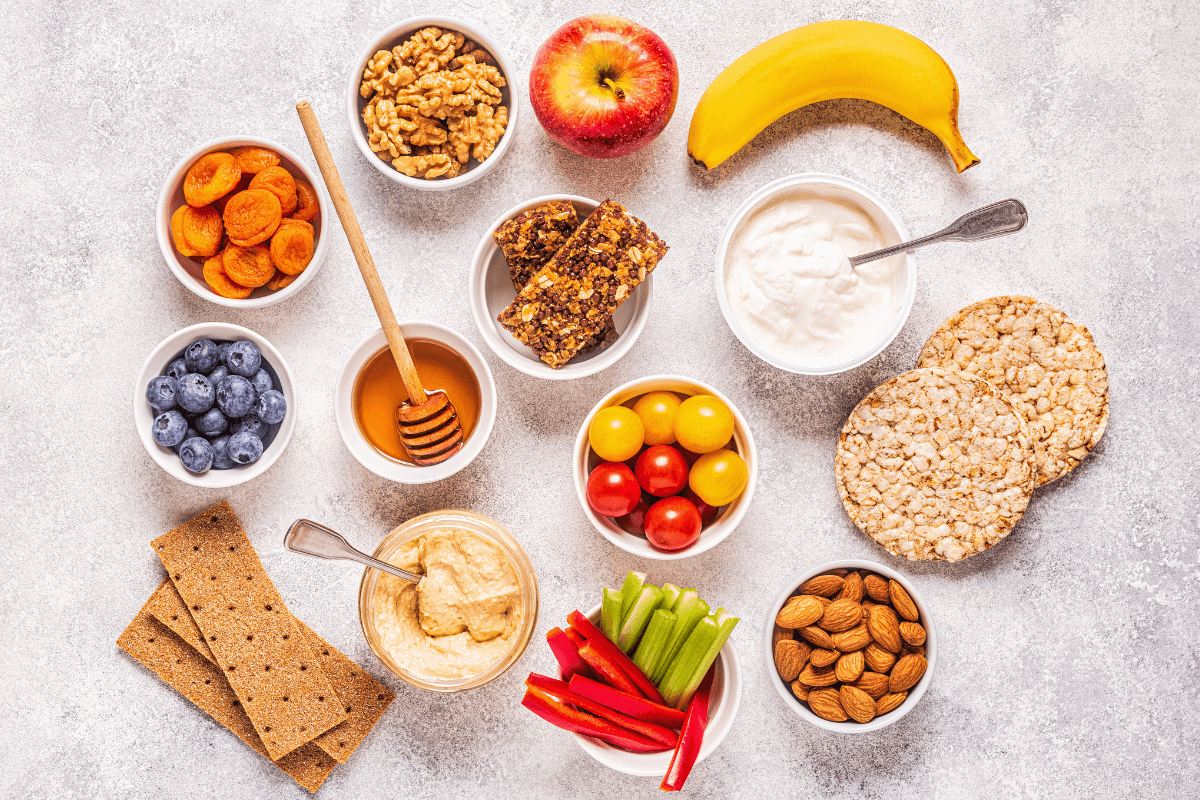
Snacking can support your plan when done intentionally. Focus on nutrient density, fiber, and protein to stay satisfied between meals. With the right structure, healthy snacks for weight loss fit smoothly into daily routines and help reduce overeating later.
Key Takeaways
- Protein + Fiber First: Build snacks that curb hunger.
- Plan Portions: Keep calories predictable and consistent.
- Read Labels: Watch added sugars and sodium.
- Prep Ahead: Stock options for home and travel.
Healthy Snacks for Weight Loss: What Actually Matters
Effective snacks share three traits: adequate protein, meaningful fiber, and controlled energy density. Protein (muscle-building nutrient) and fiber (indigestible carbohydrate) slow digestion, which may reduce hunger and grazing. Pairing both, like Greek yogurt with berries or hummus with carrots, supports satiety without excess calories.
Choose foods that deliver vitamins, minerals, and healthy fats. Emphasize whole foods over ultra-processed items. The Dietary Guidelines for Americans recommend nutrient-dense choices and limiting added sugars to maintain calorie balance; see the Dietary Guidelines for Americans for broader context. For balanced macronutrient examples that support glucose control, see Diet in Diabetes Management for a concise overview.
10 Snack Ideas You’ll Actually Enjoy
Use this healthy snacks list as a flexible starting point. Mix and match based on preferences, activity, and blood sugar patterns.
- Greek Yogurt + Berries: 3/4 cup plain yogurt with 1/2 cup berries. Add cinnamon for flavor without added sugar.
- Hummus + Veggies: 1/4 cup hummus with sliced peppers, cucumbers, and carrots. Fiber helps with fullness and steady energy. See Vegetables for Diabetes for fiber-rich ideas and prep tips.
- Cottage Cheese + Pineapple: 1/2 cup cottage cheese with 1/4 cup pineapple or peach. Offers protein and a sweet taste.
- Apple + Peanut Butter: One small apple with 1 tablespoon peanut butter. The fat and fiber combination slows digestion. Explore Low GI Fruits for options that may reduce glucose spikes.
- Popcorn + Parmesan: 3 cups air-popped with 1 tablespoon grated cheese. Popcorn is a whole grain. For portion and toppings guidance, see Can Diabetics Eat Popcorn for practical suggestions.
- Tuna Packet + Whole-Grain Crackers: One tuna pouch with 6–8 high-fiber crackers. Choose crackers with at least 3g fiber per serving.
- Trail Mix Mini-Pack: Mix 1 tablespoon almonds, 1 tablespoon pumpkin seeds, and 1 tablespoon raisins. Pre-portion to avoid excess calories.
- Edamame with Sea Salt: 3/4 cup shelled edamame. Delivers plant protein and fiber with minimal prep.
- Hard-Boiled Egg + Grape Tomatoes: One egg plus a handful of tomatoes. Add herbs or a pinch of everything seasoning.
- Protein Smoothie Mini: Blend 1/2 scoop protein, 1/2 cup unsweetened milk, ice, and spinach. Keep it small to avoid meal-sized calories.
Smart Shopping and 100-Calorie Picks
Label reading prevents surprises. Check serving sizes, calories per serving, and added sugars. The FDA’s guidance explains how to read serving lines and percent Daily Value; review how to use the Nutrition Facts label to compare options. When choosing packaged snacks, prefer short ingredient lists, whole-food bases, and at least 2–3 grams of fiber.
Pre-portioned options can help with portion control on busy days. Examples include plain yogurt cups, mini cheese sticks, or 100 calorie snack packs that avoid added sugar and refined starches. For navigating the snack aisle with blood sugar in mind, see Healthy Snacking for Diabetes for label-reading examples. If choosing sweeteners, compare options and additives; see Healthiest Sweetener Tips to understand pros, cons, and taste.
Tip: Keep a standing grocery list of snack staples. Rotate proteins (yogurt, eggs), produce (berries, carrots), and whole grains (popcorn, oats).
Portion Sizes and Timing
Target predictable snack patterns. For many adults, 150–250 calories with 10–20 grams of protein works between meals. Pre-portion nuts, seeds, and dried fruit into small containers to reduce mindless eating. Use a food scale or measuring cups until you can eyeball your usual amounts.
Snacks function best when they bridge long gaps without becoming a second lunch. If evening hunger hits, move an afternoon snack later or enlarge dinner protein. This keeps healthy snacks to lose weight aligned with your daily energy needs, rather than adding unnecessary calories.
Late-Night and Sweet Options That Fit Your Plan
Night snacking does not automatically cause fat gain. The problem is usually excess calories and high-sugar foods. Choose protein-forward, lower-glycemic options like Greek yogurt, cottage cheese, or edamame. Harvard’s overview of glycemic index explains how slower-digesting carbs can steady blood glucose; see the glycemic index resource for practical context.
Examples of the best evening snacks for weight loss include a small protein smoothie, yogurt with cinnamon, or a cheese stick with cherry tomatoes. For those managing insulin resistance, modest carbohydrate portions at night may help. See Diet for Insulin Resistance for meal-building ideas that complement evening snacks.
Note: If reflux or sleep issues occur, avoid large portions and high-fat foods late at night.
Build-Your-Own: Simple Templates and Recipes
Templates save time and improve variety. Pair one protein with one high-fiber carbohydrate, then add volume from non-starchy vegetables. This framework keeps calories modest while delivering nutrients. Adjust salt and seasoning to taste rather than relying on sugary sauces.
Quick templates and healthy snack recipes for weight loss:
- Yogurt Bowl: Plain Greek yogurt + chia + blueberries + vanilla.
- Veggie Box: Hummus + carrots + cucumbers + radishes.
- Mini Oats: 1/3 cup oats + whey + cinnamon + diced apple.
- Bean Dip Cup: Black beans + salsa + lime + cilantro.
- Egg Bites: Two egg muffins with spinach and feta.
Keep a few shelf-stable choices in your bag. Single-serve tuna, roasted chickpeas, and protein packets are travel-friendly. If appetite suppression is a goal, medical therapies may help some patients under clinical guidance. For context on mechanism and safety, see GLP-1 Weight Loss Drugs for an overview of effects and cautions.
Compare and Related Topics
Whole-grain crackers can fit a plan, but choose options with at least 3g fiber and modest sodium. Pair them with protein like tuna, cheese, or hummus. In practical terms, are crackers a good snack for weight loss depends on ingredients, serving size, and what you eat with them. Avoid refined varieties with added sugars or sweet coatings.
For broader nutrition ideas, review Superfoods for Weight Loss to expand whole-food choices beyond snacks. If you prefer to keep fruit front-and-center, Low GI Fruits can help guide selections that may support steady energy. When building produce-heavy plates, the overview in Vegetables for Diabetes explains fiber, starch, and preparation trade-offs.
Recap
Prioritize protein, fiber, and portion control. Plan snacks that bridge gaps, not expand calorie intake. Shop with labels in mind, prep ahead, and keep a few travel options on hand. With these steps, snacks support weight goals and steady energy throughout the day.
This content is for informational purposes only and is not a substitute for professional medical advice.


