
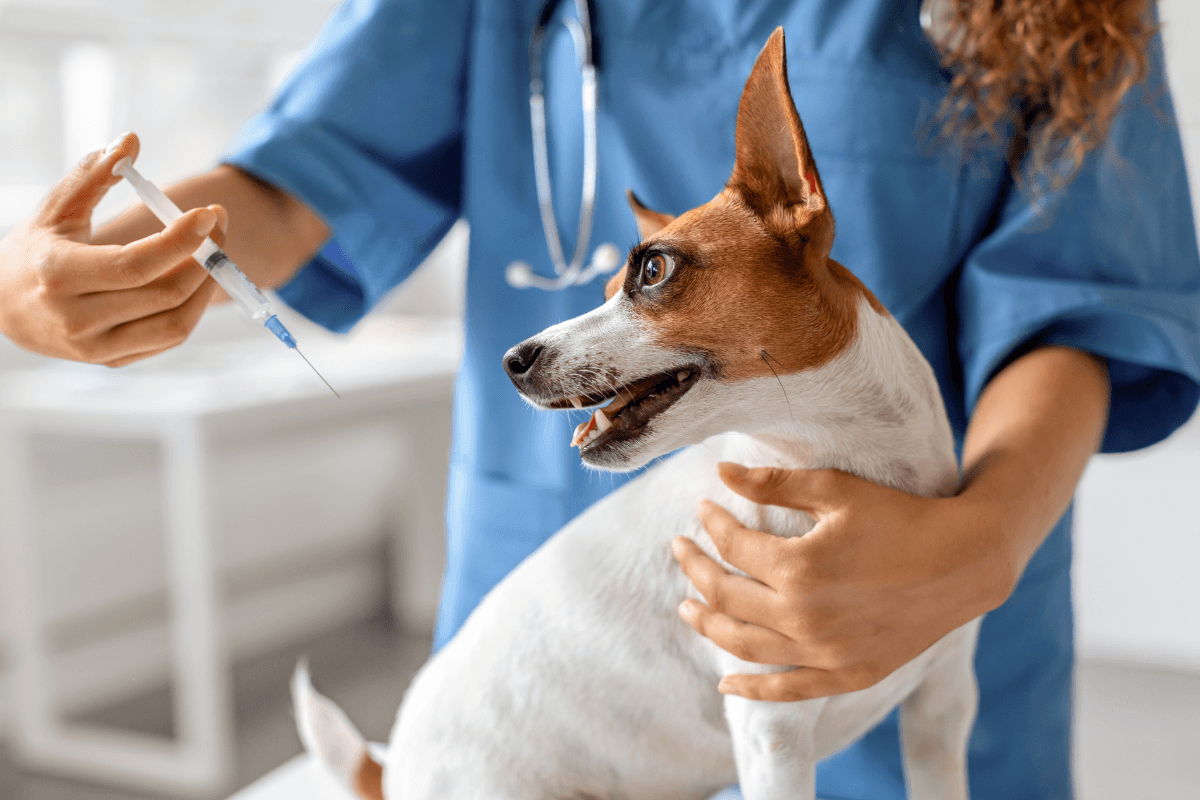
Learning how to give a dog an insulin shot can feel intimidating at first, but the basic technique is usually simple: use the syringe your veterinarian prescribed, lift a small tent of loose skin, place the needle into the subcutaneous (under-the-skin) layer, and give the injection calmly at the scheduled time. This matters because consistent technique can make shots easier on your dog and reduce avoidable handling errors. If your veterinary team has shown you a preferred site or method, follow that plan over any general article.
Why it matters: A calm routine can improve comfort and reduce avoidable injection errors.
Key Takeaways
- Use only the insulin product and syringe type your veterinarian prescribed.
- Give the shot into loose skin, not into muscle.
- Rotate injection sites instead of using the same exact point every time.
- If your dog moves and you are unsure how much insulin entered, do not guess and repeat the dose.
- A delayed, missed, or uncertain shot needs your veterinarian’s written plan, not a generic internet rule.
Before You Start: Supplies and Setup
A good setup makes the injection easier before the needle comes out. Gather the prescribed insulin, the matching syringe, a treat or meal, a sharps container, and a simple log for the time and site used. Good light helps. So does a stable surface, such as a mat or bed your dog already knows.
Check the label each time. Use only the insulin and syringe type your veterinarian prescribed for your dog. Do not substitute a different syringe, adjust the amount, or switch products on your own. If the insulin looks different from what your clinic told you to expect, stop and ask before injecting.
Many dogs do best when the shot follows the same pattern every day. That can mean meal, quiet praise, injection, then reward. When the routine is predictable, the dog learns what is coming and fights it less.
- Quiet area with good light.
- Correct insulin and matching syringe.
- Treat, meal, or other reward.
- Sharps container for disposal.
- Written log for time and site.
Where required, prescription details may be confirmed with the prescriber.
How to Give a Dog an Insulin Shot Step by Step
The easiest way to give insulin is to keep the steps short and predictable. If you are still learning how to give a dog an insulin shot, ask your veterinary team to watch your technique in person at least once. A brief hands-on demonstration often fixes problems faster than reading alone.
Set up the syringe
Wash and dry your hands. Handle the insulin exactly as the label and your clinic instructed. Draw up the prescribed amount carefully. Keep your finger off the plunger until the needle is in place. If you see obvious air bubbles, clear them before the injection using the method your clinic showed you.
Make a skin tent and inject
Choose the area your veterinarian recommended. With your non-dominant hand, lift a fold of loose skin into a tent. Insert the needle into the base of that tent, not straight down into muscle and not through the far side of the skin fold. Once the needle is seated, press the plunger smoothly and fully. Then remove the needle and praise your dog right away.
- Gather supplies before bringing your dog into position.
- Confirm the insulin name and the matching syringe.
- Choose the site and lift a gentle skin tent.
- Insert the needle into the under-the-skin space.
- Press the plunger once, then remove the needle.
- Reward your dog and discard the syringe safely.
Finish the routine
Check the coat briefly after the injection. A tiny surface drop can happen, but a strong insulin smell or obvious wet patch may mean some leaked out. If that happens and you are not sure how much insulin entered, do not guess and give more. Write down what happened and call your clinic for instructions that fit your dog’s plan.
Record the time and the site you used. That makes site rotation easier and helps your clinic troubleshoot if glucose control seems inconsistent. Learning how to give a dog an insulin shot gets much less stressful when the routine stays the same from day to day.
Where to Inject Insulin in a Dog
The best place to inject insulin in a dog is usually a loose-skinned area your veterinarian has already shown you, often along the side of the chest or abdomen rather than the exact same point every time. The goal is a site you can tent easily, reach without wrestling, and rotate from one injection to the next.
| Area | Why it may work | What to watch |
|---|---|---|
| Side of chest or flank | Often easy to tent and reach | Good for rotation when the skin is loose |
| Side of abdomen | Can work well in relaxed dogs | Stay away from irritated skin or surgical areas |
| Shoulder region | Convenient for some handlers | Do not use the exact same point repeatedly |
Rotate broadly from side to side or between approved zones instead of using one favorite dot every time. Avoid skin that is sore, bruised, scarred, infected, or damp. Some clinics may use the scruff, but it is not always the easiest site because the skin can be thicker or harder to tent in some dogs. If your clinic mapped out a specific pattern, use that pattern.
Making Shots Easier and Less Painful
The easiest way to make insulin injections less painful is to lower stress before the needle ever appears. Most dogs react more to restraint and surprise than to the tiny needle itself. A steady routine, calm hands, and a fast reward can change the whole experience.
- Same place, same cue: use the same mat, phrase, and sequence each time.
- Reward early and late: pair the setup and the finish with something your dog likes.
- Practice without injecting: show the capped syringe, touch the skin, then reward.
- Keep motions smooth: sudden grabbing makes the dog brace or twist.
- Stop the argument: if fear rises, reset instead of chasing the dog.
Quick tip: Practice the handling routine when no injection is due so your dog is not only touched at shot time.
If your dog stands up, sits, or twists away, pause and reposition. Chasing the dog with the needle usually makes the next shot harder. If the needle slips out or you cannot tell whether the full dose was delivered, do not give extra insulin unless your veterinarian tells you to.
Low-stress training can help dogs that freeze, hide, or snap when they see the syringe. Start with brief, easy sessions. Show the syringe at a distance, reward calm behavior, and stop before the dog becomes overwhelmed. Over time, many dogs learn that the routine predicts food, praise, and relief from uncertainty.
Dispensing is handled by licensed third-party pharmacies where permitted.
Common Mistakes That Can Make Shots Harder
Most home errors come from routine drift, not from the injection itself. That is good news, because routine problems are often fixable. When giving insulin injections to dogs, these are the issues veterinary teams hear about most often.
- Using a syringe that does not match the prescribed insulin.
- Keeping a finger on the plunger while still trying to place the needle.
- Pushing the needle through both sides of the skin tent.
- Using the same exact spot over and over again.
- Repeating a dose because you think some insulin leaked.
- Rushing a frightened dog instead of building a calmer routine.
Air bubbles are a common worry. Because this is a subcutaneous injection, the main issue is dose accuracy rather than the kind of emergency people associate with intravenous injections. Clear visible bubbles before the shot if you can. If you keep seeing them, ask for a hands-on demonstration of drawing up the insulin and holding the syringe.
If you are having repeated trouble giving dog insulin shot at home, do not assume you are failing. A veterinary nurse or technician can often watch your hand position, skin tent, or timing and spot a simple correction.
When Timing Is Off or the Shot Is Uncertain
The so-called 3-hour rule for insulin in dogs is not universal. Different insulin products, meal timing, and your dog’s usual glucose pattern can change the safest response to a late, missed, or partial dose. Use the written instructions from your veterinarian, not a one-size-fits-all online rule.
The same advice applies when the injection was difficult. If the shot leaked, the dog jerked away, or you think the needle passed through the skin fold, write down what happened and contact your clinic for case-specific guidance. Do not double the next dose or add extra insulin on your own.
When to seek prompt veterinary advice
Ask for help promptly if your dog seems unwell after a delayed, missed, or difficult injection, especially with signs that may suggest low or unstable blood sugar.
- Weakness, stumbling, or collapse.
- Disorientation, staring, or unusual behavior.
- Tremors or seizures.
- Vomiting or refusal to eat.
- Repeated failed injections or repeated leaking doses.
Further Reading
For broader pet medication topics, browse the Pet Health Category or the Pet Health Hub. If you want related medication explainers, see Deramaxx For Dogs and Onsior Cat Medicine.
Access options can vary by eligibility and local jurisdiction.
Authoritative Sources
- For a veterinary reference on diabetes in animals, see Merck Veterinary Manual: Diabetes Mellitus in Animals.
- For general injection handling, review VCA Animal Hospitals: Giving Injections to Dogs.
- For low-stress training ideas, see Fear Free Happy Homes: Injection Training for Your Diabetic Pet.
Once you understand how to give a dog an insulin shot, the goal is consistency rather than perfection. A quiet setup, the right site, and a predictable routine usually make each injection easier for both you and your dog.
This content is for informational purposes only and is not a substitute for professional medical advice.


