
Please note: a valid prescription is required for all prescription medication.
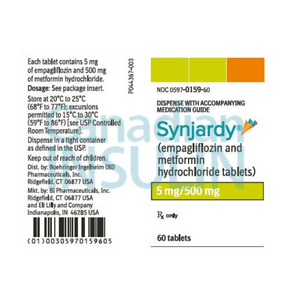
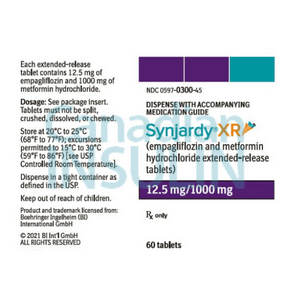
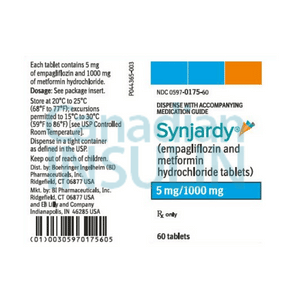
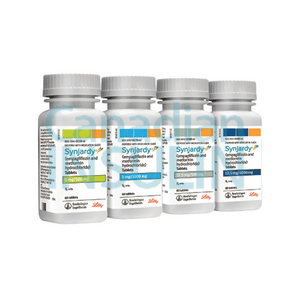
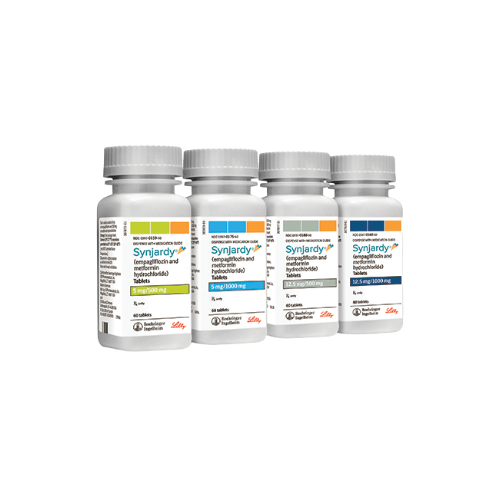
Synjardy
Buy Synjardy Online


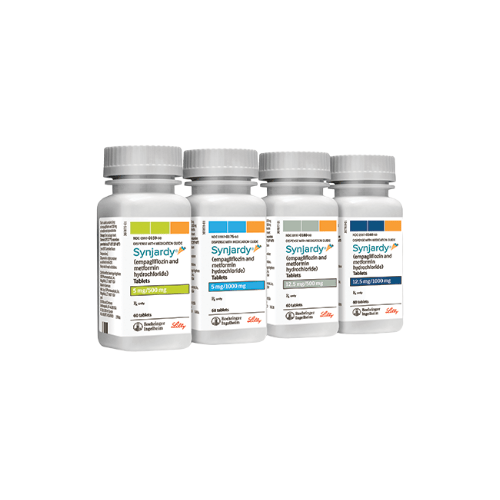
Synjardy is an oral diabetes medicine that combines empagliflozin with metformin in one tablet. It can be bought online by choosing the tablet strength and quantity that match your clinician’s directions, then reviewing the current Synjardy price before placing an order. The strength is written as empagliflozin mg/metformin mg, so both numbers matter when you choose tablets.
Synjardy tablets are used as part of a type 2 diabetes treatment plan that may also include nutrition changes, activity, glucose monitoring, and other medicines. Immediate-release Synjardy and Synjardy XR are different products, so the release type should match the directions you were given.
Synjardy Price and Strength Selection
The Synjardy cost shown during ordering should be read together with the strength, tablet count, and release type. A 12.5 mg/1000 mg tablet is not the same as a 5 mg/850 mg tablet, and a larger quantity may change the total amount due even when the per-tablet comparison looks different.
People often search for Synjardy price without insurance or Synjardy cash pay because coverage and pharmacy benefit rules can vary. For a cleaner comparison, focus on the exact tablet strength, the total number of tablets, and the current checkout total rather than a broad national average from another source.
- Strength ratio: the empagliflozin amount appears before the metformin amount.
- Tablet count: the count affects how long the supply may last.
- Release type: immediate-release Synjardy and Synjardy XR are not interchangeable.
- Total cost: use the checkout amount for the chosen strength and quantity.
Quick tip: Match both numbers in the strength before submitting order information.
For related non-insulin combination medicines, the Combination Tablets category can help you view products that combine two active ingredients in one oral form.
How to Order Synjardy Online
To order Synjardy online, choose the tablet strength that matches your treatment directions and confirm the quantity. The product name, active ingredients, and release type should line up with the medicine you use, especially if your regimen includes more than one diabetes tablet.
During ordering, keep your current medication list nearby. Synjardy contains metformin, so duplicate metformin exposure can occur if another medicine in your routine also includes metformin. A pharmacist or clinician can help clarify ingredient overlap before any medication is changed.
If your order involves US delivery from Canada, enter address information carefully and read any handling notes shown during checkout. Synjardy is an oral tablet, so it is handled differently from refrigerated insulin or injectable diabetes products that may require prompt, express, cold-chain shipping.
We may review order details when a medicine needs additional confirmation. Products are supplied through licensed pharmacies, and the order should reflect the strength, quantity, and medication name intended for your treatment plan.
Tablet Strengths, Release Type, and Generic Name
The generic name for Synjardy is empagliflozin/metformin. Empagliflozin is an SGLT2 inhibitor, a medicine class that helps the kidneys remove glucose through urine. Metformin is a biguanide, a medicine class that lowers liver glucose production and improves the body’s response to insulin.
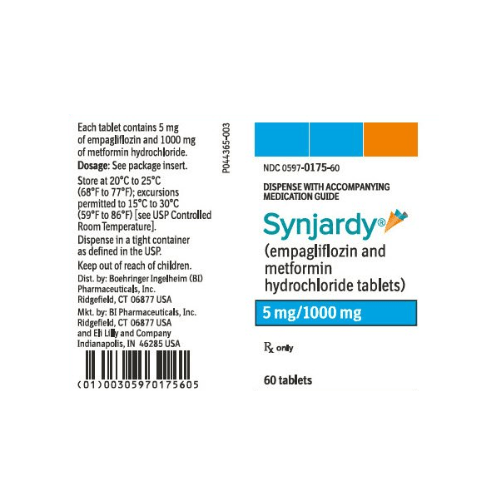
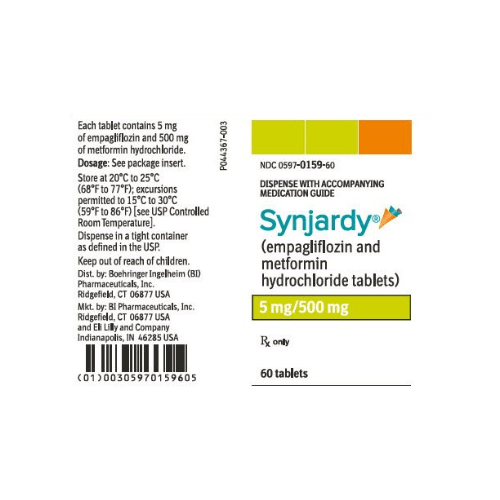
Commonly searched strengths include Synjardy 12.5 mg/1000 mg, Synjardy 5 mg/1000 mg, Synjardy 5 mg/850 mg, and Synjardy 12.5 mg/500 mg. The first number is empagliflozin, and the second number is metformin. Changing the ratio changes two active ingredients at once.
| Detail to match | Practical reason |
|---|---|
| Product name | Combination diabetes tablets can have similar names but different ingredients. |
| Immediate-release or XR | Release type affects how the tablet is designed to work. |
| Strength ratio | Both empagliflozin and metformin change when the ratio changes. |
| Quantity | The tablet count affects the supply and total cost. |
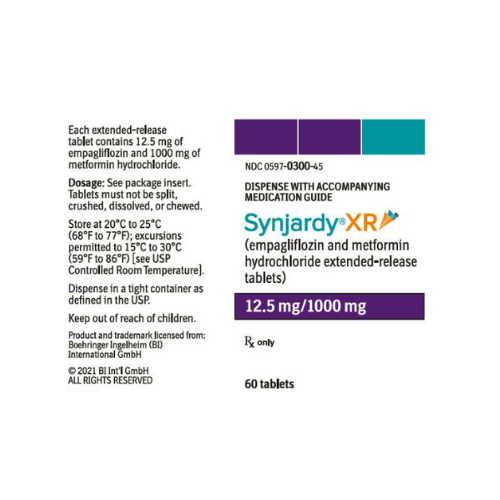
Synjardy XR is the extended-release form and may have separate pricing and strength choices. Do not treat XR tablets as a substitute for immediate-release tablets unless your clinician specifically changes the formulation.
What Synjardy Treats
Synjardy is used in type 2 diabetes care to help improve blood glucose control. It does not replace meal planning, physical activity, glucose checks, or other parts of a diabetes plan. It is not used to treat type 1 diabetes or diabetic ketoacidosis.
Empagliflozin and metformin work in different ways, which is why the combination may be used when a clinician wants both mechanisms in one tablet. The empagliflozin component increases urinary glucose removal, while metformin helps reduce liver glucose output and improve insulin sensitivity.
For broader condition information, the Type 2 Diabetes section explains how type 2 diabetes is commonly discussed across medication and lifestyle decisions. The general Diabetes section can also help place combination tablets within the wider diabetes treatment category.
Some people ask whether Synjardy helps with weight. SGLT2 inhibitors may be associated with modest weight changes in some people, but weight response varies and should not be the only reason to use or change a diabetes medicine.
Storage, Handling, and Travel Basics
Store Synjardy tablets as directed on the package, usually in a dry place away from excess heat and moisture. Keep the container closed when it is not in use. Bathroom cabinets can expose tablets to humidity, which is not ideal for many oral medicines.
Keep tablets in the labelled container, especially during travel. The label helps identify the medicine, strength, and directions if questions arise at security, a clinic, or a pharmacy. If travel crosses time zones, ask your care team how to keep medication timing consistent.
Do not split, crush, or alter tablets unless a pharmacist or clinician says the specific product may be handled that way. This is especially important with extended-release tablets, because changing the tablet can affect how the medicine is released.
If the same order includes insulin, GLP-1 medicines, or other refrigerated products, follow each item’s storage instructions separately. The Diabetes Medications category can help separate oral medicines from injectable products when organizing a regimen.
Side Effects, Warnings, and Monitoring
Common side effects of Synjardy can include nausea, diarrhea, stomach discomfort, urinary tract infections, and genital yeast infections. Stomach effects are often linked to metformin, while urinary and genital infections are known concerns with SGLT2 inhibitors such as empagliflozin.
A rare but serious warning with metformin is lactic acidosis, an acid buildup in the blood. Seek urgent medical help for unusual muscle pain, trouble breathing, severe weakness, unusual sleepiness, dizziness, stomach pain, or a slow or irregular heartbeat.
Serious SGLT2 inhibitor risks may include ketoacidosis, dehydration, low blood pressure, kidney injury, severe urinary infection, Fournier gangrene, and low blood sugar when used with insulin or medicines that increase insulin release. Contact a clinician promptly for vomiting, severe abdominal pain, rapid breathing, fever with urinary symptoms, genital pain or swelling, dehydration symptoms, or severe low blood sugar symptoms.
People with severe kidney problems, metabolic acidosis, diabetic ketoacidosis, or a serious allergy to empagliflozin, metformin, or tablet ingredients should not use this medicine. Kidney function is important because both ingredients can raise safety concerns when kidney function is reduced.
Monitoring may include kidney function, blood glucose, A1C, hydration status, and vitamin B12. Tell your care team about insulin, sulfonylureas, diuretics, blood pressure medicines, alcohol use, kidney disease, liver problems, upcoming surgery, or imaging studies that use iodinated contrast.
Why it matters: Safety screening helps prevent ingredient duplication and avoidable medication risks.
Alcohol can raise the risk of metformin-associated lactic acidosis, especially with heavy or binge use. Vomiting, diarrhea, fever, or poor fluid intake can also increase dehydration risk while using an SGLT2 inhibitor. Articles in the Type 2 Diabetes articles section can help organize practical questions for a pharmacist or clinician.
Comparing Synjardy With Related Diabetes Options
Synjardy is an empagliflozin/metformin combination tablet. It is not the same as Jardiance, which contains empagliflozin without metformin, and it is not the same as metformin alone, which does not contain an SGLT2 inhibitor.
Other combination tablets may include metformin with a different active ingredient. Those medicines may belong to another class or use a different SGLT2 inhibitor. Ingredient names should be checked first, followed by strength, release type, and tablet count.
The Non-Insulin Medications category can help you browse oral and non-insulin diabetes treatments by group. The broader Diabetes Products category includes additional diabetes-related medicines and supplies.
People also ask why Synjardy can be expensive. Brand status, strength, quantity, market pricing, insurance rules, and pharmacy sourcing can all affect what someone pays. Generic-name wording such as empagliflozin/metformin describes the ingredients, but it does not automatically mean every market has the same generic substitution choices or cost.
Future generic timing can differ by country and regulatory system. A pharmacist can explain whether a therapeutically appropriate alternative exists for your location and treatment plan. Do not substitute another diabetes tablet based only on a lower price or similar name.
Before Submitting Your Order
Before checkout, gather the medicine name, strength ratio, release type, quantity, current medication list, allergy history, and recent kidney-related information if your clinician has asked you to track it. These details make it easier to catch a mismatch before the wrong strength is chosen.
Review the final order against the directions you follow at home. If the tablet strength, quantity, release type, or ingredient list does not look familiar, pause and ask a pharmacist or clinician to clarify it before using the medicine.
For broader education about diabetes medicines and self-care topics, the Diabetes articles section covers common treatment questions. Use those materials for discussion points, not as a replacement for individualized medical advice.
This content is for informational purposes only and is not a substitute for professional medical advice.
Blood Glucose Unit Converter
Convert glucose readings between mg/dL and mmol/L without changing the clinical value.
mg/dL
-
US reporting unit
mmol/L
-
International reporting unit
These calculations are for education only and do not replace clinical advice, diagnosis, or treatment. Always confirm medical decisions with a qualified healthcare professional.
HbA1c & eAG Calculator
Convert between HbA1c percentage and estimated average glucose using the ADAG relationship.
HbA1c
-
percentage
eAG mg/dL
-
estimated average glucose
eAG mmol/L
-
estimated average glucose
These calculations are for education only and do not replace clinical advice, diagnosis, or treatment. Always confirm medical decisions with a qualified healthcare professional.
eGFR Calculator
Estimate kidney filtration using the 2021 CKD-EPI creatinine equation.
eGFR
-
mL/min/1.73 m2
G category
-
requires clinical context
These calculations are for education only and do not replace clinical advice, diagnosis, or treatment. Always confirm medical decisions with a qualified healthcare professional.
HOMA-IR Calculator
Estimate insulin resistance from fasting glucose and fasting insulin values collected from the same blood draw.
HOMA-IR
-
screening estimate, not a diagnosis
Formula used
-
depends on glucose unit
These calculations are for education only and do not replace clinical advice, diagnosis, or treatment. Always confirm medical decisions with a qualified healthcare professional.
Carb Serving Calculator
Convert total carbohydrate grams into carb choices for meal planning and diabetes education.
Carb choices
-
total carbs divided by choice size
Rounded choices
-
nearest half choice
Carb calories
-
4 kcal per gram
These calculations are for education only and do not replace clinical advice, diagnosis, or treatment. Always confirm medical decisions with a qualified healthcare professional.
Express Shipping - from $29.99
Shipping with this method takes 3-5 days
Prices:
- Dry-Packed Products $29.99
- Cold-Packed Products $39.99
Standard Shipping - $19.99
Shipping with this method takes 5-10 days
Prices:
- Dry-Packed Products $19.99
- Not available for Cold-Packed products
What is the generic name for Synjardy?
The generic name is empagliflozin/metformin. Empagliflozin is an SGLT2 inhibitor, and metformin is a biguanide. The tablet strength lists empagliflozin first and metformin second.
Is Synjardy the same as Synjardy XR?
No. Synjardy XR is the extended-release form, while Synjardy may refer to immediate-release tablets. Release type affects how the tablet is designed to work, so the formulation should match your treatment directions.
Why can Synjardy cost vary?
Synjardy cost can vary by strength, quantity, market pricing, coverage rules, and pharmacy sourcing. Compare the exact tablet strength and total tablet count rather than relying only on a broad average price.
What side effects are common with Synjardy?
Common side effects can include nausea, diarrhea, stomach discomfort, urinary tract infections, and genital yeast infections. Serious symptoms such as severe weakness, trouble breathing, vomiting, dehydration, or genital swelling need prompt medical attention.
Can Synjardy be used for type 1 diabetes?
Synjardy is used as part of type 2 diabetes care. It is not used to treat type 1 diabetes or diabetic ketoacidosis.
What should I check before ordering Synjardy tablets?
Check the product name, strength ratio, release type, tablet quantity, and ingredient list. Synjardy contains metformin, so also check whether any other medicine in your regimen contains metformin.
Rewards Program
Earn points on birthdays, product orders, reviews, friend referrals, and more! Enjoy your medication at unparalleled discounts while reaping rewards for every step you take with us.
You can read more about rewards here.
POINT VALUE
How to earn points
- 1Create an account and start earning.
- 2Earn points every time you shop or perform certain actions.
- 3Redeem points for exclusive discounts.
You Might Also Like
Select options
This product has multiple variants. The options may be chosen on the product page
Select options
This product has multiple variants. The options may be chosen on the product page
Select options
This product has multiple variants. The options may be chosen on the product page
Select options
This product has multiple variants. The options may be chosen on the product page
Related Articles
Diabetes, Type 1
Continuous Glucose Monitoring: How CGMs Fit Diabetes Care
Continuous glucose monitoring is a way to track glucose throughout the day and night with a small wearable sensor. It matters because it shows patterns, direction, and alerts that a…
Diabetes, Type 1
Type 1 Versus Type 2 Diabetes: Symptoms, Causes, and Care
type 1 versus type 2 diabetes comes down to why blood sugar rises. In type 1, the immune system destroys insulin-making cells in the pancreas, so the body makes little…
Diabetes, Type 2
Is Zepbound for Diabetes or Weight Loss? Uses and Safety
Zepbound is approved for chronic weight management, not as a diabetes-labeled medicine. The reason people ask is Zepbound for diabetes or weight loss is that it contains tirzepatide, the same…
Cardiovascular, Diabetes
National Diabetes Heart Connection Day: Heart Risks and Actions
National Diabetes Heart Connection Day is an awareness day focused on the close link between diabetes and cardiovascular disease. It encourages people with diabetes, caregivers, and care teams to review…