
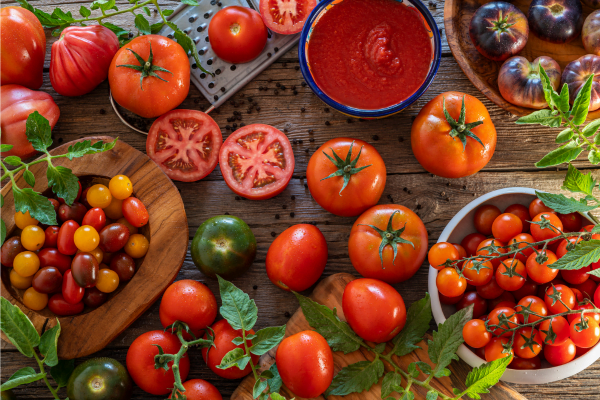
Tomatoes can fit well in many diabetes-friendly meals. Plain fresh or cooked tomatoes are usually treated as non-starchy vegetables, so a typical serving is unlikely to raise blood sugar sharply on its own. The bigger issue is the form you choose, the portion size, and what comes with it. A sliced tomato, a bowl of creamy tomato soup, and a large serving of sweetened sauce over pasta can affect the meal very differently.
For tomatoes and diabetes, think beyond whether tomatoes are “allowed.” Most people need a practical way to compare fresh, canned, sauced, juiced, and restaurant forms. This matters because added sugar, starch, sodium, and total carbohydrate can change the glucose response more than the tomato itself.
Key Takeaways
- Plain tomatoes fit: Most servings count as non-starchy vegetables.
- Form matters: Juice, soup, sauce, and condiments need closer checks.
- Labels help: Review serving size, total carbs, added sugars, and sodium.
- The plate matters: Protein, fiber, fat, and starches shape blood sugar response.
- Medicines matter: Insulin or sulfonylureas can change how meal shifts affect you.
Why Tomatoes Usually Fit Diabetes-Friendly Meals
Many people with diabetes can eat tomatoes because plain tomatoes are modest in carbohydrate and high in water. They are commonly grouped with non-starchy vegetables, like cucumbers, peppers, leafy greens, broccoli, and zucchini. That makes them different from starchy foods, such as potatoes, rice, bread, or pasta, which usually contribute more carbohydrate per serving.
Tomatoes cause confusion because they are botanically fruits. For meal planning, that label is less important than their carbohydrate load in ordinary portions. A medium fresh tomato is not nutritionally similar to a banana, a bowl of grapes, or a glass of fruit juice. It is usually used more like a vegetable in meals.
Tomatoes also bring flavor, acidity, moisture, fiber, potassium, vitamin C, and lycopene. Lycopene is the red carotenoid pigment found in tomatoes. These nutrients can support an overall healthy eating pattern, but tomatoes are not a diabetes treatment. They do not replace glucose monitoring, prescribed medication, activity, sleep, or follow-up care.
If you are building a broader eating routine, these related resources on Starting a Diabetic Diet and a Diabetes-Friendly Diet Plan can help place vegetables within full meals.
Why it matters: The recipe and portion usually matter more than the tomato itself.
Do Tomatoes Raise Blood Sugar?
Plain tomatoes usually have a low glycemic index and low glycemic load. Glycemic index estimates how quickly a carbohydrate-containing food raises blood glucose. Glycemic load also considers the amount of carbohydrate in the serving. Because plain tomatoes contain relatively little carbohydrate per typical serving, their glucose effect is usually mild for many people.
This does not mean every tomato-based food behaves the same. Blood sugar after eating reflects the whole meal. Sliced tomatoes with eggs, fish, tofu, beans, or a salad behave differently from tomato sauce served over a large bowl of refined pasta. The starch on the plate may matter more than the tomato sauce.
For tomatoes and diabetes, the most useful question is often not “Will tomatoes raise blood sugar?” A better question is, “What is the full carbohydrate load of this meal?” That includes bread, crackers, pasta, rice, sweet dressings, sugary sauces, and beverages.
How many tomatoes can someone with diabetes eat?
There is no single daily tomato limit for everyone with diabetes. A few slices in a sandwich, one chopped tomato in a salad, or a handful of cherry tomatoes with a balanced meal often fits easily. Larger amounts may still fit, but the answer depends on your meal plan, medication routine, kidney health, reflux symptoms, and glucose patterns.
People who count carbohydrates should use the serving size and total carbohydrate from a reliable nutrition source or food label. If you use continuous glucose monitoring or fingerstick checks, your own patterns can show whether a particular tomato meal works for you.
This calculator can help estimate carbohydrate servings from a listed total carbohydrate amount. It is a general math tool and does not set personal carb targets.
Carb Serving Calculator
Convert total carbohydrate grams into carb choices for meal planning and diabetes education.
These calculations are for education only and do not replace clinical advice, diagnosis, or treatment. Always confirm medical decisions with a qualified healthcare professional.
Fresh, Cooked, Canned, Sauce, Juice, and Soup
Fresh and cooked tomatoes can both work in diabetes-friendly meals. Cooking does not automatically make tomatoes worse for blood sugar. It changes texture, flavor, water content, and how much tomato fits into a serving. The main concern is what gets added during processing or cooking.
Fresh whole tomatoes, cherry tomatoes, and grape tomatoes are usually the simplest choices. They contain little besides the tomato itself. They can add volume and flavor to eggs, wraps, salads, roasted vegetables, bean dishes, and fish or chicken plates.
Canned tomatoes can also fit well. Choose plain crushed, diced, or whole canned tomatoes when possible. Compare sodium levels, and check whether sugar was added. “No sugar added” can be helpful, but the Nutrition Facts panel still matters more than front-label wording.
Tomato sauce is more variable. Some jarred sauces contain added sugar, extra oil, cheese, or large sodium amounts. A small serving may fit, while a large serving over refined pasta may push the meal higher in carbohydrate. Tomato paste is more concentrated, so a little goes a long way.
Tomato juice and tomato soup deserve extra attention. Liquids are easy to consume quickly and may feel less filling than whole vegetables. Soups can also include cream, flour, rice, pasta, or sweeteners. Restaurant soups and packaged soups may be high in sodium.
Label details that matter most
Start with serving size, total carbohydrate, added sugars, and sodium. Then read the ingredient list. If sugar, syrup, flour, or starch appears early, the product may behave more like a prepared food than a plain vegetable. Condiments such as ketchup can add small amounts of sugar repeatedly across the day.
Quick tip: Compare two sauces by the same serving size before choosing one.
How to Build a Better Tomato Plate
The diabetes plate method is a simple way to use tomatoes without turning meal planning into a math exercise. In general, the method places non-starchy vegetables on half the plate, lean protein on one quarter, and carbohydrate foods on the remaining quarter. Tomatoes can help fill the non-starchy vegetable side, especially when paired with greens, cucumbers, peppers, onions, or broccoli.
Protein and fiber can make a tomato-based meal more filling. Try tomatoes with eggs, beans, lentils, fish, tofu, poultry, or plain Greek-style yogurt in dips. Add healthy fats in modest amounts, such as olive oil, avocado, nuts, or seeds, if they fit your meal plan. These pairings do not “cancel” carbohydrate, but they can make the meal more balanced.
Carbohydrate quality still matters. Tomato slices on whole-grain toast differ from sweet tomato sauce over a large portion of white pasta. Tomato salsa with beans and vegetables differs from salsa eaten with a large basket of chips. The same tomato ingredient can support different glucose outcomes depending on the surrounding foods.
For more vegetable comparisons, see Broccoli and Diabetes and Carrots and Diabetes. These foods are not interchangeable for everyone, but comparing them can make meal planning easier.
Garden-to-table habits that help
Growing tomatoes at home does not treat diabetes. It can, however, make simple meals easier. When ripe tomatoes are nearby, you may be more likely to add them to salads, sandwiches, omelets, soups, and vegetable plates instead of relying on heavier packaged choices.
A garden-to-table approach also helps you control ingredients. You decide whether to add salt, sugar, cream, or oil. You can roast tomatoes with herbs, blend them into a basic sauce, or chop them into a fresh salad. This makes the meal easier to understand and easier to repeat.
Common Tomato-Based Foods That Need More Attention
Tomato-based foods can look healthier than they are. The word “tomato” on a package or menu does not tell you the full nutrition picture. Many prepared foods use tomatoes as a base while adding starch, sugar, fat, or large sodium amounts.
- Sweet sauces: Sugar may be added for flavor balance.
- Creamy soups: Cream and flour can change nutrition quickly.
- Large pasta meals: Pasta often drives the glucose rise.
- Tomato juice: Liquid portions can become oversized.
- Ketchup: Small servings can add up with frequent use.
- Pizza sauce: Crust and toppings shape the meal more.
Restaurant meals need the same review. Tomato on a burger is usually a small part of the plate. Pizza, pasta, breaded foods with tomato sauce, and sweet barbecue-style sauces can carry a much higher carbohydrate load. If your glucose rises more than expected, review the entire meal before blaming the tomato.
People with kidney disease may need individualized advice because potassium needs can vary. People with reflux may also notice symptoms from acidic foods, including tomatoes. Pregnancy, gastroparesis, eating disorders, repeated lows, or frequent high readings are good reasons to ask a clinician or registered dietitian for more specific guidance.
If You Use Insulin or Other Glucose-Lowering Medicines
Tomatoes do not usually cause low blood sugar by themselves. Hypoglycemia, or low blood glucose, is more often linked to insulin, some other glucose-lowering medicines, missed meals, alcohol, or unplanned activity. Still, major meal changes can matter if you dose medicine around food.
For example, replacing a higher-carbohydrate dinner with a tomato-heavy salad may reduce the meal’s carbohydrate content. That may affect glucose patterns if you use mealtime insulin or medicines that can cause lows. Do not change doses on your own based on one meal. Use your care team’s instructions and ask for help if patterns repeat.
If you want background on medicine timing and meal routines, the Diabetes Articles collection includes educational reading. The Diabetes Hub also provides a browseable condition page for diabetes-related information and products.
Keep brief notes when a meal surprises you. Include the tomato form, approximate portion, other carbohydrate foods, medication timing, activity, and glucose readings. A pattern across several meals usually tells you more than one isolated number.
Seek prompt medical care for severe symptoms, confusion, fainting, seizures, persistent vomiting, or signs of diabetic ketoacidosis, such as very high glucose with ketones or deep, labored breathing. Food changes alone are not appropriate for urgent glucose problems.
Practical Tomato Choices at Home
A few simple habits can make tomatoes easier to use without guessing. Start with whole or minimally processed tomatoes when possible. Add them to meals that already include protein, fiber, and a planned carbohydrate portion. Use sauces and soups more carefully because they vary widely by brand and recipe.
- Choose whole first: Fresh tomatoes are easiest to judge.
- Use labels: Check carbs, added sugars, and sodium.
- Measure sauces: Ladles and jars can hide large servings.
- Pair with protein: Eggs, beans, fish, tofu, or poultry help balance meals.
- Watch sides: Bread, chips, rice, and pasta often matter more.
- Review patterns: Your glucose data reflects the whole plate.
Tomatoes and diabetes can work together best when the tomato helps replace heavier sides or sweet condiments. A tomato salad with grilled fish and beans is a different meal from sweet tomato soup with crackers. Both contain tomatoes, but only one may match your goals and medication routine.
Some readers also use nutrition products as part of a care plan. If your clinician has discussed meal replacements or supplemental nutrition, the Glucerna product page can provide product-specific browsing context. It should not replace individualized diet advice.
Authoritative Sources
- For meal-planning principles, see the American Diabetes Association eating guidance.
- For plate-method planning, review the CDC diabetes meal planning resource.
- For plain nutrition data on tomato products, use USDA FoodData Central.
Tomatoes usually fit a diabetes-friendly pattern when you focus on form, portion, labels, and the rest of the meal. Fresh or plain cooked tomatoes are often simple choices. Sauces, soups, juices, and condiments need closer review.
This content is for informational purposes only and is not a substitute for professional medical advice.


