

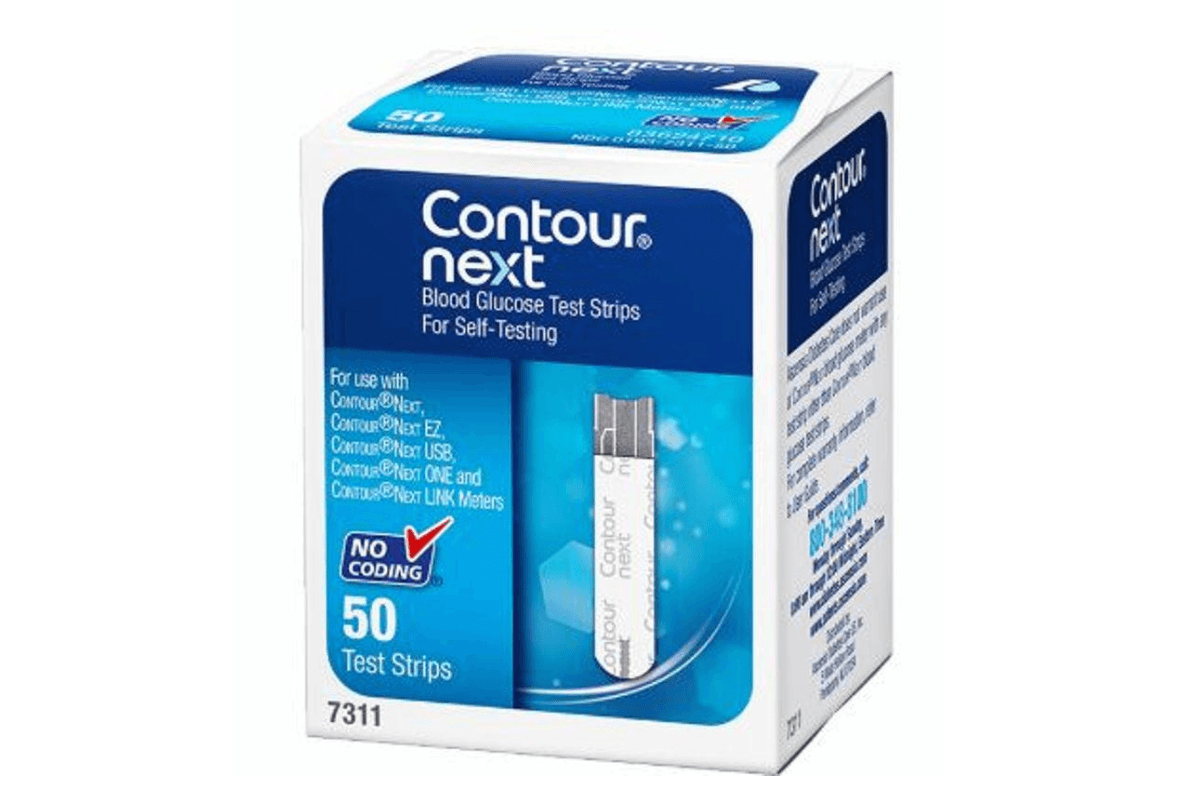
Contour Next Test Strips are single-use blood glucose strips made for compatible Contour Next meters. The key safety step is simple: match the exact meter family with the strip carton before testing. Storage, expiry dates, handwashing, sample size, and control-solution checks can also affect whether a reading is useful.
Key Takeaways
- Match the meter name to the strip carton before each refill.
- Check expiry dates, vial condition, and storage instructions.
- Wash and dry hands before applying a blood sample.
- Use control solution when readings seem inconsistent or unexpected.
- Keep glucose strips separate from ketone testing supplies.
How Contour Next Test Strips Fit Into Home Monitoring
Contour Next Test Strips are part of a self-monitoring blood glucose system. The strip receives a small blood sample, and the meter reads the strip reaction to estimate glucose concentration. Results are usually shown in mg/dL or mmol/L, depending on the meter setting and region.
This matters because the strip is not just a piece of plastic. It contains a reactive chemical layer and electrical contacts that must work with the meter’s software. A correct strip-and-meter match helps the device interpret the sample as intended.
If you are reviewing the device family, the Contour Next Meter page can help you recognize the naming used on related packaging. For people using the EZ model, the Contour Next EZ Meter page may help with product-name confirmation.
CanadianInsulin.com operates as a prescription referral platform. Where documentation is required, prescription details may be confirmed with the prescriber before pharmacy processing.
Compatibility Checks Before You Test
The strips that work with a Contour Next meter are the ones listed as compatible on the meter labeling, strip carton, or official instructions for use. Do not rely only on the word “Contour,” because older and newer product names can look similar.
Start with the full meter name printed on the device. Then compare that name with the compatibility language on the strip box. If the match is unclear, do not test until you have checked the user guide, pharmacy label, or manufacturer instructions.
Why brand and model matching is not optional
Blood glucose strips are not universal. Each strip family has its own contact layout, chemistry, and meter algorithm. The wrong strip may trigger an error message. In some situations, it may appear to fit while still producing a result you should not rely on.
People often search for “strips for Contour Next EZ” because the model name is close to other devices. A safer habit is to keep each meter with its own strip vial, lancing device, and instruction booklet. If several people in the home test glucose, write the meter name on the strip vial.
Older branding can also create confusion. Some people still use phrases such as “Bayer Contour” when discussing supplies. For naming background, see Bayer Contour Blood Glucose Meter. If you are comparing current and older strip families, the Bayer Contour Test Strips page can help distinguish a separate product name.
Quick tip: Keep the strip carton until the vial is empty, because it carries lot and compatibility details.
Storage, Expiry, And Vial Handling
Test strip storage affects performance because moisture, heat, and damaged contacts can interfere with the strip chemistry. Always follow the storage range printed on your product labeling. Avoid bathrooms, cars, windowsills, and loose bags if those locations expose strips to humidity or temperature swings.
Keep strips in their original vial or container. The container is designed to help protect the strips between tests. Transferring strips into pill organizers, pockets, or unsealed containers can expose them to moisture and friction.
Check the expiry date before opening a new vial and again if a vial has been stored for a long time. If the label has a separate discard period after opening, follow that instruction. Do not use strips that appear bent, discolored, wet, or damaged at the contact end.
Common storage and handling pitfalls
- Loose storage: Strips can be exposed to moisture or debris.
- Open vial: Humidity may affect strip chemistry over time.
- Mixed supplies: Similar boxes can lead to meter mismatch.
- Expired strips: Chemical performance may become less dependable.
- Damaged contacts: The meter may not read the strip correctly.
Some people keep a backup vial for troubleshooting. If one vial gives repeated errors and another properly stored vial works, that information can help a pharmacist, manufacturer support line, or clinician review the issue.
Technique Factors That Can Change Results
Even compatible Contour Next Test Strips can give less useful readings when the sample is contaminated or poorly applied. The most common causes are practical: food residue on fingers, wet hands, too little blood, or applying the sample incorrectly.
Wash hands with soap and warm water, then dry them fully before testing. Drying matters because water can dilute the blood sample. If soap and water are not available, follow your meter instructions for an acceptable cleaning method and make sure the skin is dry before lancing.
Some instructions recommend wiping away the first drop of blood in certain situations, such as when hands could have residue or when the first drop seems diluted by tissue fluid. This is not a universal rule for every device or every situation. Follow your meter manual or clinician’s instructions, especially if you have trouble getting enough blood.
Cold hands may make it harder to obtain an adequate sample. Warming the hands gently and letting the arm hang briefly can improve blood flow without squeezing forcefully. Heavy squeezing near the puncture site may mix tissue fluid with the sample.
If you are still building a testing routine, What Is A Lancing Device explains the tool used to obtain a fingerstick sample. For deeper selection and safety points, see Lancets For Blood Sugar Testing. Some people use Microlet Lancets, but the correct lancet depends on the lancing device model.
Why it matters: A realistic-looking number can still be wrong if the sample was contaminated.
Control Solution And Error Troubleshooting
Control solution checks whether the meter and strip system can produce a result within the expected control range. It is not used to make treatment decisions. It is a troubleshooting tool for the device, strips, and testing process.
The control range is usually printed on the strip vial or carton for that strip lot. Use the control solution recommended for your meter system. An out-of-range control result does not automatically mean the meter is broken. It may reflect expired solution, incorrect solution, improper storage, a contaminated strip, or an error in the test steps.
Consider a control check when you open a new vial, drop the meter, store supplies outside the recommended range, or see results that do not match how you feel. If repeated control checks remain outside the printed range, pause testing with that vial and review the official instructions.
What to document when errors repeat
Write down the meter model, strip lot number, expiry date, error code, and what happened during the test. Include whether hands were washed, whether the vial was left open, and whether the sample filled the strip as instructed. These details make support calls and clinical conversations more useful.
Error codes vary by meter model, so the user guide is the best source for exact meaning. Do not assume that the same code means the same thing across different systems. If readings suggest severe high or low glucose, or if symptoms are concerning, follow your care plan and seek urgent medical help when appropriate.
Timing, Units, And Interpreting Results Safely
The best time of day to check blood sugar depends on your care plan, medication regimen, meals, activity, and the reason you are testing. Common testing times may include fasting, before meals, after meals, at bedtime, or when symptoms occur. Your clinician can help decide which pattern is useful for your situation.
Home glucose readings are usually displayed as mg/dL or mmol/L. If you compare readings with educational materials, lab reports, or advice from another country, make sure the units match. A unit mix-up can lead to serious misunderstanding.
The calculator below can help convert glucose values between mg/dL and mmol/L for general comparison. It does not interpret whether a result is safe or replace clinical guidance.
Blood Glucose Unit Converter
Convert glucose readings between mg/dL and mmol/L without changing the clinical value.
These calculations are for education only and do not replace clinical advice, diagnosis, or treatment. Always confirm medical decisions with a qualified healthcare professional.
For broader monitoring routines, see How Often Should You Monitor Blood Sugar. If you are comparing meters and monitoring features, Best Blood Sugar Monitor Device outlines practical selection factors.
Glucose Strips Are Not Ketone Strips
Glucose strips and ketone strips measure different substances. Glucose strips estimate blood sugar. Ketone strips measure ketones, which are molecules produced when the body uses fat for energy. The devices and strips are not interchangeable unless the product labeling clearly says a specific meter supports both with the correct strip type.
If you need both forms of testing, store the supplies separately. Label each kit with its purpose. This reduces the chance of inserting the wrong strip, especially during illness, travel, or overnight testing.
Ketone testing may be part of a diabetes care plan for some people, especially during illness or when glucose readings are high. Follow the plan given by your clinician. Seek urgent care for symptoms such as vomiting, trouble breathing, confusion, severe weakness, or other signs your care team has told you to treat as urgent.
Access And Refill Planning Without Losing Compatibility
Access questions often come up because contour next test strips are used repeatedly, and people may refill them more often than meters. The safest refill habit is to match the exact strip name, meter model, and carton compatibility language before accepting a substitution.
Some patients explore cash-pay options when supplies are not covered or when coverage changes. Others may use cross-border fulfilment where eligibility and jurisdiction allow. These access details should not override compatibility checks or instructions from a clinician, pharmacist, or official product labeling.
When you refill supplies, compare the new box with the old one before opening it. Check the strip name, meter compatibility, expiry date, and package condition. If anything looks different, ask for clarification before using the strips.
For a directly relevant product reference, see Contour Next Test Strips. Use product pages for identification and navigation, not as a substitute for the meter manual or medical advice.
Authoritative Sources
For device-specific instructions, the most important sources are the meter user guide, strip instructions for use, and control-solution labeling that came with your supplies. General diabetes organizations and regulators can also help explain safe monitoring principles.
- Diabetes Canada provides general education on diabetes management and monitoring.
- The U.S. Centers for Disease Control and Prevention offers patient education on diabetes treatment and blood sugar monitoring.
- The U.S. FDA explains how it oversees blood glucose monitoring devices.
Accurate home testing depends on the right meter-and-strip match, careful storage, clean sampling technique, and sensible troubleshooting. Keep the packaging, record repeated errors, and bring your meter and strips to appointments when results do not fit your symptoms or usual pattern.
This content is for informational purposes only and is not a substitute for professional medical advice.