
Shipping with this method takes 3-5 days
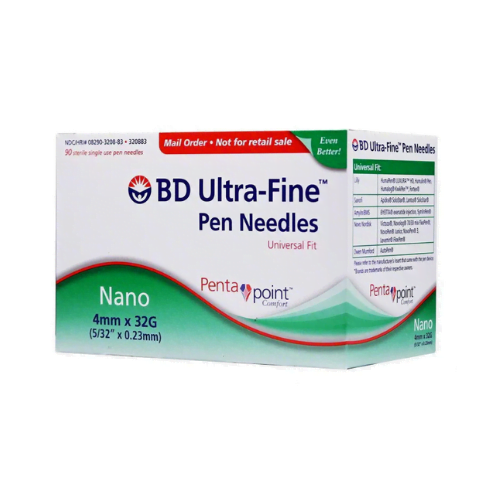
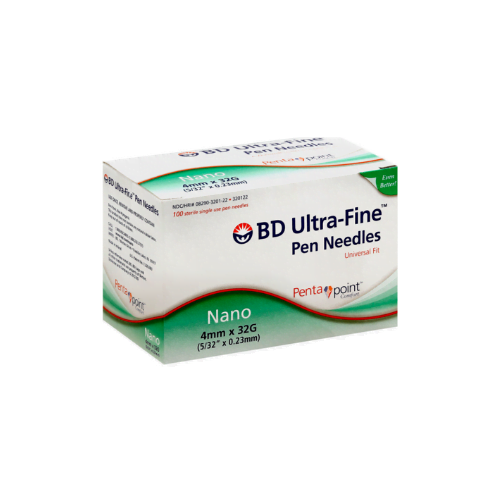
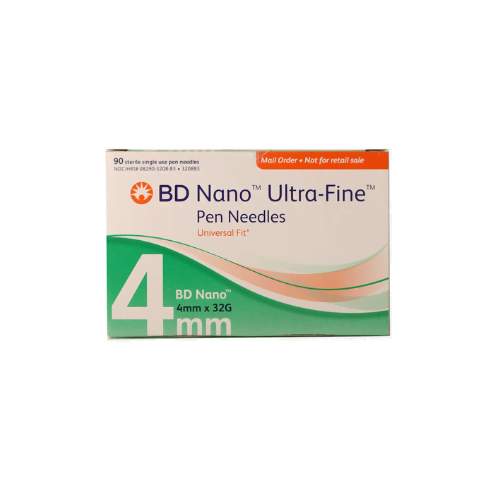
BD Nano Pro Pen Needles Ultrafine
Buy BD Nano Pro Pen Needles Online


BD Nano Pro Pen Needles Ultrafine are sterile, single-use pen needles for compatible injection pens. You can buy BD Nano Pro Pen Needles online, view the current price, and choose the needle size and quantity that match the directions given for your pen device. For this product, key purchase details include the 32G gauge, 4 mm length, box quantity, and compatibility with the injection pen you use.
These ultra-fine pen needles attach to compatible pen devices and create the pathway for subcutaneous injection, which means medicine is delivered into fatty tissue under the skin. The needle does not contain insulin, semaglutide, liraglutide, tirzepatide, or any other medicine. Dose selection comes from the medication pen and the treatment plan, not from the needle itself.
Small naming differences can matter when replacing an existing supply. Match the product name, gauge, length, box count, and device instructions rather than relying only on package color or a shortened Nano label.
BD Nano Pro Pen Needles Price and Size Selection
The BD Nano Pro Pen Needles price should be evaluated against the exact needle size and box count being purchased. Pen needle cost is usually tied to the number of sterile needles in the box, the gauge, the length, and the specific BD Nano presentation. A larger or smaller box may change the practical cost per injection even when the needle size looks similar.
BD Nano Pro Ultra-Fine Pen Needles 32G 4mm are commonly described as 4mm 32G pen needles. The 32G gauge refers to needle diameter, while 4 mm refers to the length of the needle shaft. Those measurements do not describe the dose of the medicine or how much medication the pen delivers.
When comparing BD Nano Pro Pen Needles cost without insurance or cash-pay pricing, focus on the total number of needles and the full product name. A BD Nano Pro pen needles box of 100 and a BD Nano Ultra-Fine Pen Needles box of 90 are different purchase quantities, even if both names include Nano and 32G 4mm wording.
| Purchase detail | How to use it |
|---|---|
| Gauge | Match 32G to the needle size recommended for your pen routine. |
| Length | Confirm 4 mm if that is the length specified for your injection technique. |
| Box count | Estimate how long the supply may last based on your injection schedule. |
| Pen fit | Use the pen device instructions to confirm attachment and removal steps. |
| Product name | Distinguish Nano Pro from other Nano Ultra-Fine or 2nd Gen packaging. |
Quick tip: Keep an empty box or photo of your current package nearby when choosing a replacement supply.
The diabetes supplies category can help separate device supplies from medications, glucose support items, and other treatment products. Pen needles should be chosen for device fit and injection technique, not as a substitute for a prescribed medicine.
How to Order BD Nano Pro Pen Needles Online
Start with the product name and needle size printed on your current package or pen device instructions. Choose the BD Nano Pro Pen Needles quantity that aligns with your refill timing, then review the total number of sterile needles before checkout. If you are ordering for US delivery from Canada, keep the order details consistent with the supply you are replacing.
Before submitting an order, verify the box quantity, 32G gauge, 4 mm length, and the pen device you plan to use. If the pen manufacturer recommends a different needle size or attachment method, follow the device instructions and ask a pharmacist or clinician about the correct supply.
- Choose the size: Confirm 32G x 4 mm when that is the intended needle.
- Check the box count: Compare total needles, not only the brand family.
- Match the device: Confirm the pen accepts detachable pen needles.
- Plan refills: Estimate supply needs from your actual injection schedule.
- Keep seals intact: Store individual needles unopened until use.
Do not switch needle length, injection depth, or technique simply because another supply is easier to find. Short pen needles are designed for specific subcutaneous use, and technique matters for comfort, consistent delivery, and safe handling.
Needle Size, Universal Fit, and Box Details
BD Nano 4mm pen needles are short pen needles intended for use with compatible injection pens. Many pen needles are marketed with universal fit language, but universal fit does not remove the need to follow the pen device instructions. Attachment problems can interrupt a dose, waste medicine, or create uncertainty about whether medication was delivered correctly.
BD pen needles 32G 4mm are also described as ultra-fine insulin pen needles because they are commonly used with insulin pens. They may also be used with other compatible pen medicines when the pen instructions support detachable needles. The needle itself remains a sterile accessory; it is not medicine and does not set the dose.
Names such as BD Nano Pen Needles, BD Ultra-Fine Nano Pen Needles, BD Nano Pro insulin pen needles, and BD Nano 2nd Gen Pen Needles 4mm x 32G may appear close together when people replace a familiar supply. Treat those names as related product families, then use the package details to confirm the exact gauge, length, generation, and quantity.
- 32G gauge: A smaller-diameter, ultra-fine needle size.
- 4 mm length: A short needle length used for subcutaneous injection technique.
- Single use: Each sterile needle is intended for one injection only.
- Pen attachment: These needles are for compatible pen devices, not standard syringes.
- Box quantity: The number of needles determines how many injections the box may cover.
Why it matters: A correct needle match helps prevent attachment errors and avoidable dosing interruptions.
What These Pen Needles Are Used For
BD Nano Pro Pen Needles Ultrafine are used as the disposable needle component for compatible pen injection devices. They are commonly associated with diabetes care because many insulin pens use detachable pen needles. The same general needle format may also be used with other pen-based injectable treatments when the pen manufacturer allows it.
The needle does not determine whether a medicine is appropriate for Type 1 diabetes, Type 2 diabetes, weight management, or another condition. Suitability depends on the medication inside the pen, the dose instructions, and the treatment plan. People managing Type 1 Diabetes or Type 2 Diabetes may use pen needles as part of a broader routine that also includes glucose monitoring and medication management.
For broader condition navigation, the Diabetes section can help distinguish condition information from supply selection. A diagnosis alone does not identify the correct needle size. The pen device, injection technique, and clinician or pharmacist direction should guide the choice.
Because the needle does not contain medicine, changing needles does not change the active ingredient, strength, or therapeutic class of the treatment. However, using the wrong or damaged needle can affect the injection process. If a dose seems blocked, incomplete, or uncertain, follow the medication pen instructions for missed or incomplete doses and seek professional guidance when needed.
Storage, Handling, and US Shipping from Canada
Store unused pen needles in their original packaging at room temperature unless the package instructions say otherwise. Keep the box dry, protected from excessive heat, and away from children and pets. Individual needles should remain sealed until the moment they are attached to the pen.
These supplies do not usually need refrigeration or cold-chain handling, but they still require clean storage and protection from damage. During US shipping from Canada, packaging should keep sterile supplies organized and protected in transit. Inspect the box and individual needle seals before use, especially if the package has been crushed, opened, or exposed to moisture.
Attach the needle only when you are ready to inject, then remove it according to the pen instructions. Leaving a needle attached between injections can increase leakage risk, allow air to enter some pen systems, or expose the needle to contamination. Replace the outer cap only as directed by the pen instructions and avoid handling the needle tip.
- Before use: Inspect the seal, cap, and visible needle condition.
- During use: Follow the pen device instructions for priming and injection.
- After use: Remove the needle safely and discard it promptly.
- During travel: Keep unused needles sealed and used needles in a sharps container.
The other diabetes supplies category may be useful when organizing related items such as sharps-support supplies and routine care accessories. Keep device supplies separate from medicines so that each item can be checked for its own storage and handling needs.
Safe Use, Sharps Disposal, and When to Get Help
Use a new sterile pen needle for every injection. Reusing a needle can dull or bend the tip, increase discomfort, raise contamination risk, and make delivery less reliable. Never share pen needles, even with another person who uses the same type of pen device.
Minor injection-site effects can include brief stinging, a small drop of blood, bruising, redness, or soreness. These effects are usually related to the injection process rather than any medicine inside the needle. Rotate injection sites according to the medication and pen instructions to reduce repeated irritation in one area.
Seek clinical guidance if an injection site becomes increasingly painful, warm, swollen, draining, or unusually red. Urgent help is needed if a needle breaks in the skin, if there are signs of a serious infection, or if symptoms suggest a severe allergic reaction. If medicine delivery seems incomplete, do not guess at an extra dose unless the medication instructions or a clinician tells you to do so.
Pen needles do not create drug interactions by themselves, but the medicine delivered through the pen can. Insulin and some diabetes medications can affect blood glucose, and monitoring should follow the plan set for that medicine. The diabetes articles section can help with general education topics, while individual treatment decisions should stay with your care team.
- Do not reuse: Single-use needles are not designed for repeated injections.
- Do not share: Sharing can spread bloodborne infections.
- Do not force: Replace a bent, blocked, or damaged needle.
- Do not throw loose: Place used needles in an approved sharps container.
- Do not inject through clothing: Follow the pen and clinician instructions instead.
Local sharps rules differ, so follow the disposal instructions from your pharmacy, clinic, or local waste program. A puncture-resistant sharps container helps protect household members, sanitation workers, and caregivers from accidental needle sticks.
Comparing Pen Needles With Diabetes Care Products
Pen needles should be compared with other device supplies, not with the medicines they help deliver. A pen needle can be the right size and still be inappropriate if the medication pen has integrated components or requires a different attachment system. Always check the instructions for the exact pen in use.
When treatment changes from one pen medicine to another, do not assume the same needle will always fit. Some pens use detachable universal fit pen needles, while others have product-specific parts. Ask a pharmacist or clinician if the new pen instructions are unclear or if you are moving from an insulin pen to another injectable treatment.
People using insulin may also compare pen needles with syringes, lancets, glucose monitoring supplies, and other diabetes care items. The diabetes products category can help keep medications and supplies organized during browsing. For education tied to insulin routines and glucose management, the Type 1 diabetes articles and Type 2 diabetes articles sections provide condition-specific reading.
If two BD Nano products look similar, prioritize the practical attributes: gauge, length, box quantity, sterility, single-use packaging, and pen compatibility. Packaging generations and names can change, but those attributes determine whether the supply matches your routine.
Authoritative Sources
Manufacturer materials can help confirm needle features, fit language, and correct product naming. Use official materials together with the instructions that came with your pen device.
- Manufacturer device information: BD Nano 4MM Pen Needles.
This content is for informational purposes only and is not a substitute for professional medical advice.
Express Shipping - from $29.99
Prices:
- Dry-Packed Products $29.99
- Cold-Packed Products $39.99
Standard Shipping - $19.99
Shipping with this method takes 5-10 days
Prices:
- Dry-Packed Products $19.99
- Not available for Cold-Packed products
What are BD Nano Pro Pen Needles used for?
BD Nano Pro Pen Needles are sterile, single-use needles that attach to compatible injection pens. They provide the needle pathway for subcutaneous injection but do not contain medicine or determine the dose.
Are BD Nano Pro Pen Needles 32G 4mm?
The supplied product context identifies BD Nano Pro Ultra-Fine Pen Needles 32G 4mm as a common presentation. Confirm the gauge, 4 mm length, and box quantity against your current package and pen device instructions before use.
Can BD Nano Pro Pen Needles be reused?
No. Each pen needle is intended for one injection. Reusing a needle can dull or bend the tip, increase discomfort, raise contamination risk, and interfere with smooth medication delivery.
Do BD Nano Pro Pen Needles fit all injection pens?
Many pen needles use universal fit language, but you should still check the instructions for your specific pen. Some devices use detachable pen needles, while others may have integrated or product-specific parts.
How should used BD Nano Pro Pen Needles be discarded?
Place used pen needles in an approved sharps container immediately after use. Do not throw loose needles into household trash, and follow local disposal instructions from your pharmacy, clinic, or waste program.
Rewards Program
Earn points on birthdays, product orders, reviews, friend referrals, and more! Enjoy your medication at unparalleled discounts while reaping rewards for every step you take with us.
You can read more about rewards here.
POINT VALUE
How to earn points
- 1Create an account and start earning.
- 2Earn points every time you shop or perform certain actions.
- 3Redeem points for exclusive discounts.
You Might Also Like
Select options
This product has multiple variants. The options may be chosen on the product page
Select options
This product has multiple variants. The options may be chosen on the product page
Select options
This product has multiple variants. The options may be chosen on the product page
Select options
This product has multiple variants. The options may be chosen on the product page