
Please note: a valid prescription is required for all prescription medication.
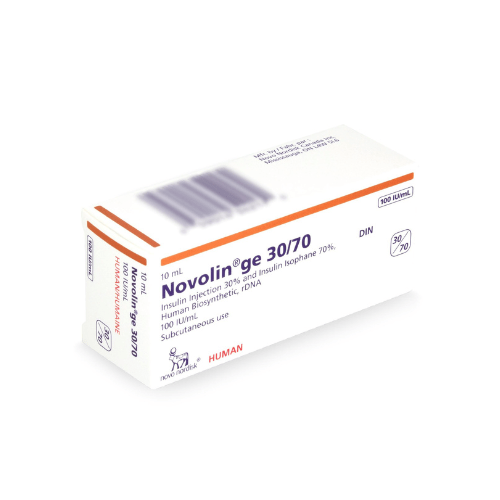
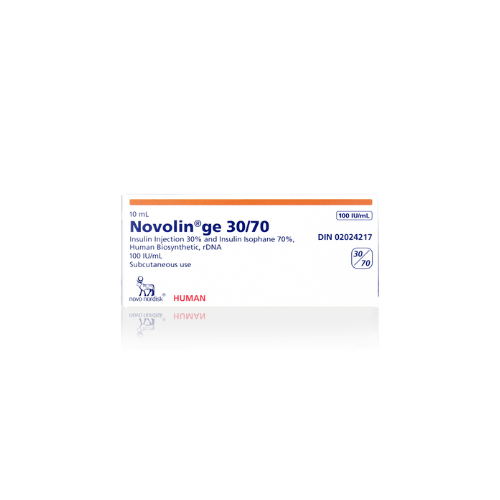
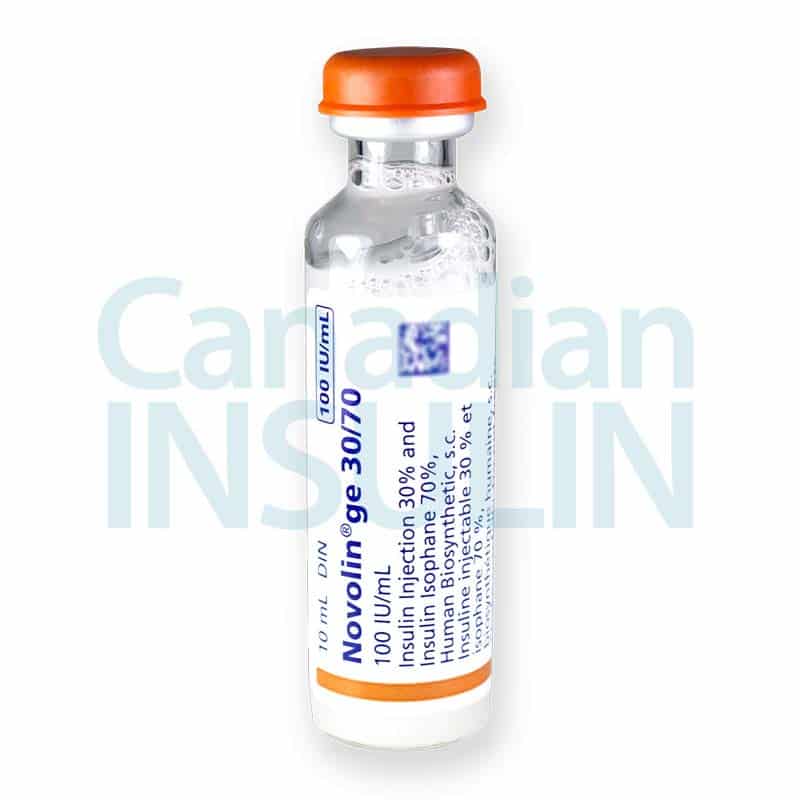
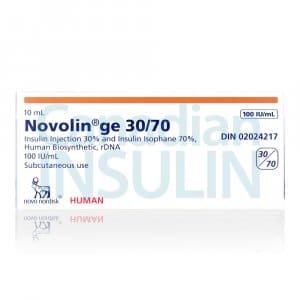
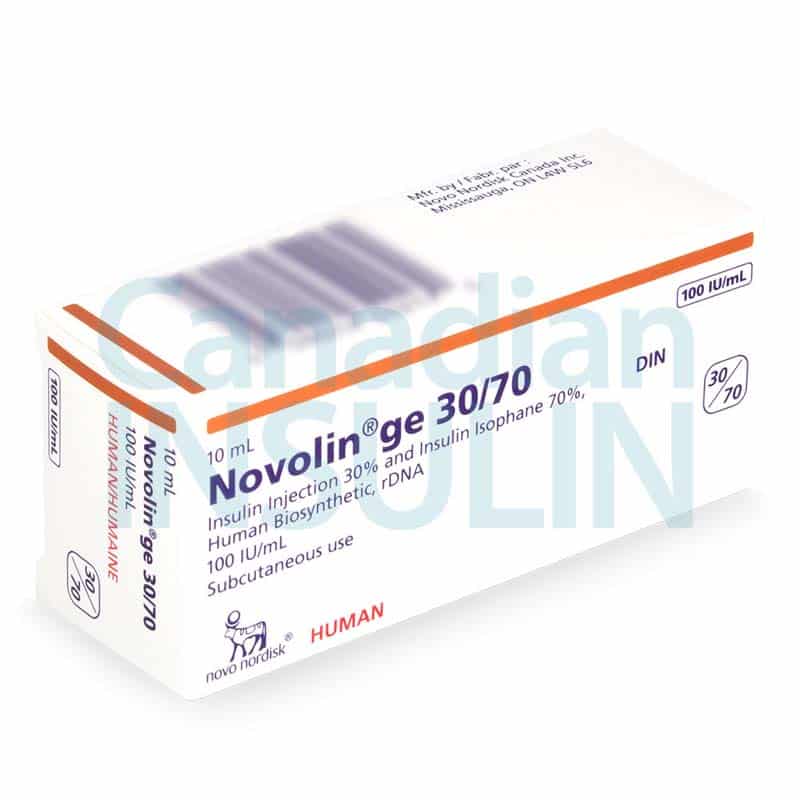
Novolin ge 30/70 Vial
Buy Novolin GE 30/70 Vial Online


Novolin GE 30/70 Vial is a premixed human insulin supplied as a 10 mL vial at 100 units/mL. It can be bought online by choosing the vial quantity shown during ordering and matching the strength, form, and insulin type to your clinician’s directions.
This insulin combines short-acting regular human insulin with intermediate-acting NPH insulin in a fixed 30/70 ratio. Because insulin is temperature-sensitive and dosing is individualized, the vial format, concentration, handling requirements, and routine monitoring all matter before use.
Novolin GE 30/70 is used by people with diabetes who need both mealtime and longer background insulin coverage from one premixed product. It is not a dose-selection tool, and changes to dose timing, meal timing, or injection frequency should be made with a diabetes care professional.
Novolin GE 30/70 Vial Price and Strength Details
The Novolin GE 30/70 Vial price should be read together with the exact vial quantity and strength shown during ordering. This product is described as a 10 mL vial of U-100 insulin, meaning it contains 100 units of insulin per mL. That concentration supports product matching, but it does not determine your personal dose.
When reviewing Novolin GE 30/70 Vial cost, focus on the vial presentation, the number of vials, and whether the 100 units/mL concentration matches the insulin syringes and directions you already use. A 10 mL U-100 vial contains a total of 1,000 units, but each injection amount depends on the individualized plan from your care team.
Some people compare Novolin GE 30/70 without insurance or cash-pay access with other insulin formats. Keep the comparison limited to the exact form and strength. Cartridges, prefilled pens, and separate regular or NPH insulin products are different medication formats and should not be treated as automatic substitutes.
| Product attribute | What to match before ordering |
|---|---|
| Form | Vial for use with insulin syringes |
| Concentration | 100 units/mL, also called U-100 insulin |
| Vial size | 10 mL vial presentation |
| Insulin type | Premixed human insulin with regular and NPH components |
| Quantity | Number of vials needed for your current refill plan |
Why it matters: Small differences in insulin form, concentration, or container can lead to wrong-supply or dosing problems.
How to Order Novolin GE 30/70 Vial Online
To order Novolin GE 30/70 Vial online, start with the vial form and 100 units/mL strength. Have the product name, insulin concentration, vial quantity, and current directions available so the order can be matched to the medication you are already instructed to use.
- Choose the Novolin GE 30/70 vial form.
- Match 100 units/mL to your insulin directions and U-100 syringes.
- Select the number of 10 mL vials needed.
- Review storage and temperature-handling information.
- Keep clinic contact information available if order details need clarification.
Novolin GE 30/70 Vial US delivery from Canada may be relevant for customers comparing cross-border service context. Insulin orders may use prompt, express, cold-chain shipping because the medication can be damaged by freezing, overheating, or direct sunlight.
Do not use the ordering process to switch from a vial to a pen, from premixed insulin to separate insulins, or from one premix ratio to another. If the exact product you use changes, ask a healthcare professional how the new form, injection technique, and timing should be handled.
Vial, U-100 Syringe, and Premix Ratio
Novolin GE 30/70 Vials 100 units/mL contain a fixed mixture of 30% regular human insulin and 70% NPH insulin, also called isophane insulin. Regular insulin is short-acting, while NPH insulin is intermediate-acting. The premix is intended to provide both components in a single injection when that approach has been selected for diabetes treatment.
The 30/70 ratio describes the formulation inside the vial. It does not mean you should split a dose into two injections, change meal timing on your own, or assume the same schedule as another insulin product. Premixed insulin generally requires consistent timing with meals and glucose monitoring, but the specific routine is individualized.
This vial should be used with insulin syringes marked for U-100 or IU-100 insulin. Using a syringe intended for a different concentration can cause a serious dosing error. If your syringe markings are unclear, do not estimate the amount; ask a pharmacist or diabetes educator to confirm the correct supplies.
- Use U-100 insulin syringes only.
- Gently mix the cloudy suspension before drawing a dose.
- Do not shake the vial hard or create foam.
- Avoid use if clumps, crystals, or particles remain after mixing.
- Never share needles or syringes with another person.
Some people use terms such as Novolin 70/30 vial, Novolin 70/30 insulin vial, or premixed insulin 30/70 vial when discussing this type of therapy. Product names can vary by market, so the vial name, ratio, concentration, and format should be matched carefully rather than assumed from a similar term.
What This Premixed Human Insulin Treats
Novolin GE 30/70 is used to help control blood glucose in people with diabetes who require insulin therapy. Diabetes treatment may involve insulin for Type 1 Diabetes, Type 2 Diabetes, or other clinician-managed situations where insulin is needed to replace or supplement the body’s insulin response.
Insulin helps move glucose from the bloodstream into cells for energy. In a premix, the regular insulin component starts working sooner, while the NPH component lasts longer. This fixed-ratio design can simplify some routines but offers less flexibility than using separate basal and mealtime insulins.
Novolin GE 30/70 is an injectable insulin, not an oral diabetes tablet. It may affect A1C over time when used as part of a broader plan that includes meals, activity, monitoring, and follow-up care. A1C is a longer-term blood glucose marker, while home glucose readings show more immediate patterns.
Because this is a fixed premix, missed meals, illness, increased activity, or changes in appetite can increase the risk of low blood sugar. If your routine changes, keep notes about meals, activity, symptoms, and glucose readings so your care team can make safe adjustments.
Storage, Handling, and Travel Basics
Insulin can lose potency if it freezes, overheats, or sits in direct sunlight. Unopened vials are generally stored in a refrigerator away from the freezer section. If a vial has frozen, been exposed to excessive heat, or changed appearance, do not use it until a healthcare professional advises you.
Once a vial is in use, follow the official package instructions for storage time and temperature. Do not rely on habits from a different insulin brand, pen, cartridge, or vial, because in-use limits can differ by container and formulation. Write the first-use date on the vial box if that helps you track it.
Before each injection, gently roll or invert the vial as directed so the suspension looks evenly cloudy or milky. Do not use the insulin if white material sticks to the bottom or side of the vial after proper mixing, or if particles remain visible in the liquid.
During travel, keep insulin with you rather than in checked luggage. Protect the vial from heat in cars, airport storage areas, and direct sun. If you travel across time zones, ask your diabetes care team how to manage injection timing, meals, and glucose checks.
Quick tip: Store insulin and U-100 syringes together in a clean, temperature-appropriate travel pouch.
Side Effects, Warnings, and Monitoring
The most important safety risk with any insulin is hypoglycemia, or low blood sugar. Symptoms may include sweating, shaking, fast heartbeat, hunger, headache, dizziness, blurred vision, weakness, anxiety, or confusion. Severe hypoglycemia can cause seizure, loss of consciousness, or emergency medical need.
Common insulin-related effects can include injection-site redness, swelling, itching, bruising, skin thickening or thinning at repeated injection sites, weight gain, and fluid retention. Rotating injection sites helps reduce local skin problems. Do not inject into skin that is lumpy, scarred, infected, or unusually irritated unless a clinician has assessed it.
Serious allergic reactions are uncommon but require urgent care. Warning signs include widespread rash, swelling of the face or throat, wheezing, chest tightness, or trouble breathing. Do not use an insulin product again after a serious reaction unless a healthcare professional has evaluated the cause and provided clear instructions.
Insulin needs can change with infection, fever, stress, kidney problems, liver problems, pregnancy, changes in meals, and changes in physical activity. Alcohol may increase the chance of low blood sugar, especially when meals are delayed. Beta blockers may make some warning signs of hypoglycemia harder to notice.
Other medicines can raise or lower blood glucose. These may include other diabetes medicines, corticosteroids, diuretics, thyroid medicines, some blood pressure drugs, certain psychiatric medicines, and products that affect appetite or digestion. Keep an updated medicine list and bring it to diabetes visits.
- Keep fast-acting sugar available as directed for low glucose.
- Monitor more closely during illness or major routine changes.
- Rotate injection sites within recommended areas.
- Ask about alcohol use and exercise timing.
- Seek urgent help for severe hypoglycemia or allergic symptoms.
Monitoring often includes home glucose checks and periodic A1C testing. Your clinician may also review weight, kidney function, liver function, injection technique, and patterns of readings that are too high or too low.
How It Compares With Related Insulin Choices
Novolin GE 30/70 is part of the broader group of pre-mixed insulin products. A premix may suit people whose meals and injection times are predictable, but it may be less adaptable for people who need separate adjustments to basal and mealtime insulin.
The broader insulin medications category can help you understand how vial, pen, cartridge, rapid-acting, short-acting, intermediate-acting, long-acting, and premixed choices are organized. The diabetes medications category includes non-insulin therapies as well, but those products work differently and may not replace insulin.
Diabetes education articles may also support safer product conversations. General diabetes information can help frame glucose targets and monitoring topics, while type 1 diabetes articles and type 2 diabetes articles address condition-specific concerns.
When comparing related therapies, focus on the insulin type, onset and duration, container, concentration, syringe or device needs, and daily routine. Do not switch to a separate regular insulin, NPH insulin, or a different premixed ratio unless your care team has explained how to use it safely.
Questions to Ask Before Using a New Vial
Before starting a new vial, confirm when to inject, how meals should be timed, what glucose range needs attention, and what to do if a meal is missed. Premixed insulin can be less forgiving when eating patterns change, so a clear sick-day and missed-meal plan is important.
Ask which body areas are appropriate for injection and how often to rotate sites. Absorption can vary by site and activity level. Hot baths, saunas, or heavy exercise soon after injection may affect blood flow and change how quickly insulin acts for some people.
Clarify how often to test glucose and when to call for advice. Useful notes include the time of injection, meal timing, carbohydrate intake when tracked, activity, symptoms, and glucose readings. Clear records make treatment review more accurate.
Authoritative Sources
Insulin selection, injection technique, storage, and safety instructions should be checked against official patient information and your clinician’s guidance. The following sources support the premixed insulin, U-100 concentration, mixing, storage, and hypoglycemia safety points discussed above.
- Manufacturer patient information: Novolin premix consumer information.
- Regulator label information: FDA patient information for Novolin 70/30.
This content is for informational purposes only and is not a substitute for professional medical advice.
Blood Glucose Unit Converter
Convert glucose readings between mg/dL and mmol/L without changing the clinical value.
mg/dL
-
US reporting unit
mmol/L
-
International reporting unit
These calculations are for education only and do not replace clinical advice, diagnosis, or treatment. Always confirm medical decisions with a qualified healthcare professional.
HbA1c & eAG Calculator
Convert between HbA1c percentage and estimated average glucose using the ADAG relationship.
HbA1c
-
percentage
eAG mg/dL
-
estimated average glucose
eAG mmol/L
-
estimated average glucose
These calculations are for education only and do not replace clinical advice, diagnosis, or treatment. Always confirm medical decisions with a qualified healthcare professional.
HOMA-IR Calculator
Estimate insulin resistance from fasting glucose and fasting insulin values collected from the same blood draw.
HOMA-IR
-
screening estimate, not a diagnosis
Formula used
-
depends on glucose unit
These calculations are for education only and do not replace clinical advice, diagnosis, or treatment. Always confirm medical decisions with a qualified healthcare professional.
Carb Serving Calculator
Convert total carbohydrate grams into carb choices for meal planning and diabetes education.
Carb choices
-
total carbs divided by choice size
Rounded choices
-
nearest half choice
Carb calories
-
4 kcal per gram
These calculations are for education only and do not replace clinical advice, diagnosis, or treatment. Always confirm medical decisions with a qualified healthcare professional.
Glycaemic Load Calculator
Calculate glycaemic load from glycaemic index and available carbohydrate in a serving.
Glycaemic load
-
GI x carbs / 100
Range
-
single serving estimate
Total carbs used
-
serving carbs x servings
These calculations are for education only and do not replace clinical advice, diagnosis, or treatment. Always confirm medical decisions with a qualified healthcare professional.
Express Shipping - from $25.00
Shipping with this method takes 3-5 days
Prices:
- Dry-Packed Products $25.00
- Cold-Packed Products $35.00
Standard Shipping - $15.00
Shipping with this method takes 5-10 days
Prices:
- Dry-Packed Products $15.00
- Not available for Cold-Packed products
What is Novolin GE 30/70 Vial used for?
Novolin GE 30/70 Vial is a premixed human insulin used to help control blood glucose in people with diabetes who require insulin. It contains regular insulin and NPH insulin in a fixed 30/70 ratio.
Is Novolin GE 30/70 the same as regular insulin?
No. Novolin GE 30/70 contains 30% regular human insulin and 70% NPH insulin. Regular insulin alone is short-acting, while this premix also includes an intermediate-acting component.
What syringes are used with Novolin GE 30/70 Vials 100 units/mL?
Use insulin syringes marked for U-100 or IU-100 insulin. A syringe made for a different concentration can cause dosing errors, so ask a pharmacist or clinician if the markings are unclear.
What are common side effects of Novolin GE 30/70?
Low blood sugar is the main risk. Other effects may include injection-site redness, swelling, itching, skin changes at repeated injection sites, weight gain, and fluid retention. Severe low blood sugar or allergic symptoms need urgent care.
How should Novolin GE 30/70 Vial be stored?
Unopened vials are generally refrigerated and protected from freezing, heat, and direct sunlight. Once opened, follow the official package instructions for in-use storage time and temperature.
Rewards Program
Earn points on birthdays, product orders, reviews, friend referrals, and more! Enjoy your medication at unparalleled discounts while reaping rewards for every step you take with us.
You can read more about rewards here.
POINT VALUE
How to earn points
- 1Create an account and start earning.
- 2Earn points every time you shop or perform certain actions.
- 3Redeem points for exclusive discounts.
You Might Also Like
Select options
This product has multiple variants. The options may be chosen on the product page
Select options
This product has multiple variants. The options may be chosen on the product page
Select options
This product has multiple variants. The options may be chosen on the product page
Select options
This product has multiple variants. The options may be chosen on the product page
Related Articles
Diabetes
Insulin Syringe Sizes: Barrel, Needle, and Safety Basics
Insulin syringe sizes describe three things: how much the barrel holds, how long the needle is, and how thin the needle is. These details matter because insulin is measured in…
Diabetes, Type 1
Fiasp Cartridge Safety, Compatibility, and Mealtime Use
A Fiasp cartridge is a replaceable cartridge form of Fiasp, a faster-acting insulin aspart used around meals when prescribed for diabetes. It is meant for compatible reusable insulin pens, not…
Diabetes, Type 1
Fiasp Alternative Options for Mealtime Insulin Decisions
A Fiasp alternative is usually another mealtime insulin that acts quickly around food, not a simple over-the-counter substitute. Options may include other insulin aspart products, insulin lispro products, insulin glulisine,…
Diabetes, Type 1
Humulin KwikPen Use: Safe Injection Steps and Checks
Humulin KwikPen how to use is mainly about safe preparation and consistent technique. Confirm the right pen, attach a new pen needle, prime the pen, dial only the prescribed dose,…