
Please note: a valid prescription is required for all prescription medication.
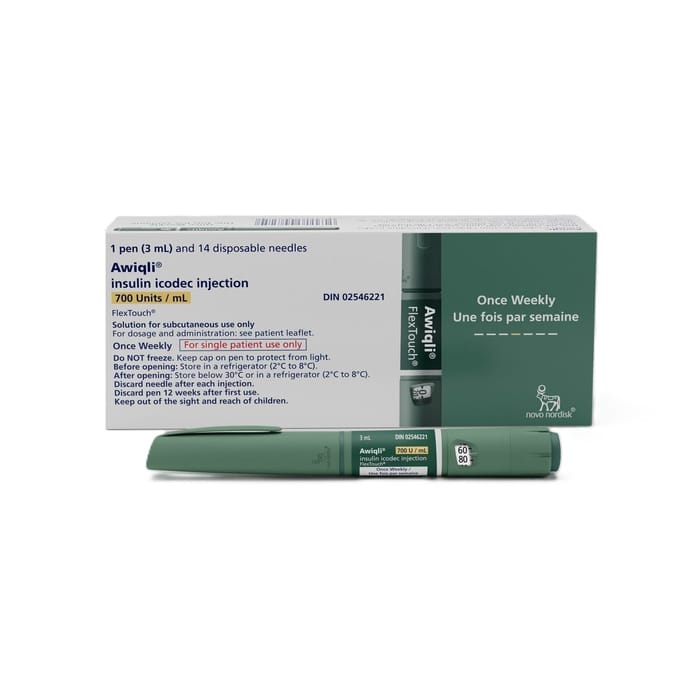
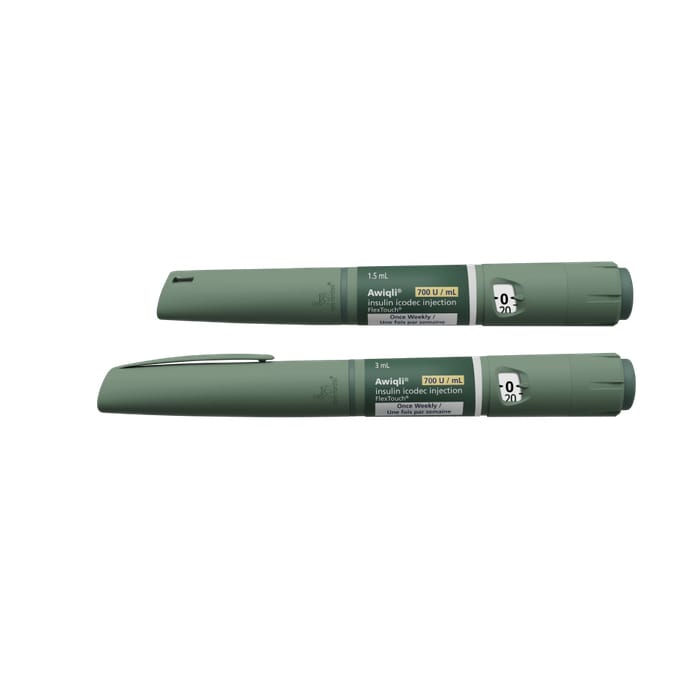
Awiqli FlexTouch Pen
Buy Awiqli FlexTouch Pen Online


Buy Awiqli FlexTouch Pen online with a valid prescription and compare current listed pricing, available pen presentations, and safety basics before checkout. If you are exploring US delivery from Canada, use the product options on this page to match the selected insulin pen, total units, and quantity to your prescription order. Before ordering, review how this once-weekly basal insulin is supplied, how it is handled, and which warnings matter for safe use.
Awiqli contains insulin icodec, a long-acting basal insulin (background insulin) designed to provide glucose-lowering coverage over seven days. It is not a rapid-acting mealtime insulin, and it should not be used as an emergency treatment for high blood sugar. The FlexTouch pen is a prefilled injection device intended for single-patient use.
Use this listing to compare the product form, available quantity, and order details before moving forward. Matching the exact pen presentation matters because insulin products can differ by concentration, total units, device type, and how the dose is delivered. Keep your prescribed directions nearby when checking product options.
Awiqli FlexTouch Pen Price and Available Options
Start with the Awiqli FlexTouch Pen price shown for the selected presentation, then compare total units, volume, pack count, and quantity before checkout. Awiqli may be listed by pen strength or total insulin content, so the displayed amount should be read alongside the exact option selected. Your Awiqli FlexTouch Pen cost may change when the supplied presentation or quantity changes.
Different pen sizes do not mean you should choose a higher or lower dose yourself. For example, a pen containing more total insulin can cover more prescribed weekly doses, but it is not automatically a larger single injection. The right listing is the one that matches the prescription, the device, and the amount your clinician instructed.
Cash-pay access may be relevant if coverage is not being used, but the practical comparison is still the same: selected pen, total contents, quantity, and any handling needs. Do not rely on the product name alone when comparing options. Insulin listings should be checked closely because small wording differences can reflect different products or delivery devices.
| Product detail | What to check | Why it matters |
|---|---|---|
| Pen presentation | Match the FlexTouch pen and total units. | Insulin devices are not interchangeable without direction. |
| Quantity | Confirm the number of pens or packs selected. | The order total depends on the selected quantity. |
| Dose increments | Official labeling describes 10-unit dose steps. | The device setting must match prescribed instructions. |
| Supplies | Check whether pen needles are separate. | Needles and sharps supplies may be needed. |
| Handling | Review temperature-sensitive storage needs. | Insulin can be damaged by heat or freezing. |
Quick tip: Compare the final selected option, not only the product name.
How to Order Online
Choose the listed presentation that matches your directions, then confirm the quantity and checkout details. If the order page asks for prescriber information, keep the clinic name, phone number, and your current directions available. Your order details may be confirmed with your prescriber when needed, and supporting records may be requested for some orders.
If your checkout involves US shipping from Canada, confirm that the selected product, patient information, and delivery address are entered consistently. Insulin is temperature-sensitive, so handling details matter as much as the product selection. Review any package instructions when the order arrives and contact a healthcare professional if the product appears damaged, frozen, overheated, or unusual.
Do not start, stop, or substitute basal insulin because an online listing appears similar. Awiqli is a specific insulin icodec product in a FlexTouch pen, and other long-acting insulins may have different dosing schedules, concentrations, and transition instructions. The safest order is the one that follows the exact product and directions written for you.
Product Details to Match Before Checkout
Awiqli FlexTouch Pen dose options are selected by the prescriber, not chosen from a general chart. Official labeling describes FlexTouch pens that deliver doses in 10-unit increments and can deliver up to 700 units in a single injection. The same device information should be used to confirm that the selected pen fits the written directions.
Awiqli may be supplied in single-patient-use prefilled pens with different total insulin contents, such as 700 units, 1050 units, or 2100 units in labeled presentations. Total units describe how much insulin is inside the pen, not how much should be injected at one time. That distinction is important when comparing product options and quantities.
Review the concentration, total volume, and pen count together. A weekly basal insulin can remain active for several days, so late doses, missed doses, or duplicate doses can have effects beyond one day. If your directions are unclear, the practical next step is to clarify the schedule with your clinician before using the pen.
- Device type: Prefilled FlexTouch insulin pen.
- Insulin type: Insulin icodec, a basal insulin analog.
- Use pattern: Usually prescribed as once-weekly basal insulin.
- Needle use: Use a new compatible needle each injection.
- Sharing risk: Never share the pen, even with a new needle.
The Insulin Pens resource covers common device terms that may help when comparing pens, cartridges, and supplies. For product browsing across diabetes therapies and devices, the Diabetes Products category can help you compare prescribed options by product type.
What This Insulin Is Used For
Awiqli is a basal insulin used to help manage blood glucose in adults when a clinician decides it is appropriate. Basal insulin works in the background between meals and overnight. It is different from rapid-acting insulin, which is typically used around meals or for correction dosing when prescribed.
Approved uses and patient groups can differ by country and label version. The U.S. prescribing information describes Awiqli for adults with type 2 diabetes, while local product information may use different wording. Match your use to the label supplied with your product and to the plan set by your healthcare professional.
This medicine is not intended to treat diabetic ketoacidosis, and it should not replace emergency care for severe high blood sugar, vomiting, dehydration, confusion, or breathing changes. A focused resource on Insulin Icodec Use Basics can help explain once-weekly basal insulin concepts without replacing individualized instructions.
Storage, Handling, and Travel Basics
Insulin storage affects product quality. Keep unopened pens refrigerated according to the package directions, and do not freeze them. If a pen has been frozen, exposed to direct heat, or left in conditions outside the labeled range, do not assume it is safe to use. Ask a pharmacist or clinician how to handle the affected product.
After first use, follow the in-use storage period and temperature limits listed with the pen. Keep the cap on when the pen is not being used, and protect it from light and heat. Do not store the pen with a needle attached because this can increase leakage, contamination risk, or inaccurate dosing.
Inspect the solution before use if the instructions tell you to do so. Many insulin products should look clear and colorless, but always follow the specific leaflet for this product. Do not use a pen if the solution looks cloudy, colored, has particles, or the device appears damaged.
Travel needs simple planning. Keep insulin away from checked luggage temperatures, avoid direct contact with ice packs, and carry supplies such as compatible needles, glucose monitoring materials, and a sharps container plan. When shipment is arranged, cold-chain shipping may be used for temperature-sensitive insulin; review the package promptly when it arrives.
Why it matters: Temperature damage can reduce insulin quality before you notice a visible change.
Focused handling pages such as Insulin Storage Temperature can help you compare general storage terms with the label supplied with your pen.
Safety Checks Before You Use It
Low blood sugar, also called hypoglycemia, is the most important safety issue with any insulin. Symptoms may include shakiness, sweating, hunger, fast heartbeat, confusion, headache, dizziness, or unusual sleepiness. Severe hypoglycemia can cause seizures, loss of consciousness, or require emergency help.
Because Awiqli is a once-weekly basal insulin, its effects can last for days. Extra doses, dose timing errors, missed meals, alcohol use, increased activity, kidney problems, liver problems, or changes to other diabetes medicines may increase the risk of low blood sugar. Your clinician may recommend more frequent glucose checks when therapy is started, changed, or interrupted.
Do not use insulin during an episode of low blood sugar. Awiqli should also not be used by someone with a known serious allergy to insulin icodec or any ingredient in the product. Seek urgent care for signs of a serious allergic reaction, such as trouble breathing, swelling of the face or throat, widespread rash, severe dizziness, or rapid heartbeat.
Injection-site reactions can occur, including redness, swelling, itching, bruising, or discomfort. Repeated injections into the same spot can cause lipodystrophy (changes in fat tissue) or localized cutaneous amyloidosis (firm skin deposits), which may affect insulin absorption. Rotate injection sites within the recommended areas, and do not inject into skin that is thickened, pitted, bruised, scarred, tender, or damaged.
Insulin can cause weight gain and may lower potassium levels in some people. Low potassium can be serious, especially for patients using certain heart medicines or those with other risk factors. Tell your clinician about heart disease, kidney disease, liver disease, pregnancy, planned surgery, major diet changes, or recurrent low blood sugar before treatment decisions are made.
Never share an Awiqli FlexTouch Pen, even if the needle has been changed. Sharing pens can transmit infections. Used needles should go into an appropriate sharps container, not household trash, loose bags, or recycling bins.
Interactions and Monitoring Points
Other medicines can change how insulin affects blood glucose. Some diabetes medicines, certain blood pressure medicines, and alcohol may increase the chance of low blood sugar. Corticosteroids, some diuretics, thyroid medicines, and certain other drugs may raise glucose or change insulin needs. Beta-blockers can also mask warning signs such as a fast heartbeat.
Thiazolidinediones, sometimes called TZDs, can cause fluid retention when used with insulin and may worsen heart failure in some patients. Report shortness of breath, rapid weight gain, or swelling in the legs or ankles. These symptoms need clinical attention, especially if you have a history of heart problems.
Monitoring is part of safe use. Blood glucose readings, A1C results, kidney function, liver status, potassium risk, diet changes, activity changes, and missed-dose patterns may all influence a clinician’s plan. Do not adjust the weekly dose or timing based only on a product page or a general insulin chart.
Compare Basal Insulin and Pen Options
Awiqli is a once-weekly basal insulin, while many other basal insulins are taken daily. That difference can affect routine, monitoring, transition instructions, and how missed doses are handled. A similar pen shape does not mean the insulin, schedule, or concentration is the same.
If your clinician has discussed alternatives, compare only the exact products named in your treatment plan. Examples of other basal insulin pen listings include Tresiba FlexTouch Pens and Toujeo DoubleStar Prefilled Pen. These products are not automatic substitutes for Awiqli and may have different active ingredients, concentrations, and dosing instructions.
Rapid-acting insulin products, premixed insulins, GLP-1 medicines, and diabetes devices serve different roles. Compare them only if they are part of your prescribed plan. When product names sound alike, check the active ingredient, device, concentration, and intended timing before placing an order.
Authoritative Sources
Official prescribing information supports labeled presentation, device, storage, and safety details: Official U.S. prescribing information.
Use official labeling and clinician instructions as the final reference for dosing, missed doses, storage limits, and safety warnings. Product pages can help compare options, but they should not replace individualized diabetes care.
This content is for informational purposes only and is not a substitute for professional medical advice.
Express Shipping - from $25.00
Shipping with this method takes 3-5 days
Prices:
- Dry-Packed Products $25.00
- Cold-Packed Products $35.00
Standard Shipping - $15.00
Shipping with this method takes 5-10 days
Prices:
- Dry-Packed Products $15.00
- Not available for Cold-Packed products
What type of insulin is Awiqli?
Awiqli contains insulin icodec, a long-acting basal insulin analog. Basal insulin helps provide background glucose control between meals and overnight. Awiqli is designed for once-weekly use when prescribed, which makes it different from many daily basal insulins and rapid-acting mealtime insulins. It should not be used for emergency treatment of high blood sugar or diabetic ketoacidosis. The exact approved use can differ by country and label version, so the supplied product leaflet and clinician’s directions are the key references.
How is Awiqli FlexTouch supplied?
Awiqli is supplied as a prefilled FlexTouch insulin pen for single-patient use. Official labeling describes pens with different total insulin contents, such as 700 units, 1050 units, or 2100 units in labeled presentations. The total units in a pen are not the same as the dose to inject. The FlexTouch device delivers in set increments, and the prescribed dose should be followed exactly. Pen needles may be handled separately, so patients should confirm compatible supplies before use.
What side effects should be monitored with Awiqli?
The most important side effect to monitor is low blood sugar, or hypoglycemia. Symptoms may include sweating, shakiness, hunger, confusion, dizziness, headache, or a fast heartbeat. Severe hypoglycemia can be dangerous and may require emergency help. Other possible concerns include injection-site reactions, allergic reactions, weight gain, swelling, changes in fat tissue at injection sites, and low potassium in some patients. Monitoring needs may change when doses, diet, activity, illness, or other diabetes medicines change.
What should I ask my clinician before starting Awiqli?
Ask how Awiqli fits into your current diabetes plan, including the weekly injection day, what to do if a dose is missed, and whether other insulin or diabetes medicines need changes. It is also reasonable to ask about glucose monitoring, low blood sugar prevention, travel storage, needle selection, and injection-site rotation. Tell your clinician about kidney disease, liver disease, heart failure, pregnancy, major activity changes, alcohol use, or repeated hypoglycemia, because these factors can affect insulin safety planning.
Can I shower after injecting insulin?
A normal shower is not automatically prohibited after an insulin injection, but heat and vigorous rubbing can increase blood flow to the injection area and may affect absorption for some insulins. Avoid massaging the site, using a sauna, or applying strong heat directly after injecting unless your clinician has told you otherwise. If you notice unusual bleeding, leakage, bruising, or repeated glucose changes after injections, discuss technique and timing with your healthcare professional.
What does a three-hour insulin timing rule mean?
The phrase three-hour rule is often used in diabetes education to discuss avoiding repeated rapid-acting correction doses too close together, because insulin already taken may still be working. It is not a universal rule for all insulin products and should not be applied to Awiqli without clinical direction. Awiqli is a once-weekly basal insulin, so timing questions, missed doses, or suspected dosing errors should be handled using the product label and the plan provided by a clinician.
Is Awiqli availability the same in every country?
No. Availability, approved indications, labeling language, and supplied presentations can differ by country. A product may be approved or marketed in one location before another, and local labels may describe different patient groups or safety language. Patients should rely on the label supplied with their product and the directions from their healthcare professional. If there is uncertainty about whether Awiqli is appropriate, the safest step is to confirm the active ingredient, device, and intended use with the prescriber.
Rewards Program
Earn points on birthdays, product orders, reviews, friend referrals, and more! Enjoy your medication at unparalleled discounts while reaping rewards for every step you take with us.
You can read more about rewards here.
POINT VALUE
How to earn points
- 1Create an account and start earning.
- 2Earn points every time you shop or perform certain actions.
- 3Redeem points for exclusive discounts.
You Might Also Like
Select options
This product has multiple variants. The options may be chosen on the product page
Select options
This product has multiple variants. The options may be chosen on the product page
Select options
This product has multiple variants. The options may be chosen on the product page
Select options
This product has multiple variants. The options may be chosen on the product page
Related Articles
Type 2 Diabetes,
Does Metformin Cause Weight Loss? Expectations and Limits
Yes, metformin can cause modest weight loss in some people, but it is not primarily a weight-loss drug. If you are asking does metformin cause weight loss, the practical answer…
Women’s Health
Non Hormonal Contraception: Options, Risks, and Fit
Non hormonal contraception means birth control that prevents pregnancy without using estrogen or progestin. Common options include the copper IUD, condoms, diaphragms, spermicides or contraceptive gels, fertility awareness-based methods, withdrawal,…
Weight Management
Weight Loss With Saxenda: Expectations, Risks, and Next Steps
Weight loss with Saxenda is usually gradual, not dramatic at the start. Saxenda is the brand name for liraglutide, a GLP-1 receptor agonist, which is a medicine class that can…
Type 2 Diabetes,
Semaglutide Weight Loss Medication: Safety, Options, and Expectations
A semaglutide weight loss medication is a GLP-1 receptor agonist (a hormone-mimicking drug that can reduce appetite) used in some settings to support chronic weight management. It changes hunger and…