
Please note: a valid prescription is required for all prescription medication.
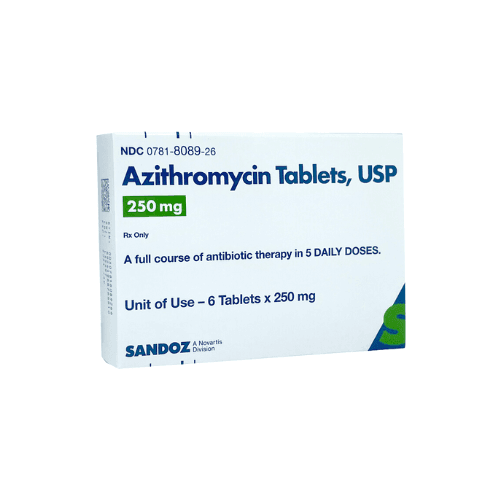
Azithromycin
Azithromycin Uses, Safety, and Handling Overview
Price:
Price range: $28.99 through $152.99
You save


Azithromycin is a prescription macrolide antibiotic used to treat certain bacterial infections. This page reviews azithromycin 250 mg tablets and common dose-pack use patterns, plus key safety and handling points. It is designed to help patients understand what to expect and what to discuss with a clinician.
What Azithromycin Is and How It Works
Azithromycin belongs to the macrolide class of antibiotics. It works by slowing bacterial protein production through binding to the 50S ribosomal subunit, which can stop bacteria from growing and allow the immune system to clear the infection. It does not treat viruses, so it is not expected to help with colds or influenza. Antibiotic use is usually guided by the suspected infection source, local resistance patterns, and a clinician’s assessment.
Our role is limited to prescription referral and, when needed, confirming details with the prescriber. Some patients explore Ships from Canada to US when local access is limited and a valid prescription is available. In practice, azithromycin may be selected for respiratory tract infections, some skin and soft tissue infections, and certain sexually transmitted infections, depending on local guidelines and individual factors.
Azithromycin has a relatively long tissue half-life, which is one reason some labeled regimens use shorter courses than other antibiotics. Even so, completing the prescribed course matters, because stopping early can allow bacteria to persist and can contribute to resistance. For background reading on infection types and stewardship concepts, the site’s browseable hubs may be useful, such as Infectious Disease Category.
Dispensing is handled by licensed third-party pharmacies where permitted. The product’s clinical role can vary by infection and by region, so it is important to rely on the prescriber’s diagnosis rather than using leftover antibiotics or sharing medication with others.
Who It’s For
Azithromycin is prescribed for people with infections that a clinician suspects are caused by susceptible bacteria. Indications vary by country and product labeling, but commonly include certain community-acquired respiratory infections and other bacterial conditions where a macrolide antibiotic is appropriate. In some cases, a clinician may choose it when a penicillin allergy is present, though this depends on the infection type and the person’s history.
This medicine is not for everyone. It should not be used by anyone with a known severe allergy (hypersensitivity) to azithromycin or related macrolide/ketolide antibiotics. Extra caution may be needed for people with a history of liver problems related to prior azithromycin use, or those with conditions that raise the risk of abnormal heart rhythms.
Infections affecting the gastrointestinal tract can have many causes, including viruses and non-infectious conditions. If symptoms include severe dehydration, blood in stool, or high fever, prompt evaluation is important. For condition context, a clinician may also consider differential diagnoses described in hubs like Bacterial Gastrointestinal Infection, while still relying on testing and exam findings.
Dosage and Usage
Azithromycin is taken by mouth as tablets or other oral formulations, depending on what is prescribed. The dose and duration depend on the infection being treated, age, kidney and liver function, and other clinical considerations. Some packs are designed as a “Z-Pak” style regimen, but not every prescription uses that schedule, and not every infection should be treated with the same course length.
For many prescriptions involving azithromycin 250 mg, the tablets are taken once daily, sometimes after a higher first-day dose when a multi-day pack is used. Follow the exact directions on the prescription label, and do not change the number of tablets or the schedule without clinician guidance. If a dose is missed, the safest next step is typically to follow the prescriber or pharmacist’s instructions rather than doubling up.
Why it matters: Incorrect antibiotic schedules can reduce effectiveness and increase side effects.
Administration basics can affect tolerability. This medicine may be taken with or without food, but taking it with a light meal can help some people who get stomach upset. If an antacid is used, ask a pharmacist whether spacing doses is recommended, because some antacid ingredients can affect absorption for certain antibiotics. If symptoms worsen or do not improve as expected, the prescriber may reassess the diagnosis or consider additional testing.
Strengths and Forms
Azithromycin is commonly available as oral tablets, capsules, and oral suspensions; some markets also have extended-release oral formulations and injectable forms used in clinical settings. The most familiar tablet presentations include 250 mg and 500 mg strengths, though availability can vary by manufacturer and jurisdiction. Pharmacies may dispense different tablet appearances depending on the supplier, even when the active ingredient and strength are the same.
Many patients encounter “dose pack” packaging that organizes tablets by day. When a prescriber writes for a Z-Pak style regimen, the medication may be dispensed as a pre-counted pack or as a standard bottle with instructions. If your prescription is specifically for azithromycin 250 mg, confirm whether it is intended as part of a multi-day pack or as a different schedule.
Labels may include USP notation, such as “azithromycin tablets USP,” which refers to United States Pharmacopeia quality standards for the product. If there is any confusion about whether the product is immediate-release, extended-release, or a specific pack configuration, a pharmacist can clarify the form and the intended administration.
Storage and Travel Basics
Store azithromycin at controlled room temperature and keep it dry and protected from excess heat. Keep tablets in the original container with the label intact so the directions and expiration date remain available. As with other prescription medicines, store out of reach of children and pets.
When traveling, carry the medication in your hand luggage when possible and keep it in its labeled packaging. If you use a pill organizer, consider keeping the labeled bottle accessible as a backup for identification. Avoid leaving the medicine in a hot car or in direct sunlight for long periods, as temperature extremes can affect many medications.
Quick tip: If tablets look damaged or discolored, ask a pharmacist before taking them.
For oral suspensions (when prescribed), storage instructions may differ after mixing, including whether refrigeration is required and how long the mixture is stable. Always follow the product-specific label, because instructions can vary by formulation and manufacturer.
Side Effects and Safety
Like many antibiotics, azithromycin can cause gastrointestinal effects. Commonly reported issues include nausea, stomach discomfort, diarrhea, and headache. Mild symptoms are often manageable, but persistent vomiting, inability to keep fluids down, or severe abdominal pain should be evaluated. Antibiotics can also disrupt normal gut bacteria, which is one reason diarrhea can occur during or after treatment.
Serious side effects are less common but important to recognize. Seek urgent care for signs of a severe allergic reaction, such as swelling of the face or throat, trouble breathing, or widespread hives. Severe or bloody diarrhea can be a sign of Clostridioides difficile–associated diarrhea and needs prompt medical attention. Azithromycin can also, in susceptible individuals, contribute to QT prolongation (a heart rhythm change that can raise arrhythmia risk), especially when combined with other QT-prolonging drugs or in people with electrolyte abnormalities.
For some prescriptions that use azithromycin 250 mg in a short course, side effects may appear early and then resolve after the medication is finished. Even so, delayed reactions can occur. If new jaundice (yellowing of skin or eyes), dark urine, or unusual fatigue develops, contact a clinician because these can be warning signs of liver injury.
Drug Interactions and Cautions
Drug interactions depend on the full medication list, including over-the-counter products and supplements. While azithromycin has fewer classic CYP3A4 interactions than some other macrolides, it can still interact in clinically meaningful ways. Tell the prescriber and pharmacist about all medicines you take, especially those used for heart rhythm problems or those known to prolong the QT interval.
Examples of interaction and caution areas include anticoagulants such as warfarin (which may require closer monitoring), certain antiarrhythmics, and medicines that affect electrolytes. Digoxin levels may be affected in some cases, and clinicians may monitor for toxicity signs when the combination is necessary. If you use antacids that contain aluminum or magnesium, ask whether separating doses is recommended for your specific product. Alcohol does not directly “cancel” antibiotic activity, but it can worsen stomach upset and can complicate recovery.
Medical history also matters. People with significant liver disease, known arrhythmia risk, or prior cholestatic jaundice related to macrolide antibiotics may need an alternative. Pregnancy and breastfeeding considerations should be reviewed with a clinician using current labeling and clinical judgment.
Compare With Alternatives
Antibiotic selection is individualized and depends on the infection site, suspected organisms, and local resistance data. In some situations, a clinician may consider doxycycline, amoxicillin-based options, cephalosporins, or other agents instead of azithromycin. The choice also depends on allergies, pregnancy status, kidney and liver function, and potential adverse effects.
Doxycycline is a tetracycline-class antibiotic sometimes used for respiratory infections, acne, and tick-borne illnesses; it has different interaction and precaution considerations, including photosensitivity and pregnancy restrictions. For general product context, see Doxycycline Product. Cephalexin is a cephalosporin commonly used for certain skin infections and urinary tract infections; it may be preferred when a beta-lactam is appropriate and resistance patterns support it, as outlined on Cephalexin Product.
“Z-Pak” convenience can be a factor, but it should not be the deciding reason to choose an antibiotic. Using the narrowest effective antibiotic for the right duration supports better outcomes and helps reduce resistance pressure at the community level.
Pricing and Access
Azithromycin is a prescription medication, so access starts with a valid prescription and clinically appropriate use. If a prescription is routed for processing, information may be verified with the prescriber to confirm details like strength, directions, and quantity. Cross-border fulfilment may be considered depending on eligibility and jurisdiction, and rules can differ by location and product type.
Out-of-pocket factors can vary widely and may include the formulation (tablet versus suspension), pack configuration (such as a 5-day pack), pharmacy dispensing fees, and local supply conditions. Insurance coverage differs by plan, and a cash-pay approach may be used by some patients, including those who are without insurance. Patients sometimes compare pharmacy discount programs and drug-pricing tools, but the most important step is ensuring the prescription matches the intended regimen and indication.
For general site information that may apply to multiple medications, see the Promotions Page. For broader health context that can affect infection risk and recovery, some readers also review related resources like Diabetes Bad Breath, Diabetes And Teeth, and Metformin Comprehensive Guide when managing complex medication lists.
Authoritative Sources
For U.S.-linked prescribing details and safety sections, consult the drug label on: DailyMed azithromycin listings.
For antibiotic use principles and stewardship background, review: CDC antibiotic use guidance.
When permitted, fulfilment may be coordinated through licensed pharmacies using prompt, express, cold-chain shipping based on product requirements.
This content is for informational purposes only and is not a substitute for professional medical advice.
Express Shipping - from $25.00
Shipping with this method takes 3-5 days
Prices:
- Dry-Packed Products $25.00
- Cold-Packed Products $35.00
Standard Shipping - $15.00
Shipping with this method takes 5-10 days
Prices:
- Dry-Packed Products $15.00
- Not available for Cold-Packed products
What are common azithromycin uses?
Azithromycin is an antibiotic used for certain bacterial infections, not viral illnesses. Depending on local guidance and the prescriber’s assessment, it may be used for some respiratory tract infections, some skin and soft tissue infections, and other specific bacterial conditions. The right antibiotic depends on the likely organism, the infection site, and resistance patterns in the community. If testing is done, results can help confirm whether azithromycin is a good match or whether another antibiotic is more appropriate.
Is azithromycin the same as a Z-Pak?
“Z-Pak” is a common nickname for a specific multi-day azithromycin regimen that is often packaged as a dose pack. Azithromycin itself is the medication; a Z-Pak refers to a particular schedule and packaging format. Not every azithromycin prescription uses a dose pack, and not every infection should be treated with the same duration. Always follow the directions on your prescription label, since the regimen can differ by infection type and by clinician preference.
How are azithromycin 250 mg tablets typically taken?
Many regimens that include azithromycin 250 mg tablets are taken once daily, sometimes after a higher first-day dose when a 5-day pack is prescribed. However, schedules vary, and some prescriptions use different day counts or strengths. Take the medication exactly as directed by the prescriber and as written on the label. If stomach upset occurs, taking it with food may help for some people. For missed doses, follow clinician or pharmacist instructions rather than doubling doses.
What side effects should I watch for while taking azithromycin?
Common side effects include nausea, diarrhea, stomach pain, and headache. More serious reactions require urgent evaluation, including trouble breathing, facial or throat swelling, severe rash, or fainting. Contact a clinician if you develop severe or watery diarrhea (especially with fever or blood), because antibiotics can rarely trigger serious colitis. Also report yellowing of the eyes or skin, dark urine, or unusual fatigue, which can be signs of liver problems. If you have heart rhythm risks, discuss QT-related cautions before starting.
What medications can interact with azithromycin?
Interactions depend on your full medication list. Azithromycin can be a concern with drugs that affect heart rhythm (including some antiarrhythmics and other QT-prolonging medicines). It may also require extra monitoring with warfarin in some cases. Antacids containing aluminum or magnesium may affect absorption for certain products, so spacing doses may be recommended. Always provide a complete list of prescription medications, over-the-counter products, and supplements so a pharmacist or prescriber can screen for interactions and advise on timing.
What should I ask my clinician before starting azithromycin?
Useful questions include: What infection is being treated, and is a bacterial cause likely? Is testing needed (for example, a throat swab or culture)? What is the exact schedule and how long should therapy continue? What symptoms would mean the diagnosis should be reassessed? Also mention any history of severe antibiotic reactions, liver disease, heart rhythm issues, or fainting episodes. Share your full medication list, including QT-prolonging drugs, anticoagulants, and supplements, so interactions and monitoring needs can be reviewed.
Does azithromycin treat colds, flu, or COVID-19?
Azithromycin treats bacterial infections and does not treat viruses that cause colds or influenza. For COVID-19, azithromycin is not routinely used as an antiviral treatment, and antibiotics are generally reserved for situations where a bacterial infection is suspected or confirmed. Taking antibiotics when they are not needed can cause side effects and contributes to antibiotic resistance. If you have viral symptoms, a clinician can advise on supportive care, warning signs that need evaluation, and whether any testing is appropriate.
Rewards Program
Earn points on birthdays, product orders, reviews, friend referrals, and more! Enjoy your medication at unparalleled discounts while reaping rewards for every step you take with us.
You can read more about rewards here.
POINT VALUE
How to earn points
- 1Create an account and start earning.
- 2Earn points every time you shop or perform certain actions.
- 3Redeem points for exclusive discounts.
You Might Also Like
Select options
This product has multiple variants. The options may be chosen on the product page
Select options
This product has multiple variants. The options may be chosen on the product page
Select options
This product has multiple variants. The options may be chosen on the product page
Related Articles
Weight Management
Generic Zepbound: Availability, Status, and Options
Key Takeaways Patients and caregivers often search for generic zepbound when they need a clear answer about availability, labeling, and lower-cost access. The term is common online, but it does…
Type 2 Diabetes,
Oral Wegovy Explained: Facts, Risks, and Access Options
The phrase oral wegovy is best understood as a search term, not a settled product name. Most people use it to mean a pill version of semaglutide for weight management,…
Diabetes, General Health,
Glp-1 Drugs Over The Counter: What’s Real And What’s Not
Key Takeaways Prescription GLP-1 medicines are not sold as true OTC drugs. Many “GLP-1” supplements aim to support fullness, not mimic prescriptions. Online “no prescription” offers raise counterfeit and quality…
Diabetes, Type 2
GLP-1 Cost Without Insurance: Compare Cash-Pay Options
Key Takeaways Many people searching for glp-1 cost without insurance are trying to plan for a long-term expense. The total can change based on the drug, the pharmacy, and how…