
Please note: a valid prescription is required for all prescription medication.
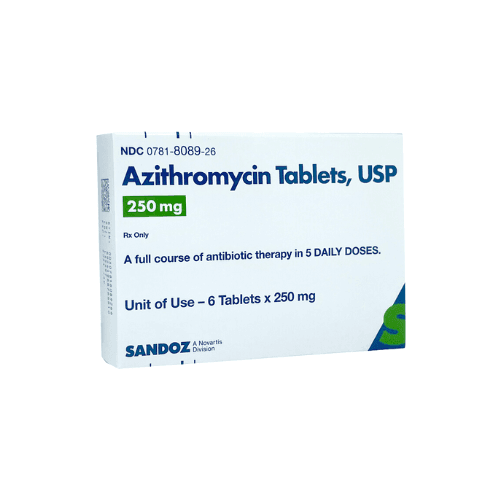
Azithromycin
Buy Azithromycin Online


Azithromycin is a macrolide antibiotic used for certain bacterial infections when the bacteria are expected to be susceptible. You can buy azithromycin online, view the current amount shown for the product, and choose the tablet strength and quantity that match the directions from your clinician. Azithromycin is sold as a generic medicine and is also associated with the brand name Zithromax.
This antibiotic slows or stops susceptible bacteria, but it does not treat viral illnesses such as colds or flu. Match the medicine name, strength, and tablet count carefully because azithromycin 250 mg tablets, azithromycin 500 mg tablets, and Zithromax tablets may represent different order choices. If any label instruction differs from what you expected, ask a pharmacist or clinician before taking the medicine.
Azithromycin Price, Tablet Strength, and Quantity
The azithromycin price is most useful when read beside the exact strength, tablet form, and total quantity. A lower displayed amount may not represent the same treatment supply if the tablet count or milligram strength is different. Compare the medicine name, dose strength, and quantity together before placing the order.
Azithromycin tablets are commonly referenced as 250 mg and 500 mg strengths. The strength tells you how much active ingredient is in each tablet, not how many tablets are needed for a full course. Zithromax 250 mg and generic azithromycin may also appear as related wording, but the product you choose should match the wording and directions provided for your treatment.
If paying without insurance, focus on the out-of-pocket amount shown for the exact strength and quantity. Cash-pay cost can change with tablet count, brand or generic selection, and order handling details. US delivery from Canada may be available as part of the service context, so review the order information and label details before use.
| What to compare | Why it matters |
|---|---|
| Tablet strength | Azithromycin 250 mg and 500 mg tablets contain different amounts per tablet. |
| Total quantity | The number of tablets affects the full supplied treatment amount. |
| Generic or brand name | Zithromax and generic azithromycin may be presented as separate choices. |
| Directions | The label instructions should determine how the tablets are used. |
Quick tip: Match the active ingredient, strength, and tablet count before comparing any displayed cost.
How to Order Azithromycin Online
To order azithromycin online, choose the tablet strength and quantity that match the treatment instructions you were given. Enter the requested order information accurately, including the patient name and contact details, so the order can be processed without avoidable mismatches. We may review order details when information needs clarification.
Keep the directions for use available while selecting the product. Azithromycin is often used in short courses, so small differences in tablet strength or count can matter. Do not change the strength, take extra tablets, or shorten the course to fit a package size unless a clinician specifically tells you to do so.
- Medicine name: confirm azithromycin or Zithromax wording.
- Strength: check whether the tablet is 250 mg, 500 mg, or another displayed strength.
- Quantity: compare the total tablets supplied, not only the package description.
- Directions: follow the written instructions for timing and duration.
- Label: inspect the product label before taking the first dose.
Azithromycin ships from Canada to US customers when the order route supports that service. Delivery details should not replace basic medication checks: confirm the label, tablet strength, and instructions when the package arrives.
What Azithromycin Is Used For
Azithromycin is used to treat certain infections caused by susceptible bacteria. It may be used for some respiratory tract infections, ear infections, skin infections, and sexually transmitted infections. The infection type, patient factors, and local resistance patterns can affect whether azithromycin is an appropriate antibiotic.
Antibiotics should be used only for bacterial infections that require them. Azithromycin will not help viral colds, flu, or most uncomplicated viral sore throats. Using antibiotics when they are not needed can increase side effects and contribute to antibiotic resistance.
For condition-based browsing, related categories include bacterial respiratory infection, ear infection, skin infection, and sexually transmitted infection. These categories can help place azithromycin among other anti-infective medicines, but the diagnosis and treatment plan should come from a qualified clinician.
Generic Azithromycin and Zithromax
Azithromycin is the active ingredient. Zithromax is a brand name associated with the same active ingredient. Depending on the market and supply route, generic azithromycin tablets and Zithromax tablets may be described separately, even when the active ingredient is the same.
Brand and generic choices can affect price, appearance, packaging, and product wording. They should not be treated as interchangeable without checking the strength, quantity, and instructions. If your treatment directions name a brand or specify generic substitution, follow that instruction or ask a pharmacist to clarify.
A Z-Pak is commonly associated with a pack of six 250 mg tablets, but not every azithromycin treatment uses that format. Some regimens may use a different number of tablets or a different tablet strength. The safest comparison is the written treatment instruction, not a familiar package nickname.
Dosage, Course Length, and Timing
Azithromycin dosage varies by infection, age, body weight, liver health, other medical conditions, and interacting medicines. An azithromycin 250 mg tablet is a strength per tablet, not a complete dosing plan. Some treatment courses use more than one tablet at a time, while others use a different schedule.
Take the tablets exactly as directed by the medication label. Symptoms may improve before the infection is fully treated, but stopping early can lead to treatment failure or antibiotic resistance. Do not save leftover tablets for a future illness or share them with another person.
- Missed timing: ask a pharmacist or clinician how to handle a missed dose.
- Vomiting after a dose: get guidance before repeating the tablet.
- Worsening symptoms: seek medical attention if fever, pain, or breathing symptoms worsen.
- New severe symptoms: urgent evaluation is needed for fainting, severe rash, or severe diarrhea.
Food instructions can vary with the exact product and individual tolerance. If stomach upset occurs, a pharmacist can advise whether taking the tablet with food is suitable for your situation.
Side Effects, Warnings, and When to Get Help
Common azithromycin side effects can include nausea, diarrhea, abdominal pain, vomiting, and headache. These effects are often mild, but they can still interfere with hydration or recovery. Contact a clinician if side effects are persistent, severe, or accompanied by worsening infection symptoms.
Serious reactions require prompt medical attention. Seek urgent help for swelling of the face or throat, trouble breathing, widespread rash, blistering skin, fainting, a fast or pounding heartbeat, yellowing of the skin or eyes, dark urine, or severe diarrhea with blood or dehydration. Antibiotic-associated diarrhea can occur during treatment or after the course is finished.
Azithromycin is contraindicated in people with known hypersensitivity to azithromycin, erythromycin, or other macrolide or ketolide antibiotics. It is also contraindicated in people with a history of cholestatic jaundice or liver dysfunction linked to prior azithromycin use. People with myasthenia gravis may experience worsening muscle weakness.
- Heart rhythm: azithromycin can prolong the QT interval in some people.
- Liver safety: serious liver injury has been reported rarely.
- Allergy history: prior macrolide reactions should be discussed before use.
- Severe diarrhea: Clostridioides difficile infection can occur after antibiotics.
- Pregnancy or breastfeeding: individualized clinical guidance may be needed.
Why it matters: Safety history can change whether this antibiotic is appropriate for a specific infection.
Interactions and Monitoring Checks
Azithromycin can interact with other medicines or increase the need for monitoring. Products containing aluminum or magnesium antacids may reduce absorption if taken too close to a dose, depending on the formulation and timing. Ask a pharmacist how to space antacids, supplements, or stomach medicines from azithromycin.
People taking warfarin or other blood thinners may need closer monitoring. Clinicians may also review medicines linked with heart rhythm effects, digoxin, colchicine, nelfinavir, certain statins, and other therapies that could change safety risk. A complete medication list helps identify problems before treatment starts.
Alcohol is not usually the main interaction concern, but it may worsen nausea, diarrhea, dizziness, or dehydration during illness. Follow practical recovery guidance for fluids, meals, rest, and follow-up testing when recommended. If you develop new palpitations, fainting, severe weakness, or signs of liver injury, seek medical care promptly.
Storage, Handling, and Delivery Checks
Azithromycin tablets are usually stored at room temperature in a dry place, away from excess heat and moisture. Keep tablets in the original labeled container when possible. This helps preserve the medicine name, strength, lot details, and directions with the tablets.
Do not store tablets in a bathroom, near a sink, or in an unlabeled container. Keep all antibiotics away from children and pets. If your order includes a different form, such as an oral suspension, follow the storage instructions printed on that label because liquids may have different handling requirements.
- On arrival: verify the medicine name, strength, and tablet count.
- Before use: read the directions and warning labels.
- During travel: keep the labeled container with you.
- After treatment: ask about safe disposal of leftover tablets.
Prompt, express, cold-chain shipping describes a broader logistics capability and does not change azithromycin storage instructions. Inspect the package and label before taking the medicine, and contact a pharmacist if anything does not match the expected treatment.
Related Infection Categories and Treatment Choices
Azithromycin is one antibiotic choice, but it is not the right medicine for every infection. Culture results, allergy history, pregnancy status, heart rhythm risk, local resistance patterns, and the infection site can all affect treatment selection. Do not substitute another antibiotic unless a clinician directs the change.
For broader medication browsing, the infectious disease category includes anti-infective products organized by treatment area. Some bacterial stomach and intestinal infections may be reviewed under bacterial gastrointestinal infection, although azithromycin suitability depends on the exact diagnosis. General educational material is also grouped under infectious disease articles.
If the medicine is for an animal rather than a person, treatment decisions belong with a veterinarian. The pet medications category is separate from human antibiotic use and should not be used to self-treat a person or a pet without professional guidance.
Authoritative Sources
Official labeling and public drug references should be used alongside the directions given for your treatment. Useful references include FDA prescribing information for Zithromax, MedlinePlus azithromycin patient information, and DailyMed azithromycin tablet labeling.
This content is for informational purposes only and is not a substitute for professional medical advice.
QTc Calculator
Calculate corrected QT interval from measured QT and heart rate.
QTc
-
milliseconds
RR interval
-
seconds
These calculations are for education only and do not replace clinical advice, diagnosis, or treatment. Always confirm medical decisions with a qualified healthcare professional.
eGFR Calculator
Estimate kidney filtration using the 2021 CKD-EPI creatinine equation.
eGFR
-
mL/min/1.73 m2
G category
-
requires clinical context
These calculations are for education only and do not replace clinical advice, diagnosis, or treatment. Always confirm medical decisions with a qualified healthcare professional.
Creatinine Clearance Calculator
Estimate creatinine clearance using the Cockcroft-Gault equation.
CrCl
-
mL/min estimate
These calculations are for education only and do not replace clinical advice, diagnosis, or treatment. Always confirm medical decisions with a qualified healthcare professional.
Express Shipping - from $29.99
Shipping with this method takes 3-5 days
Prices:
- Dry-Packed Products $29.99
- Cold-Packed Products $39.99
Standard Shipping - $19.99
Shipping with this method takes 5-10 days
Prices:
- Dry-Packed Products $19.99
- Not available for Cold-Packed products
What is azithromycin used for?
Azithromycin is used for certain bacterial infections when the bacteria are expected to be susceptible. It may be used for some respiratory tract, ear, skin, and sexually transmitted infections, but it does not treat viral colds or flu.
Is azithromycin the same as Zithromax?
Azithromycin is the active ingredient, and Zithromax is a brand name associated with that ingredient. Brand and generic products may differ in packaging, appearance, price, and wording, so match the strength and quantity to the treatment directions.
What is the difference between azithromycin 250 mg and 500 mg tablets?
The numbers describe how much azithromycin is in each tablet. A 250 mg tablet and a 500 mg tablet are different strengths and should not be substituted for each other unless a clinician or pharmacist confirms the directions.
What side effects can azithromycin cause?
Common side effects include nausea, diarrhea, abdominal pain, vomiting, and headache. Seek medical help for severe diarrhea, rash, swelling, breathing trouble, fainting, pounding heartbeat, yellow skin or eyes, or dark urine.
Can azithromycin interact with other medicines?
Yes. Antacids containing aluminum or magnesium, blood thinners such as warfarin, heart rhythm medicines, digoxin, colchicine, nelfinavir, some statins, and other therapies may require timing changes or monitoring. Share a complete medication list with a healthcare professional.
How should azithromycin tablets be stored?
Azithromycin tablets are usually stored at room temperature in a dry place, away from excess heat and moisture. Keep them in the labeled container and away from children and pets.
Rewards Program
Earn points on birthdays, product orders, reviews, friend referrals, and more! Enjoy your medication at unparalleled discounts while reaping rewards for every step you take with us.
You can read more about rewards here.
POINT VALUE
How to earn points
- 1Create an account and start earning.
- 2Earn points every time you shop or perform certain actions.
- 3Redeem points for exclusive discounts.
You Might Also Like
Select options
This product has multiple variants. The options may be chosen on the product page
Select options
This product has multiple variants. The options may be chosen on the product page
Select options
This product has multiple variants. The options may be chosen on the product page
Select options
This product has multiple variants. The options may be chosen on the product page