
Please note: a valid prescription is required for all prescription medication.
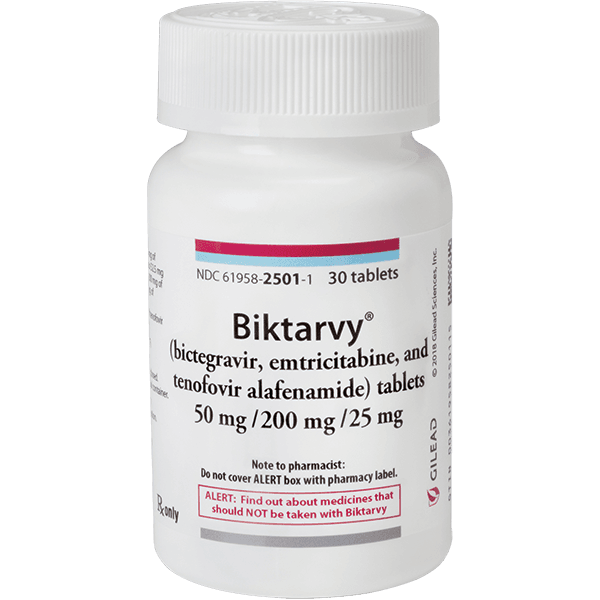
Biktarvy
Buy Biktarvy Online


Biktarvy is a combination HIV-1 medicine supplied as an oral tablet containing bictegravir, emtricitabine, and tenofovir alafenamide. You can buy Biktarvy online, view the current Biktarvy price during ordering, and choose the tablet quantity and strength shown that match your clinician’s directions. This medicine should be used only as part of an HIV care plan guided by a qualified healthcare professional.
Each tablet combines three antiretroviral agents in one daily medicine. Because HIV regimens are specific, the medicine name, active ingredients, tablet strength, and quantity all matter when you are ordering. If you are comparing Biktarvy cost with US delivery from Canada, base the comparison on the exact tablet choice, supply amount, and checkout information shown for your order.
Price, Tablet Quantity, and Dose Selection
The displayed Biktarvy price is the practical starting point for cost comparison. The final amount a customer evaluates may depend on tablet quantity, account information, cash-pay terms, coverage rules outside the store, and any order requirements shown during checkout. Monthly cost estimates can be misleading unless they use the same tablet count and the same directions from your care team.
Biktarvy cost per month may be discussed differently by clinics, insurers, pharmacies, and cash-pay customers. During ordering, focus first on the tablet strength and quantity shown rather than assuming one standard monthly amount. A quantity field usually refers to the number of tablets supplied, not a universal number of months for every person.
If you are reviewing the cost of Biktarvy without insurance, separate the medicine choice from coverage questions. The same Biktarvy tablets may lead to different out-of-pocket amounts depending on personal plan rules, deductible status, or cash-pay arrangements. Biktarvy cost with insurance can also differ from the order total because benefit decisions are handled outside the medicine’s clinical label.
| What to match | Why it matters |
|---|---|
| Medicine name | Biktarvy contains a specific three-drug HIV combination. |
| Active ingredients | Confirm bictegravir, emtricitabine, and tenofovir alafenamide. |
| Tablet strength | Use the strength directed by your HIV care team. |
| Quantity | The tablet count affects supply planning and total cost. |
| Form | This medicine is an oral tablet, not an injection. |
Quick tip: Match the tablet strength and quantity before estimating a monthly cost.
How to Order Biktarvy Online
To order Biktarvy online, choose the tablet strength and quantity that align with your current treatment plan. Keep your clinic contact information, medicine directions, and current medication list available in case any order information needs clarification. We may review order details so the medicine choice, patient information, and delivery address are consistent.
Do not substitute another antiviral medicine because the name, class, or ingredient list looks similar. HIV therapy depends on viral history, prior medicines, resistance considerations, kidney and liver function, and other individual factors. A product used for another virus, or a different HIV combination, is not interchangeable with Biktarvy unless your clinician has made that change.
Before submitting the order, review the patient name, contact details, tablet quantity, and delivery address. Practical errors can cause delays, duplicate supply, or confusion at the next refill. If you are planning US shipping from Canada, also consider how much medicine you have on hand and whether travel or refill timing could affect your routine.
What Biktarvy Is Used For
Biktarvy is used for HIV-1 treatment in eligible adults and certain pediatric patients according to its official labeling. It is described as a complete regimen, meaning it is intended to provide a full HIV-1 treatment plan for appropriate patients without adding other antiretroviral medicines. It is not a treatment for every viral infection, and it is not used as a general antiviral substitute.
HIV-1 care usually includes viral load testing, CD4 cell count monitoring, and ongoing assessment of tolerability. Some people start treatment with a complete regimen, while others may switch after being stable on another regimen when label conditions are met. Those decisions depend on clinical history, prior antiretroviral exposure, resistance testing, hepatitis B status, kidney function, liver health, and other medicines.
The HIV infection category can help separate HIV medicines from treatments for unrelated conditions. Use category browsing to support a medicine choice already discussed with your care team, not to redesign an HIV regimen on your own.
Why it matters: Antiretroviral medicines are chosen for a specific virus, treatment history, and safety profile.
Active Ingredients and How the Tablet Works
Biktarvy combines bictegravir, emtricitabine, and tenofovir alafenamide. Bictegravir is an integrase strand transfer inhibitor, often called an INSTI, which helps block HIV from inserting its genetic material into human cells. Emtricitabine and tenofovir alafenamide are nucleoside or nucleotide reverse transcriptase inhibitors, which help block another step in HIV replication.
Using three antiretroviral agents in one tablet can simplify a treatment routine for people for whom this medicine is appropriate. Simpler does not mean casual use. Taking the tablet consistently matters because missed doses can increase the risk of viral rebound and resistance, especially with HIV medicines.
Searches for Biktarvy dosage or Biktarvy dosage mg should not be used to change how you take the medicine. Dose decisions belong with the healthcare professional who knows your lab results, current medicines, and treatment history. If a strength appears during ordering, match it to the directions you were given rather than choosing based on price alone.
Storage, Handling, and Delivery Basics
Biktarvy storage is generally straightforward for an oral tablet, but moisture and heat still matter. Keep tablets in the original container unless a pharmacist gives different instructions. Store the container tightly closed, away from excess moisture, direct light, and high heat.
Bathrooms, open containers, and prolonged exposure during travel can increase moisture contact. If you use a pill organizer, ask a pharmacist whether that is appropriate for your supply and how to keep the original label available. The labeled container can also help if you need to identify the medicine during travel or a healthcare visit.
For trips, carry enough medicine for the planned period when your care team has authorized it. Keep tablets in carry-on luggage when possible, along with the labeled container. Time-zone changes can disrupt daily routines, so ask your clinic how to keep your dosing schedule consistent when crossing time zones.
Order logistics may include prompt, express, cold-chain shipping language across the store, but this tablet is not handled like a refrigerated biologic. For Biktarvy, protection from moisture, heat, and package damage is the more relevant practical concern. If a package arrives wet, crushed, opened, or exposed to unusual conditions, contact the support channel tied to your order before using the medicine.
Side Effects, Warnings, and When to Get Help
Common side effects reported with Biktarvy can include diarrhea, nausea, headache, fatigue, abnormal dreams, dizziness, and sleep changes. Many side effects are mild, but persistent, worsening, or concerning symptoms should be discussed with a healthcare professional. Do not stop or change HIV treatment without medical guidance.
The official labeling includes a boxed warning about severe acute exacerbations of hepatitis B after stopping medicines containing emtricitabine or tenofovir in people with both HIV-1 and hepatitis B virus. Worsening hepatitis B can be serious, so people with hepatitis B need appropriate monitoring if therapy is changed or discontinued. Tell your care team if you have ever had hepatitis B, liver disease, abnormal liver tests, or symptoms such as yellowing skin or eyes.
Other serious safety concerns may include lactic acidosis, severe liver problems, kidney changes, and immune reconstitution syndrome. Lactic acidosis means a buildup of lactic acid in the blood. Immune reconstitution syndrome can occur when the immune system begins to recover and reacts to hidden or previous infections.
Seek urgent medical care for severe weakness, trouble breathing, severe stomach pain, fainting, yellowing skin or eyes, dark urine, unusual swelling, or symptoms that feel rapidly worse. These warning signs are not a full list. Your clinician or pharmacist can explain which symptoms require immediate attention based on your health history.
Interactions, Contraindications, and Monitoring
Biktarvy is contraindicated with dofetilide and rifampin according to the official prescribing information. Contraindicated means the medicines should not be used together because the risk is unacceptable or the interaction can make therapy unsafe or ineffective. Give your healthcare professional a complete list of prescription drugs, over-the-counter products, vitamins, minerals, and herbal supplements.
Minerals and antacids can also matter. Calcium, iron, magnesium, and aluminum may affect absorption when taken close to certain HIV medicines. Antacids, supplements, seizure medicines, tuberculosis medicines, and herbal products such as St. John’s wort should be discussed before use.
Monitoring helps show whether treatment is working and remains safe. Your care team may follow HIV viral load, CD4 cell count, kidney function, liver tests, hepatitis B status, and other labs based on your history. These tests cannot be replaced by an online order record or by how well you feel day to day.
Pregnancy, breastfeeding, kidney disease, liver disease, hepatitis B, and previous antiretroviral resistance can affect treatment decisions. If any of these apply, speak with the clinician managing your HIV care before making refill, switch, or schedule decisions. Ordering should support the plan already chosen for you.
How This Medicine Differs From Other Antivirals
Biktarvy is an HIV-1 antiretroviral combination, not a general antiviral for any infection. The antivirals category may include medicines for different viruses, different treatment goals, and different safety considerations. A medicine used for herpes viruses, influenza, hepatitis, or another infection is not a substitute for a complete HIV-1 regimen.
Even within HIV therapy, combinations can differ by active ingredients, resistance profile, kidney considerations, liver considerations, food instructions, interaction patterns, and patient groups studied in the label. Similar class names do not make two tablets equivalent. If your care team discusses a switch, write down the exact medicine name and active ingredients before ordering.
Brand and generic naming can also vary by market. What matters for your order is that the medicine, active ingredients, form, strength, and quantity match the treatment plan you were given. Do not rely on abbreviation-style names such as bictegrav emtricit tenofov unless a healthcare professional has confirmed the exact product.
Questions to Ask Before Starting or Refilling
Before starting or refilling Biktarvy, ask which strength and quantity you should have on hand, how to handle missed doses, and what lab monitoring schedule applies to you. Also ask whether any medicines or supplements need timing adjustments. These questions are especially important if your medication list has changed since your last clinic visit.
If you have side effects, difficulty taking a daily tablet, or concerns about Biktarvy medication cost, raise those issues early. Running out, skipping doses, or changing the schedule without guidance can create bigger treatment problems. Your care team may be able to address side effects, adherence barriers, or refill planning before they interrupt therapy.
Ask how long you should continue therapy, when to repeat viral load testing, and what results would prompt a follow-up appointment. HIV treatment is long-term care, and medicine ordering is only one part of that plan. The goal is to keep the correct medicine available while staying aligned with clinical monitoring.
Authoritative Sources
For official labeling, review the Biktarvy prescribing information.
For patient safety context, review the NIH patient drug record for bictegravir, emtricitabine, and tenofovir alafenamide.
This content is for informational purposes only and is not a substitute for professional medical advice.
eGFR Calculator
Estimate kidney filtration using the 2021 CKD-EPI creatinine equation.
eGFR
-
mL/min/1.73 m2
G category
-
requires clinical context
These calculations are for education only and do not replace clinical advice, diagnosis, or treatment. Always confirm medical decisions with a qualified healthcare professional.
Creatinine Clearance Calculator
Estimate creatinine clearance using the Cockcroft-Gault equation.
CrCl
-
mL/min estimate
These calculations are for education only and do not replace clinical advice, diagnosis, or treatment. Always confirm medical decisions with a qualified healthcare professional.
Urine Albumin-Creatinine Ratio Calculator
Calculate urine albumin-creatinine ratio from spot urine albumin and creatinine values.
uACR
-
mg/g
uACR
-
mg/mmol
Category
-
A1/A2/A3 albuminuria range
These calculations are for education only and do not replace clinical advice, diagnosis, or treatment. Always confirm medical decisions with a qualified healthcare professional.
Body Surface Area Calculator
Calculate body surface area from height and weight using the Mosteller equation.
BSA
-
m2, Mosteller equation
These calculations are for education only and do not replace clinical advice, diagnosis, or treatment. Always confirm medical decisions with a qualified healthcare professional.
Ideal & Adjusted Body Weight Calculator
Estimate ideal body weight with the Devine equation and adjusted body weight when actual weight is above the estimate.
Ideal body weight
-
Devine equation
Adjusted body weight
-
IBW + 0.4 x excess weight
Difference from IBW
-
actual minus ideal
These calculations are for education only and do not replace clinical advice, diagnosis, or treatment. Always confirm medical decisions with a qualified healthcare professional.
Express Shipping - from $29.99
Shipping with this method takes 3-5 days
Prices:
- Dry-Packed Products $29.99
- Cold-Packed Products $39.99
Standard Shipping - $19.99
Shipping with this method takes 5-10 days
Prices:
- Dry-Packed Products $19.99
- Not available for Cold-Packed products
What is Biktarvy used for?
Biktarvy is used to treat HIV-1 in eligible adults and certain pediatric patients. It is a complete antiretroviral regimen when used in the patient groups and circumstances described in the official label.
Is Biktarvy an oral tablet?
Yes. Biktarvy is supplied as an oral tablet containing bictegravir, emtricitabine, and tenofovir alafenamide. Match the tablet strength and quantity to the directions from your HIV care team.
What affects Biktarvy cost per month?
Biktarvy cost per month depends on the tablet quantity, the strength chosen, cash-pay or coverage terms, and any order requirements. Use the same quantity and directions when comparing monthly estimates.
What are common side effects of Biktarvy?
Commonly reported side effects can include diarrhea, nausea, headache, fatigue, abnormal dreams, dizziness, and sleep changes. Contact a healthcare professional if symptoms persist, worsen, or feel concerning.
Which medicines should not be taken with Biktarvy?
Biktarvy is contraindicated with dofetilide and rifampin. Other medicines, antacids, mineral supplements, seizure medicines, tuberculosis medicines, and St. John’s wort may also require review by a clinician or pharmacist.
How should Biktarvy be stored?
Keep Biktarvy in its original container, tightly closed, and away from excess moisture, heat, and direct light. Ask a pharmacist before storing tablets long term in an unmarked container or pill organizer.
Rewards Program
Earn points on birthdays, product orders, reviews, friend referrals, and more! Enjoy your medication at unparalleled discounts while reaping rewards for every step you take with us.
You can read more about rewards here.
POINT VALUE
How to earn points
- 1Create an account and start earning.
- 2Earn points every time you shop or perform certain actions.
- 3Redeem points for exclusive discounts.
You Might Also Like
Select options
This product has multiple variants. The options may be chosen on the product page
Select options
This product has multiple variants. The options may be chosen on the product page
Select options
This product has multiple variants. The options may be chosen on the product page