
Please note: a valid prescription is required for all prescription medication.
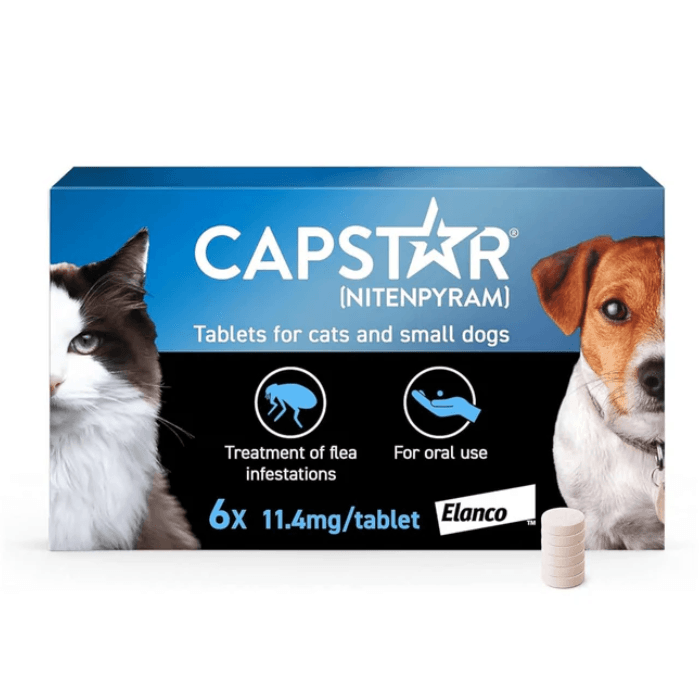
Capstar for Cat/Dog
Capstar for Cat/Dog Uses, Dosage Basics, and Safety
Price:
$77.99
You save


Capstar for Cat/Dog is an oral flea treatment for cats and dogs that targets adult fleas. It is used for short-term relief when a pet has visible fleas or needs rapid knockdown before longer-acting control. This page summarizes how it works, label-level dosing basics, safety considerations, and practical handling.
What Capstar for Cat/Dog Is and How It Works
This medicine contains nitenpyram, a neonicotinoid insecticide that affects insect nerve signaling. After a treated pet’s blood meal is taken, adult fleas are exposed and can be killed quickly. The effect is short-lived, which is why nitenpyram is commonly discussed as a “rapid relief” option rather than a month-long preventive. When a prescription is required, the platform helps confirm details with the prescriber as part of a referral process.
Some patients explore Ships from Canada to US when coordinating household supplies, including pet medications, where permitted. Capstar does not treat flea eggs or larvae, so re-infestation can occur if the home environment or other animals remain untreated. For a broader view of related items on the site, you can browse the Pet Medications hub and the Flea Infestation Cats Dogs hub for general context.
Because fleas can keep cycling through carpets, bedding, and outdoor areas, short-acting adult flea kill is often paired with longer-duration strategies. That may include environmental cleaning and a veterinarian-recommended preventive. If a pet has significant skin irritation, secondary infection, or hair loss, it may also need evaluation beyond flea control alone.
Who It’s For
This treatment is generally intended for cats and dogs with active adult flea infestations when fast reduction of live fleas is the main goal. It may be considered when fleas are seen on the coat, when a pet is intensely scratching, or before grooming or bathing in a heavily infested situation. It can also be used as part of a plan to reduce flea transfer between animals in multi-pet homes.
Not every pet is a candidate for nitenpyram. Product labeling typically includes minimum age and weight limits, and these should be checked carefully before use. Pets that are very young, underweight, acutely ill, or recovering from surgery may require a veterinarian’s input before any insecticide is used. If a pet has had a prior reaction to flea medications, or has a history of severe allergies, discussing risks and alternatives with a veterinarian is important.
Flea exposure can also be a marker of broader issues, including untreated environment, contact with wildlife, or gaps in prevention. If a pet’s itching continues after fleas are controlled, the cause may be flea allergy dermatitis, mites, skin infection, or another condition that needs a different approach.
Dosage and Usage
Capstar for Cat/Dog is taken by mouth as a tablet, using the strength selected for the pet’s species and body weight range per the label. It is commonly given as a single dose when adult fleas are present, and labeling may allow repeat dosing at defined intervals when re-infestation occurs. The safest approach is to follow the package directions exactly and use veterinary guidance if you are unsure which tablet is appropriate.
The tablet can be given with or without food, depending on label instructions and the pet’s tolerance. Some pets may drool or resist tablets, so placing it behind the tongue and ensuring it is swallowed can help. If a pet vomits soon after dosing, do not automatically re-dose; contacting a veterinarian is the safer next step because the decision depends on timing, symptoms, and the pet’s overall condition.
Quick tip: Use a recent weight from a scale or clinic record before selecting a tablet.
It is also useful to plan beyond the first day. Short-acting adult flea control reduces the visible flea burden, but it does not replace environmental measures. Washing bedding, vacuuming regularly, and treating all animals in the home (as directed by a veterinarian) can reduce the chance of fleas returning soon after the dose.
Strengths and Forms
This product is commonly available as oral tablets in more than one strength, designed for different size ranges of cats and dogs. Availability can vary by country, distributor, and pharmacy, and packaging may come in multi-tablet cards intended for repeated short-term use during an outbreak.
The strengths most commonly referenced for nitenpyram tablets include 11.4 mg and 57 mg. The correct selection depends on the labeled species and the pet’s body weight range. Tablets are not interchangeable across pets of different sizes, and splitting tablets is generally not recommended unless the label explicitly allows it.
| Form | Active ingredient | Common strengths |
|---|---|---|
| Oral tablet | Nitenpyram | 11.4 mg, 57 mg |
If you are comparing options, it may help to distinguish between short-acting “adult flea knockdown” tablets and longer-acting monthly preventives (oral or topical). That difference affects expectations for how long flea control lasts and how often follow-up prevention is needed.
Storage and Travel Basics
Store tablets at room temperature in the original packaging to protect them from moisture and light. Keep them out of reach of children and pets, since accidental ingestion can lead to adverse effects. Avoid storing flea products near food prep areas, and wash hands after handling tablets.
For travel, carry the blister pack or labeled container rather than loose tablets in an organizer, so the product name, strength, and directions remain available. This also helps if a veterinarian needs to confirm what was given. General medication packing principles are discussed in site resources like How To Travel With Zepbound (human-health focused, but useful for handling basics such as labeling and temperature exposure).
Do not leave medications in a hot car or in direct sun. Heat and humidity can damage many tablets and can also increase the risk of accidental access by pets. If the packaging looks damaged or tablets appear altered, it is safer not to use them and to seek replacement guidance.
Side Effects and Safety
Most pets tolerate nitenpyram, but side effects can happen. Reported reactions may include temporary restlessness, panting, vocalization, itching, drooling, vomiting, diarrhea, or reduced appetite. In some cases, increased scratching is seen shortly after dosing as fleas become more active before they die and as irritated skin reacts.
Why it matters: Flea die-off can look like worsening itch, even when the medicine is working.
More serious reactions are uncommon but require prompt veterinary attention. These can include facial swelling, hives, severe lethargy, collapse, trouble breathing, persistent vomiting, or neurologic signs such as tremors. If a pet has known seizure disorders or significant chronic illness, a veterinarian may want to weigh risks and benefits before choosing any insecticide.
Capstar for Cat/Dog should be used exactly as labeled, and it should not be used as a substitute for veterinary assessment when a pet is unwell. If skin lesions, hot spots, or ear inflammation are present, fleas may be only one part of the problem. For general guidance on tracking symptoms and communicating side effects clearly, see Common Toujeo Side Effects (a human-health article that still models helpful symptom documentation).
Drug Interactions and Cautions
Drug interaction data for nitenpyram in pets is more limited than for many long-term medications, but caution is still appropriate. Always tell the veterinarian about other products a pet receives, including topical flea/tick treatments, oral preventives, heartworm medications, shampoos, supplements, and any recent sedatives or anesthesia. Using multiple insecticides without a plan can increase the risk of side effects.
If a household uses more than one pest-control approach, clarify timing and product classes to avoid duplication. This is especially important when switching from one flea medication to another or when combining a short-acting tablet with a longer-acting preventive. For a general overview of how different medication classes can work and why timing matters, see Common Diabetes Medications (human-health focused, but relevant to the concept of drug classes and overlapping effects).
Also use caution with species-specific products. Dog-only topical insecticides can be dangerous to cats. If there is any uncertainty about what was applied or given recently, a veterinarian or poison control resource can help assess risk and next steps.
Compare With Alternatives
Short-acting oral nitenpyram is one tool for adult flea control, but it is not the only approach. Alternatives include topical “spot-on” adulticides, longer-duration oral flea/tick preventives, and flea collars. Each option has a different onset, duration, and safety profile, and many require a consistent schedule to maintain control.
Environmental control is often an essential companion to any on-pet treatment. Vacuuming, washing bedding, and targeted home treatments that include an insect growth regulator (IGR) can help interrupt the flea life cycle. In heavily infested settings, a veterinarian may recommend treating all pets in the household and addressing indoor and outdoor flea reservoirs at the same time.
Counterfeit or unverified products can create real safety risks, especially with pesticides. If packaging appears altered, lacks clear labeling, or has unusual tablet appearance, it is safer to pause and verify. The site’s general safety resource Illegal Weight Loss Pills is human-health oriented, but it outlines practical checks that can also apply to pet products (such as label consistency and source verification).
Capstar for Cat/Dog is typically considered when speed matters and when a longer-acting preventive is being started or restarted. A veterinarian can help match the approach to the pet’s health history and exposure risk.
Pricing and Access
Access can depend on local rules, the specific package size, and whether a prescription is required in your jurisdiction. Some flea medicines are sold over the counter in some regions, while others may require veterinary authorization. Pet insurance reimbursement varies by plan, and human prescription insurance generally does not apply to veterinary products.
If documentation is needed, CanadianInsulin.com acts as a referral platform and, where permitted, dispensing is handled by licensed third-party pharmacies. For people paying without insurance, out-of-pocket costs can also vary based on brand versus generic nitenpyram and the number of tablets per package. A practical approach is to confirm the labeled strength, the expected number of doses needed during an outbreak, and whether additional prevention is being added for longer coverage.
Some people also look for general budgeting ideas that translate across medication types. The article Cut Insulin Costs focuses on human diabetes therapy, but it can be useful for learning how to compare cash-pay options, keep records, and avoid interruptions. For non-time-limited updates that may apply to sitewide access programs, see Promotions Information.
Before starting any flea plan, it helps to confirm the broader strategy: treating all pets in the home, cleaning the environment, and choosing a preventive that matches exposure risk. A veterinarian can also advise whether persistent itching should be evaluated for allergy or infection rather than repeated insecticide dosing alone.
Authoritative Sources
For labeling, indications, and safety details, consult these references.
FDA Animal Drugs database entry: Animal Drugs at FDA.
Manufacturer product information and directions: Capstar Product Information.
Veterinary background on flea life cycle control: Merck Veterinary Manual.
When temperature-sensitive items are included, parcels may be prepared using prompt, express, cold-chain shipping according to handling requirements.
This content is for informational purposes only and is not a substitute for professional medical advice.
Express Shipping - from $25.00
Shipping with this method takes 3-5 days
Prices:
- Dry-Packed Products $25.00
- Cold-Packed Products $35.00
Standard Shipping - $15.00
Shipping with this method takes 5-10 days
Prices:
- Dry-Packed Products $15.00
- Not available for Cold-Packed products
How fast does Capstar for Cat/Dog start working on fleas?
Capstar contains nitenpyram, which is designed to kill adult fleas quickly after a dose is given. Many product references describe flea kill beginning within about 30 minutes, though the exact timing can vary by pet and flea burden. You may still see scratching shortly after dosing, since irritated skin and dying fleas can briefly increase activity. If a pet seems very uncomfortable, develops vomiting, or has swelling or breathing changes, contact a veterinarian promptly.
How long does one dose of Capstar last?
Nitenpyram is short acting. A single dose is generally intended to reduce adult fleas for about a day rather than provide month-long prevention. Because flea eggs and larvae in the environment can mature later, fleas can reappear even after a successful initial dose. For that reason, many flea plans include both immediate adult flea control and a longer-duration preventive, plus home cleaning steps like washing bedding and vacuuming.
Can Capstar be used with other flea and tick preventives?
In some cases, veterinarians may recommend using short-acting adult flea control alongside a longer-acting preventive, but combinations should be planned. Different products can contain different insecticides, and overlapping therapy can raise the chance of side effects if duplicated unintentionally. Before combining treatments, share a complete list of what your pet receives, including topicals, collars, shampoos, and supplements. A veterinarian can advise on spacing, compatibility, and what symptoms to monitor after dosing.
What side effects should I monitor for after giving a dose?
Commonly reported reactions include temporary restlessness, panting, drooling, vomiting, diarrhea, or reduced appetite. Increased scratching can also occur, especially when flea allergy dermatitis is present. Monitor your pet closely for the first several hours after a first dose, and keep note of timing and symptoms. Seek veterinary help urgently for signs of a severe reaction such as facial swelling, hives, collapse, tremors, or trouble breathing. Bring the package so the clinician can confirm strength and ingredients.
What should I ask my veterinarian before using nitenpyram?
Helpful questions include whether your pet meets the labeled minimum age and weight, which tablet strength matches your pet’s current weight, and whether any current medications could overlap with flea treatments. Ask what to do if vomiting occurs after dosing, and whether your pet’s itching could reflect allergy, mites, or skin infection rather than fleas alone. It can also help to discuss a complete flea plan, including treating other pets and addressing the home environment to prevent repeat infestations.
Does Capstar treat ticks, flea eggs, or larvae?
Capstar is intended to kill adult fleas; it is not designed to provide comprehensive parasite coverage for ticks or to eliminate flea eggs and larvae in the home. Because eggs and larvae can mature into new adult fleas, re-infestation can occur without environmental control and longer-duration prevention. If tick exposure is a concern, or if a pet has ongoing itching after adult fleas are reduced, a veterinarian can recommend additional evaluation and a preventive that matches regional parasite risks.
Rewards Program
Earn points on birthdays, product orders, reviews, friend referrals, and more! Enjoy your medication at unparalleled discounts while reaping rewards for every step you take with us.
You can read more about rewards here.
POINT VALUE
How to earn points
- 1Create an account and start earning.
- 2Earn points every time you shop or perform certain actions.
- 3Redeem points for exclusive discounts.
You Might Also Like
Select options
This product has multiple variants. The options may be chosen on the product page
Select options
This product has multiple variants. The options may be chosen on the product page
Timolol Maleate Ophthalmic Solution
Price range: $38.99 through $42.99
You save
- In Stock
- Express Shipping
Select options
This product has multiple variants. The options may be chosen on the product page
Select options
This product has multiple variants. The options may be chosen on the product page
Related Articles
Weight Management
Generic Zepbound: Availability, Status, and Options
Key Takeaways Patients and caregivers often search for generic zepbound when they need a clear answer about availability, labeling, and lower-cost access. The term is common online, but it does…
Type 2 Diabetes,
Oral Wegovy Explained: Facts, Risks, and Access Options
The phrase oral wegovy is best understood as a search term, not a settled product name. Most people use it to mean a pill version of semaglutide for weight management,…
Diabetes, General Health,
Glp-1 Drugs Over The Counter: What’s Real And What’s Not
Key Takeaways Prescription GLP-1 medicines are not sold as true OTC drugs. Many “GLP-1” supplements aim to support fullness, not mimic prescriptions. Online “no prescription” offers raise counterfeit and quality…
Diabetes, Type 2
GLP-1 Cost Without Insurance: Compare Cash-Pay Options
Key Takeaways Many people searching for glp-1 cost without insurance are trying to plan for a long-term expense. The total can change based on the drug, the pharmacy, and how…