
Please note: a valid prescription is required for all prescription medication.
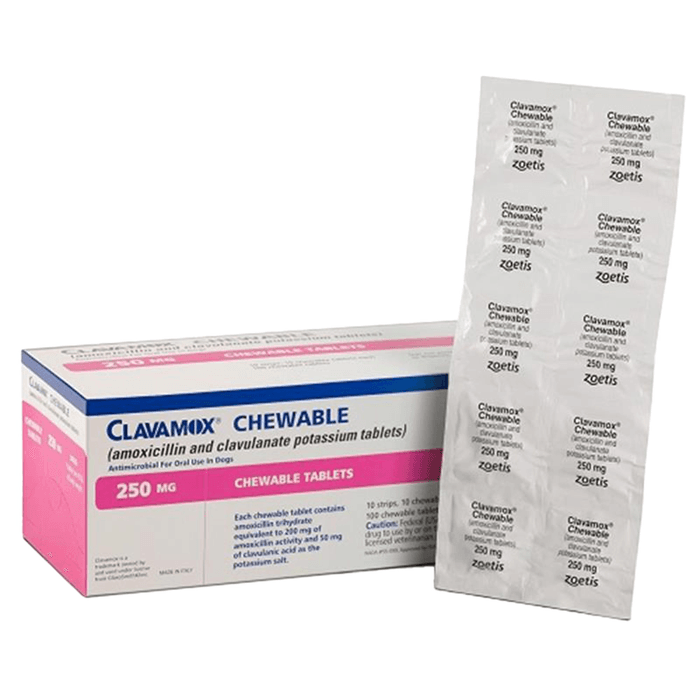
Clavamox
Buy Clavamox Online


Clavamox is an oral veterinary antibiotic containing amoxicillin and clavulanate potassium for susceptible bacterial infections in dogs and cats. It can be bought online in the form and strength shown during ordering, with the quantity matched to your veterinarian’s written directions. Clavamox for dogs is commonly used when a clinician has identified an infection that is expected to respond to this antibiotic combination.
The medicine may be supplied as tablets, chewable tablets, or oral drops, depending on the product configuration available at the time of purchase. Strength, form, total count, liquid volume, flavoring, and storage instructions can affect which package is appropriate for your pet. Choose by the clinic’s directions first, then use price and quantity to understand the full course cost.
Clavamox Price, Form, and Strength Selection
The current Clavamox price is most useful when read alongside the form, strength, and total quantity. A package of tablets, a Clavamox Chew product, and a bottle of oral drops can differ in total contents and handling needs. Clavamox for dogs price comparisons should therefore focus on the exact strength and amount needed for the treatment course, not the product name alone.
Many owners search for Clavamox 62.5 mg for dogs, Clavamox 125 mg for dogs, Clavamox 250 mg for dogs, or Clavamox 375 mg for dogs. These numbers describe tablet strength labels, not dosing advice. A higher-strength tablet is not automatically better value if it cannot be used to match the amount directed for your pet.
Liquid forms need an additional quantity check. Clavamox drops for dogs, Clavamox liquid for dogs, and Clavamox suspension for dogs all refer to oral liquid administration, where bottle size, mixing status, refrigeration instructions, and discard timing may matter. If the clinic wrote directions for a liquid, make sure the bottle volume and measuring method can support the full course.
Quick tip: Match form, strength, and total quantity before using unit price to judge value.
How to Buy Clavamox for Dogs Online
Start with the exact form named in the veterinary directions. If tablets were written, choose tablets rather than oral drops. If an oral suspension was directed, review the bottle size, whether the product requires mixing, and the storage instructions that apply after preparation.
- Match the form to the clinic’s written directions.
- Choose the strength shown for that form.
- Review total tablets, chews, or liquid volume.
- Confirm the pet species, weight, schedule, and duration.
- Keep the medicine label and clinic directions together.
Dog antibiotics such as Clavamox should be used only for the animal named in the directions. Do not share leftover canine Clavamox with another pet, even when symptoms look similar. Skin wounds, urinary signs, dental problems, and ear irritation can have different causes that require different treatment decisions.
For customers arranging US delivery from Canada, use the medicine label, form, strength, and quantity to avoid ordering a mismatched package. Some products may require different handling during transport, especially oral liquids after preparation. Do not start dosing until the package label and the clinic’s directions agree.
Forms, Ingredients, and Quantity Checks
Clavamox is the brand name for a combination of amoxicillin and clavulanate potassium. Amoxicillin is a penicillin-type antibiotic. Clavulanate helps protect amoxicillin from certain bacterial enzymes, so the combination may work against some bacteria that could resist amoxicillin alone.
That ingredient distinction answers a common question: Clavamox is not just amoxicillin. It contains amoxicillin plus clavulanate potassium. The active ingredient name may also be written as amoxicillin clavulanate potassium for dogs when a generic-style ingredient description is used.
Solid forms are often described by owners as Clavamox tablets for dogs, Clavamox pills for dogs, Clavamox chewable for dogs, or Clavamox Chew. Chewable tablets may be easier for some pets to take, but they still need the correct strength and count. Flavored products should be stored securely because pets may treat them like food.
| Form to review | What to match | Practical reason |
|---|---|---|
| Tablets | Strength and tablet count | The strength must fit the directed amount and schedule. |
| Chewable tablets | Strength, flavoring, and quantity | Chewables may help administration but remain dose-specific. |
| Oral drops | Bottle volume, mixing status, and measuring method | Liquid dosing depends on accurate measurement and storage. |
| Full course amount | Total units or total mL | A complete course may require more than one package. |
Why it matters: Package size is not the same thing as one dose.
What Clavamox Treats in Dogs and Cats
Veterinarians use Clavamox for susceptible bacterial infections in dogs and cats. Labeled and commonly referenced uses include skin and soft-tissue infections such as wounds, abscesses, and dermatitis, as well as periodontal infections and certain urinary tract infections. The infection type, bacterial suspicion, pet history, and exam findings guide whether this medicine is appropriate.
Clavamox dog antibiotic therapy does not treat every cause of redness, swelling, discharge, or urinary discomfort. It does not treat viruses, parasites, bladder stones, allergies, pain, or yeast overgrowth directly. If symptoms return soon after a previous course, the pet may need reassessment or culture testing rather than another unsupervised course.
Ear symptoms are a common reason owners ask about antibiotics. Head shaking, odor, ear redness, and discharge may involve bacteria, yeast, allergies, mites, or foreign material. A veterinarian may choose a systemic antibiotic, an ear product, cleaning, testing, or a different plan depending on the ear exam.
The Bacterial Infection collection can help you browse infection-related treatment areas. Product choice still depends on the pet, diagnosis, organism susceptibility, and written directions from the clinic.
Dosing Details to Match Veterinary Directions
Clavamox for dogs dosage is weight-based and individualized by the veterinarian. Do not estimate a dose from another pet’s treatment, the largest tablet strength, or an online example. The same medicine can be used differently depending on species, body weight, infection site, severity, and planned duration.
Directions usually include an amount, frequency, and number of days. Some pets tolerate antibiotics better with a small meal, but the medicine label and clinic directions should guide administration. If a dose is missed, ask the veterinary clinic or a pharmacist how to handle the next dose instead of doubling the amount.
For cats, administration needs can differ from dogs, and oral drops may be chosen when tablets are difficult. Measure liquid medicine with the supplied device or a dosing syringe recommended by the veterinary team. Household spoons are not reliable for oral suspensions and can lead to underdosing or overdosing.
Generic Clavamox for dogs may be discussed as amoxicillin and clavulanate potassium. Ingredient matching alone is not enough for safe substitution. The veterinarian should approve the ingredient, form, strength, and directions before a different product is used.
Storage, Handling, and Arrival Checks
Storage instructions depend on the form. Tablets and chewable tablets are generally kept in a closed container at room temperature, away from excess heat and moisture. Keep all pet medicines out of reach of children and animals, especially flavored chewables that may be mistaken for treats.
Oral drops need closer handling. Some liquid presentations are supplied as powder for mixing, and the prepared suspension may require refrigeration and a discard date. Shake the bottle as directed, use the recommended measuring device, and do not use the liquid after the labeled in-use period has passed.
When the medicine arrives, compare the container label with the veterinary directions before giving the first dose. Confirm the form, strength, pet name, quantity, and storage instructions. If the package is damaged, the liquid appearance seems unusual, or temperature-sensitive handling appears inconsistent with the label, contact the appropriate pharmacy support contact or veterinary clinic before use.
During travel, keep Clavamox in its original container with the label attached. Bring enough medicine for the planned course, but avoid leaving it in a hot vehicle or direct sunlight. If a pet vomits shortly after a dose, ask the clinic before repeating the dose.
Side Effects, Warnings, and Monitoring
Common side effects of Clavamox may include vomiting, diarrhea, reduced appetite, drooling, or stool changes. Some stomach upset can occur with antibiotics. Persistent vomiting, bloody diarrhea, severe lethargy, dehydration signs, or refusal to eat should be reported promptly to the veterinarian.
Clavamox can be hard on some dogs’ stomachs, especially when illness, appetite changes, or other medicines are already present. Giving the medicine exactly as directed and following any food instructions may help tolerability. Do not start anti-diarrhea products, probiotics, or leftover medicines without veterinary input, because some products are not suitable for every pet.
Allergy history is important with penicillin-type antibiotics. Tell the veterinarian if your pet has reacted to penicillins, cephalosporins, or similar beta-lactam antibiotics. Facial swelling, hives, severe itching, collapse, or trouble breathing can signal a serious allergic reaction and require urgent veterinary care.
Provide the clinic with a current list of medicines, supplements, recent injections, and chronic conditions. Other antibiotics, immune-suppressing medicines, kidney-related treatments, and gastrointestinal products may influence the plan. Pregnancy, nursing, seizure history, kidney disease, liver disease, or a history of severe digestive reactions may also affect monitoring.
- Watch appetite, stool quality, energy, and hydration.
- Report worsening infection signs or new symptoms.
- Keep the full course aligned with the written duration.
- Do not share tablets, chews, or drops between pets.
- Seek urgent care for facial swelling or breathing trouble.
Sleepiness, Response Time, and Follow-Up
Owners often ask whether Clavamox will make a dog sleepy. Sleepiness is not usually the main expected effect of this antibiotic, but the infection itself, fever, pain, dehydration, reduced appetite, or stomach upset can make a pet seem tired. Marked lethargy, weakness, collapse, or major behavior change should be reported rather than dismissed as normal.
Improvement timing depends on the infection type and the pet’s overall health. Some signs may begin to improve during the directed course, while deeper infections, wounds, dental disease, or urinary problems may need rechecks. If symptoms worsen, new signs appear, or the clinic requested follow-up testing, do not extend or restart the medicine on your own.
Track practical details while your pet is taking Clavamox. Note each dose, appetite, vomiting, stool changes, water intake, urination, wound appearance, mouth pain, or ear symptoms if relevant. This information helps the veterinary team decide whether the medicine is working as expected or whether another evaluation is needed.
Related Pet and Infection Categories
If you are comparing Clavamox with other veterinary medicines, the Pet Medications category is the most direct place to browse animal-health products. It can help organize choices by pet-focused treatment areas while keeping the final decision tied to the clinic’s diagnosis.
For broader infection-related product browsing, the Infectious Disease category groups medicines used in infection care. The Infectious Disease articles category can also help with background reading about infection topics, but it should not replace veterinary assessment.
A different antibiotic may be needed when bacteria are resistant, the infection is deep, the pet has a drug reaction history, or the problem is not bacterial. Do not switch from Clavamox to another antibiotic based only on price, tablet size, or leftover supply. The safest product choice is the one that matches the animal, organism suspicion, and written treatment plan.
Authoritative Sources
Official manufacturer prescribing information for chewable tablets: Clavamox Chewable Prescribing Information.
Pet-owner product information from the manufacturer: Zoetis Clavamox Product Information.
Use these sources to confirm label-level details such as active ingredients, indicated uses, and safety cautions. Your veterinarian’s directions remain the practical source for your pet’s amount, schedule, duration, and follow-up plan.
This content is for informational purposes only and is not a substitute for professional medical advice.
Express Shipping - from $29.99
Shipping with this method takes 3-5 days
Prices:
- Dry-Packed Products $29.99
- Cold-Packed Products $39.99
Standard Shipping - $19.99
Shipping with this method takes 5-10 days
Prices:
- Dry-Packed Products $19.99
- Not available for Cold-Packed products
Is Clavamox just amoxicillin?
No. Clavamox contains amoxicillin plus clavulanate potassium. Clavulanate helps protect amoxicillin from certain bacterial enzymes, so the combination is not the same as plain amoxicillin.
What are the common side effects of Clavamox in dogs?
Common side effects may include vomiting, diarrhea, reduced appetite, drooling, or stool changes. Contact the veterinarian if symptoms are severe, persistent, bloody, or accompanied by marked lethargy or dehydration.
Is Clavamox hard on a dog’s stomach?
Some dogs develop stomach upset while taking antibiotics, including Clavamox. Follow the clinic’s directions about food, and ask before adding probiotics, anti-diarrhea products, or other medicines.
Will Clavamox make my dog sleepy?
Sleepiness is not usually the main expected effect, but infection, pain, fever, dehydration, or digestive upset can make a dog seem tired. Report marked lethargy, weakness, collapse, or major behavior changes.
What is Clavamox used for in dogs and cats?
Veterinarians use Clavamox for susceptible bacterial infections, including certain skin and soft-tissue infections, wounds, abscesses, periodontal infections, and some urinary tract infections. It does not treat viral, parasitic, allergic, or yeast problems directly.
Can I use leftover Clavamox for another pet?
No. Clavamox should be used only for the pet and condition it was directed for. Similar symptoms can have different causes, and using leftover antibiotics can delay proper care or contribute to resistance.
Rewards Program
Earn points on birthdays, product orders, reviews, friend referrals, and more! Enjoy your medication at unparalleled discounts while reaping rewards for every step you take with us.
You can read more about rewards here.
POINT VALUE
How to earn points
- 1Create an account and start earning.
- 2Earn points every time you shop or perform certain actions.
- 3Redeem points for exclusive discounts.
You Might Also Like
Select options
This product has multiple variants. The options may be chosen on the product page
Select options
This product has multiple variants. The options may be chosen on the product page
Select options
This product has multiple variants. The options may be chosen on the product page
Select options
This product has multiple variants. The options may be chosen on the product page