
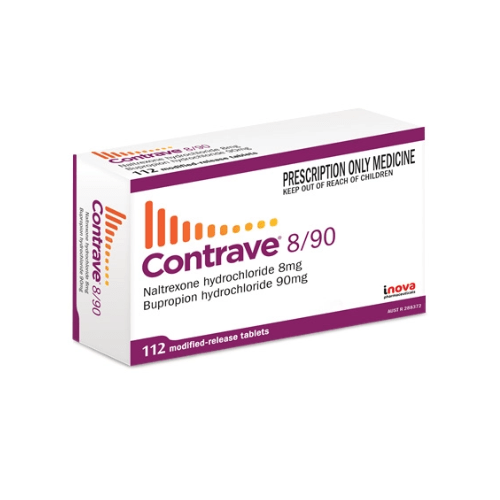
A valid prescription is required for this medication.
Compare prices. See your savings.
 US comparison
 Canadian comparison
Buy Contrave ER Tablets Online
Rx Prescription required Fast, secure shipping
Health tools
Research and education tools. They do not replace clinical advice, diagnosis, or treatment.
BMI Calculator
Estimate adult body mass index from height and weight, with metric and imperial units.
These calculations are for education only and do not replace clinical advice, diagnosis, or treatment. Always confirm medical decisions with a qualified healthcare professional.
Calorie & TDEE Calculator
Estimate resting energy needs and daily calorie range from age, sex, body size, and activity level.
Hold Ctrl or Cmd to select more than one calculator.
These calculations are for education only and do not replace clinical advice, diagnosis, or treatment. Always confirm medical decisions with a qualified healthcare professional.
Macro Calculator
Split a daily calorie target into protein, carbohydrate, and fat ranges using common nutrition planning ratios.
These calculations are for education only and do not replace clinical advice, diagnosis, or treatment. Always confirm medical decisions with a qualified healthcare professional.
Weight Loss Timeline Calculator
Estimate a simple timeline from current weight, goal weight, and average daily calorie deficit.
These calculations are for education only and do not replace clinical advice, diagnosis, or treatment. Always confirm medical decisions with a qualified healthcare professional.
Weight-Loss Progress Calculator
Track percentage body-weight change and progress toward a target weight.
These calculations are for education only and do not replace clinical advice, diagnosis, or treatment. Always confirm medical decisions with a qualified healthcare professional.
About Contrave ER
Contrave ER is an extended-release oral tablet that contains naltrexone 8 mg and bupropion 90 mg in each tablet. You can buy Contrave online, view the current tablet price, and match the 8/90 mg strength and quantity to the directions provided for your treatment. Contrave ER 8 90mg tablets are used as part of a chronic weight management plan in certain adults.
This medicine is taken by mouth and is not an injectable weight management treatment. It combines two active ingredients that affect appetite and reward pathways in the brain, and it is intended to be used with a reduced-calorie diet and increased physical activity. If you are arranging US delivery from Canada, keep the medicine name, strength, quantity, and contact details consistent throughout checkout.
Contrave ER 8/90 mg Tablet Price and Quantity
The current Contrave price depends on the tablet quantity and the order information shown at checkout. The 8/90 mg strength means each extended-release tablet contains naltrexone 8 mg and bupropion 90 mg. A 120-tablet quantity should be considered separately from any smaller quantity, because the total cost and days supplied may differ.
When comparing Contrave cost from Canada, focus first on the active ingredients, strength, tablet form, and quantity. Brand name alone is not enough to confirm that the medicine matches your directions. If you are comparing Contrave without insurance or using a cash-pay approach, keep the price decision separate from dose or schedule decisions.
Quick tip: Match the 8/90 mg strength and tablet count before entering payment or delivery details.
| Product feature | What to verify |
|---|---|
| Form | Extended-release oral tablet. |
| Strength | Naltrexone 8 mg and bupropion 90 mg per tablet. |
| Quantity | Confirm whether the order is for Contrave 120 tablets or another quantity. |
| Price | Use the amount shown for the exact strength and quantity being purchased. |
| Substitution | Do not assume separate naltrexone and bupropion products are interchangeable with Contrave ER. |
How to Order Contrave Online
To order Contrave online, choose the Contrave ER tablet strength and quantity that match your written directions. Review the medicine name, active ingredients, strength, tablet count, delivery address, and contact information before completing checkout. Accuracy matters because extended-release tablets should not be treated like immediate-release tablets or separate single-ingredient medicines.
We may review order details when clarification is needed, and products are supplied through licensed pharmacies. If order information needs to be confirmed, respond with the requested details so the medicine, quantity, and contact information stay aligned. Do not change tablet count, dosing schedule, or timing because another quantity appears less expensive.
- Choose Contrave ER tablets in the 8/90 mg strength.
- Confirm the quantity, such as 120 tablets when that is the quantity being purchased.
- Enter patient and contact information carefully.
- Review the checkout total for the exact tablet quantity.
- Keep the labeled container and written directions after receiving the medicine.
Contrave ships from Canada to US customers as part of the service context for this product. Shipping arrangements may include prompt, express, cold-chain shipping processes when appropriate for pharmacy handling, but this oral tablet should still be protected from heat, moisture, and avoidable delays.
What Contrave ER Is Used For
Contrave weight loss medication is used for chronic weight management in adults with obesity, or in adults who are overweight and have at least one weight-related condition. It is used together with dietary changes and increased physical activity. It is not approved for children, and it is not a treatment for depression, smoking cessation, alcohol dependence, or opioid dependence.
Contrave naltrexone bupropion is a fixed-dose combination tablet. Naltrexone is an opioid antagonist, meaning it blocks opioid receptors. Bupropion is an aminoketone antidepressant that affects norepinephrine and dopamine signaling. Together, the ingredients influence brain pathways involved in appetite and reward, but individual response varies.
People considering medication-assisted weight management may also browse the Weight Management Products category to understand broad treatment formats. Oral tablets and injectable therapies can differ in active ingredients, dosing schedules, storage needs, side effect profiles, and monitoring requirements.
Strength, Dose Schedule, and Tablet Use
Contrave ER tablets should be swallowed whole. Do not crush, chew, cut, or split the tablet, because the extended-release design controls how the medicine is released. Altering the tablet can change exposure and may increase the chance of side effects.
Contrave doses are commonly started with a gradual step-up schedule. This titration approach is intended to improve tolerability and reduce certain risks, including seizure risk. Use the schedule provided with your own medicine, and ask a healthcare professional if the directions are unclear or differ from what you expected.
Avoid taking Contrave with a high-fat meal. Official labeling warns that high-fat meals can increase exposure to naltrexone and bupropion. Because exposure can affect side effect risk, food instructions should be followed consistently.
Why it matters: The 8/90 mg tablet strength is fixed, so dose changes usually involve the number and timing of whole tablets rather than altering the tablet itself.
Expected Weight Management Questions
Weight change with Contrave is not immediate for every person. Progress is usually assessed over time while also reviewing tolerability, eating patterns, physical activity, blood pressure, pulse, and other health factors. If the medicine is not helping enough or side effects are difficult, a clinician may reassess the treatment plan.
Contrave is not the same as Ozempic. Ozempic contains semaglutide and is used for type 2 diabetes, while Contrave contains naltrexone and bupropion for chronic weight management in certain adults. Wegovy also contains semaglutide but is approved for chronic weight management. These medicines work through different pathways and are not direct substitutes.
The Obesity and Overweight sections can help place medication therapy in the broader context of weight-related health needs. They should not replace individualized medical advice, especially when diabetes, high blood pressure, mental health conditions, or other medicines are involved.
Storage, Handling, and Travel
Store Contrave ER tablets according to the label, away from excess heat and moisture. Keep the bottle closed when not in use and store it out of reach of children and pets. Do not move tablets into an unlabeled container unless a pharmacist confirms a safe way to organize them.
Contrave tablets are different from refrigerated injectable weight management medicines. They do not require a pen device, needles, or a sharps container. Even so, tablets can still be affected by poor storage conditions, so avoid bathrooms, cars, and other places with heat or humidity.
For travel, keep Contrave in the original labeled container whenever possible. Bring enough tablets for the planned trip and a reasonable buffer for delays, while taking only the amount directed. If airport or border staff ask about the medicine, the labeled container helps identify it clearly.
Side Effects, Warnings, and Monitoring
Common Contrave side effects can include nausea, constipation, headache, vomiting, dizziness, insomnia, dry mouth, and diarrhea. These effects are often discussed during follow-up because they can affect comfort and continuation. Report persistent or worsening symptoms, especially during dose titration.
Contrave includes serious safety warnings. Because it contains bupropion, the prescribing information carries a boxed warning about suicidal thoughts and behaviors in children, adolescents, and young adults; Contrave is not approved for pediatric use. New or worsening depression, agitation, unusual mood changes, or suicidal thoughts need prompt medical attention.
Contrave should not be used by people with uncontrolled high blood pressure, seizure disorder, current or past bulimia or anorexia nervosa, chronic opioid use, acute opioid withdrawal, pregnancy, or use of other bupropion-containing products. It is also contraindicated with monoamine oxidase inhibitors, often called MAOIs, within the specified washout period. Severe allergic reactions, seizures, significant blood pressure changes, or symptoms of liver problems require urgent assessment.
| Safety area | Why it matters |
|---|---|
| Blood pressure and pulse | Contrave can increase blood pressure or heart rate in some people. |
| Seizure risk | Bupropion can raise seizure risk, especially with certain conditions or interacting medicines. |
| Opioid exposure | Naltrexone can block opioid effects and may trigger withdrawal in opioid-dependent people. |
| Mood symptoms | Behavior changes, agitation, or suicidal thoughts require prompt attention. |
| Pregnancy | Contrave is contraindicated during pregnancy. |
Interactions, Alcohol, and Follow-Up
Tell a healthcare professional about all medicines and supplements before using Contrave. Important interaction areas include antidepressants, antipsychotics, seizure-threshold-lowering medicines, beta blockers, antiarrhythmics, diabetes medicines, opioids, opioid use disorder treatments, and recent MAOI use. Over-the-counter products can also matter.
Alcohol use should be discussed before treatment begins. Heavy alcohol use, abrupt alcohol withdrawal, or sudden stopping of sedatives, benzodiazepines, barbiturates, or seizure medicines may increase seizure risk. People using diabetes medicines may need closer monitoring because weight loss can affect blood glucose patterns.
Follow-up may include blood pressure, pulse, mood symptoms, body weight trend, medication tolerance, and glucose checks when diabetes medicines are part of care. These monitoring steps support safer use; they are not a reason to adjust dose or stop therapy without professional guidance.
Contrave Generic and Related Treatment Choices
Contrave is the brand name for the fixed-dose combination of naltrexone and bupropion in an extended-release tablet. Separate naltrexone and bupropion products should not be assumed to be the same as Contrave ER. Brand and generic naming, substitution rules, and market availability can differ by country, so use the exact active ingredients, strength, release type, and tablet directions when evaluating alternatives.
Contrave ER is an oral naltrexone bupropion ER tablet, while GLP-1 medicines are injectable or oral incretin-based therapies depending on the product. GLP-1 receptor agonists are incretin-based medicines that act on glucagon-like peptide-1 pathways. They have different dosing, storage, contraindications, and side effect considerations.
For broader reading on weight management medicines, the Weight Management Articles section can help organize questions before a clinical discussion. Use educational material to prepare questions about side effects, monitoring, realistic goals, and how one medicine differs from another rather than to change treatment independently.
Authoritative Sources
Official prescribing information: FDA Contrave Prescribing Information covers indications, dosing, contraindications, boxed warnings, interactions, and storage details.
Use official labeling for safety-sensitive decisions, especially contraindications, high-fat meal warnings, pregnancy restrictions, seizure risk, opioid-related risks, and mood monitoring. Product information can support ordering and quantity selection, but medical use should follow the label and healthcare professional guidance.
This content is for informational purposes only and is not a substitute for professional medical advice.
This content is for informational purposes only and is not a substitute for professional medical advice.
Two ways to ship
Cold-packed medications travel by Express shipping. Dry-packed medications can ship Express or Standard.
Earn points on every order
Earn points on birthdays, product orders, reviews, friend referrals, and more! Enjoy your medication at unparalleled discounts while reaping rewards for every step you take with us.
Register and/or Login
Create an account and start earning.
Earn Rewards
Earn points every time you shop or perform certain actions.
Redeem
Redeem points for exclusive discounts.
Ways to save
We stand behind our prices
We work hard to offer the very best available price. If you find a lower price on the same product, we will match it.
Learn how →Tiered pricingNew tiered pricing is here
Buy more and save more on the medications you trust: save 7% per pack when you buy 2, and 14% per pack when you buy 3 or more.
See tiered pricing →You might also like
View all →
Related articles
View all →
Joint Health Habits to Prevent Injury and Maintain Strength
Joint health improves when you combine regular movement, strength training, balanced nutrition, enough recovery, and early attention to pain signals. This matters…
Read more →
Contrave Side Effects: Safety, Timing, and Red Flags
Contrave side effects commonly include nausea, constipation, headache, dizziness, dry mouth, vomiting, diarrhea, and trouble sleeping. Most mild reactions are more noticeable…
Read more →
Contrave and Alcohol: Navigating the Risks and Precautions
Mixing Contrave and alcohol can complicate treatment and raise safety risks. This guide explains why the combination matters, how to plan around…
Read more →
Contrave vs Wegovy: Differences That Shape Treatment Choice
Contrave vs Wegovy is not a simple “better or worse” choice. Contrave is an oral combination medication that may help with cravings…
Read more →Speak to us
Our customer service team are highly experienced and friendly. Get in touch today.
What is Contrave ER 8/90 mg used for?
Contrave ER 8/90 mg is used for chronic weight management in certain adults with obesity, or in adults who are overweight and have at least one weight-related condition. It is used with a reduced-calorie diet and increased physical activity.
Is Contrave the same as Ozempic?
No. Contrave contains naltrexone and bupropion in an extended-release tablet. Ozempic contains semaglutide and is used for type 2 diabetes. They work through different mechanisms and are not direct substitutes.
How quickly do people lose weight with Contrave?
Weight response varies. Progress is usually assessed over time with monitoring for side effects, blood pressure, pulse, and overall tolerability. A healthcare professional can decide whether treatment is working well enough for an individual patient.
What are common downsides of Contrave?
Common downsides include nausea, constipation, headache, vomiting, dizziness, insomnia, dry mouth, and diarrhea. Serious concerns include seizure risk, blood pressure increases, opioid-related risks, mood changes, and contraindications such as pregnancy or uncontrolled high blood pressure.
Can Contrave ER tablets be split or crushed?
No. Contrave ER tablets should be swallowed whole. Crushing, chewing, cutting, or splitting may affect the extended-release design and can change how the medicine is released.
Speak to our team
 Call toll free1-844-560-7790
 Emailservice@canadianinsulin.com
Monday to Friday 7am – 11pm EST
Saturday 7am to 7pm EST
Sunday 8am – 5pm EST