
Please note: a valid prescription is required for all prescription medication.
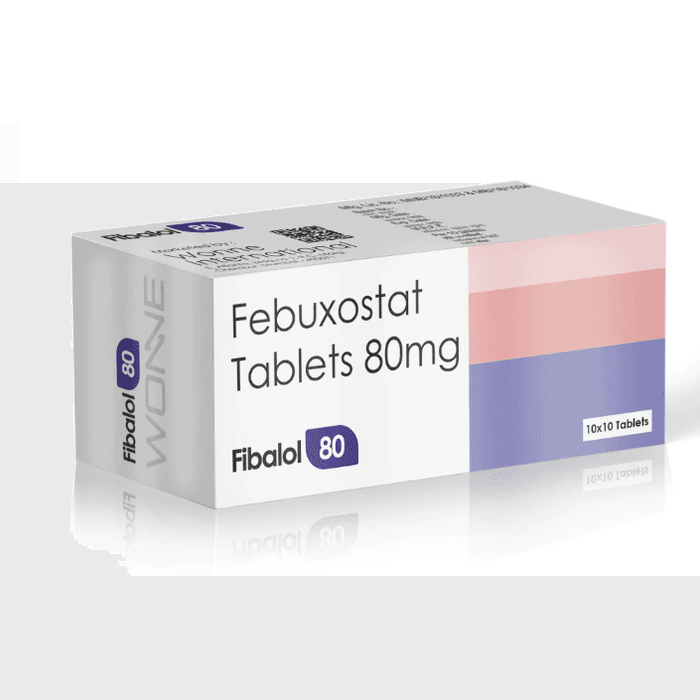
Febuxostat
Buy Febuxostat Online


Febuxostat is an oral gout medication used to lower uric acid in adults with chronic gout-related hyperuricemia. It can be bought online, with the tablet strength and quantity chosen to match the directions from your clinician. During ordering, review the Febuxostat price together with the strength shown, such as 40 mg or 80 mg when available, so the medicine you choose matches your treatment plan.
Febuxostat belongs to a class called xanthine oxidase inhibitors. These medicines reduce the amount of uric acid the body makes, helping long-term uric acid control rather than treating sudden gout pain. If you are comparing Febuxostat tablets with Uloric medicine or allopurinol, the active ingredient, dose strength, safety history, and monitoring plan all matter.
Febuxostat Price and Strength Choices
The Febuxostat price should be read with the tablet strength and quantity, not by the medicine name alone. A package of febuxostat 40 mg tablets and a package of febuxostat 80 mg tablets may have different totals because each tablet contains a different amount of active ingredient. The tablet count also changes the final amount due during checkout.
Generic febuxostat may be listed separately from brand-name Uloric. The generic product contains the active ingredient febuxostat, while Uloric is a brand name associated with the same active ingredient. Substitution decisions should follow the written treatment directions and local pharmacy rules, especially when the directions name Uloric 40 mg or another brand-specific entry.
| Ordering detail | What to review | Why it matters |
|---|---|---|
| Strength | Look for 40 mg, 80 mg, or the strength shown | The tablet strength determines how much febuxostat is in each tablet. |
| Quantity | Read the tablet count before checkout | The number of tablets affects the total Febuxostat cost. |
| Generic or brand | Read whether the item says febuxostat or Uloric | Brand and generic wording can affect substitution decisions. |
| Directions | Match the strength and quantity to clinician instructions | Changing strengths without guidance can change treatment exposure. |
Quick tip: Compare strength and tablet count together before judging value.
How to Order Febuxostat Online
To order Febuxostat online, choose the tablet strength displayed for the product and enter the requested customer and medicine information during checkout. We may review order details when clarification is needed. If your order involves US delivery from Canada, keep your medicine information and clinician directions available so the strength and quantity can be verified against your records.
Do not choose a different strength because it appears more convenient or changes the total price. Febuxostat 40 mg and febuxostat 80 mg tablets are not interchangeable unless a clinician has directed the change. If the tablet appearance changes after a refill, read the label and confirm the active ingredient and strength before taking it.
- Match the strength: Choose the tablet strength shown in your treatment directions.
- Confirm the count: Make sure the quantity supports the intended supply.
- Read the label: Check active ingredient, strength, and directions after delivery.
- Keep records: Store medication information with your health records for future refills.
What Febuxostat Treats
Febuxostat is used for chronic management of high uric acid in adults with gout. High uric acid can lead to urate crystal buildup, which contributes to gout flares and joint inflammation. Febuxostat helps reduce uric acid production over time, but it is not a pain reliever for an active gout flare.
This medicine is often discussed when allopurinol has not worked well enough, has not been tolerated, or is not appropriate for a particular patient. Treatment decisions usually account for uric acid blood levels, previous gout flares, kidney function, liver function, cardiovascular history, and other medicines. Related condition browsing is available under gout products and hyperuricemia products.
Starting a urate-lowering medicine can sometimes be associated with gout flares because uric acid levels are changing. A clinician may use a separate flare-prevention or flare-treatment medicine, such as colchicine or an anti-inflammatory, depending on the patient. The instructions for febuxostat and any flare medicine should be kept separate and followed carefully.
Dose Options, Tablets, and Brand Relationship
Febuxostat dose options commonly include 40 mg and 80 mg tablets. Each strength refers to the amount of febuxostat in one tablet. A higher-strength tablet is not simply a larger package, and a larger quantity is not a stronger dose. Always read both details before selecting a refill quantity or comparing febuxostat generic price entries.
| Tablet wording | How to read it | Practical check |
|---|---|---|
| febuxostat 40 mg | One tablet contains 40 mg of febuxostat | Use only when this strength matches treatment directions. |
| febuxostat 80 mg tablets | One tablet contains 80 mg of febuxostat | Do not substitute for 40 mg without clinical direction. |
| Uloric medicine | Uloric is a brand name for febuxostat | Confirm whether the brand or generic is intended. |
Febuxostat is the active ingredient. Uloric is the brand-name medicine associated with that ingredient. Country-specific brand naming and substitution practices can differ, so the safest buying decision is to match the active ingredient, strength, and directions rather than relying on the brand name alone.
Swallowing instructions, timing, and whether the medicine is taken with food should follow the medicine label and clinical directions. If you miss a dose, do not double up unless your clinician has specifically told you to do so. Ask for guidance if missed doses happen repeatedly or if gout symptoms change after starting therapy.
Storage, Handling, and Travel
Febuxostat tablets are oral solid medication and are generally stored at room temperature according to the package label. Keep tablets away from excess heat, moisture, and direct light. Do not store them in a bathroom cabinet if humidity is high. Keep the container closed and out of reach of children and pets.
After delivery, inspect the package, label, strength, and tablet count. Do not use tablets from wet, crushed, or broken packaging. If you use a pill organizer, keep the original labeled container available so the medicine name, strength, and directions can still be checked.
- At home: Keep tablets in their labeled container.
- During travel: Carry medication records with the medicine.
- After arrival: Read the label before taking the first tablet.
- If damaged: Set the package aside and ask for guidance before use.
Febuxostat does not require cold-chain storage in ordinary tablet handling. Store it separately from other medicines that look similar, especially if more than one household member uses daily tablets.
Safety, Warnings, and Side Effects
Febuxostat carries an important cardiovascular safety warning. In a large safety study, patients treated with febuxostat had a higher rate of heart-related death than patients treated with allopurinol. A history of heart attack, stroke, chest pain, heart failure, or other cardiovascular disease should be part of the clinical discussion before and during treatment.
Commonly reported effects include nausea, joint pain, rash, and abnormal liver blood tests. Gout flares may also occur when uric acid levels begin to shift, even if the medicine is lowering uric acid as intended. A rash can be minor, but severe skin reactions are possible and need prompt medical attention.
Seek urgent help for chest pain, shortness of breath, sudden weakness on one side, trouble speaking, swelling of the face or throat, or a severe blistering rash. Contact a clinician if you notice yellow skin, dark urine, severe fatigue, persistent nausea, or worsening gout symptoms. These symptoms may point to heart, liver, allergic, or flare-related concerns.
- Cardiovascular history: Heart and stroke history can affect suitability.
- Liver monitoring: Liver blood tests may be ordered before or during treatment.
- Skin reactions: New rash should be reported, especially if widespread or painful.
- Gout flares: Flare medicine may be managed separately from urate-lowering therapy.
- Not for sudden pain: Febuxostat does not treat immediate gout flare pain.
Why it matters: Safety history can change whether febuxostat is the right urate-lowering medicine.
Interactions, Contraindications, and Monitoring
Febuxostat should not be used with azathioprine or mercaptopurine because serious toxicity can occur. These medicines may be used in immune, inflammatory, transplant, or cancer-related care, so a complete medication list is important. Theophylline and other medicines may also require review because xanthine oxidase pathways can affect how some drugs are processed.
Monitoring commonly focuses on uric acid levels, liver tests, gout flare pattern, and overall tolerability. Kidney function can matter, but febuxostat decisions are not based on kidney numbers alone. Cardiovascular history, liver enzymes, current medicines, and prior response to allopurinol may all influence ongoing treatment.
- Contraindicated combinations: Avoid use with azathioprine or mercaptopurine.
- Medicine list: Include over-the-counter products and supplements.
- Blood tests: Uric acid and liver results may guide follow-up.
- Flare plan: Ask how to handle early gout flares after starting treatment.
- Heart symptoms: Report new chest pain, shortness of breath, or neurologic symptoms urgently.
Febuxostat is not intended for people with high uric acid who do not have gout unless a clinician has a specific reason. It is also not a substitute for lifestyle and health-factor discussions that may influence gout, such as alcohol intake, diet pattern, weight, kidney disease, and interacting medicines.
Compare Related Gout Options
Allopurinol and febuxostat are both urate-lowering medicines, but they are not interchangeable without clinical direction. Allopurinol is often used first, while febuxostat may be considered when allopurinol has not been suitable or effective enough. The choice depends on medical history, lab response, safety factors, and tolerability.
Some gout care also includes medicines for pain and inflammation during flares. These are different from long-term uric acid-lowering treatments. Browse pain and inflammation products if your clinician has discussed separate flare-related therapy, and use pain and inflammation articles to support questions for your next appointment.
| Medicine or category | How it differs | Buying decision |
|---|---|---|
| Febuxostat | Lowers uric acid production for chronic gout management | Match tablet strength and quantity to treatment directions. |
| Allopurinol | Another xanthine oxidase inhibitor used for urate lowering | Do not switch based on Febuxostat cost alone. |
| Flare medicines | May reduce pain and inflammation during attacks | Use only as directed for flare management. |
If you are comparing febuxostat gout treatment with other approaches, separate the goals clearly. Long-term urate lowering aims to reduce uric acid over time. Flare treatment aims to control acute pain and inflammation. Many people need a plan for both, but the medicines and instructions may be different.
Authoritative Sources
The following sources support key indication, warning, interaction, and patient-information points for febuxostat.
- Official Uloric prescribing information provides labeled uses, cardiovascular warning language, contraindications, interactions, and monitoring details.
- MedlinePlus febuxostat drug information explains patient-facing uses, precautions, side effects, and when to seek help.
- American College of Rheumatology febuxostat patient information describes the medicine in gout treatment context.
This content is for informational purposes only and is not a substitute for professional medical advice.
eGFR Calculator
Estimate kidney filtration using the 2021 CKD-EPI creatinine equation.
eGFR
-
mL/min/1.73 m2
G category
-
requires clinical context
These calculations are for education only and do not replace clinical advice, diagnosis, or treatment. Always confirm medical decisions with a qualified healthcare professional.
Creatinine Clearance Calculator
Estimate creatinine clearance using the Cockcroft-Gault equation.
CrCl
-
mL/min estimate
These calculations are for education only and do not replace clinical advice, diagnosis, or treatment. Always confirm medical decisions with a qualified healthcare professional.
BMI Calculator
Estimate adult body mass index from height and weight, with metric and imperial units.
BMI
-
kg/m2 equivalent
Category
-
Adult screening range
These calculations are for education only and do not replace clinical advice, diagnosis, or treatment. Always confirm medical decisions with a qualified healthcare professional.
Calorie & TDEE Calculator
Estimate resting energy needs and daily calorie range from age, sex, body size, and activity level.
Hold Ctrl or Cmd to select more than one calculator.
BMR
-
estimated calories/day at rest
Maintenance
-
BMR multiplied by activity
Weight loss guide
-
maintenance minus 500 kcal/day
These calculations are for education only and do not replace clinical advice, diagnosis, or treatment. Always confirm medical decisions with a qualified healthcare professional.
Weight Loss Timeline Calculator
Estimate a simple timeline from current weight, goal weight, and average daily calorie deficit.
Estimated weekly change
-
based on 3,500 kcal per lb
Estimated time
-
simple arithmetic estimate
Approx. date
-
if average deficit is maintained
These calculations are for education only and do not replace clinical advice, diagnosis, or treatment. Always confirm medical decisions with a qualified healthcare professional.
Express Shipping - from $29.99
Shipping with this method takes 3-5 days
Prices:
- Dry-Packed Products $29.99
- Cold-Packed Products $39.99
Standard Shipping - $19.99
Shipping with this method takes 5-10 days
Prices:
- Dry-Packed Products $19.99
- Not available for Cold-Packed products
What is Febuxostat used for?
Febuxostat is used for long-term management of high uric acid in adults with gout. It lowers uric acid production but does not relieve the immediate pain of a sudden gout flare.
Is Febuxostat the same as Uloric?
Febuxostat is the active ingredient. Uloric is a brand name associated with febuxostat. When choosing between generic febuxostat and brand-name wording, match the active ingredient, strength, and clinician directions.
What strengths does Febuxostat come in?
Febuxostat dose options commonly include 40 mg and 80 mg tablets. The correct strength depends on your treatment directions; do not switch between strengths without clinical guidance.
What are common Febuxostat side effects?
Commonly reported effects include nausea, joint pain, rash, and abnormal liver blood tests. Gout flares can also happen when uric acid levels begin changing after treatment starts.
What serious warnings should I know about Febuxostat?
Febuxostat has an important cardiovascular warning. People with a history of heart attack, stroke, chest pain, heart failure, or other heart disease should make sure that history is reviewed before and during treatment.
Which medicines should not be taken with Febuxostat?
Febuxostat should not be used with azathioprine or mercaptopurine because serious toxicity can occur. Keep an updated list of all medicines, supplements, and over-the-counter products for clinical review.
How should Febuxostat tablets be stored?
Store Febuxostat tablets according to the package label, away from excess heat, moisture, and direct light. Keep tablets in the labeled container and out of reach of children and pets.
Rewards Program
Earn points on birthdays, product orders, reviews, friend referrals, and more! Enjoy your medication at unparalleled discounts while reaping rewards for every step you take with us.
You can read more about rewards here.
POINT VALUE
How to earn points
- 1Create an account and start earning.
- 2Earn points every time you shop or perform certain actions.
- 3Redeem points for exclusive discounts.
You Might Also Like
Select options
This product has multiple variants. The options may be chosen on the product page
Select options
This product has multiple variants. The options may be chosen on the product page
Select options
This product has multiple variants. The options may be chosen on the product page
Select options
This product has multiple variants. The options may be chosen on the product page
Related Articles
Type 2 Diabetes,
Semaglutide Weight Loss Medication: Safety and Options
A semaglutide weight loss medication is a GLP-1 receptor agonist used in some settings to support chronic weight management. It works by changing appetite and fullness signals, not by stimulating…
Gastrointestinal
Over the Counter Anti Nausea Medication: Options and Risks
Over the counter anti nausea medication can help, but the right product depends on why you feel sick. For motion sickness, antihistamines such as dimenhydrinate or meclizine are common. For…
Diabetes, Type 2
GLP-1 Explained: Meaning, Medications, and Patient Questions
GLP-1 is a natural gut hormone that helps regulate blood sugar, appetite, and digestion after meals. The same term is also used for prescription medicines that act on the GLP-1…
General Health
Low Income Medication Options for Safer Refill Planning
If you cannot afford a prescription, start by protecting the medication plan before you search for a cheaper source. Low income medication options can include insurance review, generics, patient assistance…