
Please note: a valid prescription is required for all prescription medication.
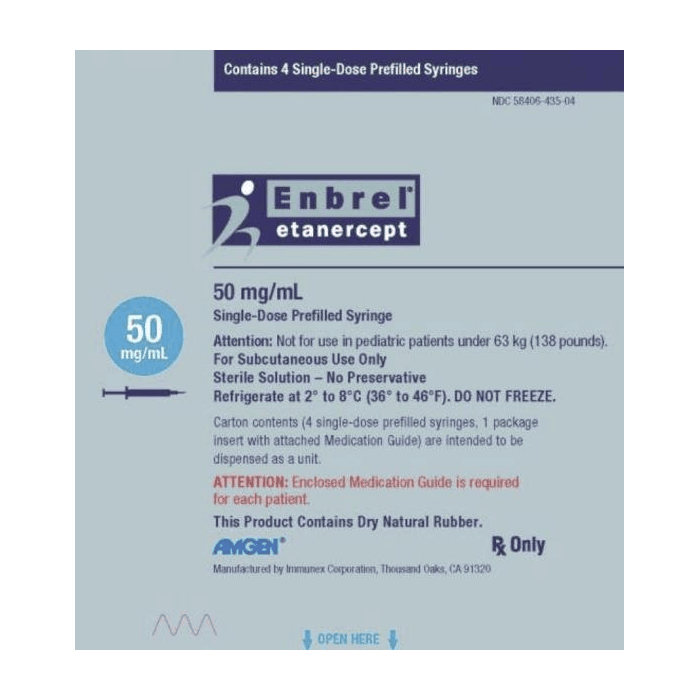
Enbrel Pre-Filled Syringe
Buy Enbrel Pre-Filled Syringe Online


Enbrel Pre-Filled Syringe is a single-dose etanercept injection used in treatment plans for certain inflammatory autoimmune conditions. It can be bought online by choosing the syringe strength and quantity that match the directions from the clinician managing treatment. Available syringe strengths may include 25 mg and 50 mg presentations when shown during ordering.
Enbrel is a refrigerated biologic medicine supplied in a manual prefilled syringe for subcutaneous injection, which means injection under the skin. The strength, syringe format, quantity, and cold-chain handling all affect the final order, so match the carton and syringe labels to the intended treatment plan before use.
Enbrel Pre-Filled Syringe Price, Strengths, and Quantity
The Enbrel Pre-Filled Syringe price should be read together with the exact strength, device form, and quantity. A 25 mg prefilled syringe and a 50 mg prefilled syringe contain different total amounts of etanercept. They should not be treated as interchangeable just because both are manual Enbrel syringes.
If you are evaluating Enbrel cost without insurance, keep each comparison like-for-like. Use the same strength, syringe format, and pack count when looking at cash-pay amounts. A different quantity may change the total supplied, but it does not change the injection schedule chosen by the clinician.
The manual syringe is different from Enbrel autoinjector or cartridge formats. A syringe requires the person giving the injection to place the needle and press the plunger. That format may suit patients or caregivers who were trained on a manual device, while others may have been instructed to use a different presentation.
| Ordering detail | What to verify |
|---|---|
| Strength | Common syringe presentations include 25 mg/0.5 mL and 50 mg/mL when available. |
| Quantity | The number of single-dose syringes affects supply length, not the prescribed schedule. |
| Device form | A manual prefilled syringe is not the same as an autoinjector or cartridge. |
| Cold storage | Refrigerated handling matters during packing, receipt, storage, and travel. |
Quick tip: Compare only the same syringe strength and quantity when checking Enbrel price without insurance.
How to Order Enbrel Pre-Filled Syringe Online
Start with the strength and form named in the treatment directions. Choose the Enbrel syringe strength shown during ordering, then match the quantity to the amount intended for the treatment period. If the instructions specify a manual syringe, do not substitute an autoinjector or other device format unless the treatment plan has changed.
Keep the medication name, strength, and device wording consistent across the carton, syringe, and clinic instructions. Enbrel 25 mg prefilled syringe and Enbrel 50 mg prefilled syringe entries may appear close together, but they represent different strengths. Using the printed strength is safer than relying on box size, liquid volume, or memory.
Because this medicine is temperature-sensitive, review receiving and storage instructions before completing the order. For US delivery from Canada, Enbrel may require prompt, express, cold-chain shipping so the syringes remain protected during transit. Inspect the package soon after arrival and move the carton into refrigerated storage as directed.
What Enbrel Treats
Enbrel contains etanercept, a tumor necrosis factor blocker. Tumor necrosis factor, or TNF, is an immune-system protein that can contribute to inflammatory disease activity. By blocking TNF, etanercept helps reduce immune-driven inflammation in conditions for which it is prescribed.
Labeled uses include rheumatoid arthritis, psoriatic arthritis, ankylosing spondylitis, plaque psoriasis, and polyarticular juvenile idiopathic arthritis in appropriate patients. The exact condition, age group, dose schedule, and combination with other medicines should come from the treating clinician and official labeling.
Condition-specific browsing can help separate Enbrel from unrelated medicines. Related areas include rheumatoid arthritis, psoriatic arthritis, ankylosing spondylitis, plaque psoriasis, and juvenile idiopathic arthritis.
Enbrel is not an immediate pain reliever. It is usually part of a longer-term plan for inflammatory disease control. Response timing varies by condition and patient, so worsening symptoms, infection symptoms, or lack of expected benefit should be discussed with the healthcare professional overseeing therapy.
Active Ingredient, Syringe Format, and Device Fit
The active ingredient in Enbrel Pre-Filled Syringe is etanercept. Etanercept is a biologic medicine, meaning it is made using living cells rather than manufactured like a simple chemical tablet. Biologic products require careful storage, handling, and product identification.
Each Enbrel single-dose prefilled syringe is intended for one use only. It should not be reused, refilled, shared, or transferred into another syringe. The syringe should remain in its original carton until use when possible because the carton helps protect it from light and keeps product identification clear.
A manual Enbrel syringe gives the user control over the injection rate. That can be helpful for someone trained on this format, but it also requires comfort with seeing the needle, placing the syringe correctly, and pressing the plunger steadily. Anyone who has difficulty with hand strength, vision, or needle handling should ask the care team whether a different Enbrel device is more appropriate.
Enbrel prefilled syringe vs autoinjector is mainly a device question. The syringe is manually controlled, while an autoinjector automates more of the injection process. Do not switch between device types unless a clinician confirms the change, because training, handling, and instructions differ.
Injection Checks and Practical Use Basics
Follow the official Instructions for Use for injection steps. In general, Enbrel prefilled syringes are removed from the refrigerator and allowed to reach room temperature as directed before injection. Do not warm the syringe with hot water, a microwave, direct sunlight, or another heat source.
Inspect the syringe before use. Do not use it if the solution is discolored, unusually cloudy, frozen, leaking, expired, or if the syringe appears cracked or damaged. Small appearance details can vary, so manufacturer instructions should guide decisions when something looks wrong.
- Training: Use the syringe only after proper injection instruction.
- Site rotation: Rotate injection areas as taught by the clinician.
- Skin checks: Avoid tender, bruised, red, hard, scarred, or irritated skin.
- Needle cover: Keep it in place until the instructions say to remove it.
- Sharps disposal: Put used syringes into an approved sharps container.
Why it matters: Correct device handling helps the ordered syringe match the intended treatment safely.
Storage, Travel, and Receiving the Syringes
Enbrel is temperature-sensitive. Manufacturer instructions generally call for refrigerated storage at 36°F to 46°F (2°C to 8°C) in the original carton. Do not freeze the syringe, and do not use it if it has been frozen.
Some labeling allows storage at room temperature up to 77°F (25°C) for a limited period, often up to 14 days. Once the syringe has been stored at room temperature, it should not be returned to the refrigerator. If it is not used within the allowed time, it may need to be discarded according to product instructions.
For travel, keep the carton protected from direct heat and avoid placing syringes in checked luggage where temperatures can vary. An insulated carrier may help maintain the required range, but the syringe should not sit directly against ice packs. Keep the carton available so the medicine can be identified if questions arise during travel.
After delivery, inspect the package condition promptly. If the carton is damaged, the syringe looks abnormal, or temperature exposure is uncertain, set the syringe aside and ask an appropriate clinical or support professional before use. Do not guess about a refrigerated biologic when storage conditions are unclear.
Side Effects, Warnings, and Monitoring
Enbrel can lower immune system activity and may increase the risk of serious infections. These infections can include tuberculosis, bacterial sepsis, invasive fungal infections, and other opportunistic infections. Enbrel should not be used in patients with sepsis.
Before treatment begins, clinicians commonly consider infection history, tuberculosis risk, hepatitis B status, vaccination history, and other immune-suppressing medicines. During treatment, fever, persistent cough, shortness of breath, painful skin sores, burning with urination, severe fatigue, or unexplained weight loss should be reported promptly.
- Common effects: Injection site reactions, upper respiratory symptoms, headache, rash, or nausea may occur.
- Infection signs: Fever, chills, worsening cough, or unusual weakness need clinical attention.
- Allergic reactions: Hives, swelling, wheezing, or trouble breathing may require urgent care.
- Nervous system symptoms: New numbness, tingling, vision changes, or weakness should be assessed.
- Heart concerns: New or worsening heart failure symptoms should be discussed quickly.
Malignancies, including lymphoma, have been reported in children and adolescents treated with TNF blockers. This warning does not mean every patient has the same risk. It does mean the official label and personal risk factors should be reviewed before starting or continuing therapy.
Safety information is especially important for people who get frequent infections, have chronic or recurrent infections, have diabetes, have a history of tuberculosis, live in areas with certain fungal infections, or take other medicines that suppress the immune system. A clinician may pause or reassess treatment if a serious infection, new diagnosis, or surgery occurs.
Interactions, Vaccines, and Ongoing Checks
Tell the treating clinician about all biologic medicines, immune-suppressing drugs, steroids, and recent or planned vaccines. Combining Enbrel with certain immune-modulating treatments can raise safety concerns. Some biologic combinations, such as use with anakinra or abatacept, may not be recommended under the label.
Live vaccines are generally avoided during treatment with TNF blockers. Children should be brought up to date on appropriate immunizations before starting therapy when possible. Household vaccine questions should be handled by a healthcare professional, especially when someone nearby is immunocompromised.
Monitoring may include tuberculosis screening, hepatitis B evaluation, symptom checks, and lab work when clinically appropriate. If new symptoms appear after an injection, write down the timing, dose strength, injection site, and other medicines taken. That information can help the care team evaluate whether Enbrel, another medicine, an infection, or the underlying condition may be involved.
Articles in the pain and inflammation library can provide broader context about inflammatory conditions and treatment conversations. Use educational material to prepare better questions, not to change injection timing, dose strength, or device type without medical guidance.
Related Categories and Treatment Choices
Enbrel belongs to a group of immune-modulating medicines used for inflammatory disease. It is different from over-the-counter pain relievers because it targets immune pathways rather than only short-term pain or fever. The right treatment choice depends on diagnosis, disease severity, prior treatment response, infection risk, and device preference.
For broader browsing in the same therapeutic area, visit the pain and inflammation category. That category helps separate immune and inflammation treatments from unrelated diabetes supplies, devices, and other product groups.
When comparing Enbrel syringe formats with nearby alternatives, focus on the active ingredient, strength, device, storage requirements, and safety warnings. A lower cash-pay price is not helpful if the strength or device does not match the intended treatment. Conversely, the same medicine in a different delivery device may require new training before use.
Questions to bring to the care team may include which strength is intended, whether a manual syringe is preferred, how to handle missed or delayed injections, which vaccines should be avoided, and what infection symptoms should prompt a call. Clear answers before the syringes arrive can reduce uncertainty at the time of injection.
Authoritative Sources
The following official resources support device, administration, storage, and safety information for Enbrel Pre-Filled Syringe.
- Device and injection guidance: Official Enbrel injection information.
- Label and boxed warnings: FDA prescribing information.
This content is for informational purposes only and is not a substitute for professional medical advice.
Research & Education Tool
Enbrel Pre-Filled Syringe Dosage Calculator
Enter the vial amount, diluent volume, and target amount to estimate concentration, draw volume on a 1 mL U-100 syringe, and approximate vial yield.
For research and educational use only. Check all values against the product label, certificate of analysis, and any applicable professional guidance before relying on the result.
mg
Concentration
-
mcg / mL
Volume per Dose
-
-
Estimated Draws / Vial
-
rounded down to whole draws
Draw Reference
Enter values to estimate the syringe mark.
0
-
-
-
-
Express Shipping - from $29.99
Shipping with this method takes 3-5 days
Prices:
- Dry-Packed Products $29.99
- Cold-Packed Products $39.99
Standard Shipping - $19.99
Shipping with this method takes 5-10 days
Prices:
- Dry-Packed Products $19.99
- Not available for Cold-Packed products
What is Enbrel Pre-Filled Syringe used for?
Enbrel Pre-Filled Syringe contains etanercept, a TNF blocker used for certain inflammatory autoimmune conditions. Labeled uses include rheumatoid arthritis, psoriatic arthritis, ankylosing spondylitis, plaque psoriasis, and polyarticular juvenile idiopathic arthritis in appropriate patients.
What is the difference between Enbrel 25 mg and 50 mg prefilled syringes?
They contain different total amounts of etanercept and should not be treated as interchangeable. The strength printed on the carton and syringe should match the treatment directions from the clinician managing therapy.
How should Enbrel prefilled syringes be stored?
Enbrel is generally stored refrigerated at 36°F to 46°F (2°C to 8°C) in the original carton and protected from light. Do not freeze it. Some labeling allows room temperature storage up to 77°F (25°C) for a limited period, often up to 14 days.
Is the Enbrel prefilled syringe the same as an autoinjector?
No. The prefilled syringe is a manual injection device, while an autoinjector automates more of the injection process. Device choice affects training and handling, so do not switch formats unless the care team confirms the change.
What side effects should be watched for with Enbrel?
Common effects may include injection site reactions, upper respiratory symptoms, headache, rash, or nausea. Serious infection symptoms, allergic reactions, new numbness or vision changes, or worsening heart failure symptoms need prompt clinical attention.
Rewards Program
Earn points on birthdays, product orders, reviews, friend referrals, and more! Enjoy your medication at unparalleled discounts while reaping rewards for every step you take with us.
You can read more about rewards here.
POINT VALUE
How to earn points
- 1Create an account and start earning.
- 2Earn points every time you shop or perform certain actions.
- 3Redeem points for exclusive discounts.
You Might Also Like
Select options
This product has multiple variants. The options may be chosen on the product page
Select options
This product has multiple variants. The options may be chosen on the product page
Select options
This product has multiple variants. The options may be chosen on the product page
Select options
This product has multiple variants. The options may be chosen on the product page