
Shipping with this method takes 3-5 days
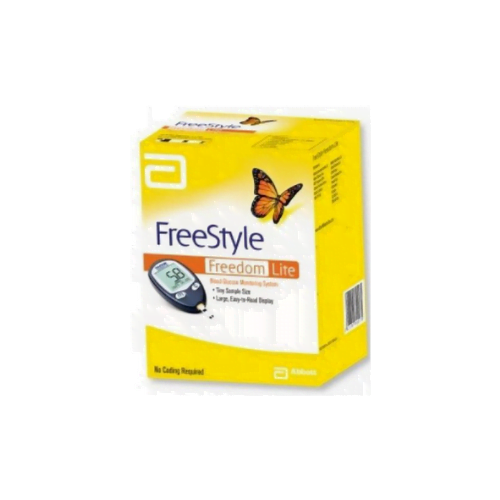
Freestyle Freedom Lite Meter
Buy FreeStyle Freedom Lite Meter Online


FreeStyle Freedom Lite Meter is a handheld blood glucose meter used for fingerstick blood sugar testing with compatible FreeStyle Lite test strips. You can buy FreeStyle Freedom Lite Meter online, view the current price, and choose the meter quantity shown during ordering to match the monitoring plan discussed with your care team.
The meter helps display glucose readings from a small blood sample so results can be recorded and discussed with a clinician. It is a monitoring device, not a diabetes medicine, and it should be used with the supplies and instructions that match the FreeStyle Freedom Lite blood glucose monitoring system.
FreeStyle Freedom Lite Meter Price and Meter-Kit Details
The FreeStyle Freedom Lite Meter price should be assessed with the exact meter contents shown during ordering. A glucose meter purchase may involve the device alone or a meter kit with starter components, depending on the package description. Match the device name, quantity, and included items before adding recurring supplies.
The long-term FreeStyle Freedom Lite Meter cost depends heavily on test-strip and lancet use. The meter is reusable, while strips and lancets are consumed with routine testing. If you are paying cash or comparing costs without insurance, separate the one-time device expense from the supplies needed for your testing schedule.
Quick tip: Do not assume strips are included unless the package description says they are included.
| Ordering detail | Why it matters |
|---|---|
| Meter name | FreeStyle Freedom Lite and other FreeStyle meters can sound similar. |
| Package contents | A meter kit may differ from a device-only purchase. |
| Compatible strips | FreeStyle Lite test strips are the key recurring supply for this meter system. |
| Testing frequency | More frequent checks usually require more strips and lancets. |
| Supply storage | Strip handling and expiration dates can affect reading reliability. |
A low meter price does not always mean the lowest overall monitoring expense. The practical comparison is the full setup: meter, strips, lancets, lancing device, control solution when used, batteries, and a sharps container for safe disposal.
How to Order This Glucose Meter Online
Start by matching the product name to the FreeStyle Freedom Lite glucose meter your clinician or diabetes educator recommended. Then choose the meter quantity shown during ordering and add compatible supplies if they are needed for your routine. Accurate patient and contact information helps prevent delays if order details need clarification.
US delivery from Canada may be relevant for customers planning cross-border supply access. Handling for a room-temperature meter is different from refrigerated diabetes medicines, but the device and strips should still be protected from moisture, crushing, and extreme temperatures after arrival.
- Match the exact meter name before checkout.
- Read the package contents before assuming a kit is complete.
- Plan strips and lancets separately for ongoing use.
- Keep the device manual for setup and troubleshooting.
- Inspect the package before first use.
If you are also organizing broader diabetes supplies, the diabetes supplies category can help you browse monitoring items that may be used alongside a home testing routine. Supplies are not automatically interchangeable, so the meter and strip system should be paired carefully.
What the FreeStyle Freedom Lite Monitoring System Does
The FreeStyle Freedom Lite blood glucose monitoring system is used for self-monitoring of blood glucose. Blood glucose means the amount of sugar in the blood at the time of testing. Many people with diabetes use readings to understand patterns related to meals, physical activity, illness, stress, and prescribed treatment.
The device is for in vitro diagnostic testing, which means the test is performed outside the body on a blood sample. It does not diagnose diabetes by itself, replace laboratory testing, or decide medication changes on its own. Readings should be interpreted with symptoms, recent food intake, activity, and the clinical action plan you were given.
Home monitoring is common in both type 1 diabetes and type 2 diabetes, though testing schedules can differ widely. Some people test several times daily, while others test at specific times set by their clinician. The meter supports the routine; the care plan determines when and how results should be used.
Compatible Test Strips, Lancets, and Supplies
The most important companion item is the test strip. FreeStyle Lite test strips for Freedom Lite Meter use should match the meter labeling. Using a different strip may cause an error or produce a reading that cannot be relied on for day-to-day diabetes decisions.
Lancets and a lancing device are also part of fingerstick testing. A lancet makes a small puncture to obtain a blood drop, and it should be changed as directed to reduce discomfort and contamination risk. Lancets are single-person supplies and should not be shared.
Control solution may be used to check whether the meter and strip system are working within the expected range. It is not a treatment product and does not measure your blood glucose. Follow the manual when control-solution testing is recommended, such as when a new vial of strips is opened, the meter is dropped, or readings do not match symptoms.
Why it matters: The meter is reusable, but strips and lancets are recurring supplies.
For broader browsing, the blood glucose monitors category can help compare meter styles and related monitoring systems. If your care team has already chosen a FreeStyle strip system, keep the meter-and-strip pairing consistent before changing devices.
No Coding, Display, and Setup Features
The FreeStyle Freedom Lite no coding meter design means the user does not manually enter a code from each strip vial before testing. This can simplify setup, but it does not remove the need for correct strip insertion, enough blood sample, clean hands, and proper strip storage.
The FreeStyle Freedom Lite large display meter may be easier for some users to read than smaller devices. Display size can matter for people with vision changes, older adults, and caregivers who help record readings. Lighting, hand strength, strip handling, and button use should also be considered when choosing a home meter.
The FreeStyle Freedom Lite Meter manual is the best source for first-use steps, symbols, error messages, battery information, cleaning instructions, control-solution checks, and sample application. Keep the manual with the meter or save the manufacturer manual PDF if your household prefers digital instructions.
Accuracy, Testing Technique, and Reading Checks
Accurate readings depend on the meter, compatible strips, storage conditions, and user technique. Wash and dry hands before testing because food residue, lotion, water, or other substances on the skin can affect a fingerstick sample. Insert the strip as described, apply enough blood, and wait for the meter to display the result.
Expired strips, strips exposed to moisture, or vials left open may produce unreliable results. Store strips in their original container when directed, close the vial promptly, and keep them away from heat and humidity. A meter error message should be handled according to the manual before relying on a result.
If a reading seems unusual, consider symptoms and the action plan from your clinician. A repeat test may be appropriate when technique or strip handling is uncertain. Contact a healthcare professional promptly if repeated readings are outside the range you were told to watch for or if the result does not match how you feel.
- Use the matching strip type for the meter.
- Wash and dry hands before sampling.
- Keep strip vials closed between tests.
- Watch strip expiration dates.
- Record unusual readings and related symptoms.
People learning a new routine may benefit from the diabetes articles section for practical education topics. Educational reading should support, not replace, the individualized instructions from a clinician or diabetes educator.
Safety Basics and When to Seek Help
A blood glucose meter provides information, but it does not treat low or high blood sugar. Follow your care plan for what to do when readings are below or above your target range. Medication changes, insulin corrections, food intake, and emergency steps should come from clinician instructions.
Possible symptoms of low blood sugar include shakiness, sweating, hunger, dizziness, confusion, weakness, or a fast heartbeat. Possible symptoms of very high blood sugar include increased thirst, frequent urination, nausea, stomach pain, fatigue, or deep breathing. Severe symptoms, fainting, inability to keep fluids down, or signs of diabetic ketoacidosis require urgent medical attention.
Do not share lancets or lancing devices. Blood-contact items can transmit infections even when they look clean. If another person helps with testing, both people should follow the cleaning and handling steps in the meter manual and dispose of sharps in an appropriate container.
Keep a written or digital log if your clinician has asked for one. Patterns often matter more than a single number. Bring glucose records, meter error messages, strip vial information, and questions to diabetes appointments so treatment decisions can be based on a fuller picture.
Storage, Handling, and Travel
Store the FreeStyle Freedom Lite blood sugar monitor and supplies according to the manual and package labeling. Keep the meter dry, avoid direct sunlight, and do not leave it in a hot car or freezing environment. Test strips often need more careful storage than the meter because moisture and temperature can damage strip performance.
When traveling, keep the meter, strips, lancets, lancing device, and spare battery together in a protective case. Carry enough supplies for the planned testing schedule plus a reasonable backup amount. If flying, keep testing supplies accessible rather than packed where they cannot be reached during delays.
Inspect the meter after travel, drops, or exposure to unusual conditions. If the device appears damaged or readings are inconsistent, use the troubleshooting steps in the manual. Control solution may help determine whether the meter and strips are working within the expected range.
First-Use Checklist for a New Meter
Before using a new FreeStyle Freedom Lite diabetes meter, inspect the package and make sure the meter is clean and undamaged. Insert or confirm the battery as directed, set the date and time, and make sure the display is easy to read. Correct date and time settings make logged readings easier to interpret later.
Open a fresh strip vial only when you are ready to test, and close it promptly after removing a strip. Prepare a clean lancet, lancing device, tissue, and sharps container before sampling. Having supplies ready reduces missed steps and helps avoid using the wrong strip during a busy morning or nighttime check.
If the meter is used by a caregiver, agree on a simple recording system. The log should identify the time of testing and any relevant context your clinician wants tracked, such as meals, exercise, symptoms, or medication timing. The diabetes condition section can help place monitoring in the broader context of diabetes management.
Compare Related Diabetes Monitoring Choices
Choosing a glucose monitoring kit is usually about strip compatibility, readability, ease of sampling, supply access, and the person’s testing routine. A FreeStyle Freedom Meter, FreeStyle Freedom Lite Meter, and other FreeStyle systems may have similar names, so confirm the exact meter and strip pairing before buying supplies.
Other meters may use their own test strips, control solution instructions, and setup steps. Products are not interchangeable simply because they measure blood glucose. If your clinician recommends changing systems, ask which strips, lancets, and logging method should be used with the new device.
The broader diabetes products category can help organize related supplies and treatment items in one place. Device choice should remain tied to the clinical plan, especially for people who use insulin or have frequent high or low readings.
Questions to Ask Your Care Team
Ask how often to test, which times of day matter most, and what reading ranges require action. People using insulin, sulfonylureas, or other treatments that can cause low blood sugar may need a clearer plan for hypoglycemia symptoms and follow-up steps.
Ask whether control-solution checks are recommended for your routine and when to replace strips, lancets, or the meter. If vision, dexterity, tremor, neuropathy, or memory issues make fingerstick testing difficult, ask whether caregiver support or another monitoring approach would be safer.
If you cannot find the device locally and are concerned about FreeStyle Freedom Lite discontinued status, rely on the current item name, package contents, and compatible strip information during ordering. Do not assume a substitute meter will work with supplies you already own.
Authoritative Sources
For device-specific steps, rely on the manufacturer manual, package insert, and instructions from the treating clinician. The manual is the practical source for setup, cleaning, error messages, battery replacement, sample application, control-solution testing, and storage limits for this monitoring system.
For clinical decisions, use individualized diabetes guidance rather than a single home meter result. A reading is one piece of information, and the care plan should explain when to test, which numbers need action, and when urgent care is needed.
This content is for informational purposes only and is not a substitute for professional medical advice.
Blood Glucose Unit Converter
Convert glucose readings between mg/dL and mmol/L without changing the clinical value.
mg/dL
-
US reporting unit
mmol/L
-
International reporting unit
These calculations are for education only and do not replace clinical advice, diagnosis, or treatment. Always confirm medical decisions with a qualified healthcare professional.
HbA1c & eAG Calculator
Convert between HbA1c percentage and estimated average glucose using the ADAG relationship.
HbA1c
-
percentage
eAG mg/dL
-
estimated average glucose
eAG mmol/L
-
estimated average glucose
These calculations are for education only and do not replace clinical advice, diagnosis, or treatment. Always confirm medical decisions with a qualified healthcare professional.
CGM Time-in-Range Summary
Summarise CGM percentages across very low, low, in-range, high, and very high glucose bands.
Entered total
-
should equal 100%
Below range
-
very low plus low
Above range
-
high plus very high
Summary
-
common adult CGM targets vary by patient
These calculations are for education only and do not replace clinical advice, diagnosis, or treatment. Always confirm medical decisions with a qualified healthcare professional.
Carb Serving Calculator
Convert total carbohydrate grams into carb choices for meal planning and diabetes education.
Carb choices
-
total carbs divided by choice size
Rounded choices
-
nearest half choice
Carb calories
-
4 kcal per gram
These calculations are for education only and do not replace clinical advice, diagnosis, or treatment. Always confirm medical decisions with a qualified healthcare professional.
Corrected Sodium Calculator
Estimate sodium corrected for hyperglycemia using common 1.6 and 2.4 correction factors.
Corrected sodium
-
1.6 factor
Corrected sodium
-
2.4 factor
These calculations are for education only and do not replace clinical advice, diagnosis, or treatment. Always confirm medical decisions with a qualified healthcare professional.
Express Shipping - from $29.99
Prices:
- Dry-Packed Products $29.99
- Cold-Packed Products $39.99
Standard Shipping - $19.99
Shipping with this method takes 5-10 days
Prices:
- Dry-Packed Products $19.99
- Not available for Cold-Packed products
What is the FreeStyle Freedom Lite Meter used for?
The FreeStyle Freedom Lite Meter is used for self-monitoring of blood glucose with a small blood sample and compatible strips. It helps record glucose readings for diabetes management, but it does not diagnose diabetes or replace clinical assessment.
Does the FreeStyle Freedom Lite Meter use FreeStyle Lite test strips?
The meter should be used with the strip type specified for the FreeStyle Freedom Lite system. FreeStyle Lite test strips are the key companion supply commonly associated with this meter, and strip compatibility should be confirmed before testing.
Are test strips included with the meter?
Do not assume strips are included unless the package contents say they are included. Some purchases may involve a meter kit, while others may be device-only. Strips, lancets, and other supplies may need to be added separately.
What does no coding mean on this meter?
No coding means the meter does not require manual code entry from each strip vial before testing. You still need to insert the strip correctly, use enough blood, store strips properly, and follow the manual for accurate results.
What should I do if a glucose reading seems wrong?
Wash and dry your hands, review strip storage and expiration dates, and repeat testing if your care plan recommends it. Contact a healthcare professional promptly if readings remain unexpected or do not match how you feel.
How should I store the FreeStyle Freedom Lite Meter and supplies?
Keep the meter dry, protected from direct sunlight, and away from very hot or freezing conditions. Store strips according to their labeling, close the vial promptly, and avoid moisture because damaged strips can affect readings.
Rewards Program
Earn points on birthdays, product orders, reviews, friend referrals, and more! Enjoy your medication at unparalleled discounts while reaping rewards for every step you take with us.
You can read more about rewards here.
POINT VALUE
How to earn points
- 1Create an account and start earning.
- 2Earn points every time you shop or perform certain actions.
- 3Redeem points for exclusive discounts.
You Might Also Like
Select options
This product has multiple variants. The options may be chosen on the product page
Select options
This product has multiple variants. The options may be chosen on the product page
Select options
This product has multiple variants. The options may be chosen on the product page
Select options
This product has multiple variants. The options may be chosen on the product page