
Please note: a valid prescription is required for all prescription medication.
Glucagon Injection Kit with Diluent
Buy Glucagon Injection Kit with Diluent Online


Glucagon Injection Kit with Diluent is an emergency glucagon rescue product used for severe low blood sugar when swallowing carbohydrates is unsafe or not possible. It can be bought online, with current price information shown during ordering, and the kit strength and quantity should match the directions from the treating clinician. The powder-and-diluent format requires caregiver familiarity before an emergency occurs.
This type of glucagon emergency kit is commonly kept at home, school, work, or during travel for people at risk of severe hypoglycemia. The person who may need the medicine and the person likely to give it should both know where the kit is stored, when to use it, and when to seek emergency help.
Quick tip: Keep the expiry date, storage location, and caregiver training in the same routine safety check.
Glucagon Injection Kit with Diluent Price and Kit Selection
The current Glucagon Injection Kit with Diluent price is tied to the kit strength, quantity, and cart amount chosen during ordering. View the displayed total before checkout and match the kit name, form, labelled amount, and instructions to the written rescue plan from the care team. A glucagon 1 mg injection kit may be a common wording in some orders, but the exact product wording should still guide selection.
Glucagon injection kit cost can vary by product format and supply needs. A powder-and-diluent kit is different from a ready-to-use injectable device or nasal glucagon, even though all may be used for severe hypoglycemia. Do not switch between formats unless the treating clinician updates the emergency plan and confirms the training steps.
Cash-pay customers often compare the displayed price, number of kits needed, and replacement timing. Some households keep rescue medicine in more than one location, but quantity should follow the care plan and practical access needs. US delivery from Canada may be part of the service context for customers ordering from the United States.
| What to review | Why it matters |
|---|---|
| Kit format | Powder and diluent kits require mixing before injection, unlike some ready-to-use products. |
| Labelled strength | The strength should match the clinician’s written directions and the kit instructions. |
| Quantity | Extra locations may require extra kits, but only within the rescue plan. |
| Expiry date | Emergency medicine should be replaced before it expires. |
| Training needs | Caregivers should practice the steps before a severe low occurs. |
The Hypoglycemia Aids category can help you browse related low-blood-sugar support items that may be kept alongside rescue supplies.
How to Order a Glucagon Kit Online
Start by choosing the kit strength and quantity that match the emergency instructions from the care team. During checkout, enter patient and order information carefully so the order can be reviewed for accuracy. We may help confirm order details when needed, and medicines are supplied through licensed pharmacy channels.
Before payment, read the kit name and directions closely. A glucagon kit with diluent, a glucagon reconstitution kit, an autoinjector, and nasal glucagon may differ in age information, storage, preparation, and caregiver steps. Similar names do not mean the same device or directions.
- Match the kit name: Use the exact wording in the care plan when available.
- Review the strength: Choose the dose or strength shown for the product only when it matches directions.
- Plan locations: Store kits where trained caregivers can reach them quickly.
- Check handling notes: Follow the labelled storage range and shipping instructions.
- Train caregivers: Review the supplied instructions before the kit is needed.
Prompt, express, cold-chain shipping may be used when product handling requires temperature-conscious logistics. Inspect the parcel and kit when it arrives. If packaging appears damaged, incomplete, or unclear, contact support before placing it into an emergency supply.
What the Kit Contains and How the Format Works
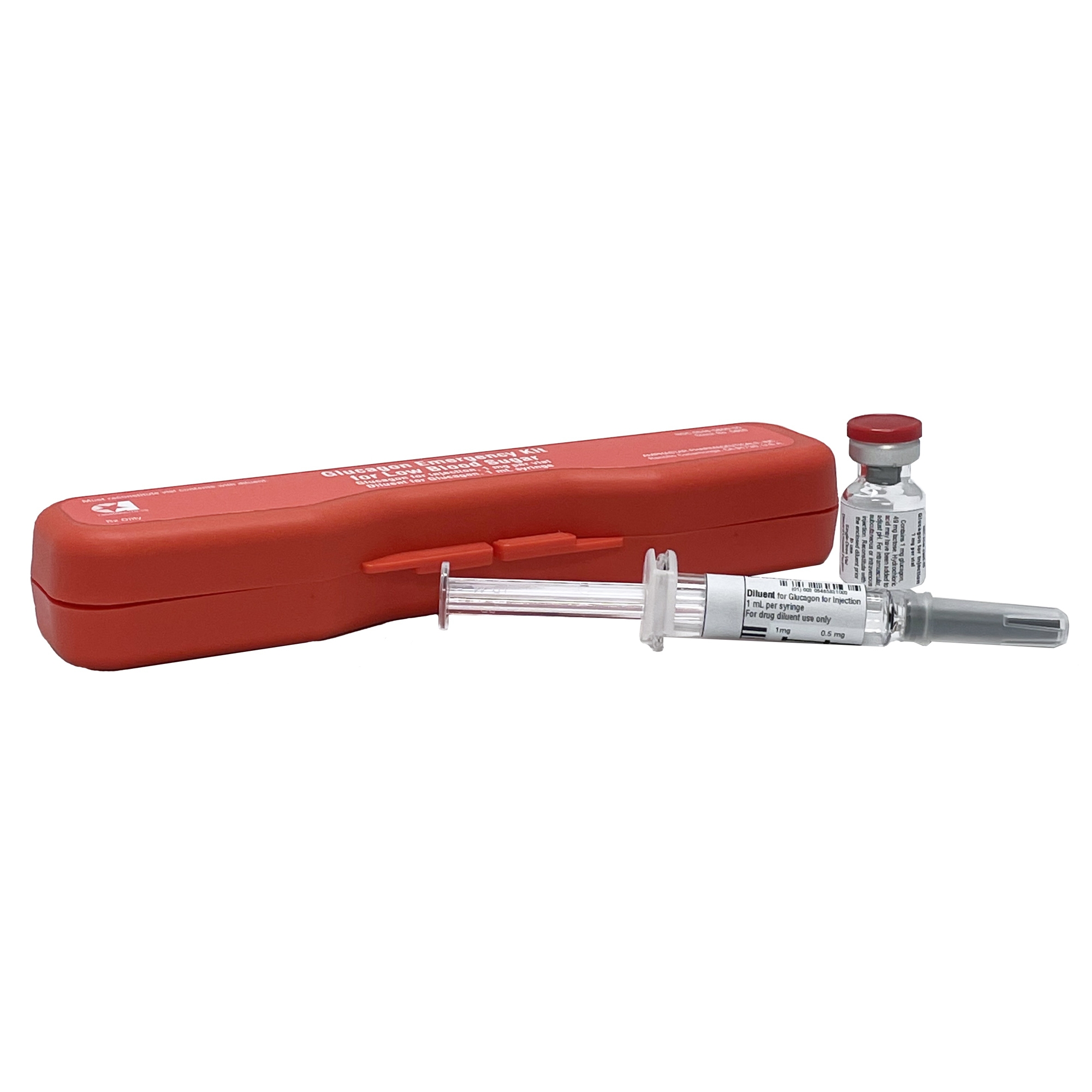
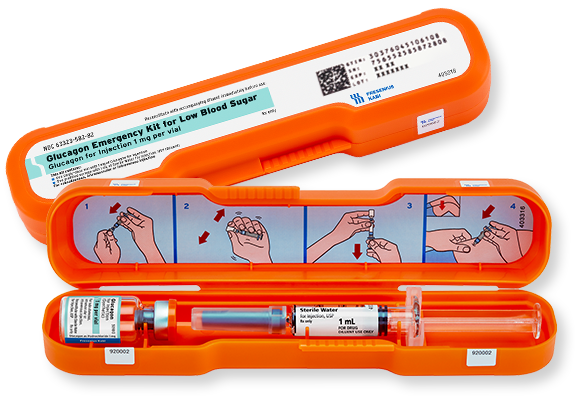
A glucagon kit with diluent usually contains sterile glucagon powder and a syringe of liquid used to reconstitute the medicine. Reconstitution means mixing a dry medicine with the supplied liquid so the solution can be injected. The diluent is not a separate treatment; it is used to dissolve the glucagon powder immediately before administration.
Packaging can differ by manufacturer, so do not rely only on memory from a prior kit. Look for the vial, diluent syringe, needle or syringe assembly if included, patient instructions, and protective case. The person giving emergency glucagon should understand which liquid to use, how to mix it, and what the finished solution should look like according to the package instructions.
Some labels and care plans may use terms such as glucagon for injection, glucagon powder and diluent, glucagon rescue kit, or glucagon hypoglycemia kit. These phrases often describe the same general emergency category, but the kit’s exact name and directions still matter. The Diabetes articles section may support broader education, while official kit instructions remain the source for administration steps.
Why it matters: In a severe low, the caregiver should not be deciding between unfamiliar liquids, devices, or dose markings.
What Severe Hypoglycemia Means
Glucagon is used for severe hypoglycemia, meaning dangerously low blood sugar that may cause confusion, seizure, inability to swallow, or unconsciousness. It is most often part of an emergency plan for people with diabetes who use insulin or other medicines that can lower blood glucose. Oral sugar, juice, or glucose tablets may be unsafe when a person cannot swallow normally.
Glucagon works differently from eating carbohydrates. It signals the liver to release stored glucose into the bloodstream, which may help raise blood sugar during an emergency. Because the response depends partly on liver glycogen stores, glucagon may work less well after prolonged fasting, starvation, adrenal insufficiency, chronic hypoglycemia, or heavy alcohol use.
A glucagon emergency kit is not a routine snack, daily diabetes medicine, or substitute for regular glucose monitoring. After emergency glucagon is used, medical help is commonly recommended because the person may need monitoring, additional carbohydrate once awake, and evaluation for the cause of the low blood sugar.
People managing low-blood-sugar risk can browse the Hypoglycemia section for related items. Broader diabetes supplies and medicines are organized in the Diabetes condition area.
Storage, Expiry, and Travel Handling
Storage matters because glucagon may be needed without warning. Keep the kit in its original packaging, follow the temperature range on the label, and protect it from freezing or excessive heat. Store it in a visible, predictable place rather than moving it between bags, drawers, or rooms without telling caregivers.
Do not pre-mix a powder-and-diluent glucagon kit for later use unless the official instructions specifically say to do so. Many glucagon for injection kits are mixed immediately before administration, and unused mixed solution is discarded as directed. If the kit is expired, missing parts, cracked, wet, or inconsistent with the instructions, replace it rather than relying on it during an emergency.
Travel requires planning because rescue medicine should remain accessible. Keep the kit within reach during flights, car trips, sports events, or overnight stays. School staff, coaches, coworkers, family members, and travel companions should know its location and understand when emergency services should be called.
Side Effects, Warnings, Interactions, and Monitoring
Glucagon can cause nausea, vomiting, headache, dizziness, injection-site discomfort, fast heartbeat, or blood pressure changes. Vomiting can occur after use, so caregivers are often instructed to position an unconscious person safely and to call emergency services. Seek urgent care if the person does not respond as expected, has breathing problems, remains confused, or has another severe episode.
People with a known allergy to glucagon or a kit component should not use it. Official labelling also lists important cautions for certain tumors, including pheochromocytoma and insulinoma, because glucagon can affect hormone release and blood glucose in potentially dangerous ways. These conditions require individualized medical direction.
Several medicines can affect glucagon response or monitoring. Beta-blockers may intensify pulse or blood pressure effects. Indomethacin may reduce the blood-glucose response. Warfarin effects may be increased according to product labelling. Share current medicines, alcohol use, eating changes, recent illness, and repeated low-blood-sugar episodes with the treating clinician.
After an emergency glucagon injection, blood glucose should be checked according to the care plan. Once the person is awake and able to swallow, clinicians often recommend a fast source of carbohydrate followed by longer-acting food, but the exact plan should be individualized. Do not change insulin, sulfonylurea, or other diabetes medicine doses only because a rescue kit is available.
Comparing Glucagon Rescue Formats
Powder-and-diluent kits are one type of emergency glucagon injection. Other prescribed rescue formats may include ready-to-use injectable products or nasal glucagon. The best format depends on the person’s age, ability of caregivers to follow steps, storage needs, training, and the care plan.
When comparing a glucagon injection kit with nearby choices, focus on real emergency use. A caregiver may need to act while frightened, tired, or away from home. A format that is familiar and easy to locate can reduce hesitation. However, ease of use should not override the clinician’s instructions or the product label.
The Diabetes Supplies category can help organize related testing, injection, and support items. Customers with broader treatment needs can browse Diabetes Products for other diabetes-related categories.
Questions to Ask Before Replacing or Reordering
Reorder timing should account for expiry dates, kit location, and whether a prior kit was used during an emergency. If a kit was used, damaged, lost, or carried through extreme temperatures, replace it promptly. If the care plan changes, review the new instructions before choosing the next kit.
Ask the care team which caregivers should be trained, where kits should be stored, and what steps follow glucagon use. Families may need separate instructions for school, childcare, sports, overnight visits, or travel. Adults may need workplace or household plans so another person can act if severe hypoglycemia causes confusion or unconsciousness.
Discuss recurring lows, nighttime episodes, reduced food intake, illness, alcohol use, exercise changes, or recent medicine adjustments. A rescue kit is important, but prevention and monitoring remain central to safe diabetes care. Glucose records, continuous glucose monitor alerts, meal patterns, and insulin timing can all shape a safer plan.
Authoritative Sources
Official labelling information is available from the DailyMed Glucagon Kit Label.
Regulatory labelling is also available through the FDA Glucagon for Injection Label.
This content is for informational purposes only and is not a substitute for professional medical advice.
Blood Glucose Unit Converter
Convert glucose readings between mg/dL and mmol/L without changing the clinical value.
mg/dL
-
US reporting unit
mmol/L
-
International reporting unit
These calculations are for education only and do not replace clinical advice, diagnosis, or treatment. Always confirm medical decisions with a qualified healthcare professional.
HbA1c & eAG Calculator
Convert between HbA1c percentage and estimated average glucose using the ADAG relationship.
HbA1c
-
percentage
eAG mg/dL
-
estimated average glucose
eAG mmol/L
-
estimated average glucose
These calculations are for education only and do not replace clinical advice, diagnosis, or treatment. Always confirm medical decisions with a qualified healthcare professional.
Carb Serving Calculator
Convert total carbohydrate grams into carb choices for meal planning and diabetes education.
Carb choices
-
total carbs divided by choice size
Rounded choices
-
nearest half choice
Carb calories
-
4 kcal per gram
These calculations are for education only and do not replace clinical advice, diagnosis, or treatment. Always confirm medical decisions with a qualified healthcare professional.
Glycaemic Load Calculator
Calculate glycaemic load from glycaemic index and available carbohydrate in a serving.
Glycaemic load
-
GI x carbs / 100
Range
-
single serving estimate
Total carbs used
-
serving carbs x servings
These calculations are for education only and do not replace clinical advice, diagnosis, or treatment. Always confirm medical decisions with a qualified healthcare professional.
CGM Time-in-Range Summary
Summarise CGM percentages across very low, low, in-range, high, and very high glucose bands.
Entered total
-
should equal 100%
Below range
-
very low plus low
Above range
-
high plus very high
Summary
-
common adult CGM targets vary by patient
These calculations are for education only and do not replace clinical advice, diagnosis, or treatment. Always confirm medical decisions with a qualified healthcare professional.
Express Shipping - from $29.99
Shipping with this method takes 3-5 days
Prices:
- Dry-Packed Products $29.99
- Cold-Packed Products $39.99
Standard Shipping - $19.99
Shipping with this method takes 5-10 days
Prices:
- Dry-Packed Products $19.99
- Not available for Cold-Packed products
What is a Glucagon Injection Kit with Diluent used for?
It is used as emergency treatment for severe hypoglycemia, or dangerously low blood sugar, when a person cannot safely swallow carbohydrates. Caregivers should follow the kit instructions and the emergency plan from the treating clinician.
How is a glucagon kit with diluent different from ready-to-use glucagon?
A kit with diluent usually requires mixing glucagon powder with the supplied liquid before injection. Ready-to-use injectable products or nasal glucagon have different preparation steps, storage details, and training needs, so they should not be substituted without updated clinical direction.
What side effects can glucagon cause?
Common effects may include nausea, vomiting, headache, dizziness, injection-site discomfort, fast heartbeat, or blood pressure changes. Emergency help is commonly recommended after use because the person may need monitoring and follow-up care.
How should a glucagon emergency kit be stored?
Store the kit in its original packaging, follow the temperature range on the label, protect it from freezing or excessive heat, and replace it before the expiry date. Keep it somewhere trained caregivers can find quickly.
Can the glucagon powder be mixed in advance?
Most powder-and-diluent glucagon kits are mixed immediately before use. Do not pre-mix the kit for later unless the official instructions specifically allow it, and discard unused mixed solution as directed.
When should emergency services be called after glucagon is given?
Follow the emergency plan supplied by the treating clinician and the kit instructions. Emergency help is commonly recommended after glucagon use, especially if the person remains unconscious, confused, unable to swallow, or does not improve as expected.
Rewards Program
Earn points on birthdays, product orders, reviews, friend referrals, and more! Enjoy your medication at unparalleled discounts while reaping rewards for every step you take with us.
You can read more about rewards here.
POINT VALUE
How to earn points
- 1Create an account and start earning.
- 2Earn points every time you shop or perform certain actions.
- 3Redeem points for exclusive discounts.
You Might Also Like
Select options
This product has multiple variants. The options may be chosen on the product page
Select options
This product has multiple variants. The options may be chosen on the product page
Select options
This product has multiple variants. The options may be chosen on the product page
Select options
This product has multiple variants. The options may be chosen on the product page