
Please note: a valid prescription is required for all prescription medication.
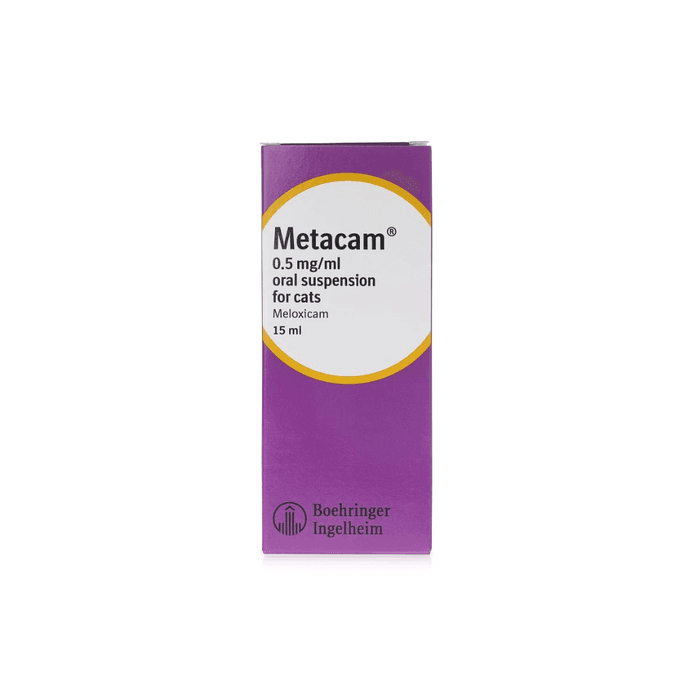
Metacam Oral Suspension for Cats
Metacam Oral Suspension for Cats: Product Overview
Price:
Price range: $49.99 through $76.99
You save


Metacam oral suspension is a veterinary nonsteroidal anti-inflammatory drug that contains meloxicam. This page explains Metacam Oral Suspension for Cats as a liquid option used for feline pain and inflammation under veterinary direction. It reviews how it works, dosing and handling basics, key safety cautions, and where to find reliable references.
What Metacam Oral Suspension for Cats Is and How It Works
Metacam is a brand-name formulation of meloxicam, an NSAID (nonsteroidal anti-inflammatory drug). NSAIDs reduce inflammation by inhibiting cyclooxygenase enzymes (COX), which lowers prostaglandins (chemical messengers involved in pain, swelling, and fever). In cats, veterinarians may prescribe meloxicam for certain short-term pain and inflammation scenarios, and the exact labeled uses can vary by country. CanadianInsulin functions as a prescription referral service rather than a dispensing pharmacy. Some patients explore US delivery from Canada for prescribed veterinary medicines when permitted.
This medicine is supplied as a liquid suspension so small doses can be measured more precisely than many tablets. The goal is symptom relief while limiting NSAID-related harms, especially effects on the stomach and kidneys. Your veterinarian’s directions should reflect the cat’s condition, hydration status, and concurrent diseases. When needed, prescription details are confirmed with the prescribing veterinarian to match the written directions. For related therapeutic areas on the site, some people browse hubs such as Pain Inflammation and Pet Medications.
Who It’s For
Veterinarians may prescribe oral meloxicam for cats when inflammation and pain are expected to respond to an NSAID, such as certain acute pain states or chronic joint disease. Common real-world contexts include post-procedure discomfort and osteoarthritis-related mobility issues, but the permitted indications depend on the product labeling in your region. Some owners also ask about use during flare-ups of degenerative joint disease, where inflammation contributes to stiffness and reduced activity.
Meloxicam is not appropriate for every cat. It is often avoided in cats that are dehydrated, have known kidney disease, have a history of gastrointestinal ulceration or bleeding, or have serious liver dysfunction. It may also be unsuitable for cats that are very young, frail, or medically unstable unless a veterinarian determines benefits outweigh risks. If you are reviewing condition-specific options, CanadianInsulin hosts browseable hubs like Feline Acute Pain and Feline Arthritis to help compare medication categories that may be listed for those topics.
Dosage and Usage
Follow the veterinary prescription exactly, because dosing for cats is sensitive to weight, hydration, and the product concentration (mg/mL). For Metacam Oral Suspension for Cats, the prescribed amount is typically measured in mL using an oral dosing syringe or dropper provided with the product, then given by mouth as directed. Some labels describe a one-time dose for certain situations, while other jurisdictions may allow short courses; your veterinarian will specify the schedule that applies to the product dispensed.
Shake the bottle well before each use to ensure the medication is evenly mixed, and measure the dose carefully at eye level. Give the medicine exactly as directed regarding food, since some clinicians prefer dosing with a small meal to reduce stomach upset. If a dose is missed, dosing decisions should be discussed with the veterinary clinic rather than “doubling up.”
Quick tip: Keep a simple log of dosing time and observed appetite, stool, and energy.
Strengths and Forms
Metacam oral suspension is a liquid formulation, but the concentration and bottle size can differ by country and supply chain. Prescriptions should always specify concentration (mg/mL) so the measured mL aligns with the intended mg dose. In practice, people may encounter presentations described as 0.5 mg/mL or 1.5 mg/mL, and volumes such as 3 mL, 15 mL, or 30 mL; however, availability varies and the dispensing label is the source of truth. When documenting a refill request with a clinic, it helps to record both the concentration and the total bottle volume.
The table below shows how to think about product identity without assuming a specific format.
| What to verify | Where to find it | Why it matters |
|---|---|---|
| Concentration in mg/mL | Front label and pharmacy label | Prevents mL-to-mg confusion |
| Bottle volume in mL | Carton or bottle | Helps track remaining supply |
| Dosing device type | Box contents | Supports accurate measurement |
If your veterinarian changes the concentration, the measured volume may change even if the intended mg dose does not. That is one reason to keep the full product name, including Metacam Oral Suspension for Cats, in your pet’s medication list along with concentration and directions.
Storage and Travel Basics
Store the suspension according to the carton instructions and the pharmacy label. Many oral suspensions are kept at controlled room temperature and protected from excessive heat, moisture, and direct light, but you should not assume refrigeration is required unless the label states it. Avoid freezing, and keep the cap tightly closed to reduce contamination and evaporation. Keep all veterinary medicines out of reach of children and other pets, since accidental ingestion can be serious.
For short trips, keep the bottle in its original packaging and bring the dosing device so measurement stays consistent. Do not leave the medication in a parked car where temperatures can swing quickly. If you are uncertain whether Metacam Oral Suspension for Cats can be exposed to higher temperatures for brief periods, confirm with a pharmacist or veterinarian using the exact product and lot information. If the liquid looks separated after shaking, has unusual odor, or the packaging is damaged, ask a professional before continuing use.
Side Effects and Safety
Like other NSAIDs, meloxicam can cause gastrointestinal and kidney-related side effects in cats. Commonly reported issues include decreased appetite, vomiting, diarrhea, lethargy, and behavior changes that may suggest stomach discomfort. Some cats may drink more or urinate more, which can be an early sign of kidney stress. Because cats can hide illness, subtle changes in eating, grooming, or litter box habits deserve attention during any NSAID course.
Stop the medication and contact a veterinarian urgently if you notice black or tarry stool, blood in vomit or stool, severe weakness, pale gums, collapse, marked increase in thirst or urination, or yellowing of the eyes or skin. Risk can be higher in dehydrated cats, seniors, or those with pre-existing kidney disease. For general education on inflammatory conditions and symptom tracking, the site also maintains an editorial hub at Pain Inflammation.
Why it matters: Early recognition of NSAID intolerance may reduce the chance of serious complications.
Drug Interactions and Cautions
Do not combine meloxicam with other NSAIDs unless a veterinarian explicitly directs it, because stacked NSAID exposure increases ulcer and kidney risk. The same caution applies to corticosteroids (such as prednisone), which can raise the risk of gastrointestinal injury when used with an NSAID. Tell the veterinary team about any recent injectable pain medications, post-operative drugs, or long-acting steroid injections, since those can affect the overall safety picture.
Other interactions and cautions may involve drugs that affect kidney blood flow or clotting, including certain diuretics, ACE inhibitors, anticoagulants, and some chemotherapy agents. Supplements are not automatically safe; some may affect bleeding tendency or appetite, complicating monitoring. If your cat is scheduled for anesthesia or is recovering from illness that caused poor intake, the clinician may reassess NSAID suitability. Keep an up-to-date list that includes Metacam Oral Suspension for Cats, the concentration, and the last dose given, and share it at every visit.
Compare With Alternatives
NSAIDs are only one category used for feline pain management, and the “best” option depends on diagnosis, duration, and comorbidities. In some situations a veterinarian may consider another NSAID labeled for cats in your country, a different route of administration (such as injection), or a short course of an opioid analgesic. For neuropathic components of pain, some clinicians use medications like gabapentin, typically as part of a broader plan. The choice also depends on how reliably the cat can be medicated and whether appetite is stable.
Non-drug approaches can matter, especially for chronic joint disease. These may include weight management plans, gentle activity changes, environmental modifications (ramps, low-entry litter boxes, soft bedding), and targeted physical rehabilitation when available. Joint diets and supplements are sometimes discussed, but quality and expected benefit vary. When comparing options, focus on monitoring requirements, contraindications, and the practical ability to measure and administer doses safely over time.
Pricing and Access
Meloxicam for cats is prescription-only in many jurisdictions, so access typically starts with a veterinary evaluation and a written prescription. Coverage can vary: some pet insurance plans reimburse eligible medications, while others treat them as out-of-pocket expenses. For households paying cash and without insurance, the main practical variables tend to be the concentration, bottle size, and whether follow-up monitoring is recommended by the clinic.
CanadianInsulin can help route prescription information and confirm details needed for processing. Where permitted, licensed third-party pharmacies dispense and fulfil prescriptions. Requirements may include veterinarian contact information, a current prescription, and confirmation that the product and concentration match the prescribed directions. For readers who also browse broader health education content on the site, examples include Cataract Awareness Month, Managing Retinopathy In Diabetes, and Metformin Prevent Blindness; these are general articles and not veterinary guidance.
Authoritative Sources
For U.S. safety communications on meloxicam in cats, see the FDA animal drug safety page: https://www.fda.gov/animal-veterinary/product-safety-information/metacam-meloxicam.
For EU veterinary regulatory summaries, review the EMA veterinary record for Metacam: https://www.ema.europa.eu/en/medicines/veterinary/EPAR/metacam.
For general NSAID safety concepts in pets, consult the Merck Veterinary Manual topic library: https://www.merckvetmanual.com/pharmacology/systemic-pharmacotherapeutics-of-the-musculoskeletal-system/nonsteroidal-anti-inflammatory-drugs-nsaids.
Where permitted and appropriate for the medication type, distribution may use prompt, express, cold-chain shipping based on handling requirements.
This content is for informational purposes only and is not a substitute for professional medical advice.
Express Shipping - from $25.00
Shipping with this method takes 3-5 days
Prices:
- Dry-Packed Products $25.00
- Cold-Packed Products $35.00
Standard Shipping - $15.00
Shipping with this method takes 5-10 days
Prices:
- Dry-Packed Products $15.00
- Not available for Cold-Packed products
Is Metacam the same as meloxicam for cats?
Metacam is a brand name; meloxicam is the active ingredient. Meloxicam is an NSAID used in veterinary medicine to reduce inflammation and pain. Different manufacturers may supply meloxicam with different concentrations, dosing devices, and labeling, so “meloxicam” is not always interchangeable at the mL level. If a prescription is written for a specific product, confirm the concentration on the label before measuring a dose. Your veterinarian can explain whether a substitution is appropriate for your cat’s condition and risk factors.
How long can cats take meloxicam oral suspension?
Duration depends on the labeled indication in your jurisdiction and your veterinarian’s plan. Some labels allow only a single dose for cats, while others may describe short courses or carefully selected longer-term use under veterinary supervision. Because NSAIDs can affect the kidneys and gastrointestinal tract, a clinician may recommend monitoring, especially for older cats or those with prior kidney concerns. Do not extend a course or restart an old bottle without confirming that the prescription is still appropriate.
What side effects should I monitor for while my cat is on an NSAID?
Watch for appetite changes, vomiting, diarrhea, dark or tarry stool, increased thirst, increased urination, unusual tiredness, or behavior that suggests abdominal pain. These can be early signs of NSAID intolerance or more serious complications. Cats with dehydration, kidney disease, or recent illness may be at higher risk. If any concerning signs occur, stop the medication and contact a veterinarian promptly for guidance. Bring the product details, concentration, and the time of the last dose to support assessment.
Can Metacam be given with steroids or other pain relievers?
Combining an NSAID like meloxicam with corticosteroids (for example, prednisone) or another NSAID is generally avoided unless a veterinarian directs it, because the combination can increase the risk of gastrointestinal ulceration and kidney injury. Other pain relievers may or may not be compatible depending on the drug class, timing, and the cat’s overall health. Always tell the veterinary team about recent injections, post-surgical medications, supplements, and any human medicines in the household, since accidental exposure can also affect safety decisions.
What should I ask my veterinarian before starting meloxicam for my cat?
Ask what the exact goal of treatment is (short-term post-procedure pain vs chronic arthritis), what concentration is being prescribed, and how the dose will be measured. It is also reasonable to ask about kidney and gastrointestinal risks for your cat, including whether baseline labs or follow-up checks are recommended. Clarify what to do if your cat stops eating, vomits, or becomes dehydrated, and whether the medication should be given with food. Finally, confirm which other drugs must be avoided during the treatment period.
How do I measure an oral suspension dose accurately for a cat?
Use only the dosing syringe or device recommended for the product, and measure at eye level on a stable surface. Shake the bottle as directed so the suspension is uniform, then draw up the prescribed mL amount carefully. Avoid using kitchen teaspoons, which are inaccurate. If the prescription changes or the concentration differs from a prior bottle, the mL amount may change even if the intended dose is similar. If the markings are hard to read or the device is missing, ask a pharmacist or veterinary clinic for help before dosing.
Rewards Program
Earn points on birthdays, product orders, reviews, friend referrals, and more! Enjoy your medication at unparalleled discounts while reaping rewards for every step you take with us.
You can read more about rewards here.
POINT VALUE
How to earn points
- 1Create an account and start earning.
- 2Earn points every time you shop or perform certain actions.
- 3Redeem points for exclusive discounts.
You Might Also Like
Select options
This product has multiple variants. The options may be chosen on the product page
Select options
This product has multiple variants. The options may be chosen on the product page
Select options
This product has multiple variants. The options may be chosen on the product page
Select options
This product has multiple variants. The options may be chosen on the product page
Related Articles
Diabetes, General Health,
Glp-1 Drugs Over The Counter: What’s Real And What’s Not
Key Takeaways Prescription GLP-1 medicines are not sold as true OTC drugs. Many “GLP-1” supplements aim to support fullness, not mimic prescriptions. Online “no prescription” offers raise counterfeit and quality…
Diabetes, Type 2
GLP-1 Cost Without Insurance: Compare Cash-Pay Options
Key Takeaways Many people searching for glp-1 cost without insurance are trying to plan for a long-term expense. The total can change based on the drug, the pharmacy, and how…
Cardiovascular, Diabetes, Nephrology,
SGLT2 Inhibitors Drugs: Names, Uses, And Safety Notes
Key Takeaways They lower glucose by increasing urinary sugar loss. Common options include dapagliflozin, empagliflozin, canagliflozin, and ertugliflozin. Some products combine an SGLT2 inhibitor with metformin. Risks include dehydration and…
General Health, Men’s
Ozempic Bodybuilding and Strength Training Muscle-Sparing Tips
Key Takeaways GLP-1 drugs can reduce appetite and total intake. Resistance training supports lean mass during weight loss. Protein planning matters when early satiety limits meals. Side effects can affect…