
Shipping with this method takes 3-5 days
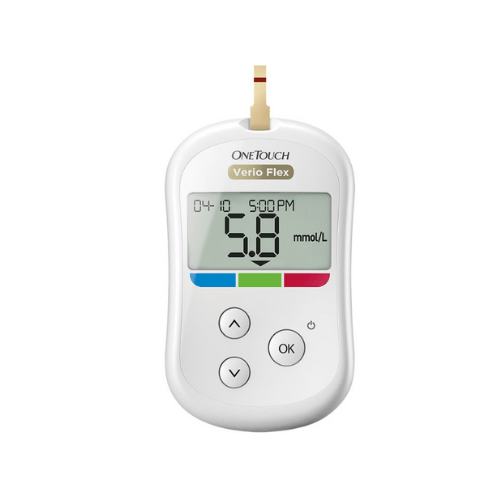
OneTouch Verio Flex Meter
Buy OneTouch Verio Flex Meter Online


OneTouch Verio Flex Meter is a blood glucose meter for at-home diabetes monitoring with compatible OneTouch Verio test strips. You can buy OneTouch Verio Flex Meter online, view the current price, and match the meter, strips, lancets, and setup needs to your clinician’s monitoring plan.
The meter gives point-in-time blood glucose readings from a small blood sample, usually taken from a fingertip. Choose the meter presentation and quantity shown during ordering, then make sure any supplies you already use belong to the same OneTouch Verio strip family.
OneTouch Verio Flex Meter Price and Setup Cost
The OneTouch Verio Flex Meter price should be read together with what is included in the meter purchase. A meter-only item is different from a kit-style purchase, and related supplies may need to be purchased separately. The total setup cost can include test strips, lancets, a lancing device, control solution, batteries, and a carrying case if those items are part of your routine.
If you are comparing OneTouch Verio Flex without insurance or using cash pay, focus on the recurring supply cost as well as the meter cost. Test strips are used one at a time, and lancets are intended for single use. A lower meter price may not lower your ongoing spending if the compatible strips are harder to maintain in your preferred quantity.
- Meter wording: Distinguish meter-only from a kit-style purchase.
- Strip family: Use OneTouch Verio strips that match the meter instructions.
- Testing frequency: Estimate how quickly strips and lancets will be used.
- Quantity: Match the meter and supply counts shown during ordering.
- Care plan: Use the device family named by your healthcare professional.
Quick tip: Do not assume strips are included unless the purchase wording clearly says they are included.
How to Order This Glucose Meter Online
To order OneTouch Verio Flex Meter online, select the meter purchase, review the current price, and match the product name to your testing supplies. Product names in the OneTouch family can look similar, so it is worth reading the full device name before placing the order.
US delivery from Canada may be available as part of the ordering service, depending on the order and destination details. Keep your meter, compatible strips, and lancets organized as one testing system so that replacement supplies are easier to identify later.
The order step matters because blood glucose meters are not universally interchangeable with every strip brand. If you are replacing a lost or aging meter, match the device to the strips you already have only if they are OneTouch Verio strips and remain within their labeled dating and storage conditions. If you are starting a new home-testing routine, ask your diabetes care team how often to test and which supplies to keep on hand.
Device Details to Match Before Checkout
The OneTouch Verio Flex glucose meter is part of a blood glucose monitoring system used with compatible OneTouch Verio test strips. It is intended for in vitro diagnostic use, meaning the test is performed on a blood sample outside the body. The result can help track glucose patterns, but the number should be interpreted with the treatment plan you were given.
| Detail to match | Why it matters |
|---|---|
| Meter name | Confirms you are choosing OneTouch Verio Flex rather than another OneTouch meter family. |
| Compatible strips | The meter must be used with OneTouch Verio test strips according to the instructions. |
| Routine supplies | Fingerstick testing usually requires strips, lancets, and a lancing device. |
| Bluetooth feature | The meter can pair with the OneTouch Reveal app after proper setup. |
| Manual instructions | The official manual explains first-time setup, display messages, battery use, and testing steps. |
OneTouch Ultra, OneTouch Verio, and other OneTouch products may use different strip systems. Matching the meter and strips helps avoid wasted supplies and helps reduce testing errors caused by using the wrong product family.
Compatible Supplies and Bluetooth App Features
The OneTouch Verio Flex blood glucose meter is commonly paired with OneTouch Verio test strips. Browse the broader diabetes supplies category if you need to plan a full testing setup with related meter supplies. Always follow the strip storage and use directions that apply to the specific strip container.
Fingerstick monitoring also requires lancets and safe sharps handling. A fresh lancet may make testing more comfortable and reduces contamination risk. Do not share lancets or lancing devices, even with another person in the same household, because bloodborne infection risk can occur.
The OneTouch Verio Flex Bluetooth meter can sync readings with the OneTouch Reveal app after pairing. App syncing may help organize readings and identify patterns, but it does not replace clinician interpretation. If a meter result, app entry, or written log appears inconsistent, use the meter result and follow the official instructions for checking or repeating a test.
For people managing diabetes supplies across several devices, the blood glucose monitors category can help separate meter choices from strips, lancets, and other accessories. Avoid mixing supplies between device families unless the manufacturer instructions specifically support that use.
How It Is Used for Diabetes Monitoring
The OneTouch Verio Flex blood glucose monitoring system is used by people with diabetes to measure blood sugar at a specific moment. A typical test uses a small capillary blood sample from the fingertip. The reading can help show patterns around meals, exercise, illness, stress, and medication timing.
Your clinician should tell you when to test and how to respond to results. Some people check fasting glucose, before meals, after meals, at bedtime, during symptoms, or before driving. The right schedule depends on the type of diabetes, medications used, risk of low blood sugar, and the goals in your care plan.
A standard meter is different from a continuous glucose monitor. A meter gives individual fingerstick readings, while a CGM uses a worn sensor to estimate glucose trends in interstitial fluid. If you are reviewing monitoring choices for diabetes, the diabetes condition section can help place glucose testing within broader diabetes care topics.
People living with type 1 diabetes often rely on frequent glucose information because insulin timing and hypoglycemia prevention are central to daily care. People with type 2 diabetes may use meter readings to understand medication effects, meal patterns, activity, and changes during illness. In either case, a meter supports decisions but does not treat diabetes by itself.
Accuracy, Technique, and Reading Checks
OneTouch Verio Flex accuracy depends on the device, the strips, and the way each test is performed. Handwashing, sample size, strip dating, strip storage, temperature, and residue on the skin can affect a result. Wash and dry your hands before testing, especially after handling food, lotion, or anything sugary.
If a reading does not match how you feel, repeat the test with clean hands and a new strip. Follow the manual for error messages, low or high readings, and control solution testing. Control solution may be useful after opening a new strip container, after the meter has been dropped, or when results seem inconsistent.
Why it matters: A glucose reading can lead to an unsafe response if the number is wrong or interpreted without context.
Record unusual circumstances with the result when possible. Examples include recent meals, exercise, illness, missed medication, hand contamination, or strips that may have been exposed to moisture. That context helps your care team review patterns instead of overreacting to one isolated number.
Storage, Handling, and Travel
The meter is not a refrigerated product, but it should be protected from heat, freezing temperatures, direct sunlight, moisture, dust, and hard impact. Store the meter, strips, and lancets according to the official instructions. Avoid keeping testing supplies in a bathroom, parked car, or checked luggage where temperature and humidity can change quickly.
Keep test strips in their original container unless the manufacturer instructions say otherwise. Close the container immediately after removing one strip. Do not use strips that are expired, damaged, wet, or stored outside their recommended conditions, because strip problems can make readings less reliable.
When traveling, pack the meter, strips, lancets, a lancing device, spare batteries if appropriate, and written care instructions in an easy-to-access bag. Used lancets should go into a proper sharps container or another puncture-resistant container if local rules allow. If your order includes handling or delivery choices, prompt, express, cold-chain shipping language should not be read as a substitute for the storage instructions that apply after receipt.
Safety Basics Before Using a Blood Glucose Meter
A blood glucose meter is a medical device, not a diabetes medication. It does not lower high blood sugar or raise low blood sugar. The safety risk comes from inaccurate testing, misread results, poor technique, or changing treatment without instructions from a clinician.
Seek urgent medical help for severe symptoms such as confusion, fainting, seizure, chest pain, trouble breathing, persistent vomiting, or signs of dehydration. People using insulin or medicines that can cause hypoglycemia should follow their written plan for very low readings, missed meals, illness, and ketone checks if those instructions apply.
- Clean hands: Wash and dry thoroughly before each test.
- Correct strip: Use only strips identified for the OneTouch Verio system.
- Fresh lancet: Use a new lancet for each fingerstick.
- Symptom mismatch: Retest and seek guidance if the number seems wrong.
- Sharps safety: Dispose of lancets in a secure container.
Hypoglycemia means low blood sugar, and hyperglycemia means high blood sugar. Both can require prompt action based on your personal care plan. A meter reading should be considered alongside symptoms, recent food, activity, medication timing, and any instructions from your diabetes care team.
Related Diabetes Monitoring Choices
If your clinician says another meter family is acceptable, compare display readability, strip access, app support, hand dexterity needs, and supply organization before switching. The broader diabetes products category can help you view diabetes-related items without assuming every item works with the same meter.
Some people compare fingerstick meters with continuous glucose monitoring systems. A CGM may reduce routine fingersticks for some users, but it has sensors, wear time, alarms, adhesive considerations, and setup steps that differ from a standard meter. A fingerstick meter may still be needed for confirmation checks depending on the device and care instructions.
For educational reading, the diabetes articles category covers broader diabetes topics, while type 1 diabetes articles and type 2 diabetes articles can help you frame monitoring questions for your next appointment. Use educational content to prepare questions, not to replace individualized medical guidance.
Authoritative Sources
Manufacturer professional materials summarize OneTouch Verio Flex features and support documents: OneTouch professional meter resources. First-time setup steps are available from the manufacturer: OneTouch Verio Flex setup instructions.
Independent device information is also listed by the American Diabetes Association consumer guide: American Diabetes Association device listing. Use official instructions first for setup, storage, error messages, and control solution testing.
This content is for informational purposes only and is not a substitute for professional medical advice.
Blood Glucose Unit Converter
Convert glucose readings between mg/dL and mmol/L without changing the clinical value.
mg/dL
-
US reporting unit
mmol/L
-
International reporting unit
These calculations are for education only and do not replace clinical advice, diagnosis, or treatment. Always confirm medical decisions with a qualified healthcare professional.
HbA1c & eAG Calculator
Convert between HbA1c percentage and estimated average glucose using the ADAG relationship.
HbA1c
-
percentage
eAG mg/dL
-
estimated average glucose
eAG mmol/L
-
estimated average glucose
These calculations are for education only and do not replace clinical advice, diagnosis, or treatment. Always confirm medical decisions with a qualified healthcare professional.
Carb Serving Calculator
Convert total carbohydrate grams into carb choices for meal planning and diabetes education.
Carb choices
-
total carbs divided by choice size
Rounded choices
-
nearest half choice
Carb calories
-
4 kcal per gram
These calculations are for education only and do not replace clinical advice, diagnosis, or treatment. Always confirm medical decisions with a qualified healthcare professional.
Glycaemic Load Calculator
Calculate glycaemic load from glycaemic index and available carbohydrate in a serving.
Glycaemic load
-
GI x carbs / 100
Range
-
single serving estimate
Total carbs used
-
serving carbs x servings
These calculations are for education only and do not replace clinical advice, diagnosis, or treatment. Always confirm medical decisions with a qualified healthcare professional.
Corrected Sodium Calculator
Estimate sodium corrected for hyperglycemia using common 1.6 and 2.4 correction factors.
Corrected sodium
-
1.6 factor
Corrected sodium
-
2.4 factor
These calculations are for education only and do not replace clinical advice, diagnosis, or treatment. Always confirm medical decisions with a qualified healthcare professional.
Express Shipping - from $29.99
Prices:
- Dry-Packed Products $29.99
- Cold-Packed Products $39.99
Standard Shipping - $19.99
Shipping with this method takes 5-10 days
Prices:
- Dry-Packed Products $19.99
- Not available for Cold-Packed products
What strips work with the OneTouch Verio Flex Meter?
The OneTouch Verio Flex Meter is used with compatible OneTouch Verio test strips. Do not use strips from a different meter family unless the manufacturer instructions specifically identify them as compatible.
Is the OneTouch Verio Flex Meter a continuous glucose monitor?
No. It is a fingerstick blood glucose meter that gives point-in-time readings from a blood sample. A continuous glucose monitor uses a worn sensor and works differently.
Does the OneTouch Verio Flex Meter connect to an app?
Yes. The meter can pair with the OneTouch Reveal app after setup. App records can help organize readings, but your clinician should explain how to interpret patterns and respond to results.
What affects OneTouch Verio Flex accuracy?
Accuracy can be affected by hand contamination, strip expiration, strip storage, sample size, temperature, moisture, and testing technique. If a result does not match symptoms, wash and dry your hands and repeat the test with a new strip.
What should I include when buying a glucose meter setup?
A practical setup usually includes the meter, compatible test strips, lancets, a lancing device, and storage for used sharps. Control solution or spare batteries may also be useful if recommended in the manual.
Rewards Program
Earn points on birthdays, product orders, reviews, friend referrals, and more! Enjoy your medication at unparalleled discounts while reaping rewards for every step you take with us.
You can read more about rewards here.
POINT VALUE
How to earn points
- 1Create an account and start earning.
- 2Earn points every time you shop or perform certain actions.
- 3Redeem points for exclusive discounts.
You Might Also Like
Select options
This product has multiple variants. The options may be chosen on the product page
Select options
This product has multiple variants. The options may be chosen on the product page
Select options
This product has multiple variants. The options may be chosen on the product page
Select options
This product has multiple variants. The options may be chosen on the product page