
Please note: a valid prescription is required for all prescription medication.
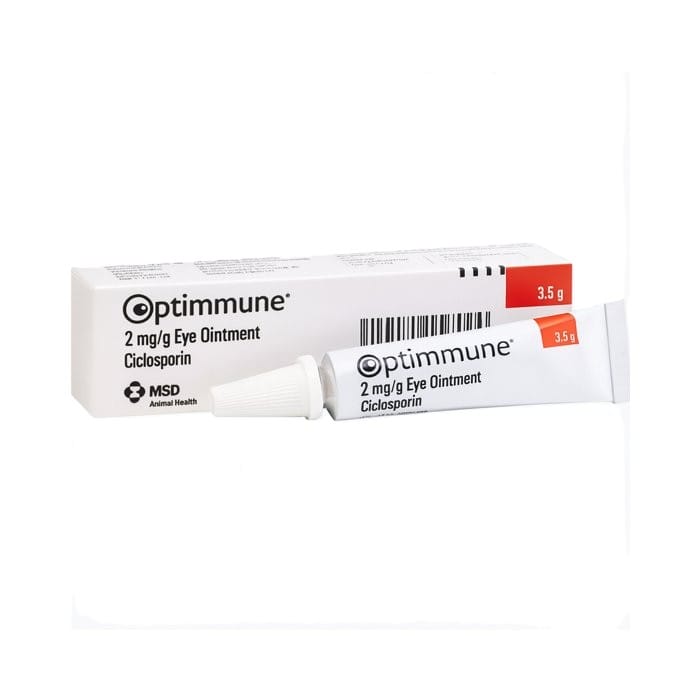
Optimmune
Optimmune for Dogs: Buy for Canine Dry Eye
Price:
$73.99
You save


Optimmune is a veterinary ophthalmic ointment used to manage certain immune-mediated eye surface conditions in dogs. It is most commonly prescribed for keratoconjunctivitis sicca (KCS), often called chronic dry eye. This page summarizes how it works, how it is typically used, and key safety and handling points.
What Optimmune Is and How It Works
Optimmune is a prescription veterinary eye ointment that contains cyclosporine, an immunomodulator (a medicine that changes immune activity). CanadianInsulin acts as a prescription referral service, not a dispensing pharmacy, so clinical decisions and prescribing remain with your veterinarian. In practice, optimmune for dogs is used to support tear film health and reduce inflammation on the ocular surface in patients with chronic dry eye.
Cyclosporine works locally in the eye area by dampening inflammatory signals that can interfere with normal tear production and corneal comfort. In KCS, the lacrimal glands may not produce enough tears, which can lead to thick discharge, redness, squinting, and corneal damage over time. Some patients explore US shipping from Canada for veterinary prescriptions when permitted by jurisdiction. For additional background on the condition itself, you can browse the Canine Dry Eye hub.
Because KCS can have multiple contributing factors, a veterinary eye exam helps confirm the diagnosis and rule out problems that need different treatment, such as eyelid abnormalities or corneal ulceration. Your veterinarian may also recommend tear testing (for example, a Schirmer tear test) and corneal staining to guide safe use and follow-up. Treatment response is usually monitored by symptoms plus repeat testing rather than by appearance alone.
Cyclosporine is also used in veterinary ophthalmology for some immune-driven surface diseases beyond classic KCS, based on clinician judgment and the individual exam. If needed, prescription details are verified directly with the veterinarian. When used as directed and combined with appropriate eye hygiene, the goal is to improve comfort, reduce discharge, and protect the cornea from ongoing dryness-related injury.
Who It’s For
Veterinarians most often consider this medication for dogs diagnosed with KCS (dry eye) where reduced tear production is contributing to irritation and surface damage. It may also be considered in selected dogs with inflammatory ocular surface disease when a clinician believes an immune component is present. In those situations, optimmune for dogs is typically one part of a broader care plan that can include lubrication and treatment of underlying triggers.
Not every red or watery eye is dry eye. Conditions such as infection, foreign material under the eyelid, corneal ulcers, or eyelid conformation issues can look similar and may require different therapy. A clinician should evaluate dogs with significant pain, sudden squinting, a cloudy cornea, or vision changes promptly.
Use may be avoided or delayed when there is an untreated eye infection or an active corneal ulcer, depending on veterinary assessment. Dogs with known hypersensitivity to cyclosporine or ointment ingredients should not use it. If your dog has a history of chronic pannus-like disease, you may find general context in the Canine Chronic Superficial Keratitis hub, but diagnosis and treatment choices should come from a veterinary exam.
Older dogs and brachycephalic breeds (short-nosed breeds) may need closer monitoring because they can be prone to surface irritation and tear-film instability. If you are managing multiple long-term conditions in a pet household, medication routines and observation habits matter; the article Managing Geriatric Diabetes Tips can be a useful model for tracking symptoms and follow-up even beyond diabetes care.
Dosage and Usage
Directions for use should follow the veterinary prescription and the product labeling. In many care plans, the ointment is used on a regular schedule (often twice daily), with adjustments based on tear testing and clinical response. Your veterinarian may recommend use in one or both eyes, depending on which eyes are affected. Optimmune for dogs should be used only for the pet it was prescribed for.
For general handling, caregivers typically place a small ribbon of ointment into the lower eyelid pocket, then allow the dog to blink to spread it across the eye surface. Try to avoid touching the tube tip to the eye, eyelid, fingers, or hair to reduce contamination. If other ophthalmic medicines are also prescribed, ask your veterinarian how to separate them in time and which should be used first.
Quick tip: Wash hands before and after eye medication handling and recap the tube promptly.
If a dose is missed, the safer approach is usually to resume the next scheduled dose rather than doubling the amount, but the prescribing veterinarian should guide case-specific decisions. If your dog resists eye handling, a clinic team can demonstrate positioning techniques to reduce stress and help avoid accidental contact with the cornea.
Strengths and Forms
This product is supplied as an ophthalmic ointment intended for veterinary use. The commonly referenced presentation is Optimmune 0.2% cyclosporine ophthalmic ointment, often packaged as a 3.5 g tube, though availability can vary by distributor and jurisdiction. In some references, 0.2% may also be expressed as 2 mg/g, depending on labeling conventions.
The ointment base can be helpful for longer contact time on the eye surface, but it may temporarily blur vision after use, which is relevant for dogs that navigate stairs or uneven ground. If you are comparing care options, note that optimmune for dogs is not an “eye drop” solution; it is an ointment formulation with different handling characteristics.
| Attribute | What you may see |
|---|---|
| Active ingredient | Cyclosporine |
| Dosage form | Ophthalmic ointment |
| Strength | 0.2% (label-dependent display) |
| Common package | 3.5 g tube |
Availability of specific package sizes or labeling language may differ across pharmacies. For browsing related items intended for animals, the Pet Medications category is a navigational list rather than clinical guidance.
Storage and Travel Basics
Store ophthalmic ointments according to the carton and insert instructions. In general, keep the tube tightly closed when not in use and protect it from excessive heat and moisture. Avoid using the product if the tube tip becomes visibly contaminated or if the ointment changes in appearance in a way that is not described in the labeling.
If the medication is used for long-term management, consider noting the open date and discarding any product that is past its labeled in-use period. If your veterinarian gives separate instructions for duration after opening, follow those directions. Keep the tube out of reach of children and other pets to reduce accidental exposure.
When traveling, maintain a routine that supports correct dosing times and safe handling. Carry the medication in its original packaging so the label is available if you need veterinary help away from home. If your dog is sensitive to bright light due to surface irritation, simple environmental steps like shade breaks and limiting wind exposure during car rides can reduce discomfort.
Because the ointment can briefly blur vision, allow your dog to settle after administration before climbing stairs or jumping. If multiple pets live in the home, store each pet’s medicines separately to avoid mix-ups, especially when more than one animal has eye disease.
Side Effects and Safety
Most side effects are local and involve the eye area. Dogs may show temporary stinging, redness, increased tearing, mild swelling, or rubbing after ointment use. A small amount of discharge can also occur, especially if the tear film is still unstable. If these signs persist or worsen, contact the prescribing clinic for guidance. In routine care, optimmune for dogs should be used with periodic veterinary rechecks to confirm the cornea remains healthy.
More serious concerns include significant eye pain, marked squinting, a cloudy or blue-tinged cornea, worsening light sensitivity, or sudden behavior changes that suggest impaired vision. These signs can indicate corneal injury, infection, or another urgent eye problem that needs prompt evaluation. If your dog develops facial swelling, hives, or severe itching after use, stop the product and seek veterinary care, as this may reflect a hypersensitivity reaction.
Why it matters: Untreated corneal injury can worsen quickly and may threaten vision.
Long-term eye conditions can also affect quality of life through chronic discomfort and sleep disruption. Keeping a simple symptom log (discharge amount, squinting, rubbing, and tolerance of light) can make follow-up visits more informative. For households balancing multiple chronic conditions, education on medication safety habits can help reduce errors; the resource Pet Insulin Dosage highlights practical strategies that translate well to other medicines, even though it discusses insulin specifically.
Drug Interactions and Cautions
Veterinary ophthalmic regimens often include more than one product, such as lubricating drops, antibiotic drops, or anti-inflammatory medications. If your dog uses multiple eye medicines, your veterinarian should specify sequencing and timing so each product can work as intended and so the eye surface is not overly irritated. Do not start additional prescription or over-the-counter eye products without veterinary input, since some agents can be unsafe when a corneal ulcer is present.
Tell the veterinarian about any immunosuppressive drugs, steroid use, or significant underlying illness, because these factors can change how eye infections are assessed and treated. If systemic disease is present, it may indirectly influence eye health through hydration status, inflammation, and healing capacity. The guide Identify Feline And Canine may help caregivers recognize broader health changes that warrant veterinary evaluation, even though it is not specific to eye disease.
Use caution if your dog has a history of recurrent eye infections or if discharge becomes thick, colored, or foul-smelling. These changes can signal infection that needs separate treatment. If pregnancy, breeding, or nursing is a consideration for your dog, ask the prescribing veterinarian to review risk-benefit based on available veterinary guidance and labeling.
Finally, ensure the tube is used only for the prescribed dog. Sharing ophthalmic products between pets can spread infection and increases the chance of contamination.
Compare With Alternatives
Treatment plans for KCS and related surface problems are individualized. In many cases, veterinarians combine an immune-modulating medicine with lubrication and eyelid hygiene rather than relying on a single product. When discussing optimmune for dogs, it can help to understand how common alternatives differ in purpose and formulation.
Common categories your veterinarian may consider include:
- Lubricating tear substitutes: used for symptom relief and surface protection.
- Other immune-modulators: for example, topical tacrolimus compounded by a pharmacy when clinically appropriate.
- Anti-inflammatory or antimicrobial therapy: selected when inflammation or infection is present.
The best option depends on tear test results, corneal status, and whether infection is suspected. Some dogs need short-term changes in therapy if ulcers develop or if irritation increases. Ask your veterinarian which outcomes will be monitored (comfort, discharge, tear test values, corneal clarity) and how often rechecks are expected.
If your dog has other chronic conditions that complicate medication routines, caregiver education may reduce mistakes. General habit-building ideas appear in Living With Diabetes Tips, which focuses on consistent routines that can be adapted for pet care schedules.
Pricing and Access
Optimmune is generally treated as a prescription veterinary medication, so a valid prescription from a licensed veterinarian is usually required. Documentation requirements can vary by jurisdiction and by the dispensing pharmacy. Medications are dispensed by licensed third-party pharmacies where allowed. In some cases, prescription information must be clarified before processing to match the prescriber’s instructions.
Out-of-pocket expense can differ based on tube size, the number of tubes needed for ongoing care, and the dosing schedule your veterinarian sets. Pet insurance plans, when applicable, may have different reimbursement rules for chronic conditions and for prescription ointments. If you are paying without insurance, it can help to ask the clinic whether refills are expected monthly or less often and whether recheck exams are required before renewing.
When comparing access options, consider practical factors such as how consistently your dog tolerates ointment administration and whether you need a backup tube for travel or multi-caregiver households. If you are managing multiple medical needs at home, caregiver stress can be real; the article Diabetes Diagnosis Mental Health offers strategies for coping with long-term routines that may apply broadly, even beyond diabetes. For a site-specific overview of how prescription coordination may work for pets and their owners, see Pet Diabetes How CanadianInsulin.
For safety, keep a record of your dog’s current medicines and bring it to veterinary visits. If therapy is not helping or if symptoms worsen, the next step is usually re-evaluation rather than self-directed changes. Your veterinarian may repeat tear tests or reassess the cornea to determine whether a different approach is needed.
Authoritative Sources
For regulatory and veterinary background, these sources can be helpful references:
FDA database for approved animal drugs: Animal Drugs @ FDA.
Veterinary clinical overview of KCS in dogs: Merck Veterinary Manual KCS In Dogs.
When permitted, fulfillment may involve prompt, express, cold-chain shipping based on the dispensing pharmacy and destination.
This content is for informational purposes only and is not a substitute for professional medical advice.
Express Shipping - from $25.00
Shipping with this method takes 3-5 days
Prices:
- Dry-Packed Products $25.00
- Cold-Packed Products $35.00
Standard Shipping - $15.00
Shipping with this method takes 5-10 days
Prices:
- Dry-Packed Products $15.00
- Not available for Cold-Packed products
What is Optimmune used for in dogs?
Optimmune is a prescription veterinary ophthalmic ointment most commonly used to manage keratoconjunctivitis sicca (KCS), often called chronic dry eye. In KCS, tear production can be inadequate, which may lead to redness, thick discharge, squinting, and corneal irritation. Your veterinarian typically confirms the diagnosis with an eye exam and tear testing, then monitors response over time. Some clinicians may also consider topical cyclosporine products for other immune-mediated ocular surface problems based on the exam findings.
How long does Optimmune take to work for dry eye?
Response time can vary. Some dogs show gradual improvement in comfort and discharge over days to weeks, while others may require a longer period and repeat tear testing to determine whether the plan is effective. Severity of KCS, corneal health, concurrent infection, and how consistently the ointment is used can all influence results. If signs worsen (more squinting, cloudiness, or increased pain), prompt re-evaluation is important because a different problem, such as a corneal ulcer, may be present.
How do I use ophthalmic ointment safely in my dog’s eye?
Follow the prescription label and your veterinarian’s instructions. A common technique is to gently pull down the lower eyelid to form a pocket, place a small ribbon of ointment inside without touching the tube tip to the eye or hair, and then allow the dog to blink. Wipe away excess discharge with a clean, damp pad before medicating if advised by the clinic. Wash hands before and after, recap the tube, and use the product only for the prescribed pet.
What side effects should I watch for with Optimmune?
Most side effects involve local irritation, such as temporary stinging, redness, tearing, mild swelling, or increased rubbing after use. Contact your veterinarian if these signs persist or if discharge becomes thick, colored, or foul-smelling. Seek urgent veterinary care for significant pain, a cloudy or blue-tinged cornea, marked light sensitivity, or sudden vision-related behavior changes. Rarely, generalized allergic reactions can occur; facial swelling, hives, or severe itching after use should be treated as an emergency.
Can Optimmune be used with artificial tears or other eye medications?
Many dogs with dry eye use more than one eye product, such as lubricating drops, antibiotics, or anti-inflammatory therapy. Compatibility and timing depend on the specific medicines and whether the cornea is healthy. Your veterinarian should provide instructions on spacing doses and which product to use first, since ointments can affect how other drops spread on the eye surface. Avoid adding over-the-counter “redness relief” products unless a veterinarian confirms they are safe for your dog’s situation.
What should I ask my veterinarian before starting Optimmune?
Useful questions include: What diagnosis is being treated (KCS versus infection or ulcer)? What tests were done, and when should tear testing be repeated? Should the ointment be used in one eye or both, and at what schedule? What symptoms should trigger an urgent call (pain, cloudiness, sudden squinting)? Also ask how to use other eye medicines alongside it, how long one tube typically lasts for your dog’s plan, and how refills and follow-up exams will be handled.
What should I do if I miss a dose?
Follow the guidance from your veterinarian and the product labeling. In many medication routines, the safer approach is to give the next dose at the regular time rather than using extra ointment to “catch up,” but individual instructions can differ based on severity and the overall plan. If missed doses happen often, tell the clinic; they may help with a simpler schedule or handling techniques. If your dog seems more uncomfortable after missed doses, arrange a recheck to ensure the cornea remains healthy.
Rewards Program
Earn points on birthdays, product orders, reviews, friend referrals, and more! Enjoy your medication at unparalleled discounts while reaping rewards for every step you take with us.
You can read more about rewards here.
POINT VALUE
How to earn points
- 1Create an account and start earning.
- 2Earn points every time you shop or perform certain actions.
- 3Redeem points for exclusive discounts.
You Might Also Like
Select options
This product has multiple variants. The options may be chosen on the product page
Select options
This product has multiple variants. The options may be chosen on the product page
Select options
This product has multiple variants. The options may be chosen on the product page
Related Articles
Uncategorized
High Blood Sugar: Symptoms, Causes, and Urgent Signs
Hyperglycemia is the medical term for glucose above your target range. In everyday language, it means high blood sugar. It can happen with diabetes, severe stress, illness, steroid medicines, or…
Respiratory, Weight Management
Zepbound for Sleep Apnea: Who It May Help and Why CPAP Still Matters
Zepbound for sleep apnea may be appropriate for some adults, but it is not a blanket replacement for standard apnea treatment. The current discussion mainly involves obstructive sleep apnea (OSA),…
Weight Management
Generic Wegovy: Availability, Alternatives, and Cost Context
Generic Wegovy is usually a search for a lower-cost semaglutide option, but the term can be misleading. A true generic is a regulator-approved equivalent to a brand medicine, and patients…
Type 2 Diabetes,
Generic Ozempic Explained for Patients and Caregivers
Key Takeaways People searching generic ozempic are usually trying to confirm whether a lower-cost semaglutide option is a true approved equivalent, a compounded product, or a different diabetes medicine. Separate…