
Please note: a valid prescription is required for all prescription medication.
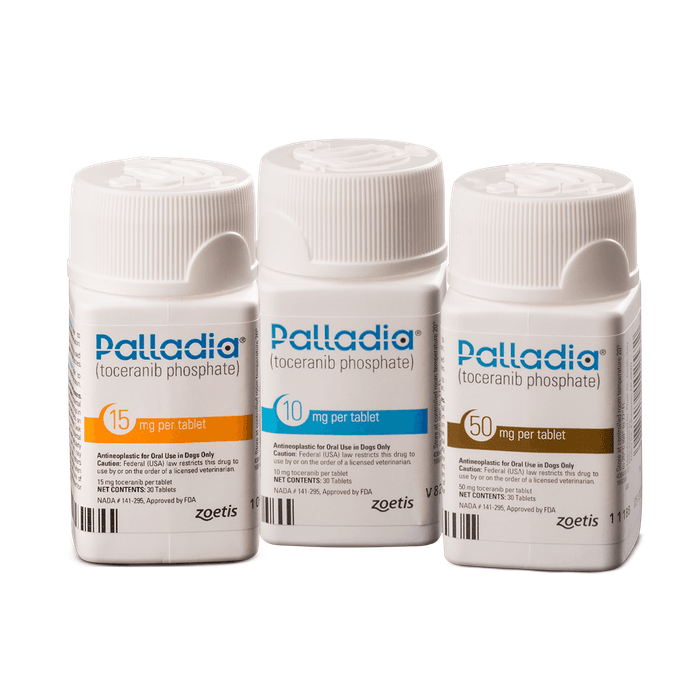
Palladia
Buy Palladia Online


Palladia is a veterinary cancer medicine for dogs that contains toceranib phosphate. You can buy Palladia online, view the current Palladia price during ordering, and choose the tablet strength and quantity that match your veterinarian’s directions. Palladia tablets require careful household handling and close veterinary follow-up because they are used for canine cancer treatment.
Palladia for dogs is used under veterinary supervision, most often in treatment plans for certain mast cell tumors. When ordering, match the active ingredient, tablet strength, quantity, and pet information to the written treatment plan from the clinic. If you are arranging US delivery from Canada, use the checkout and label instructions for the medicine being ordered rather than assuming all strengths or quantities are managed the same way.
Palladia Price, Cost, and Tablet Selection
The Palladia cost you see during ordering can vary by tablet strength, quantity, and the supply needed for your dog’s treatment plan. Evaluate price by the total number of tablets and the strength of each tablet, not by one tablet count alone. A smaller quantity may not reduce overall treatment expense if the dog’s plan requires several tablets per treatment day or ongoing refills.
Commonly discussed Palladia tablets include 10 mg, 15 mg, and 50 mg strengths. Your veterinarian may use one strength or a combination of strengths to reach the intended amount for your dog. A term such as Palladia 65 mg tablets may describe a total planned amount assembled from more than one tablet strength, rather than a single tablet that must exist as one strength.
If you are comparing Palladia without insurance or planning a cash-pay purchase, focus on the full treatment supply instead of only the upfront bottle total. Ask the veterinary clinic how many treatment days the ordered quantity should cover and whether follow-up lab work or dose adjustments may affect future refills. This helps you judge Palladia for dogs cost per month more realistically.
Quick tip: Compare strength, quantity, and expected treatment duration together before judging the total cost.
| Ordering detail | Why it matters |
|---|---|
| Tablet strength | The strength affects how the dog’s treatment amount is assembled. |
| Quantity | The tablet count determines how long the supply may last. |
| Active ingredient | Palladia contains toceranib phosphate, a targeted cancer medicine. |
| Handling needs | Anti-cancer tablets need safe storage, hand washing, and waste precautions. |
How to Order This Veterinary Cancer Medicine
To order Palladia online, choose the tablet strength and quantity that align with the clinic’s written instructions for your dog. Keep the pet’s name, clinic contact information, and treatment directions consistent throughout ordering. We may help review order details if clarification is needed for the medicine, strength, or pet information.
The order is easiest to complete when the product name, active ingredient, strength, quantity, and dog’s details all match the clinic plan. Do not substitute a different strength only because it appears less expensive per tablet. Different strengths can change the number of tablets needed and may affect how accurately the intended amount is given.
Some pet owners compare order Palladia from Canada service pathways for cross-border access. Ships from Canada to US wording should be treated as logistics context for an order, not as a substitute for checking the strength, quantity, storage instructions, and clinic directions. Follow any package-specific instructions if they differ from general expectations for room-temperature tablets.
What Palladia Treats in Dogs
Palladia is the brand name for toceranib phosphate tablets. Toceranib phosphate is an antineoplastic medicine, meaning it is used in cancer treatment. It is a tyrosine kinase inhibitor, a targeted therapy that affects signaling pathways involved in tumor cell growth and blood vessel development.
The labeled use is for certain canine mast cell tumors, especially Patnaik grade II or III recurrent cutaneous mast cell tumors with or without regional lymph node involvement. Mast cell tumors begin in mast cells, which are immune cells found in the skin and other tissues. These tumors can behave differently from dog to dog, so treatment decisions depend on tumor grade, spread, symptoms, and overall health.
Veterinarians may consider surgery history, tumor measurements, lab results, appetite, weight, organ function, and quality of life before using Palladia mast cell tumor treatment in dogs. If you are browsing condition-related items, the Canine Mast Cell Tumor section can help you keep oncology-related shopping separate from unrelated pet medicines.
Palladia cancer medication for dogs is not a general wellness supplement or routine antibiotic. It belongs in a monitored oncology plan. If your dog’s diagnosis, tumor grade, or current health status has changed, contact the veterinary clinic before continuing, restarting, or changing the medicine schedule.
Active Ingredient and How It Works
Palladia toceranib phosphate tablets work by inhibiting certain receptor tyrosine kinases. These are signaling proteins that help regulate cell growth, survival, and blood vessel formation. In some cancers, abnormal signaling can support tumor growth or tumor blood supply. Blocking selected pathways may help slow tumor activity in dogs whose cancer is appropriate for this treatment.
The medicine’s targeted mechanism does not mean it affects only cancer cells. Normal tissues also use related signaling pathways, which is one reason side effects and monitoring are important. Gastrointestinal signs, changes in blood counts, and organ function changes can occur during therapy and may require clinic-directed interruptions or supportive care.
Toceranib phosphate for dogs should be evaluated as part of a complete cancer plan rather than as an isolated tablet purchase. The veterinarian may combine it with surgery, other medications, supportive care, or scheduled reassessments. Those decisions depend on the dog’s cancer type, treatment goals, tolerability, and response over time.
Tablet Strengths and Use Instructions
Choose Palladia 10 mg tablets, Palladia 15 mg tablets, Palladia 50 mg tablets, or another displayed strength only when it matches the clinic’s instructions. Strengths are not interchangeable unless the veterinarian has intentionally changed the tablet combination. A dog may need multiple tablets to reach a planned amount, and the combination can matter for dosing accuracy.
Do not split, crush, or open Palladia tablets unless the veterinary team gives specific safe-handling instructions. Broken tablets can expose people, children, other pets, and household surfaces to residue from an anti-cancer medicine. If a tablet is dropped, damaged, spit out, or partly chewed, ask the clinic how to handle the situation safely.
Give the medicine exactly as directed by the veterinarian. Do not make up missed amounts, change the schedule, or restart after a break without clinic guidance. If your dog vomits after a dose, refuses food, develops diarrhea, or seems unusually tired, write down the timing and contact the veterinary team for next steps.
Why it matters: The wrong tablet strength can change the amount of toceranib phosphate your dog receives.
Handling, Storage, and Household Safety
Palladia tablets require careful handling because they are cancer medicine tablets. Wash hands after touching the bottle or tablets, and use disposable gloves if your veterinary team recommends them. Keep the bottle away from children, other pets, food preparation areas, and places where tablets could be mistaken for household medication.
Store the medicine in the original container unless the clinic provides a different safe plan. Keep it secured in a dry area away from direct heat and moisture, and follow the label for storage temperature. Do not place loose tablets into a pill organizer that children, visitors, or other pets could access.
Pet waste may require additional precautions during treatment. The veterinary team may recommend gloves when cleaning urine, feces, vomit, or bedding, particularly soon after a dose. Pregnant people, people trying to become pregnant, and immunocompromised household members should ask the clinic about handling tablets and waste before caring for the dog during treatment.
Palladia tablets are not usually handled like refrigerated biologic medicines. If the package includes special storage or transport directions, follow those instructions. The supplied shipping phrase for some medicines may mention prompt, express, cold-chain shipping, but Palladia handling should follow the tablet label and the veterinary clinic’s direction.
Side Effects, Warnings, and Monitoring
Common side effects reported with Palladia can include diarrhea, vomiting, decreased appetite, weight loss, tiredness, lameness, and changes in stool. Some dogs also develop changes detected on bloodwork before owners notice obvious symptoms. Monitoring matters because a dog may need supportive medication, a treatment break, or a clinic-directed change based on signs or lab results.
Serious warning signs require prompt veterinary attention. These include severe or bloody diarrhea, black tarry stool, repeated vomiting, collapse, pale gums, fever, marked lethargy, trouble breathing, unusual bruising, or signs of significant pain. Palladia has been associated with gastrointestinal ulceration or perforation, bone marrow effects, and other clinically important reactions.
This medicine may not be suitable for every dog. Tell the veterinary team about pregnancy or breeding plans, poor appetite, infection, kidney concerns, liver concerns, gastrointestinal disease, recent surgery, bleeding problems, or any unexplained weight loss. These factors can affect whether to start, pause, or continue treatment.
Give the clinic a complete list of all medicines and supplements your dog receives. Include anti-inflammatory drugs, corticosteroids, stomach protectants, antibiotics, heart medicines, flea and tick products, supplements, and any other cancer therapy. Medication combinations may change side effect risk or monitoring needs.
Monitoring commonly includes physical exams, blood counts, and blood chemistry. Some dogs may also need urinalysis, blood pressure checks, tumor measurements, or imaging. These visits help the veterinary team assess tolerability, response, and whether ongoing treatment remains appropriate for the dog’s quality of life.
Questions to Ask the Veterinary Team
Before buying Palladia for dogs, ask how the tablet strength relates to the amount intended for your dog. Confirm whether the clinic expects one strength, multiple strengths, or a specific tablet combination. This is especially important when different household members may give medication on different days.
Ask what side effects should trigger a same-day call and what signs can be recorded until the next scheduled visit. Many clinics provide written instructions for diarrhea, vomiting, missed amounts, appetite changes, and waste handling. Keep those instructions near the medicine so all caregivers follow the same plan.
Pet owners often ask whether Palladia is worth it for dogs. That answer depends on tumor behavior, expected benefit, side effect risk, monitoring burden, cost, and quality of life. The veterinarian is best positioned to interpret whether the treatment is helping and whether changes are needed.
Related Categories for Oncology and Pet Medicines
Palladia is a specific veterinary oncology tablet, so it should not be substituted with unrelated pet medication. If you are reviewing cancer-related choices, the Cancer category can help organize medicines used in oncology contexts. The Pet Medications category keeps animal health products separate from human-only therapies.
Condition and category browsing can help you identify adjacent products, but treatment changes should start with the diagnosis and written clinic plan. Supportive medicines, alternative cancer drugs, and unrelated prescriptions may have different safety issues, monitoring needs, and handling precautions. For broader educational reading, the Cancer articles section can provide background topics without replacing veterinary guidance.
Authoritative Sources
Official manufacturer information is available from Zoetis Palladia product information.
Veterinary oncology education is summarized by NC State Veterinary Hospital: All About Palladia.
Published veterinary research is available through Peer-reviewed toceranib phosphate monotherapy report.
This content is for informational purposes only and is not a substitute for professional medical advice.
Express Shipping - from $29.99
Shipping with this method takes 3-5 days
Prices:
- Dry-Packed Products $29.99
- Cold-Packed Products $39.99
Standard Shipping - $19.99
Shipping with this method takes 5-10 days
Prices:
- Dry-Packed Products $19.99
- Not available for Cold-Packed products
What is Palladia used for in dogs?
Palladia contains toceranib phosphate and is used under veterinary supervision for certain canine mast cell tumors, especially recurrent cutaneous mast cell tumors with specific grade and lymph node criteria. Your veterinarian will consider tumor type, spread, lab results, and overall health before using it.
Are Palladia 10 mg, 15 mg, and 50 mg tablets interchangeable?
No. Different strengths can be used to assemble the intended amount, but they should not be swapped without veterinary direction. Match the strength and quantity to the clinic’s written instructions for your dog.
What side effects should I watch for with Palladia?
Common concerns include diarrhea, vomiting, reduced appetite, weight loss, tiredness, lameness, and stool changes. Contact the veterinary clinic promptly for severe diarrhea, bloody or black stool, repeated vomiting, collapse, pale gums, fever, breathing trouble, unusual bruising, or marked lethargy.
How should Palladia tablets be handled at home?
Keep tablets in the original container, store them securely, wash hands after handling, and use gloves if the veterinary team recommends them. Do not split, crush, or open tablets unless the clinic gives specific safe-handling instructions.
Why does Palladia cost vary by dog?
Palladia cost depends on tablet strength, quantity, treatment duration, and whether the veterinarian uses one strength or a combination. Monitoring visits, lab work, and treatment changes can also affect the practical monthly expense.
Rewards Program
Earn points on birthdays, product orders, reviews, friend referrals, and more! Enjoy your medication at unparalleled discounts while reaping rewards for every step you take with us.
You can read more about rewards here.
POINT VALUE
How to earn points
- 1Create an account and start earning.
- 2Earn points every time you shop or perform certain actions.
- 3Redeem points for exclusive discounts.
You Might Also Like
Select options
This product has multiple variants. The options may be chosen on the product page
Select options
This product has multiple variants. The options may be chosen on the product page
Select options
This product has multiple variants. The options may be chosen on the product page
Select options
This product has multiple variants. The options may be chosen on the product page