
Please note: a valid prescription is required for all prescription medication.
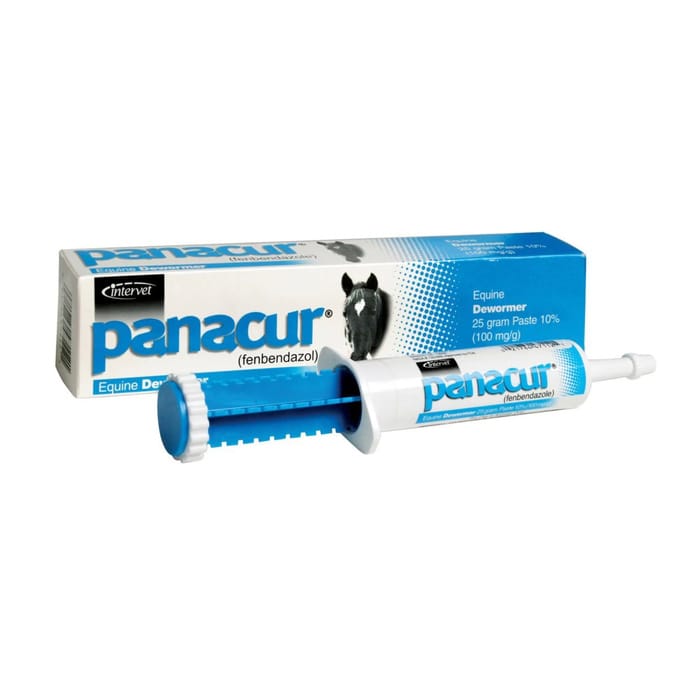
Panacur Paste
Buy Panacur Paste Online


Panacur Paste is a veterinary dewormer that contains fenbendazole, an anthelmintic medicine used for parasite control in animals. You can buy Panacur Paste online, view the current price during ordering, and choose the form and quantity that match the animal’s treatment plan. The paste format is commonly used for horses, so species wording, tube contents, and label directions should be matched carefully before use.
Panacur equine paste is not the same as every Panacur product. Fenbendazole may also appear in granules, suspensions, and other veterinary forms, and each form is measured differently. Match the animal species, active ingredient, concentration, pack size, and dosing device to the instructions from the veterinarian or the official label.
US delivery from Canada may be part of the service context for some orders. Start with the medication match rather than the delivery wording: the right animal, right form, and right quantity matter most for safe deworming.
Panacur Paste Price and Form Selection
The Panacur Paste price should be read together with the form, concentration, tube or syringe contents, and quantity chosen during ordering. A lower line-item price may not mean better value if the total amount supplied, animal weight range, or labeled use differs. Paste products can also look similar to other dewormers, so the active ingredient and species labeling are important.
Many shoppers search for panacur equine paste, panacur paste for horses, panacur horse wormer, fenbendazole paste, panacur oral paste, panacur syringe, or panacur tube. Those terms usually point toward horse-labeled paste, but they do not replace the official product label. The package wording should tell you whether the medicine is intended for horses and how the contents are measured.
When comparing cash-pay amounts, focus on what changes the final order: the chosen form, quantity, package size, and any handling requirements. Do not assume that a horse paste, dog product, cat product, granule, or liquid suspension can be substituted simply because fenbendazole appears on the label.
| What to match | Why it matters |
|---|---|
| Active ingredient | Fenbendazole identifies the deworming medicine, but form and species labeling still matter. |
| Paste form | Paste is measured and administered differently from granules or suspension. |
| Species wording | Equine directions should not be converted for dogs, cats, or small animals without veterinary guidance. |
| Tube or syringe contents | Total contents may not equal one complete treatment for every animal. |
| Quantity | Multiple units change the final cost and may affect storage planning. |
Quick tip: Match the label and animal species before comparing brand names across fenbendazole products.
How to Order the Correct Dewormer
Choose Panacur Paste when the paste form matches the animal’s deworming plan. Read the label language closely, especially if several Panacur products appear during browsing. A paste for horses should be separated from granules, suspensions, and other veterinary presentations before checkout.
Keep the clinic’s directions available when choosing quantity and reviewing the label. Dose changes, species changes, or substitutions should come from the veterinarian managing the animal’s care. Checkout notes are not a safe place to request a different dose, a different animal use, or a switch to another dewormer.
Before placing the order, verify the following practical points:
- Match the product form to the animal’s deworming instructions.
- Read the active ingredient and concentration on the label.
- Confirm the animal species named on the package.
- Choose the quantity needed for the planned course.
- Review storage directions and expiration dating when the product arrives.
We may review order information when clarification is needed. If the animal’s plan has changed, contact the veterinary team before using a different amount or product form.
What Panacur Dewormer Paste Treats
Panacur Paste is used in veterinary medicine to treat and control certain internal parasites. Official equine label information for fenbendazole paste describes use against parasites such as large strongyles, small strongyles, pinworms, and ascarids in horses, depending on the exact label and regimen. These are intestinal worms that can affect weight, coat condition, appetite, and overall health.
Fenbendazole belongs to the anthelmintic class, meaning it is a worming medicine. It is not an antibiotic, pain medicine, anti-inflammatory, or general digestive treatment. Do not use it to treat diarrhea, coughing, poor appetite, or weight loss unless a veterinarian has connected those signs to a parasite diagnosis or prevention schedule.
The parasite-control plan can differ by species, weight, age, exposure, fecal test results, travel history, stable environment, and rescue background. Foals, underweight animals, and animals with unknown parasite histories may need closer veterinary direction. Heavy parasite burdens can sometimes cause illness during or after treatment, so monitoring matters.
For horse-specific browsing, the Equine Intestinal Worms collection helps separate equine parasite products from other pet medication categories. Dog and cat parasite concerns belong in animal-specific categories such as Canine Intestinal Worms and Feline Intestinal Worms.
Product Details to Match Before Use
Panacur Paste contains fenbendazole, but the paste format affects measurement, handling, and administration. A syringe-style paste may have markings that help set an amount for a horse, while a suspension or granule product may use a different measuring method. The active ingredient alone is not enough to decide whether two products are interchangeable.
Panacur paste for horses may be described as panacur equine dewormer, panacur equine wormer, panacur horse dewormer, or panacur horse wormer paste. Those are common product descriptions for equine use, not instructions for dogs, cats, or people. Small animals can be especially difficult to dose accurately with a horse-labeled paste unless a veterinarian specifically directs its use.
Check the package for the following details before giving the medicine:
- Species labeling: Use the animal species named in the directions.
- Concentration: Strength wording helps distinguish paste from other forms.
- Applicator type: Syringe or tube markings affect measurement.
- Total contents: Package size affects how much medicine is available.
- Use directions: Follow the exact label and veterinary plan.
Why it matters: Matching form and species helps reduce measuring errors and cross-species misuse.
Measuring, Giving, and Monitoring the Animal
Panacur Paste dosage should come from the label and the animal-specific veterinary plan. Body weight is usually central to dewormer dosing, and an estimate can be wrong enough to matter. Weight tape measurements, scale weights, and recent veterinary records can help guide a more accurate discussion with the clinic.
Questions about how to use a Panacur syringe usually involve setting the applicator, placing the paste in the mouth, and making sure the animal swallows it. Follow the package directions for the exact paste in hand. If the markings are unclear, the plunger sticks, or the animal spits out part of the dose, contact the veterinary team rather than guessing.
Do not copy a dose from one horse, dog, cat, foal, puppy, kitten, or rescue animal to another. The treatment schedule can change by parasite target and health status. Some regimens involve repeated doses, while others do not; repeating a dose without direction can create unnecessary exposure or confusion in a broader parasite-control plan.
- Confirm weight: Dewormer amounts often depend on body weight.
- Confirm schedule: Repeat treatment only as directed.
- Confirm target: Parasite type can affect medicine choice.
- Confirm swallowing: Ask what to do if medicine is lost.
- Confirm records: Keep deworming dates available for the veterinarian.
Call the veterinary team if the animal receives more than intended, vomits soon after use, develops severe diarrhea, or seems unusually weak. Do not give an extra amount unless a veterinary professional tells you to do so.
Panacur, Ivermectin, and Other Horse Wormers
Panacur is not the same as ivermectin. Panacur contains fenbendazole, while ivermectin products contain a different active ingredient. Both can be used in parasite-control programs, but they may target different parasites and may not be appropriate at the same time or for the same purpose.
DuraMectin is commonly associated with ivermectin paste. It should not be treated as the same medicine as Panacur Paste. Switching between fenbendazole paste, ivermectin paste, combination horse wormers, or other dewormers can change the parasite coverage, safety profile, and timing of the animal’s plan.
Veterinarians may rotate or choose dewormers based on fecal egg counts, season, age, farm history, regional parasite concerns, and resistance patterns. A horse that recently received another wormer may need a different schedule than one with unknown treatment history. Bring the names and dates of recent dewormers to the appointment.
For broader category browsing, the Pet Medications section can help separate parasite treatments from unrelated veterinary medicines. Use categories for orientation, then rely on the label and veterinary plan for the final product choice.
Storage, Handling, and Shipping Basics
Store Panacur Paste according to the package instructions. Keep the container closed and in the original labeled packaging. The label helps identify the active ingredient, animal use, lot information, expiration date, and directions if questions arise at a barn, boarding facility, rescue, or multi-pet home.
Keep veterinary dewormers away from children, food, human medicines, animal feed, and other animals unless the label gives different directions. Do not transfer paste into an unmarked syringe or container. Unlabeled paste can create dosing confusion, especially where multiple animals receive different medicines.
Heat, freezing, moisture, and damaged packaging can affect many veterinary products. If the tube is cracked, the plunger does not move properly, the paste looks unusual, or the expiration date has passed, ask a veterinary professional before use. Do not attempt to repair a damaged applicator or estimate a dose from a broken device.
Orders may involve prompt, express, cold-chain shipping when handling requirements call for it. Keep the package intact when it arrives, and store the medicine as directed before treatment day.
Side Effects, Warnings, and Precautions
Fenbendazole is widely used in veterinary medicine, but side effects can still occur. Possible concerns may include vomiting, diarrhea, reduced appetite, drooling, or unusual behavior, depending on the animal, formulation, dose, parasite burden, and overall health. Mild changes should still be documented, especially if the animal has other medical problems.
Seek veterinary help promptly if the animal develops facial swelling, hives, collapse, severe weakness, bloody diarrhea, repeated vomiting, breathing difficulty, dehydration, or rapid worsening after treatment. These signs need professional assessment. Do not try to manage serious reactions by changing the dose at home.
Tell the veterinarian about pregnancy, nursing, young age, low body weight, poor condition, liver or kidney concerns, recent illness, and all current medicines or supplements. Include other dewormers, flea and tick products, vaccines, and recent parasite preventives. Timing matters because overlapping treatments can confuse monitoring and may increase risk.
Do not use veterinary Panacur wormer products in people. Human exposure, accidental ingestion, or eye contact should be handled through appropriate medical or poison control advice, especially when children are involved. Wash hands after handling the product and clean any spills according to the label or veterinary guidance.
Monitoring is especially important for foals, rescue horses, heavily parasitized animals, and animals with unknown treatment histories. Parasite die-off can sometimes make an animal appear worse during treatment. Watch hydration, appetite, manure quality, energy level, and signs of colic or discomfort in horses.
Related Veterinary Deworming Choices
Panacur Paste is one product within a broader parasite-control plan. Another form may be more appropriate when the animal is not a horse, when measurement must be very precise, or when the veterinarian wants a different administration method. Granules and suspensions can be easier to measure for some animals, but they are not automatic substitutes for paste.
If the animal needs a different product form, use the same decision points: active ingredient, species labeling, concentration, pack size, measuring method, and treatment schedule. Dogs and cats should have their own veterinary plan because body size, tolerance, and labeled directions differ from equine products.
Parasite control is also different from bacterial infection treatment. Dewormers do not replace antibiotics, pain medicines, or supportive care when another diagnosis is present. If symptoms continue after deworming, or if the animal becomes worse, the veterinarian may recommend fecal testing, blood work, hydration support, or another examination.
Use official labels and veterinary directions together. Online information can help you prepare questions about fenbendazole paste, ivermectin products, foal treatment, fecal testing, and deworming schedules, but it should not replace animal-specific care.
Authoritative Sources
Official fenbendazole paste label information is available from DailyMed Panacur fenbendazole information.
Use the official label, the package in hand, and veterinary instructions together. Ask the clinic before changing species use, dose amount, treatment interval, or dewormer type.
This content is for informational purposes only and is not a substitute for professional medical advice.
Express Shipping - from $29.99
Shipping with this method takes 3-5 days
Prices:
- Dry-Packed Products $29.99
- Cold-Packed Products $39.99
Standard Shipping - $19.99
Shipping with this method takes 5-10 days
Prices:
- Dry-Packed Products $19.99
- Not available for Cold-Packed products
What does Panacur Paste treat?
Panacur Paste contains fenbendazole, a veterinary dewormer. Equine label information describes use against certain internal parasites in horses, including large strongyles, small strongyles, pinworms, and ascarids, depending on the exact label and regimen.
What is Panacur dewormer paste?
Panacur dewormer paste is an oral veterinary paste containing fenbendazole. The paste form is measured and handled differently from granules or suspension, so the animal species, concentration, tube contents, and label directions should be matched before use.
Can Panacur horse paste be used for dogs or cats?
Do not convert equine paste directions for dogs or cats unless a veterinarian specifically directs it. Horse-labeled paste can be difficult to measure accurately for small animals, and dog or cat products may use different forms or directions.
Is Panacur the same as ivermectin or DuraMectin?
No. Panacur contains fenbendazole. Ivermectin products, including products commonly associated with DuraMectin, contain a different active ingredient. Do not switch dewormers unless the veterinarian confirms the product and schedule.
How should Panacur Paste be stored?
Store Panacur Paste according to the package instructions, in the original labeled container, away from children, food, human medicines, and animal feed. Do not use a damaged tube or expired product without veterinary guidance.
What side effects should be watched for after Panacur Paste?
Possible concerns may include vomiting, diarrhea, reduced appetite, drooling, or unusual behavior. Seek veterinary help promptly for facial swelling, hives, collapse, severe weakness, bloody diarrhea, repeated vomiting, breathing difficulty, or dehydration.
Rewards Program
Earn points on birthdays, product orders, reviews, friend referrals, and more! Enjoy your medication at unparalleled discounts while reaping rewards for every step you take with us.
You can read more about rewards here.
POINT VALUE
How to earn points
- 1Create an account and start earning.
- 2Earn points every time you shop or perform certain actions.
- 3Redeem points for exclusive discounts.
You Might Also Like
Select options
This product has multiple variants. The options may be chosen on the product page
Select options
This product has multiple variants. The options may be chosen on the product page
Select options
This product has multiple variants. The options may be chosen on the product page
Select options
This product has multiple variants. The options may be chosen on the product page