
Please note: a valid prescription is required for all prescription medication.
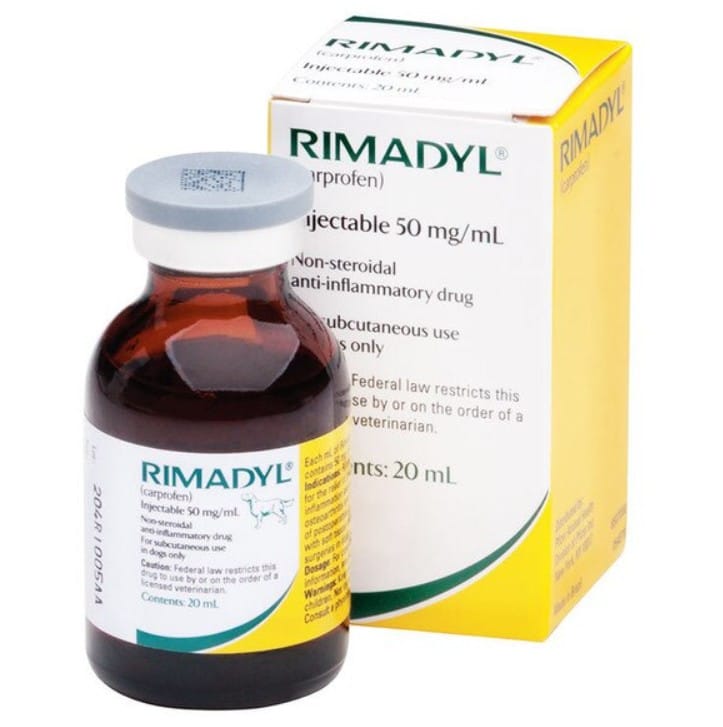
Rimadyl Injectable
Buy Rimadyl Injectable Online


Rimadyl Injectable is a carprofen injection for dogs used by veterinarians for pain and inflammation control. It can be bought online, with the available strength and quantity matched to the directions from the veterinary team. The commonly referenced presentation is a 20 mL vial with a 50 mg/mL concentration.
This veterinary NSAID is intended for dog use when an injectable form is appropriate, such as around certain surgical procedures. Because the vial contains multiple millilitres of solution, the total vial contents should never be treated as a single dose or a treatment-length estimate. Match the brand, active ingredient, concentration, route, and vial quantity to the veterinary directions before completing an order.
Rimadyl Injectable Price and Vial Selection
The Rimadyl Injectable price should be read together with the vial size and concentration. A 20 mL vial at 50 mg/mL contains more medication than a single patient dose, and the number of doses depends on the dog’s weight, treatment plan, and any instructions for handling an opened vial.
When viewing the current cash-pay amount, focus on the exact vial quantity being placed in the cart. A lower unit amount is not useful if the form, strength, or quantity does not match what the veterinary team requested. If clinic instructions specify injectable carprofen, do not substitute tablets, chewables, or another NSAID product without veterinary approval.
| Ordering detail | Why it matters |
|---|---|
| Active ingredient | Rimadyl Injectable contains carprofen, a veterinary NSAID. |
| Form | Injectable solution, not an oral tablet or chewable. |
| Common vial size | 20 mL when this presentation is used. |
| Concentration | 50 mg/mL, unless the vial label states otherwise. |
| Quantity | The vial count should match veterinary directions and practical handling needs. |
Quick tip: Read mL and mg/mL together; vial size is not the same as dose.
How to Order Rimadyl Injectable from Canada
To order Rimadyl Injectable from Canada, choose the injectable solution and vial quantity that match the veterinary directions. Keep the dog’s current weight, clinic contact information, and any written instructions available in case the order requires clarification. We may help confirm order details when a medication order needs clinical documentation.
US delivery from Canada may be used as part of the service context for customers ordering this veterinary product. Injectable medicines also need practical planning because the original vial, cap, label, and packaging should stay intact until administration. If the veterinary clinic will administer the injection, bring the original packaging so staff can verify the product before use.
- Product name: Rimadyl Injectable or carprofen injection should match the veterinary directions.
- Route: Follow the route described by the official label and veterinary plan.
- Strength: Match the 50 mg/mL concentration when that is the directed product.
- Quantity: Select the vial count requested for the dog’s treatment plan.
- Clinic records: Keep surgery notes, weight records, and medication history available.
What Rimadyl Injectable Is Used For
Rimadyl Injectable for dogs is used for pain and inflammation control when a veterinarian chooses injectable carprofen. Official product information describes use for postoperative pain in dogs, including pain associated with soft tissue and orthopedic surgery. The injectable form may be selected when timing, route, or surgical workflow makes injection appropriate.
Carprofen belongs to the nonsteroidal anti-inflammatory drug class, often shortened to NSAID. NSAIDs help reduce inflammation-related pain by affecting prostaglandin pathways, but those same pathways are also involved in stomach, kidney, liver, and clotting function. That is why individual dog factors matter before treatment.
Some dogs receive carprofen products as part of osteoarthritis care, but the form matters. Injectable carprofen is not automatically interchangeable with oral Rimadyl, generic carprofen tablets, or chewable products. If the treatment goal is long-term joint pain support, the Canine Osteoarthritis section can help separate joint-care products from unrelated pet medicines.
This medication is not a general pain reliever for every pet. It is for dogs under veterinary direction, and it should not be used in cats or other animals unless a veterinarian specifically directs an appropriate product and plan.
Dose, Route, and Concentration Basics
Rimadyl Injectable 20 mL refers to the vial volume. Rimadyl Injectable 50 mg/mL refers to the concentration, meaning each millilitre contains 50 mg of carprofen. Both details are needed because the dose calculation depends on the dog and the veterinary plan, not the vial size alone.
A Rimadyl Injectable dosing chart or package insert may help veterinary staff confirm labeled dosing information, but it should not replace patient-specific directions. Do not estimate a dose from another dog, reuse an old surgical plan, or continue treatment beyond the intended schedule without veterinary guidance.
Route also matters. Product information commonly describes subcutaneous administration for dogs, meaning injection under the skin. Do not give this medicine intravenously, intramuscularly, by mouth, or by any other route unless the official label and veterinary directions support that route for the patient.
Why it matters: Carprofen appears in several forms, and each form can have different directions.
Storage, Handling, and Shipping
Injectable veterinary medicines require careful handling from arrival through administration. Inspect the package for the labelled vial, cap condition, solution appearance, and any temperature or handling directions. If the vial appears damaged, unsealed, discoloured, cloudy when it should not be, or otherwise abnormal, contact the veterinary team before use.
Store the vial according to the label and package insert. Keep it in its original packaging, away from children, pets, food areas, and unmarked medication storage. Do not transfer the solution into another container, and do not combine it with unrelated injectable products.
When temperature-sensitive handling is needed, prompt, express, cold-chain shipping may be used to help protect appropriate products during transit. On arrival, move the medicine to the storage conditions described by the label. Travel, heat exposure, and delays between receipt and storage can increase handling risk for injectable products.
If a clinic will administer the injection, transport the vial in its labelled packaging. Veterinary staff need the product name, concentration, lot information, and visible condition of the vial to verify the medicine before giving it.
Side Effects, Warnings, and Monitoring
Carprofen is an NSAID, and NSAIDs can cause adverse effects in some dogs. Possible signs include vomiting, diarrhea, reduced appetite, tiredness, behaviour changes, increased drinking or urination, dark or tarry stools, yellowing of the gums or eyes, or unusual bruising. Injection-site discomfort can also occur with injectable medicines.
Serious reactions are uncommon but can be urgent. Contact a veterinarian promptly if the dog has persistent vomiting, black stools, collapse, severe weakness, yellow gums, seizure-like activity, or signs of significant pain after treatment. These signs may suggest gastrointestinal bleeding, liver injury, kidney injury, or another serious problem that needs clinical assessment.
Dogs with kidney disease, liver disease, dehydration, bleeding disorders, stomach ulcers, very young age, advanced age, pregnancy, recent anesthesia, or poor appetite may need extra evaluation. Veterinary teams may recommend bloodwork, hydration assessment, or follow-up monitoring before or after NSAID use, especially when pain control continues beyond the immediate surgical period.
- Watch appetite: Reduced eating can be an early warning sign.
- Check stool color: Black or tarry stool needs prompt veterinary contact.
- Track thirst and urination: Changes can signal kidney stress or another issue.
- Observe behaviour: Depression, agitation, or sudden weakness should be reported.
- Follow the plan: Do not add extra doses because pain appears uncontrolled.
Interactions and Dogs Who Need Extra Caution
Do not combine Rimadyl Injectable with another NSAID unless a veterinarian gives explicit directions. This includes aspirin, meloxicam, deracoxib, firocoxib, robenacoxib, and other anti-inflammatory pain medicines. Combining NSAIDs can increase the risk of stomach ulceration, bleeding, kidney stress, and liver-related problems.
Corticosteroids such as prednisone or dexamethasone can also increase NSAID-related risk when used too close together. Tell the veterinary team about all pain medicines, steroid medicines, diuretics, ACE inhibitors, anticoagulants, supplements, and over-the-counter products. Supplements that affect appetite, bleeding, sedation, or stomach tolerance can complicate monitoring.
A washout period may be needed when changing from one anti-inflammatory medicine to another. The timing depends on the medicine, dog, and treatment context. Do not decide that interval by online search or by comparing another pet’s instructions.
Carprofen should be used only when the expected benefit outweighs patient-specific risks. Dogs recovering from surgery may already have changes in hydration, appetite, kidney blood flow, and activity level, so the follow-up plan is part of safe use.
Rimadyl Injectable and Related Pet Medication Choices
Rimadyl Injectable is only one form of carprofen therapy. Oral tablets, chewables, and other veterinary NSAIDs may be used in different situations, but they are not automatic substitutes for an injectable product. Strength, route, timing, and monitoring can all change when switching forms.
If the veterinary directions do not call for injectable carprofen, browse the broader Pet Medications category to stay within animal-specific products. Human pain relievers should not be used as substitutes, because many common human medicines can be unsafe or fatal for pets.
For postoperative pain, injection timing may be part of the surgical protocol. For osteoarthritis, the care plan may include weight management, controlled exercise, joint-support strategies, and periodic monitoring. Medication choice should fit that broader plan rather than only the product name.
What to Check Before Completing an Order
Before completing an order, compare the Rimadyl carprofen injection details line by line with the veterinary directions. The active ingredient, injectable form, 50 mg/mL concentration, and 20 mL vial size should make sense together. If any detail conflicts with clinic instructions, ask the veterinary team before proceeding.
Do not assume that the total vial volume equals a fixed number of treatment days. A vial may contain multiple doses, but dose volume depends on the dog’s weight, labeled dosing, route, and any discard instructions after opening. Surgical timing can also affect how and when the product is used.
Keep the order practical by choosing only the quantity directed for the treatment plan. Storing extra injectable medication without a clear plan can increase handling errors, confusion with other products, and accidental exposure risks at home.
- Match the brand or active ingredient to the veterinary directions.
- Confirm the injectable solution form.
- Check the 50 mg/mL concentration and 20 mL vial size.
- Choose the directed vial quantity.
- Review storage instructions as soon as the package arrives.
- Save the package insert for the veterinary team and future reference.
Authoritative Sources
Official product information should guide approved uses, route, contraindications, adverse reactions, and handling language. Manufacturer information: Rimadyl Injectable Solution.
Veterinary label references can help confirm carprofen terminology, NSAID class cautions, and dog-use safety language. Veterinary label summary: Rimadyl Injectable for Dogs.
Use official references for product identification and safety review, not to set an individual dose. The veterinary team remains the appropriate source for patient-specific dosing, timing, monitoring, and route decisions.
This content is for informational purposes only and is not a substitute for professional medical advice.
Express Shipping - from $29.99
Shipping with this method takes 3-5 days
Prices:
- Dry-Packed Products $29.99
- Cold-Packed Products $39.99
Standard Shipping - $19.99
Shipping with this method takes 5-10 days
Prices:
- Dry-Packed Products $19.99
- Not available for Cold-Packed products
What is Rimadyl Injectable used for in dogs?
Rimadyl Injectable contains carprofen, an NSAID used by veterinarians for pain and inflammation control in dogs. Product information commonly describes use for postoperative pain, including pain associated with soft tissue and orthopedic surgery.
Is Rimadyl Injectable the same as oral Rimadyl?
No. The active ingredient may be carprofen, but the injectable solution is a different form from tablets or chewables. Route, concentration, timing, and handling instructions can differ, so substitutions should be cleared by the veterinary team.
What does Rimadyl Injectable 50 mg/mL mean?
The 50 mg/mL concentration means each millilitre of solution contains 50 mg of carprofen. It does not describe a full dose by itself. Dose volume depends on the dog’s weight and the veterinary treatment plan.
What side effects should I watch for after carprofen injection?
Watch for vomiting, diarrhea, reduced appetite, unusual tiredness, behavior changes, increased drinking or urination, dark stools, yellow gums or eyes, or unusual bruising. Contact a veterinarian promptly if severe or persistent signs occur.
Can Rimadyl Injectable be used with other pain medicines?
It should not be combined with another NSAID or a corticosteroid unless a veterinarian gives explicit directions. Tell the veterinary team about all medicines, supplements, and over-the-counter products before carprofen is used.
How should Rimadyl Injectable be stored?
Store the vial according to the label and package insert. Keep it in the original packaging, protect it from inappropriate heat or handling, and keep it away from children and pets. Do not use a vial that appears damaged or abnormal.
Rewards Program
Earn points on birthdays, product orders, reviews, friend referrals, and more! Enjoy your medication at unparalleled discounts while reaping rewards for every step you take with us.
You can read more about rewards here.
POINT VALUE
How to earn points
- 1Create an account and start earning.
- 2Earn points every time you shop or perform certain actions.
- 3Redeem points for exclusive discounts.
You Might Also Like
Select options
This product has multiple variants. The options may be chosen on the product page
Select options
This product has multiple variants. The options may be chosen on the product page
Select options
This product has multiple variants. The options may be chosen on the product page
Select options
This product has multiple variants. The options may be chosen on the product page