
Please note: a valid prescription is required for all prescription medication.
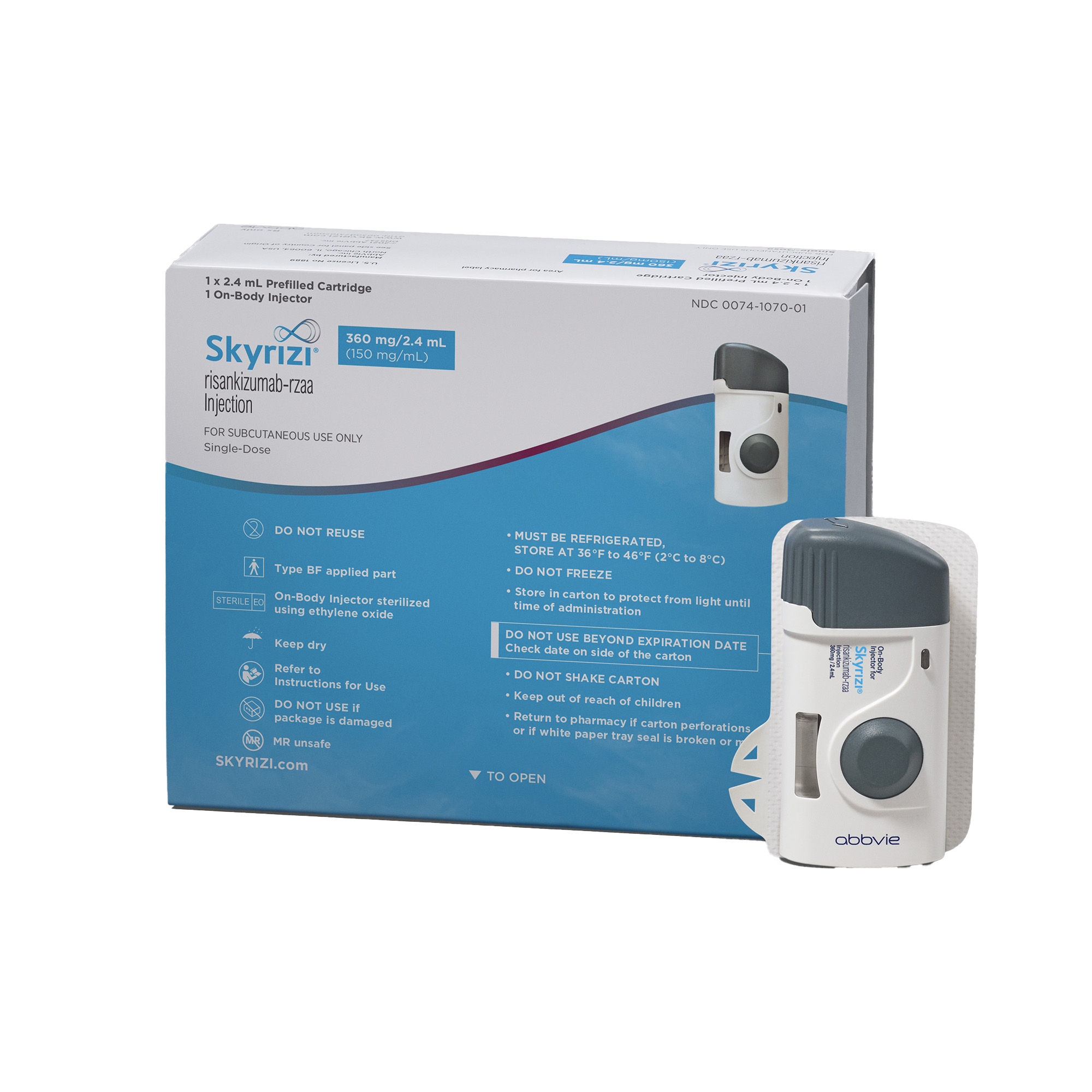
Skyrizi Pre-fill Cartridge w/ Injector
Buy Skyrizi Pre-fill Cartridge w/ Injector Online


Skyrizi Pre-fill Cartridge w/ Injector is a risankizumab injectable product used with a compatible on-body injector. It can be bought online by choosing the cartridge-with-injector format and matching the strength and quantity shown during ordering to your clinician’s directions. The Skyrizi prefilled cartridge with injector is a refrigerated biologic, so form, device type, storage, and handling instructions all matter.
This format is different from a Skyrizi pen or a Skyrizi 150 mg prefilled syringe. When ordering Skyrizi online, use the exact product name, device, strength, and total contents from your clinic paperwork rather than choosing by brand name alone. If US delivery from Canada is part of your order, confirm the address and temperature-sensitive handling information carefully.
Skyrizi Price, Strength, and Device Selection
Skyrizi price can vary by device format, strength, quantity, and the product configuration being ordered. A Skyrizi on-body injector price should be assessed against the cartridge kit itself, not against a separate pen or syringe format. The most useful comparison is the total medicine, device type, and pack count tied to the item you intend to receive.
The Skyrizi 360 mg prefilled cartridge is commonly discussed with the on-body injector because this device system is used for a specific administration pathway. Do not treat a Skyrizi 360 mg price as a monthly cost or as a substitute for an individualized treatment schedule. Dosing frequency, induction needs, and maintenance timing depend on the condition being treated and the clinician’s plan.
People reviewing Skyrizi cost without insurance or a cash-pay amount should keep the device distinction front and center. A lower amount attached to another injectable format may not help if your directions name the cartridge and on-body injector. The same active ingredient, risankizumab, may be supplied in more than one format, but the formats are not interchangeable for ordering or administration.
| Order detail | What to verify |
|---|---|
| Device format | Match the prefilled cartridge with injector format when that is the product directed. |
| Strength | Use the strength shown during ordering and compare it with clinic instructions. |
| Quantity | Confirm whether the order reflects one kit or another available quantity. |
| Total contents | Read milligram and volume information when it appears on the carton or order screen. |
| Alternative formats | Do not substitute a pen or prefilled syringe without clinical confirmation. |
Quick tip: Keep your carton label, medication list, or clinic instructions nearby while matching strength and device information.
How to Buy Skyrizi On-Body Injector Online
To buy Skyrizi on-body injector online, start with the cartridge-with-injector format and verify that it matches your treatment plan. The active ingredient should be risankizumab, but the device and strength still need to align with the product you were directed to use. If anything differs from your paperwork, pause and ask your clinic or pharmacist to clarify the intended format.
Order information may be reviewed to help ensure the medicine, strength, device, and customer details are consistent. Enter names, contact information, and clinic details accurately if those fields are requested. For biologic medicines, small discrepancies can delay review because the product must match the intended use pathway.
Cold-chain logistics are important for this medicine. If the service route includes prompt, express, cold-chain shipping, read the arrival instructions before storing the carton. Skyrizi should not be handled like a room-temperature retail item, and the cartridge should remain protected from heat, freezing, and rough handling.
- Choose the cartridge-with-injector format.
- Match the strength and total contents to clinician directions.
- Confirm quantity before checkout.
- Enter customer and clinic information accurately when requested.
- Plan for refrigerated storage when the package arrives.
Do not change dose timing, device type, or injection method to fit a different product format. If your instructions name a pen, prefilled syringe, or another Skyrizi presentation, verify the intended product before continuing.
What Skyrizi Treats
Skyrizi is the brand name for risankizumab-rzaa, an interleukin-23 antagonist. Interleukin-23 is an immune signal involved in inflammatory pathways. By targeting that signal, risankizumab can help control inflammation in certain immune-mediated conditions when used as directed by a healthcare professional.
Skyrizi is used for moderate to severe plaque psoriasis, active psoriatic arthritis, Crohn’s disease, and ulcerative colitis in appropriate patients. The cartridge-with-injector format is often associated with inflammatory bowel disease maintenance treatment, while other Skyrizi formats may be used in different conditions or treatment phases. The condition, stage of therapy, and dosing plan determine which format is appropriate.
For bowel disease navigation, the Crohn’s Disease and Ulcerative Colitis categories can help place this medicine among related treatment areas. For skin and joint conditions, the Psoriasis and Psoriatic Arthritis categories provide condition-specific browsing. These internal categories support orientation, but the exact Skyrizi device and strength should still come from the treatment plan.
Why it matters: The same brand can appear in multiple injectable formats with different preparation and administration steps.
Cartridge, Injector, Pen, and Syringe Differences
The Skyrizi prefilled cartridge is designed for use with the compatible on-body injector, sometimes shortened to OBI. The cartridge is inserted into the device according to the official instructions, and the device delivers the medicine through a controlled injection process. The system is single use and should not be taken apart, reused, or adapted for another cartridge.
The Skyrizi on-body injector differs from a pen because the user attaches the device to the body and follows a device-guided injection process. It also differs from a prefilled syringe, which requires a different injection technique. Warm-up time, inspection steps, placement, injection duration, indicator lights, and disposal instructions may vary by format.
Device problems should be handled cautiously. If the injector does not start, stops early, leaks, displays an error, or appears damaged, do not attempt an extra dose unless a healthcare professional tells you to. Save the device if instructed, note what happened, and contact a clinician or pharmacist for guidance.
The 150 mg prefilled syringe, Skyrizi pen, and 360 mg cartridge system may all be associated with the Skyrizi name, but that does not make them interchangeable. Product strength, volume, device design, route instructions, and treatment phase can differ. The safest purchase decision is to match the exact format rather than choosing by familiarity or convenience.
Storage, Handling, and Travel Planning
Skyrizi is a refrigerated biologic. Store it in the refrigerator within the temperature range stated on the carton and official instructions, commonly 2°C to 8°C or 36°F to 46°F. Keep the medicine in the original carton to protect it from light. Do not freeze it, shake it, or use it if the carton or cartridge appears damaged.
Before injection, official instructions may direct you to let the carton reach room temperature for a specified period. Do not use hot water, a microwave, a heating pad, direct sunlight, or other external heat to speed warming. Keep the device away from children and pets while it is being prepared.
Inspect the medicine before use according to the instructions supplied with the product. Do not inject if the solution appearance, device condition, or storage history raises concern. If the carton arrived damaged or the product may have been exposed to temperatures outside the label range, contact a qualified professional before using it.
- Refrigerate within the labeled temperature range.
- Keep the carton closed until preparation.
- Protect the cartridge from light.
- Do not freeze or shake the product.
- Use an appropriate sharps container after injection.
Travel requires planning because temperature excursions can affect biologic medicines. Use an insulated container when appropriate, avoid direct contact between the medicine and ice packs unless instructions allow it, and ask your healthcare team how to handle delayed or missed injections before leaving. Do not make schedule changes on your own to accommodate travel.
Side Effects, Warnings, and Monitoring
Skyrizi affects the immune system and may increase the risk of infections. Tell a healthcare professional about active infections, frequent infections, tuberculosis exposure, or symptoms such as fever, cough, painful skin sores, diarrhea, or burning during urination. Treatment may need clinical evaluation if an infection is present or suspected.
Common side effects reported with Skyrizi can include upper respiratory infections, headache, fatigue, injection site reactions, and fungal skin infections. Some people using Skyrizi for inflammatory bowel disease may also be monitored for liver-related lab changes, particularly around induction treatment. The side effects most relevant to you depend on diagnosis, treatment phase, other medicines, and medical history.
Serious allergic reactions can occur with risankizumab. Seek urgent medical help if you develop swelling of the face, lips, mouth, or throat; trouble breathing; chest tightness; severe rash; faintness; or dizziness after an injection. Do not use Skyrizi if a clinician has told you that you had a serious hypersensitivity reaction to risankizumab-rzaa or any ingredient in the product.
Before treatment and during ongoing use, your healthcare team may consider infection screening, tuberculosis evaluation, vaccination status, liver tests, and symptom tracking. Keep a record of injection dates, device problems, missed doses, infections, side effects, and new medicines. This information helps clinicians decide whether monitoring or device support needs adjustment.
Interactions, Vaccines, and Medicines to Discuss
Risankizumab does not have the same interaction pattern as many oral small-molecule drugs, but immune system effects are still clinically important. Tell your healthcare team about biologics, corticosteroids, immunosuppressants, recent antibiotics, antifungals, and any medicine started after your last dose. Combining immune-active therapies can change monitoring needs and infection risk.
Live vaccines are generally avoided during treatment with risankizumab. A clinician may review vaccines before therapy begins and may recommend timing certain immunizations before a future dose. Do not stop, delay, or repeat a Skyrizi injection because of a vaccine question unless a healthcare professional gives that instruction.
Pregnancy planning, breastfeeding, chronic infections, liver disease concerns, and recent surgery are also important discussion points. These topics do not always mean Skyrizi cannot be used, but they may affect timing, monitoring, or the decision to continue. Ask your clinician what symptoms should prompt a call and what routine labs or follow-up visits are expected for your condition.
Related Treatment Areas and Browsing Paths
Skyrizi belongs to specialty immune-mediated treatment categories, so related browsing works best when organized by diagnosis and route of administration. The Gastrointestinal Collection may be useful when reviewing medicines used in bowel disease care. The Dermatology Collection may help when browsing products used for skin-related conditions.
Educational categories can also support broader questions that often come up with biologic therapy. The Gastrointestinal Articles section may help with background reading on digestive conditions, while Dermatology Articles covers skin-focused topics. Use these materials to prepare questions, not to change the medicine, device, or dosing schedule on your own.
When comparing Skyrizi with other immune therapies, focus on clinically relevant differences rather than brand names alone. Indications, treatment phase, injection format, refrigeration, infection monitoring, vaccine timing, and lab follow-up can all differ. If your clinic changes your treatment plan from a cartridge kit to another format, update the order information before completing purchase.
Authoritative Sources
Device-specific instructions should come from official materials. The Official on-body injector support provides manufacturer guidance for the Skyrizi OBI system.
The On-body injector instructions for use explain preparation, device operation, injection steps, and disposal. Follow the leaflet supplied with your carton if it differs from a general online summary.
For clinical safety, indications, warnings, and monitoring information, consult the Official prescribing information. A healthcare professional can interpret the label in the context of your diagnosis, other medicines, and medical history.
This content is for informational purposes only and is not a substitute for professional medical advice.
Affected Body Surface Area Calculator
Estimate affected body surface area using palm units and optional entered body-region percentages.
Estimated affected BSA-one palm approximates 1%
Check-screening estimate only
These calculations are for education only and do not replace clinical advice, diagnosis, or treatment. Always confirm medical decisions with a qualified healthcare professional.
Express Shipping - from $29.99
Shipping with this method takes 3-5 days
Prices:
- Dry-Packed Products $29.99
- Cold-Packed Products $39.99
Standard Shipping - $19.99
Shipping with this method takes 5-10 days
Prices:
- Dry-Packed Products $19.99
- Not available for Cold-Packed products
What is the Skyrizi prefilled cartridge with injector used for?
Skyrizi contains risankizumab-rzaa, an interleukin-23 antagonist used for certain immune-mediated conditions, including plaque psoriasis, psoriatic arthritis, Crohn’s disease, and ulcerative colitis in appropriate patients. The cartridge-with-injector format should be matched to the condition and treatment phase directed by a healthcare professional.
Is the Skyrizi on-body injector the same as the Skyrizi pen?
No. The on-body injector uses a prefilled cartridge and a compatible device that attaches to the body for a device-guided injection process. The pen and prefilled syringe are different formats with different preparation and administration steps.
How should Skyrizi be stored?
Skyrizi is usually stored refrigerated at the temperature range stated on the product label, commonly 2°C to 8°C or 36°F to 46°F. Keep it in the original carton, protect it from light, and do not freeze or shake it.
What side effects can happen with Skyrizi?
Common side effects can include upper respiratory infections, headache, fatigue, injection site reactions, and fungal skin infections. Serious allergic reactions and infections are possible, so seek medical help for breathing trouble, facial or throat swelling, severe rash, fever, or signs of infection.
Can Skyrizi be used with vaccines?
Live vaccines are generally avoided during treatment with risankizumab. Ask your healthcare team how to time vaccines before or during therapy, and do not delay or repeat an injection unless a clinician gives that instruction.
What should I do if the Skyrizi injector has an error or leaks?
Do not repeat a dose unless a healthcare professional tells you to. Note what happened, save the device if instructed, and contact a clinician or pharmacist for guidance on the next step.
Rewards Program
Earn points on birthdays, product orders, reviews, friend referrals, and more! Enjoy your medication at unparalleled discounts while reaping rewards for every step you take with us.
You can read more about rewards here.
POINT VALUE
How to earn points
- 1Create an account and start earning.
- 2Earn points every time you shop or perform certain actions.
- 3Redeem points for exclusive discounts.
You Might Also Like
Select options
This product has multiple variants. The options may be chosen on the product page
Select options
This product has multiple variants. The options may be chosen on the product page
Select options
This product has multiple variants. The options may be chosen on the product page
Select options
This product has multiple variants. The options may be chosen on the product page