
Please note: a valid prescription is required for all prescription medication.
Humira
Buy Humira Online


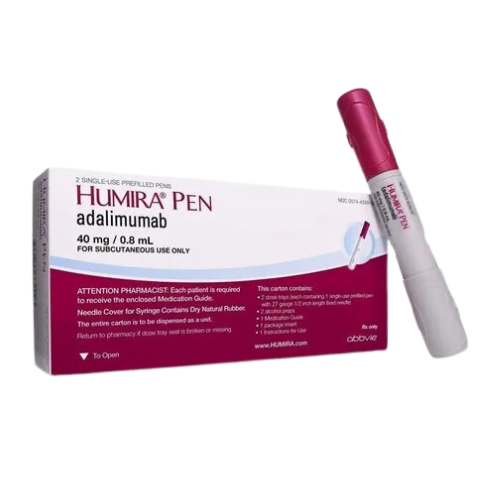
Humira is an adalimumab injection used to treat several immune-mediated inflammatory conditions. You can buy Humira online, view the current Humira price, and choose the available strength, device, and quantity that match your clinician’s directions.
Humira is a biologic medicine, which means small differences in device, strength, concentration, and package contents can matter. Match the Humira injection format shown during ordering with the exact medicine name, dose instructions, and treatment schedule given by your healthcare professional.
Humira Price, Strength, and Device Selection
The Humira price is most useful when read together with the injection device, strength, and quantity. A pen, prefilled syringe, carton count, or single-use supply may be priced differently because each format contains a specific amount of medicine. Cost comparisons should start with the form your clinician intended, not only the total amount shown at checkout.
Many people search for Humira 40 mg because 40 mg presentations are common in adult maintenance schedules for some conditions. Your own Humira dosage may differ by diagnosis, age, body weight, starter schedule, previous biologic use, and response to treatment. Choose the available dose or strength shown during ordering only when it matches your treatment plan.
If you are looking at Humira cost without insurance or cash-pay access, keep the product format and package size in the same comparison. A lower total may reflect a different quantity, concentration, or device. US delivery from Canada may appear in service information for some cross-border orders, and refrigerated handling can affect how the order is coordinated.
Quick tip: Match the device, strength, and quantity before comparing totals.
How to Order Humira Online
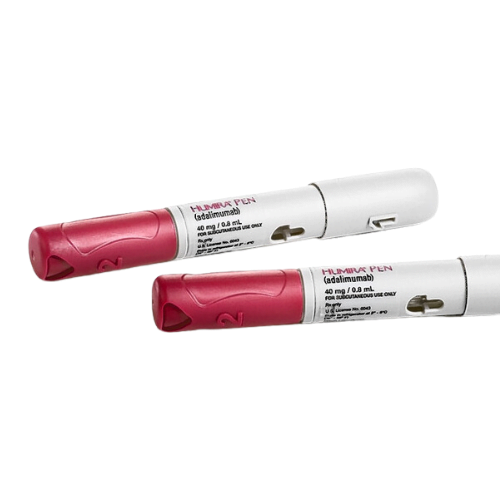
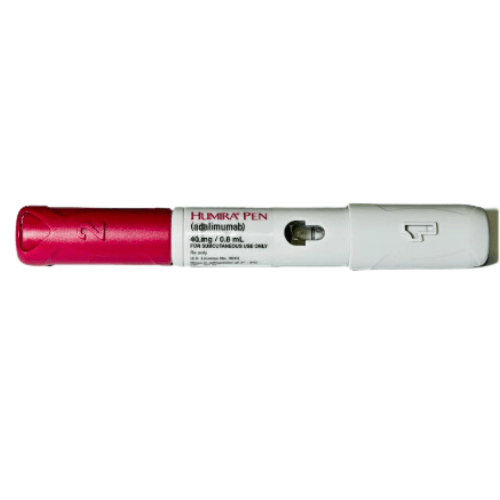
Start by choosing the Humira pen or Humira prefilled syringe format when those choices are available, then match the strength and quantity to your directions. Humira is injected under the skin, so the device is part of the treatment experience. Do not switch between pen and syringe formats unless your healthcare professional has agreed that the change is appropriate.
During checkout, enter accurate contact and delivery information because Humira is a refrigerated biologic. Address errors or missed contact details can complicate cold-chain coordination. If your order requires clarification, we may review order information so the medicine, strength, and quantity align with the treatment instructions provided.
The order process should not require you to choose a new dose, shorten the dosing interval, or change a starter schedule. If the medicine name, device, concentration, or number of injections differs from what you expected, pause and contact your healthcare professional before continuing.
What Humira Does and What It Treats
Humira contains adalimumab, a tumor necrosis factor blocker. Tumor necrosis factor, often called TNF, is an immune-system protein involved in inflammation. By blocking TNF, adalimumab can reduce inflammatory activity in specific diseases when a clinician decides the medicine fits the diagnosis and safety profile.
Approved uses include moderate to severe rheumatoid arthritis, psoriatic arthritis, ankylosing spondylitis, Crohn’s disease, ulcerative colitis, plaque psoriasis, hidradenitis suppurativa, uveitis, and certain forms of juvenile idiopathic arthritis. The exact condition matters because starting doses, maintenance schedules, response goals, and monitoring are not the same for every disease.
For arthritis-related treatment browsing, the rheumatoid arthritis, psoriatic arthritis, and ankylosing spondylitis sections can help separate joint and spine conditions. Digestive conditions such as Crohn’s disease and ulcerative colitis may involve different starter schedules and follow-up markers. Skin and eye uses can also differ, including plaque psoriasis, hidradenitis suppurativa, and uveitis.
Injection Forms, Strengths, and Doses
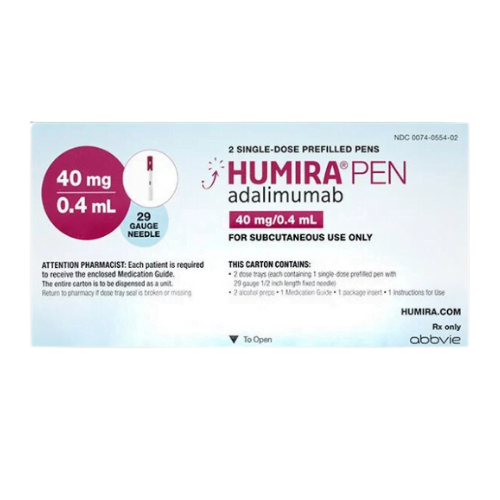
Humira is supplied as an adalimumab injection for subcutaneous use, meaning it is injected into the fatty layer under the skin. Product names and carton descriptions may mention a pen, prefilled syringe, citrate-free formulation, single-use device, strength, concentration, or number of devices. These details describe how the medicine is supplied and administered.
Dosing is condition-specific. Some patients use starter doses before moving to maintenance therapy, while others follow a stable ongoing schedule. Children, adolescents, and adults may have different dosing rules, and some regimens depend on weight. Do not use another person’s Humira dose as a reference for your own order.
| Attribute | Why it matters |
|---|---|
| Device | Pen and syringe formats are used differently and may not feel the same during injection. |
| Strength | The mg strength should align with the dose instructions from your clinician. |
| Concentration | Some adalimumab products may have different volume-to-strength relationships. |
| Quantity | The number of pens or syringes affects how long the supply may last. |
| Formulation | Labels may identify citrate-free or other formulation details that can be clinically relevant. |
Why it matters: Biologic products can look similar while differing in device, contents, and intended use.
What to Expect During Treatment
Humira is usually used as an ongoing treatment rather than a short course for sudden symptoms. Some people notice improvement after several doses, while others need more time and monitoring before the clinician can judge response. The expected timeline depends on the condition being treated, baseline disease activity, and other medicines in the plan.
How long a person stays on Humira is individualized. Some patients remain on therapy for years when benefits continue and safety monitoring is acceptable. Others stop or change treatment because of infections, side effects, loss of response, surgery planning, pregnancy planning, insurance or access changes, or a clinician’s reassessment of the disease.
Keep scheduled follow-up visits and report changes in symptoms. For rheumatoid arthritis, follow-up may focus on joint swelling, pain, function, and inflammation markers. For Crohn’s disease or ulcerative colitis, monitoring may include stool symptoms, flare frequency, weight, bloodwork, and sometimes endoscopy or imaging. For skin or eye disease, your clinician may track lesion severity, visual symptoms, or inflammation control.
Storage, Handling, and Travel
Humira is a refrigerated biologic. Store it according to the label, keep it in the original carton to protect it from light, and do not freeze it. Do not use a pen or syringe that has been frozen, appears damaged, or contains medicine that looks cloudy, discolored, or contains particles unless the label describes that appearance as expected.
Cold handling is part of safe ordering. When refrigerated medicine is shipped, open the package promptly and store the medicine as directed. If prompt, express, cold-chain shipping instructions are included, follow them closely and contact the dispensing team or your healthcare professional if the package arrives warm, damaged, or delayed beyond the handling instructions.
Travel takes planning because temperature extremes can affect biologic medicines. Keep Humira with you rather than placing it in checked luggage, and protect it from heat, freezing temperatures, and direct sunlight. Carry the labeled carton or documentation when traveling with injection devices, especially when passing through airport security or crossing borders.
Side Effects, Warnings, and Monitoring
Humira affects the immune system and can make some infections more serious. The U.S. prescribing information includes boxed warnings for serious infections and malignancy. Serious infections reported with TNF blockers include tuberculosis, bacterial sepsis, invasive fungal infections, and infections caused by other opportunistic organisms. Clinicians commonly screen for tuberculosis before starting therapy and may consider hepatitis B status and other risk factors.
Common side effects can include injection-site reactions, upper respiratory infections, headache, rash, nausea, and sinus symptoms. Injection-site reactions may involve redness, itching, pain, swelling, or bruising around the injection area. Report side effects that are severe, persistent, spreading, or associated with fever or other illness.
Serious risks can include severe allergic reactions, new or worsening heart failure, blood disorders, liver problems, lupus-like symptoms, demyelinating disease, serious infections, and certain cancers. Seek urgent medical help for trouble breathing, swelling of the face or throat, chest pain, fainting, severe weakness, high fever, or symptoms of a severe allergic reaction.
Before using or continuing adalimumab, discuss active infections, recurrent infections, recent hospitalization, planned surgery, cancer history, heart failure, neurologic disease, liver disease, tuberculosis exposure, hepatitis B history, and pregnancy or breastfeeding plans. These factors do not automatically rule out therapy, but they can change screening, timing, monitoring, or whether another treatment is safer.
Interactions, Vaccines, and Immune-System Cautions
Humira is often described as a strong immunosuppressive biologic because it blocks TNF, an immune pathway involved in inflammation and infection defense. That does not mean every patient has the same infection risk. Risk depends on age, diagnosis, other medicines, medical history, vaccination status, and exposure to infections.
Tell your clinician about prescription medicines, over-the-counter products, supplements, and any biologic or immune-suppressing therapy you use. Combining adalimumab with certain medicines may increase infection risk. Labeling discusses risks with other TNF blockers and immune-modulating agents such as anakinra or abatacept. Your clinician decides which combinations are appropriate.
Live vaccines are generally avoided during treatment with TNF blockers. Inactivated vaccines may still be recommended for some patients, but timing matters. If you need vaccines for work, school, travel, seasonal protection, or pregnancy planning, ask your healthcare professional about timing before starting or while continuing therapy.
Monitoring may include symptom checks, infection screening, bloodwork, liver tests, and condition-specific follow-up. Contact a clinician promptly for fever, persistent cough, night sweats, unexplained weight loss, unusual bruising, yellowing of the skin or eyes, severe abdominal pain, new numbness or weakness, or worsening shortness of breath.
Related Treatment Areas
Adalimumab belongs to a wider group of anti-inflammatory and immune-modulating medicines. The pain and inflammation category can help organize products used in rheumatology and inflammatory conditions. For digestive disease treatment areas, the gastrointestinal category may be useful when comparing medicines discussed by a gastroenterology clinician.
Some Humira uses overlap with dermatology or ophthalmology care. The dermatology category can help separate skin-related products from arthritis or bowel-disease medicines. The ophthalmology category may be relevant when eye inflammation is part of the treatment discussion.
Do not substitute Humira for another biologic, biosimilar, or immune-modulating medicine based only on shared condition names. Treatment choice depends on diagnosis, disease severity, previous response, infection risk, safety history, monitoring needs, and the exact medicine named in your treatment plan.
Authoritative Sources
Official labeling is the best source for approved indications, boxed warnings, dosing rules, storage instructions, device handling, interactions, and detailed safety information. Use label information together with the directions from your healthcare professional, especially if your condition uses a starter schedule or weight-based plan.
- FDA-approved labeling: Humira prescribing information.
- Manufacturer prescribing information: AbbVie Humira label.
This content is for informational purposes only and is not a substitute for professional medical advice.
Research & Education Tool
Humira Dosage Calculator
Enter the vial amount, diluent volume, and target amount to estimate concentration, draw volume on a 1 mL U-100 syringe, and approximate vial yield.
For research and educational use only. Check all values against the product label, certificate of analysis, and any applicable professional guidance before relying on the result.
mg
Concentration
-
mcg / mL
Volume per Dose
-
-
Estimated Draws / Vial
-
rounded down to whole draws
Draw Reference
Enter values to estimate the syringe mark.
0
-
-
-
-
Express Shipping - from $29.99
Shipping with this method takes 3-5 days
Prices:
- Dry-Packed Products $29.99
- Cold-Packed Products $39.99
Standard Shipping - $19.99
Shipping with this method takes 5-10 days
Prices:
- Dry-Packed Products $19.99
- Not available for Cold-Packed products
What exactly does Humira do?
Humira contains adalimumab, a TNF blocker. It reduces activity in an inflammatory immune pathway involved in conditions such as rheumatoid arthritis, Crohn’s disease, ulcerative colitis, plaque psoriasis, psoriatic arthritis, ankylosing spondylitis, hidradenitis suppurativa, uveitis, and certain juvenile idiopathic arthritis cases.
What are the worst side effects of Humira?
The most serious risks include severe infections, tuberculosis, invasive fungal infections, certain cancers, severe allergic reactions, heart failure worsening, blood disorders, liver problems, lupus-like symptoms, and neurologic problems. Seek urgent help for breathing trouble, face or throat swelling, chest pain, fainting, high fever, or severe weakness.
Is Humira a strong immunosuppressant?
Humira is an immune-modulating biologic that blocks TNF, a protein involved in inflammation and infection defense. It can increase infection risk, especially when used with other immune-suppressing medicines or in people with certain medical histories.
How long can a person stay on Humira?
Some people stay on Humira for years when it continues to help and monitoring remains acceptable. Others stop or change therapy because of side effects, infections, loss of response, surgery planning, pregnancy planning, or a clinician’s reassessment.
Does Humira need to be refrigerated?
Yes. Humira is a refrigerated biologic and should be stored according to the label, protected from light, and not frozen. If a pen or syringe has been frozen, damaged, or exposed to questionable temperatures, ask a healthcare professional before using it.
Rewards Program
Earn points on birthdays, product orders, reviews, friend referrals, and more! Enjoy your medication at unparalleled discounts while reaping rewards for every step you take with us.
You can read more about rewards here.
POINT VALUE
How to earn points
- 1Create an account and start earning.
- 2Earn points every time you shop or perform certain actions.
- 3Redeem points for exclusive discounts.
You Might Also Like
Select options
This product has multiple variants. The options may be chosen on the product page
Select options
This product has multiple variants. The options may be chosen on the product page
Select options
This product has multiple variants. The options may be chosen on the product page
Select options
This product has multiple variants. The options may be chosen on the product page