
Please note: a valid prescription is required for all prescription medication.
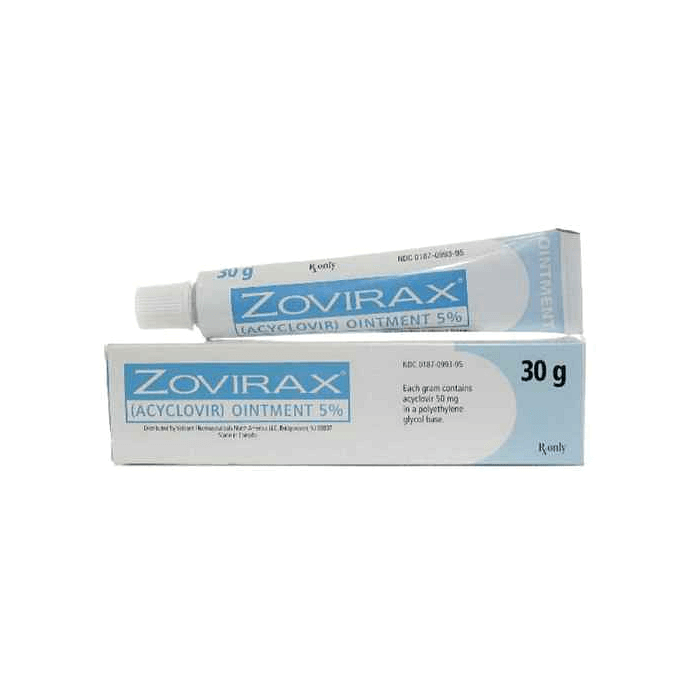
Zovirax Oint 5%
Zovirax Oint 5% How to Buy, Prescription Requirements and Safety
Price:
Price range: $123.99 through $790.99
You save


Zovirax is a prescription topical antiviral ointment containing acyclovir. Zovirax Oint 5% is used on certain herpes simplex virus skin lesions to help limit viral replication. This page summarizes common uses, basic directions, safety points, and practical handling topics to review with a clinician.
What Zovirax Oint Is and How It Works
Zovirax Oint is a topical form of acyclovir, an antiviral medicine used for herpes simplex virus (HSV). After it gets into infected cells, acyclovir is activated by viral enzymes and then interferes with viral DNA (genetic material) replication, which can help limit lesion progression. Prescription details may be confirmed with the prescriber as part of referral processing. Some patients explore Ships from Canada to US for continuity of therapy, depending on eligibility and jurisdiction.
This treatment does not eradicate HSV from the body, and it is not used to prevent future outbreaks. It is typically used during an episode on affected external skin areas, and it works best when started early in the course of symptoms. Because HSV can still spread even when lesions are improving, the ointment should be paired with careful hygiene and avoidance of touching other skin or mucous membranes after contact with the lesion area. The product is for skin use only and is not for the eyes.
Who It’s For
Acyclovir topical ointment is prescribed for certain HSV skin or mucocutaneous (skin-to-mucosa) infections, and it may be used for an initial episode of genital herpes in adults when directed by a clinician. In some situations, clinicians may use topical therapy as part of care for limited mucocutaneous HSV in people with reduced immune function, where the risks and benefits are reviewed carefully. For condition context and related products, you can browse the Herpes Simplex and Genital Herpes hubs.
This ointment is not appropriate for everyone. It should not be used by anyone with a known allergy to acyclovir, valacyclovir, or any ingredient in the formulation. It should also not be used in or near the eyes, and it is not intended for use inside the mouth or deep inside the nose. If you are pregnant, breastfeeding, immunocompromised, or treating a child, the prescriber should confirm whether topical therapy is suitable and what to monitor.
Dosage and Usage
For many prescriptions, clinicians direct people to start topical acyclovir as soon as symptoms begin (such as tingling, itching, or the first appearance of lesions). Label-based schedules for topical acyclovir often involve use multiple times a day at regular intervals for about a week, but the exact regimen should match the prescription instructions. If your directions differ, follow the labeled tube instructions and the prescriber’s plan rather than adjusting the schedule on your own.
When using Zovirax Oint 5%, the goal is to cover the lesion area with a thin film while limiting spread to surrounding skin. A common approach is to clean and dry the area first, use a finger cot or disposable glove to place a small amount on lesions, then remove the glove and wash hands thoroughly. Avoid sharing the tube with others, and avoid rubbing the ointment aggressively into skin that is already irritated.
- Start early: use at first symptoms
- Thin layer: cover lesions lightly
- Hand hygiene: wash before and after
- Barrier tools: glove or finger cot
- Limit spread: avoid touching other areas
- Follow duration: finish prescribed course
Quick tip: Keep a small supply of single-use gloves with the tube to reduce accidental transfer.
If lesions are near sensitive areas, ask a clinician or pharmacist about safe technique and what to avoid. Also remember that topical treatment does not eliminate transmission risk; safer-sex practices and avoiding contact during active lesions remain important parts of prevention planning.
Strengths and Forms
This medicine is supplied as a topical ointment at a 5% concentration of acyclovir. The ointment base can feel greasy compared with creams, which is one reason some clinicians choose other formulations for certain body sites. Availability of tube size can vary by pharmacy and jurisdiction, and some people may receive a branded product or a generic equivalent depending on what is permitted and stocked.
In practice, topical acyclovir ointment is commonly packaged in a small tube for short-course use. If you have sensitivities to certain excipients (inactive ingredients), check the package labeling and confirm ingredients with a pharmacist, since the base can differ slightly between manufacturers.
| Attribute | What to expect |
|---|---|
| Active ingredient | Acyclovir |
| Strength | 5% ointment |
| Form | Topical ointment (skin use) |
| Common package | Small tube; often 15 g |
| Prescription status | Prescription medication |
Storage and Travel Basics
Store topical acyclovir ointment at controlled room temperature and keep the cap closed between uses. Do not freeze it, and do not store it where it will be exposed to high heat (for example, a hot car), since the ointment base can separate or change texture. Keep the tube out of reach of children, and avoid leaving it where it could be contaminated by shared bathroom surfaces.
When traveling with Zovirax Oint 5%, it helps to keep the tube in its original packaging so the prescription label stays with it. If you use gloves or finger cots, pack those in a clean bag as well. If the tube looks discolored, smells unusual, or the texture has changed substantially, ask a pharmacist whether it should be replaced.
Why it matters: Good storage helps the ointment stay consistent and easier to use correctly.
Side Effects and Safety
Topical acyclovir is generally associated with local skin effects at or near the treated area. Commonly reported issues include burning, stinging, pain, itching, dryness, flaking, or mild redness. Some people can develop contact dermatitis (a skin reaction) from either the active drug or the ointment base. If irritation is severe, spreads beyond the treated area, or does not improve, a clinician may want to reassess whether the diagnosis or formulation is appropriate.
With Zovirax Oint 5%, serious reactions are uncommon but possible. Stop use and seek urgent medical care if there are signs of a severe allergic reaction, such as hives, swelling of the face or throat, trouble breathing, or widespread blistering rash. Also contact a clinician promptly if lesions are worsening, you develop fever or significant systemic symptoms, the area becomes very painful with pus or crusting that suggests bacterial infection, or any medication gets into an eye.
- Common: burning or stinging
- Common: itching or dryness
- Possible: localized rash
- Serious: swelling or hives
- Urgent: breathing difficulty
- Urgent: eye exposure
Drug Interactions and Cautions
Because this is a topical medicine with limited systemic absorption, major drug-drug interactions are not expected for most people. However, combining multiple topical products on the same area can increase irritation or alter how well each product stays on the skin. If you use other medicated creams, topical steroids, or fragranced skin products near lesions, ask a clinician or pharmacist how to space them and what to avoid.
Use extra caution if the treated area is large, if skin is severely broken, or if you have significant immune suppression, because your clinician may prefer a different antiviral strategy. Avoid covering lesions with tight, occlusive dressings unless specifically directed, since trapped moisture can worsen irritation. If someone is asking about antiviral treatment for animals, dosing and products are species-specific; the Pet Medications hub can help you browse veterinary options separately.
- Other topicals: may irritate skin
- Occlusion: can worsen discomfort
- Large areas: ask clinician first
- Immune suppression: reassess plan
- Eye contact: rinse and seek care
Compare With Alternatives
Topical acyclovir ointment is one option within a broader set of HSV treatments. For some people, clinicians consider oral antivirals (such as acyclovir, valacyclovir, or famciclovir) when symptoms are extensive, outbreaks are frequent, or systemic therapy is preferred for practical reasons. Others may be directed to different topical antivirals depending on the location of lesions and the intended use.
If you are comparing Zovirax Oint 5% to other products, key differences usually include formulation (ointment versus cream), site of use, and how often it must be used. For nonprescription cold sore care, some people use OTC options like docosanol for herpes labialis, but those products are not the same as prescription acyclovir ointment and may be used for different indications. To see other items in the same medication class, you can browse the Antiviral Medications category list.
- Oral antivirals: systemic treatment option
- Topical creams: different texture and use
- OTC docosanol: cold sore-specific product
- Supportive care: hygiene and symptom relief
Pricing and Access
Access to prescription topical antivirals can vary based on diagnosis, prescriber documentation, and pharmacy policies. Insurance coverage differs by plan, and some plans may treat topical antivirals differently than oral agents. Where permitted, dispensing is completed by licensed third-party pharmacies, not by this site. If a claim is denied, a prescriber may be asked for additional information such as indication, prior therapies, or quantity limits.
If you are paying out of pocket, cost can differ between brand and generic products, between tube sizes, and between pharmacies. People who are without insurance sometimes compare options such as a generic acyclovir ointment, prescription benefit programs, or clinician-selected alternatives that better fit their treatment plan. For broader budgeting and refill-planning ideas (even though examples focus on diabetes), some readers use guides like Cut Insulin Costs and Diabetes Management Tips.
In some cases, additional verification steps are needed before a prescription can be processed, including confirming directions or the prescriber’s information. Eligibility and jurisdiction can also affect cross-border fulfilment considerations for patients exploring referral-based pathways. If you are looking for general, non-time-sensitive updates, the Current Promotions page may provide context on site-wide programs. Practical routines that support consistent medication use are also discussed in articles such as Common Diabetes Medications, Managing Geriatric Diabetes, and Living With Diabetes, which can be adapted to other chronic-care needs.
Authoritative Sources
For the most accurate details about indications, directions, and safety warnings, rely on official labeling and reputable public-health resources. These sources can help you confirm whether topical acyclovir is intended for your specific type of HSV infection and where it should and should not be used. If anything on your tube label differs from general guidance, the tube label and prescriber instructions should take priority.
Neutral references that many clinicians use include the following:
- For patient-friendly acyclovir topical information, see MedlinePlus: Acyclovir Topical.
- For HSV education and prevention basics, see CDC: Genital Herpes Fact Sheet.
- For drug labeling references, see DailyMed Drug Label Database.
When fulfillment is permitted, the dispensing pharmacy may use prompt, express, cold-chain shipping when a product requires temperature control.
This content is for informational purposes only and is not a substitute for professional medical advice.
Express Shipping - from $25.00
Shipping with this method takes 3-5 days
Prices:
- Dry-Packed Products $25.00
- Cold-Packed Products $35.00
Standard Shipping - $15.00
Shipping with this method takes 5-10 days
Prices:
- Dry-Packed Products $15.00
- Not available for Cold-Packed products
What is acyclovir ointment used for?
Acyclovir ointment is a prescription topical antiviral used for certain herpes simplex virus infections affecting the skin or mucocutaneous areas. Clinicians may prescribe it for an initial episode of genital herpes in adults, and in some cases for limited mucocutaneous HSV in people with reduced immune function. It is applied to lesions on external skin as directed. It does not cure HSV or prevent future outbreaks, and it is not intended for eye infections or for use inside the mouth.
Is this ointment the same as cold sore treatments at the pharmacy?
Not always. “Cold sores” usually refers to herpes labialis on or around the lips, and many OTC products are intended only for that use. Prescription acyclovir ointment is a specific formulation and may be prescribed for particular HSV infections, including certain genital lesions. Some prescription antivirals are creams, and others are oral tablets, which can change how they are used. If you are treating lip lesions, ask a clinician which product and route is appropriate for that site.
When should treatment be started during an outbreak?
Topical antiviral therapy is generally most helpful when started as early as possible, such as at the first tingling, itching, or redness before blisters fully develop. Your prescription directions should specify how often to use it and for how many days. Starting early does not eliminate transmission risk, and HSV can still spread even as skin improves. If you are unsure whether a lesion is HSV or something else, a clinician may recommend confirmation before treatment.
What are common skin side effects with topical acyclovir?
Most side effects are local and occur where the medicine is used. People may notice burning, stinging, itching, mild pain, dryness, flaking, or redness. Less commonly, a rash or contact dermatitis can occur, which may reflect sensitivity to the active drug or the ointment base. If irritation becomes intense, spreads beyond the treated area, or does not improve over several days, stop using the product and ask a clinician or pharmacist whether evaluation is needed.
What symptoms mean I should stop using it and get medical help?
Seek urgent care for signs of a severe allergic reaction, such as hives, swelling of the face or throat, trouble breathing, or widespread blistering rash. Contact a clinician promptly if lesions rapidly worsen, you develop fever or significant body aches, the area becomes very painful with pus or increasing redness (possible bacterial infection), or any ointment gets into an eye. People with significant immune suppression should have a lower threshold to seek evaluation for new or worsening symptoms.
What should I ask my clinician or pharmacist before using topical acyclovir?
Helpful questions include: What HSV type and site are being treated, and is topical therapy appropriate for that location? When should I start and stop treatment, and how should I space doses while awake? What technique reduces spread (gloves, handwashing, avoiding other skin areas)? Are there restrictions on other creams, lotions, or dressings on the same area? If outbreaks recur, ask when oral antivirals or preventive strategies might be considered and what follow-up is recommended.
Rewards Program
Earn points on birthdays, product orders, reviews, friend referrals, and more! Enjoy your medication at unparalleled discounts while reaping rewards for every step you take with us.
You can read more about rewards here.
POINT VALUE
How to earn points
- 1Create an account and start earning.
- 2Earn points every time you shop or perform certain actions.
- 3Redeem points for exclusive discounts.
You Might Also Like
Select options
This product has multiple variants. The options may be chosen on the product page
Select options
This product has multiple variants. The options may be chosen on the product page
Select options
This product has multiple variants. The options may be chosen on the product page
Select options
This product has multiple variants. The options may be chosen on the product page
Related Articles
Type 2 Diabetes,
Generic Liraglutide For Weight Loss: A Practical Guide
People searching for generic liraglutide for weight loss usually want clear answers on three points: whether an approved lower-cost version exists, how it differs from brand-name products, and what access…
Type 2 Diabetes,
Liraglutide Vs Semaglutide Comparison Guide For Patients
Key Takeaways People searching liraglutide vs semaglutide usually want a practical comparison, not a slogan. The most useful differences involve formulation, schedule, approved uses, side effect patterns, and the paperwork…
Weight Management
Generic Zepbound: Availability, Status, and Options
Key Takeaways Patients and caregivers often search for generic zepbound when they need a clear answer about availability, labeling, and lower-cost access. The term is common online, but it does…
Type 2 Diabetes,
Oral Wegovy Explained: Facts, Risks, and Access Options
The phrase oral wegovy is best understood as a search term, not a settled product name. Most people use it to mean a pill version of semaglutide for weight management,…